
Selecting the right packaging material is the difference between a pristine delivery and a box of broken pieces. To choose the right bubble wrap, you must match the bubble diameter, the film thickness, and the roll dimensions to the fragility, weight, and shape of your items. Evaluating these physical specifications ensures your goods survive the bumps, drops, and vibrations of transit without incurring unnecessary shipping costs.
Quick Guide: Which Bubble Wrap Specs Actually Matter?
Bubble wrap is not a one-size-fits-all solution. A delicate porcelain figurine requires a completely different cushioning profile than a heavy, sharp-edged metal tool. If you choose a wrap with bubbles that are too small for a heavy item, the weight will easily compress the air pockets, leaving the item vulnerable to impact. Conversely, wrapping a tiny, intricate item in large-bubble wrap is clumsy and leaves structural air gaps.
To make an informed decision, focus on three primary dimensions: bubble size (diameter and height), film thickness, and overall roll dimensions. Matching these physical properties to your item’s fragility, weight, and surface sensitivity prevents under-protecting your goods or overpaying for bulky packaging you do not need.
Products mentioned in this guide
![91m/20m/10m BubbLest™ [FREE PENKNIFE] Bubble Packaging Material Direct Singapore Manufacturer | Clingwrap | Plasticwrap | Cling Wrap | Plastic Wrap | Bubble Roll |](https://img.lazcdn.com/g/p/118908581c7285d2410f3d4422311ca0.png_400x400q80.png_.webp)
Prices are valid at publication and may change. Please refer to the product page for the latest price.
Bubble Size and Profile: Matching Cushioning to Item Fragility
Bubble size is typically defined by two measurements: the bubble diameter and the bubble height. Together, these dimensions determine the volume of air trapped within each pocket. This air volume directly dictates how much kinetic energy the wrap can absorb during drops or impacts. When a boxed item experiences a fall, the air inside the bubbles compresses, acting as a deceleration zone that dampens the shock before it reaches the item’s surface.

Larger bubbles contain a higher volume of air, providing deeper cushioning and a wider buffer zone. However, their physical bulk makes them less flexible, meaning they cannot conform tightly to complex shapes or fit into narrow crevices. Smaller bubbles offer less depth but conform beautifully to intricate geometries, ensuring that every polished surface is shielded from friction and minor abrasions.
Small Bubbles for Surface Protection and Lightweight Items
Small bubble wrap typically features bubbles with a diameter of 10mm and a height of 4mm. This low-profile design is engineered primarily to prevent surface scratches, scuffs, and minor abrasions rather than absorbing heavy drop impacts.
This specification is ideal for lightweight items, polished surfaces, glassware (often used as an inner wrap layer), and objects with intricate details. Because the bubbles are small and closely spaced, they conform tightly to handles, spouts, and delicate protrusions without leaving awkward air gaps that could allow the item to shift. However, small bubbles compress quickly under heavy loads and offer minimal shock absorption for significant drops.
Large Bubbles for Shock Absorption and Fragile or Heavy Items
Large bubble wrap generally utilizes bubbles with a diameter of 25mm to 32mm and a height of 10mm to 12mm. The primary function of this larger profile is to absorb high-impact shocks and fill empty spaces inside shipping boxes.
This wrap is highly effective for heavy electronics, fragile ceramics, furniture edges, and creating a robust buffer zone between the item and the outer carton wall. The main limitation is bulk; large bubbles make packages significantly larger, which can increase shipping costs if your carrier uses dimensional weight pricing. Additionally, they are difficult to wrap around small, delicate objects, and wrapping sharp protrusions with them can easily puncture the expanded film.
Film Thickness and Layering: Preventing Punctures and Tears
While bubble size determines the cushioning depth, film thickness determines the durability of that cushion. Film thickness is measured in microns (µm) or mils (where 1 mil equals 25.4 microns). Standard, light-duty bubble wrap typically ranges from 40 to 50 microns. Medium-duty wraps sit around 60 to 80 microns, while heavy-duty varieties designed for industrial use can exceed 100 microns.
If the plastic film is too thin, the bubbles will pop prematurely under pressure or tear when exposed to sharp edges, rendering the cushion useless. To prevent this, manufacturers produce both single-layer and multi-layer bubble wrap. Single-layer wrap consists of a flat backing sheet with shaped bubbles heat-sealed to it. Multi-layer (or co-extruded) bubble wrap adds a second flat layer of plastic over the open side of the bubbles, sandwiching the air pockets. This multi-layer construction dramatically increases puncture resistance and slows down air diffusion over long transit times.
When assessing your packaging needs, examine the physical characteristics of your items. Sharp, heavy, or metallic objects require thicker, multi-layer films to prevent the item from cutting through the plastic. Rather than relying on generic “heavy-duty” marketing labels, always check the manufacturer’s technical specifications for the actual micron or mil rating to verify the wrap’s true strength.
Roll Width, Length, and Perforations: Optimizing Coverage and Workflow
Choosing the right roll format helps minimize material waste, speeds up your packing process, and ensures you do not run out of supplies mid-pack.
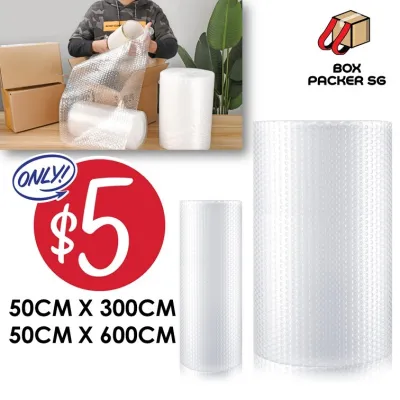
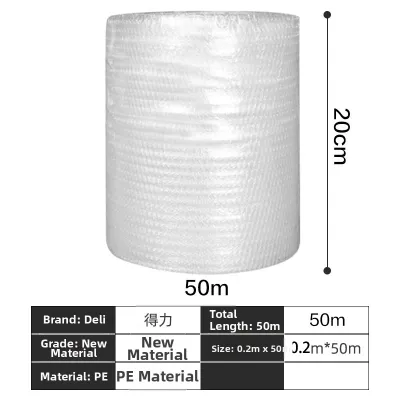
- Roll Width: Standard widths typically range from 300mm to 500mm and up to 1000mm or more. For small items like cosmetics, books, or mugs, a 300mm width is easy to handle and minimizes cutting. For medium appliances, kitchenware, or larger decor, a 500mm width provides excellent coverage. Matching the roll width to your most common box size reduces the need to overlap multiple sheets.
- Roll Length: For occasional home moving or low-volume shipping, a short roll of 5 to 10 meters is easy to manage. For high-volume e-commerce or industrial shipping, purchasing master rolls of 50 to 100 meters offers a much lower cost per square meter.
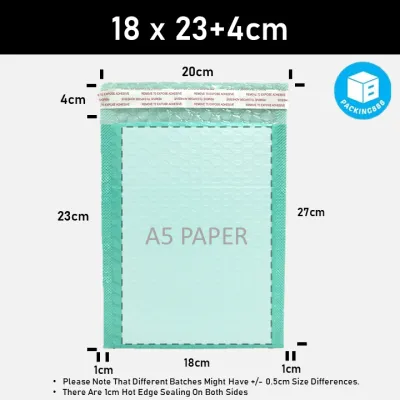
- Perforations and Formats: Continuous rolls offer maximum flexibility for wrapping irregularly shaped or exceptionally long items, though they require scissors or a dispenser cutter. Pre-perforated rolls (typically perforated every 300mm or 500mm) allow you to tear off uniform sheets quickly without tools, streamlining high-volume packing workflows. Pre-cut bubble bags are also available for rapid, repetitive packing of standard-sized items.
Keep physical storage in mind when ordering. A 100-meter roll of large-bubble wrap is exceptionally bulky and can easily overwhelm small office spaces or home storage areas.
Specs That Rarely Change Protection Levels
When browsing packaging supplies, you will encounter several aesthetic and material variations. Understanding which specifications actually impact performance helps you avoid paying a premium for unnecessary features.
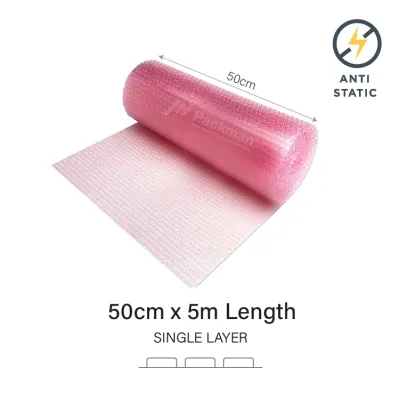
- Color Variations: Standard bubble wrap is clear. While you may see green, blue, or yellow rolls, these colorants are typically cosmetic or used for brand differentiation. They do not alter the physical strength or shock absorption of the plastic. The only functional color standard is pink, which indicates the film has been treated with anti-static additives.
- Roll Weight: The weight of a roll is simply a byproduct of its dimensions and film thickness. It is not an independent performance metric you need to optimize for.
- Eco-Friendly Labels: Recycled-content bubble wrap is an excellent choice for reducing environmental impact. Modern manufacturing ensures that high-quality recycled wrap performs comparably to virgin plastic. However, eco-friendly labels do not automatically guarantee a specific protection level; you must still verify the actual bubble size and micron thickness to ensure it meets your item's physical requirements.
Matching Bubble Wrap Specs to Common Packing Scenarios
To simplify your purchasing decision, use the table below to match your specific item type with the recommended bubble wrap specifications. Keep in mind that bubble wrap is only one part of a secure packaging system; using a sturdy outer box and appropriate void fill is equally critical.
| Item Category | Recommended Bubble Size | Recommended Film Construction | Packing Notes |
|---|---|---|---|
| Glassware & Ceramics | Small (10mm) | Medium (60–80 microns), Single-layer | Wrap items individually to prevent clinking; use multiple layers for delicate stems. |
| Heavy Electronics | Large (25–32mm) | Thick (80–120 microns), Multi-layer | Focus on corner protection; ensure the outer box has adequate void fill to prevent shifting. |
| Books & Flat Media | Small (10mm) | Standard (40–50 microns), Single-layer | Protects corners from denting; wrap tightly and secure with packaging tape. |
| Irregularly Shaped Decor | Small or Large (depending on weight) | Thick (80–120 microns), Multi-layer | Use small bubbles for tight wraps on intricate details, then over-wrap with large bubbles for shock absorption. |
Frequently Asked Questions (FAQ)
Can I use small bubble wrap for heavy items if I add more layers?
Adding multiple layers of small bubble wrap increases surface scratch protection, but it does not significantly improve deep shock absorption for heavy items. Under heavy loads, the small volume of air inside small bubbles is easily displaced, causing them to bottom out. For heavy items, use large bubble wrap or high-density foam as your primary shock-absorbing layer.
Does the color of the bubble wrap indicate a difference in strength?
No, standard colors like clear, blue, or green are purely cosmetic or used for inventory sorting. The only functional color is pink, which designates anti-static bubble wrap. The physical puncture resistance and strength of any bubble wrap depend entirely on its measured film thickness and construction, not its color.
Is anti-static bubble wrap necessary for all electronics?
Anti-static bubble wrap is only necessary for bare circuit boards, internal computer components, and highly sensitive microelectronics that are vulnerable to electrostatic discharge (ESD). For fully assembled consumer electronics housed in plastic or metal casings, such as a laptop or smartphone in its original retail packaging, standard bubble wrap is perfectly sufficient for physical protection.
Community discussion
Share your experience or ask a question. Comments are reviewed before publication.