
Choosing the right small envelope depends on the dimensions of your contents and how you fold them. The most common standard small envelopes are C6 (114 mm x 162 mm), which fits an A4 sheet folded into quarters, and DL (110 mm x 220 mm), which accommodates an A4 sheet folded into thirds. Selecting the correct size ensures your letters, invitations, or cards fit securely without shifting or tearing during transit.
Quick Answer: Common Small Envelope Dimensions
Standard small envelopes are designed to match common paper sizes, minimizing the need for custom cutting or complex folding.
| Envelope Format | Dimensions (Metric) | Ideal Contents | Matching Paper Size |
|---|---|---|---|
| C6 | 114 mm x 162 mm | Greeting cards, photos, A6 cards | A4 folded in quarters, flat A6 |
| DL | 110 mm x 220 mm | Business letters, invoices, flyers | A4 folded into thirds (tri-fold) |
| A6 | 121 mm x 165 mm | Custom invitations, RSVP cards | Flat A6 cardstock, folded A5 |
| C7 | 81 mm x 114 mm | Mini gift cards, RSVP notes | A7 cards, A6 folded in half |
These standard formats align with international paper sizes to keep your mailings neat, professional, and easy to assemble.
Products mentioned in this guide
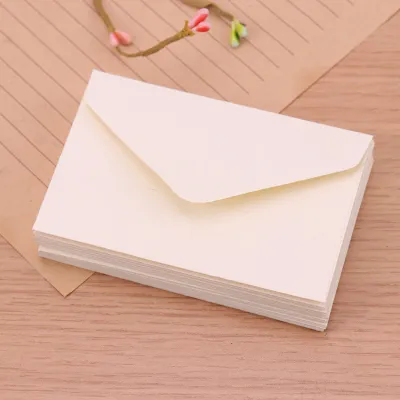
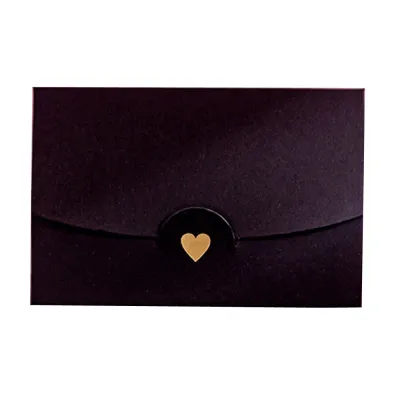
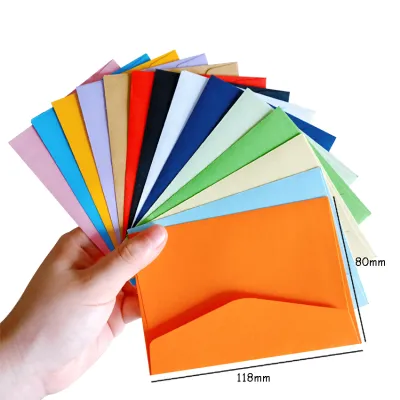
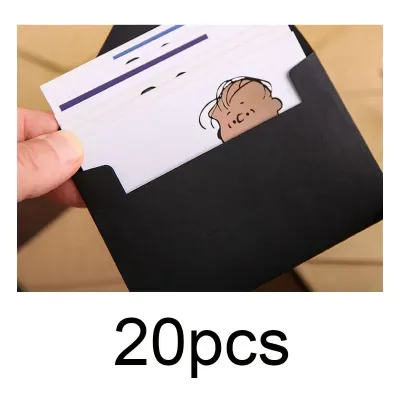
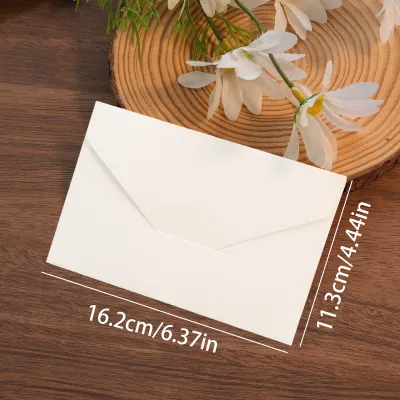
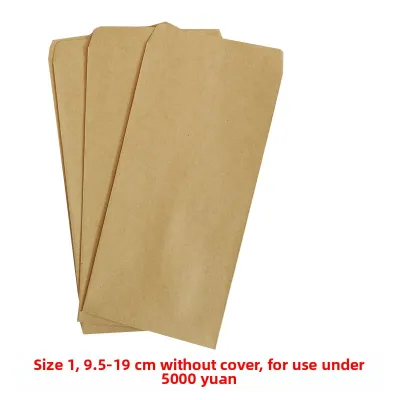
Prices are valid at publication and may change. Please refer to the product page for the latest price.
Understanding Standard Small Envelope Formats
Navigating envelope naming conventions is straightforward once you understand the standard series. The most widely used system is the ISO C-series, designed to hold matching A-series paper sizes. For example, a C6 envelope is proportioned to hold an A6 sheet flat, or an A5 sheet folded once, or an A4 sheet folded twice. This geometric relationship ensures a consistent, snug fit without wasting space.

In contrast, the A-series envelope system is a separate standard primarily used for invitations, greeting cards, and social stationery. An A6 envelope is slightly larger than a C6 envelope, measuring 121 mm by 165 mm. This minor difference is crucial when selecting packaging; the A6 envelope is designed to hold A-series cards with a bit more clearance, making it a popular choice for handmade cards or thicker cardstock invitations that require extra breathing room.
The DL (Dimension Long) format is another common standard, measuring 110 mm by 220 mm. It is designed to hold an A4 sheet folded horizontally into three equal sections, making it the staple for business correspondence, invoices, and official notices.
When shopping on an online marketplace or at a local stationery store, pay close attention to packaging labels. Manufacturers print both the format code and the exact dimensions in millimeters. Always verify these measurements against your contents to account for minor brand variations.
How to Match Your Items to the Right Envelope
To ensure your items slide into the envelope smoothly, measure your contents accurately. Start with the length and width of your flat item. If your item is thick—such as a booklet, layered greeting card, or small badge—you must also measure its thickness.
For flat items, choose an envelope that is at least 5 mm larger than the contents in both length and width to prevent bending. For thicker items, add the thickness of the item to both the length and width measurements before comparing them to the envelope dimensions. A card that is 4 mm thick requires significantly more clearance than a single flat sheet of the same face size.
Folding methods dictate your envelope choice. A tri-fold method matching a DL envelope is ideal for business letters, while a quarter-fold matching a C6 envelope is practical for personal correspondence. Ensure your folds are crisp and flat; bulky, uneven folds increase thickness, making insertion difficult and causing the envelope to bulge.
Finally, consider local postal guidelines regarding thickness and weight. In Singapore, standard mail rates apply to letters within specific weight tiers and thickness limits. If your envelope exceeds the maximum thickness threshold—typically 6 mm—it may be reclassified as a package or large letter, resulting in higher postage fees. Keeping your contents flat helps you avoid unexpected surcharges.
Choosing Paper Weight and Closure Types
The material quality of your envelope affects its durability and security. Envelope paper weight is measured in grams per square meter (GSM). Standard envelopes typically range from 80 GSM to 100 GSM, offering a lightweight option for general correspondence. For formal invitations or heavier contents, opting for 110 GSM to 120 GSM provides a sturdier feel, greater tear resistance, and improved opacity.
The sealing mechanism is another practical consideration when choosing small envelopes.
- Gummed closures: These traditional envelopes feature a strip of water-activated adhesive along the flap. They are highly cost-effective and ideal for high-volume mailings where automated inserting and sealing machines are used.
- Self-seal (peel-and-stick) closures: These feature a protective strip covering a pressure-sensitive adhesive. They are incredibly convenient for manual sealing, as you simply peel off the strip and press the flap down.
- Clasp or button-and-string closures: These reusable options are excellent for internal office mail or documents that need to be accessed repeatedly without tearing the paper.
For added security, consider envelopes with an internal security tint—a printed pattern that prevents people from reading the contents through the paper. Alternatively, lined envelopes feature an elegant inner paper lining, adding a premium aesthetic touch and an extra layer of privacy for personal invitations.
Frequently Asked Questions (FAQ)
Can I use an A6 envelope for a standard C6 greeting card?
No, a standard C6 greeting card will not fit well inside an A6 envelope. A C6 card typically measures 105 mm by 148 mm, designed to fit a C6 envelope (114 mm x 162 mm). An A6 envelope is larger (121 mm x 165 mm). While the card will physically fit inside, there will be excessive empty space, causing it to slide around and potentially get damaged. Conversely, an A6 card will not fit inside a C6 envelope. Always match the card format directly to its corresponding envelope standard.
What is the maximum thickness for a standard small envelope?
The maximum thickness for a standard small envelope depends on local postal sorting guidelines. For standard letter rates, the thickness limit is typically 6 mm. If your envelope exceeds this due to bulky contents, rigid inserts, or thick cardstock, it will be reclassified as a large letter or parcel, which increases postage costs. To ensure your mail qualifies for standard rates, keep contents flat, distribute bulk evenly, and verify the thickness before mailing.

Community discussion
Share your experience or ask a question. Comments are reviewed before publication.