
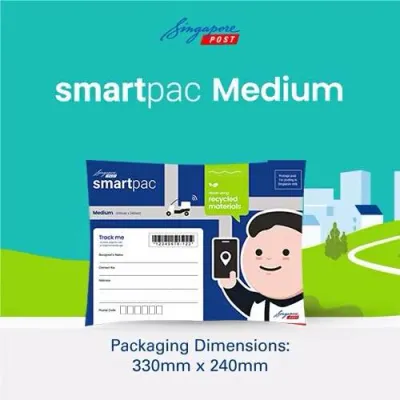
SingPost medium courier bags, widely used across Singapore for local and tracked deliveries, generally feature flat dimensions of approximately 240 mm by 330 mm. However, these flat measurements do not represent the actual volume of goods you can pack inside. The true capacity of the bag depends heavily on the thickness and flexibility of your items, as well as the space required for protective wrapping and a secure adhesive seal.
Understanding the Official Dimensions and Usable Space
Before purchasing packaging in bulk, it is essential to verify the current official length and width specifications on the SingPost website or through authorized packaging retailers in Singapore. Exact millimeter dimensions can vary slightly depending on production batches, manufacturing tolerances, or the specific product line you select, such as prepaid postage mailers versus standard non-prepaid polymailers.
When planning your shipments, you must distinguish between total flat dimensions and usable internal space. The flat length of a courier bag includes the self-adhesive sealing flap, which typically measures between 40 mm and 50 mm. Once this flap is folded over to seal the bag, that length is completely lost for storage, immediately reducing your usable depth.
Products mentioned in this guide
![[SINGPOST] MEDIUM smartpac - A postage-paid packaging for local delivery. Trackable via the SingPost mobile app.](https://img.lazcdn.com/g/p/3360d819ebee92c4900de5d10f98c2e8.png_400x400q80.png_.webp)
![[1/2/3/4 pcs] SingPost Smartpac Medium size - for using within Singapore only - Prepaid Packaging with Tracking](https://img.lazcdn.com/g/p/8f2c3c3994c2d6fb1e87feebed85f10b.jpg_400x400q80.jpg_.webp)
Prices are valid at publication and may change. Please refer to the product page for the latest price.
Side seams also restrict the usable width. Standard flat polymailers are constructed with heat-sealed side seams that usually take up 5 mm to 10 mm on each side. Because these bags are flat and do not feature built-in bottom folds or side expansion panels, any item with physical thickness will pull the front and back sheets together, drastically reducing the effective width and length available for your product.
Weight limits are another critical factor governing the bag’s structural integrity. For prepaid medium options, SingPost enforces specific weight thresholds, often capping the limit at 1 kg or 2 kg depending on the precise service tier. Exceeding these limits can cause the adhesive seal to fail or the seams to burst under pressure during transit, potentially resulting in postal surcharges or returned parcels.
For daily shipping operations, the bag’s width and weight limit are the most crucial parameters to monitor. The exact thickness of the plastic, usually measured in microns, is generally less critical for soft items, though it becomes highly important if you are shipping goods with defined edges that require enhanced puncture resistance.
What Items Actually Fit Inside a Medium Courier Bag?
To visualize how these flat dimensions translate into practical three-dimensional packing scenarios, it helps to categorize your products by their flexibility and thickness. Flexible, soft goods are the easiest to pack because they naturally conform to the bag’s shape without placing excessive stress on the heat-sealed seams.

Flexible and Soft Apparel Single garments such as T-shirts, lightweight blouses, activewear, thin dresses, or summer clothing are ideal for a medium courier bag. Soft accessories like socks, scarves, beanies, or small plush toys can also be packed efficiently because they compress easily under light pressure.
Flat, Rigid Goods Standard A4-sized documents, thin paperback books, e-readers, or small tablets can fit comfortably inside a medium bag. However, these rigid items must be wrapped in a thin protective layer first to prevent their corners from wearing through the plastic during sorting.
Items to Avoid Standard flat polymailers lack a gusset, which is the expandable side panel found in grocery bags or shipping boxes. Consequently, you should avoid packing bulky, rigid, or highly spherical items. A thick shoebox, a ceramic coffee mug, or a heavy winter jacket will stretch the flat plastic to its absolute limit, pulling the sides inward and preventing the adhesive flap from sealing properly.
Additionally, avoid shipping heavy hardware or items with sharp, unpadded edges. If an item cannot flex, it concentrates all physical stress onto specific points of the plastic. Without adequate padding, these sharp corners can easily puncture the mailer during automated sorting and transit.
How to Measure Your Packed Items for a Perfect Fit
To ensure your items fit comfortably without stressing the seams of a medium courier bag, you can use a simple, step-by-step measurement framework. Taking accurate measurements beforehand prevents wasted packaging and ensures your products arrive safely.
First, wrap your item completely in its final protective packaging layer before taking any measurements. Whether you use bubble wrap, foam sleeves, or thick tissue paper, this protective layer adds bulk that must be accounted for in your final calculations.
Second, measure the maximum length, width, and height of the wrapped item using a standard measuring tape. Always measure the thickest point of the product, as irregular shapes can easily deceive the eye.
Third, apply a practical estimation formula to convert your three-dimensional product measurements into two-dimensional bag dimensions. To ensure the item fits within a flat bag, the required flat width of the bag must satisfy the following calculation:
Required Flat Width = Wrapped Item Width + Wrapped Item Height + 2 cm (Clearance Buffer)
Similarly, the required flat length of the bag, excluding the sealing flap, must satisfy this calculation:
Required Flat Length = Wrapped Item Length + Wrapped Item Height + 2 cm (Clearance Buffer)
Fourth, always maintain a minimum safety margin of 2 to 3 cm from all edges. This clearance ensures that you do not pinch the product when folding down the adhesive flap and prevents unnecessary tension on the side seams when the bag is handled by postal staff.
Fifth, perform a physical dry fit test before committing to a large batch of packaging for an e-commerce business. Cut a sheet of scrap paper or cardboard to the exact flat dimensions of the medium courier bag and attempt to wrap it around your packed product to confirm the fit visually.
When to Upgrade to a Larger Bag or a Shipping Box
Recognizing the physical and logistical limits of a medium courier bag is essential for preventing product damage, transit delays, or unexpected postal surcharges in Singapore’s shipping network.
Keep a close eye on the physical warning signs of an overpacked bag. If the plastic shows signs of excessive stretching, thinning, or white stress discoloration along the seams, the bag is too small for the item. If the sealed bag cannot lay completely flat on a sorting table, or if the corners of the item are pressing aggressively against the plastic, the packaging is highly vulnerable to bursting.
Logistical and weight limits must also be respected. If your packed parcel exceeds the weight threshold designated for SingPost’s medium tier, you must upgrade to a larger packaging size or a different postage class. Shipping an overweight bag can lead to administrative delays, additional handling fees, or the parcel being returned to the sender.
For fragile, high-value, or highly irregular items, do not rely on flexible polymailers. Instead, transition to corrugated cardboard boxes or heavy-duty padded mailers. Flexible courier bags offer no protection against compression, meaning delicate items can easily be crushed under the weight of heavier parcels during transit.
Frequently Asked Questions (FAQ)
Are standard polymailer courier bags waterproof and tear-resistant?
Standard polyethylene courier bags provide basic resistance to light rain, humidity, and moisture during typical handling in Singapore’s tropical climate. However, they are not completely waterproof and will not protect contents if submerged in water. The degree of tear resistance depends heavily on the specific micron thickness and plastic blend of the bag. Always check the manufacturer’s specifications on the packaging label for certified tear-resistance ratings, particularly if you plan to ship heavier or slightly pointed items.
Can I use a medium courier bag for international postal shipments?
Yes, SingPost permits the use of polymailers for international shipments, provided the packaging is robust enough to endure longer transit times, automated sorting machinery, and multiple handovers between international postal carriers. Ensure the self-adhesive seal is highly secure, and consider reinforcing the seams with heavy-duty packaging tape. Because international parcels face more rigorous handling, avoid shipping fragile items in unpadded bags and verify if the destination country has specific outer packaging restrictions.

Community discussion
Share your experience or ask a question. Comments are reviewed before publication.