
When shopping for a paper shredder, the horsepower (HP) rating of the motor is one of the most prominent specifications you will encounter. In simple terms, a shredder’s horsepower indicates the mechanical power and torque the motor delivers to the cutting blades. A higher HP rating generally means the machine can chew through thicker stacks of paper, handle tougher materials like credit cards, and operate for longer periods without needing to stop and cool down.
However, relying solely on the horsepower number can be misleading. Motor power must be balanced with the machine’s internal gear ratios, blade design, and overall build quality. Understanding how this metric translates to daily performance helps you avoid overpaying for an industrial-grade motor when a compact, efficient model would easily suit your workspace.
What Shredder Machine HP Actually Measures
Horsepower is a unit of measurement that quantifies the rate at which work is done. In a paper shredder, the motor’s HP rating reflects its ability to generate torque—the rotational force required to drive the steel cutting cylinders through dense layers of paper. While rotational speed determines how quickly the paper passes through the machine, torque determines whether the blades can actually shear through the fibers without seizing up.
Products mentioned in this guide
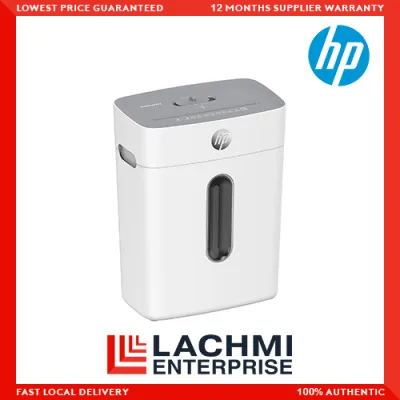
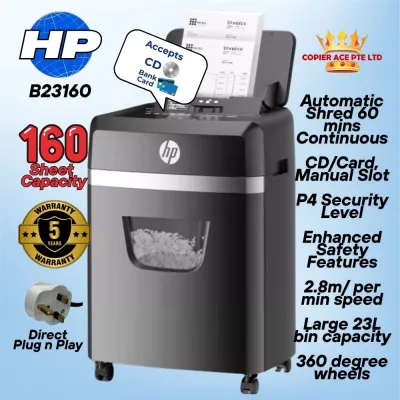
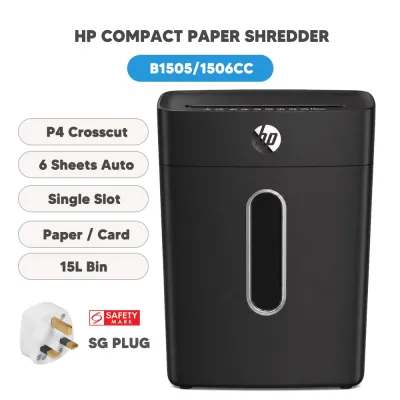
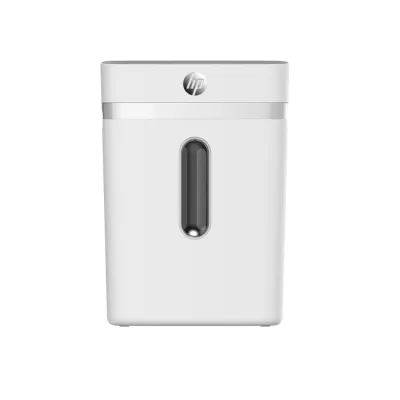
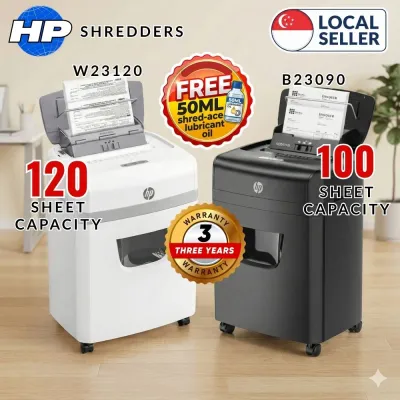
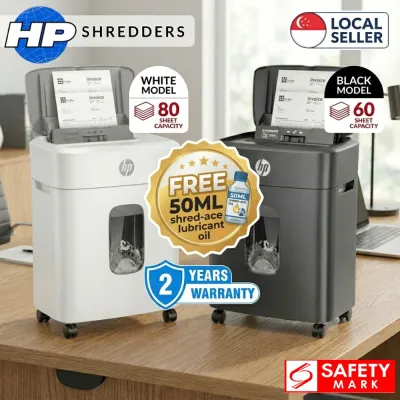
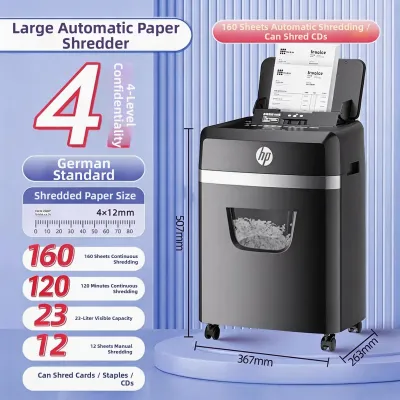
Prices are valid at publication and may change. Please refer to the product page for the latest price.
When comparing models on an ecommerce platform, you will often see peak HP and continuous (or rated) HP. Peak horsepower represents the absolute maximum power the motor can generate for a brief fraction of a second, typically during startup when the motor first draws electrical current. Continuous horsepower is the sustained power output the motor can safely maintain during normal, ongoing operation.
For a reliable assessment of a shredder’s true capabilities, always look for the continuous or rated HP on the manufacturer’s specification sheet. A high peak HP rating might look impressive on packaging, but it does not prevent the machine from stalling under a heavy, sustained load. The continuous power rating is what ensures the motor can work in tandem with the cutting cylinders to process paper smoothly.
How Motor Power Affects Shredding Capability and Daily Use
The direct relationship between motor power and shredding capability is most obvious when looking at sheet capacity. A motor with higher torque can easily drive the cutting shafts through multiple sheets of paper simultaneously, overcoming the cumulative resistance of the paper fibers. If a motor lacks sufficient power, attempting to shred a stack near the machine’s limit will cause the motor to strain, slow down, and eventually trigger an automatic jam-prevention shutdown.

Beyond sheet capacity, motor power determines the machine’s duty cycle—the amount of time a shredder can run continuously before the motor accumulates too much heat and requires a cooldown period. Lower-powered motors often heat up quickly under load, resulting in short run times of just two to five minutes, followed by a lengthy cooldown of thirty minutes or more. More robust motors with higher continuous HP ratings can dissipate heat more efficiently, allowing for longer run times that are essential for bulk shredding tasks.
A powerful motor cannot compensate for poorly designed cutting cylinders. The blades must be precisely aligned and made of hardened steel to distribute the motor’s force effectively. If the cutters are dull or constructed from soft alloys, even a high-horsepower motor will struggle, leading to frequent paper jams and premature wear on the internal drive gears.
Matching Shredder HP to Your Home or Office Needs
Selecting the right shredder motor power depends heavily on your typical daily volume and the specific materials you need to destroy. For light personal use or a home office where you only shred a few utility bills or bank statements a week, a low-horsepower model is usually perfectly adequate. These machines are designed for intermittent use, handling small batches of paper without taking up excessive space or drawing unnecessary power.
In contrast, a shared office or commercial environment demands a shredder with a much higher continuous HP rating. When multiple employees rely on a single machine to dispose of sensitive documents throughout the day, the shredder must support sustained runs and handle thick files without stalling. Additionally, processing denser materials like thick cardstock, laminated sheets, plastic credit cards, or compact discs requires the high torque that only a heavy-duty motor can provide.
Rather than trying to calculate the exact horsepower you need, use the manufacturer’s recommended sheet capacity per pass as your primary guide. If a machine is rated for 10 sheets per pass, the motor has been engineered to handle that specific load safely. To prolong the lifespan of any shredder, operate it at roughly 70% to 80% of its maximum rated sheet capacity during daily use.
Other Critical Specs to Evaluate Alongside HP
While motor power is vital, it should never be evaluated in isolation. The security level, defined by the international DIN 66399 standard (P-levels), is arguably more important for data protection. A high-horsepower strip-cut shredder might process paper quickly, but it only cuts pages into long strips (P-1 or P-2), which can be easily reassembled. If you handle highly confidential financial or personal data, look for a cross-cut (P-3 or P-4) or micro-cut (P-5 or higher) model, which turns paper into tiny, unreadable particles, even if these complex cuts require more motor effort.
Usability features also dictate convenience. Consider the throat width, which determines the size of the paper feed entry; a standard A4 throat is common, but wider throats are necessary for ledger paper. Bin capacity is another factor, as micro-cut particles pack down more densely than strip-cut pieces, reducing how often you need to empty the wastebasket. Look for built-in anti-jam features, such as automatic reverse sensors that detect when too much paper has been inserted and automatically back it out.
Finally, verify the electrical specifications of the shredder to ensure compatibility with your local power supply. In Singapore, standard household electricity is delivered at 230 volts and 50 hertz, utilizing a Type G three-pin plug. Importing a shredder designed for a different voltage system (such as 110V systems) without a proper transformer can permanently damage the motor, pose a fire hazard, or cause the machine to fail instantly.
Frequently Asked Questions (FAQ)
Is a higher HP shredder always better for home use?
Not necessarily. While a high-horsepower shredder offers excellent performance, it is often unnecessary and impractical for a typical household. High-HP machines tend to be significantly larger, heavier, and louder during operation, which may not suit a quiet home environment. They also represent a higher upfront financial investment. For domestic tasks, it is usually wiser to prioritize a compact physical footprint, low operating noise, and robust safety features—such as sensors that stop the blades if hands get too close—over raw motor power.
Can a low HP shredder handle staples and paper clips?
The ability to shred metal fasteners like staples and small paper clips is primarily determined by the hardness and design of the cutting cylinders, rather than the horsepower of the motor alone. Many modern light-duty shredders feature specially hardened steel cutters engineered to chew through standard staples without damage. However, you should never assume a machine can handle metal. Always check the manufacturer’s explicit product specifications; feeding metal into a shredder not rated for it can dull the blades, chip the cutting teeth, and void your warranty.

Community discussion
Share your experience or ask a question. Comments are reviewed before publication.