
For most primary and secondary school students, super glue 5800 is not a standard or necessary item for daily stationery lists. Due to its rapid bonding properties and potential safety hazards, schools generally prohibit instant adhesives for everyday classroom use. You should only consider purchasing it if your child’s secondary school Design and Technology (D&T) or advanced art syllabus explicitly requires it for specific non-porous materials, and even then, it should be used under strict supervision.
Preparing a school stationery list can be a balancing act between meeting academic requirements and ensuring classroom safety. While high-strength adhesives are incredibly useful for household repairs, they are rarely appropriate for a student’s pencil case. Understanding when a specialized adhesive like super glue 5800 is actually necessary—and when it poses an unnecessary risk—helps keep your child’s learning environment safe and productive.
Is Super Glue Actually Required for Your Child's Grade?
Primary school students primarily work with porous, lightweight materials such as construction paper, cardboard, felt, and thin craft sticks. For these everyday classroom activities, standard school adhesives are more than sufficient. These younger students do not require the intense, instant bonding power of a cyanoacrylate adhesive, which can cause accidental skin bonding or ruin school uniforms within seconds. Standard school glues also allow for easy cleanup from desks and hands, which is a frequent necessity in primary classrooms.
Products mentioned in this guide
![[SG Stock] 5800 Universal Super Glue Multipurpose Glue Electric Welding Glue Strong Contact Adhesive Suitable for All-materia](https://img.lazcdn.com/g/p/1615aade344023df53cba3b587bf5e85.jpg_400x400q80.jpg_.webp)
![[✅SG Ready Stock] 5800 Multi-Functional Electric Welding Glue - Strong Adhesion for Plastic Ceramic Wood and Metal](https://img.lazcdn.com/g/p/ddd14666fb0b68b306043042df339048.png_400x400q80.png_.webp)
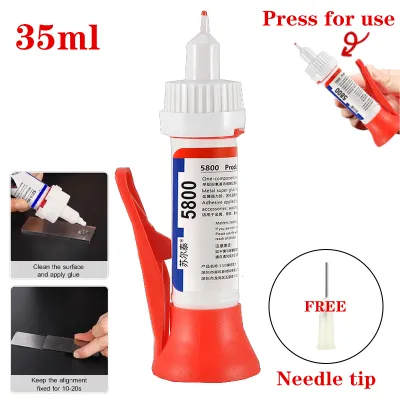
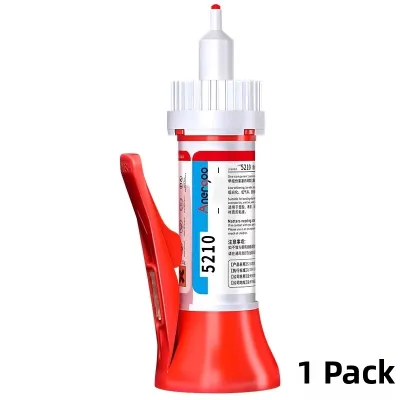
Prices are valid at publication and may change. Please refer to the product page for the latest price.
As students transition into secondary school, their coursework often becomes more complex, particularly in subjects like Design and Technology (D&T) or advanced visual arts. In these classes, students may work with non-porous materials such as acrylic sheets, hard plastics, metals, or dense hardwoods. Standard school glues cannot bond these surfaces effectively, which is where a high-strength adhesive like super glue 5800 might be considered.
Even in secondary school, however, instant adhesives are rarely a daily requirement. Teachers typically specify the exact tools and materials needed for a particular project brief rather than expecting students to carry super glue in their daily pencil cases. If a project requires a cyanoacrylate adhesive, the school often provides it in a controlled workshop environment under direct teacher supervision.
Before purchasing any high-strength adhesive, check the official stationery list provided by the school at the start of the academic year. If the list does not explicitly name super glue or a specific model like 5800, you should assume it is not required. Unnecessary high-strength adhesives in a school bag can lead to accidental spills, damaged school property, or painful skin contact during unsupervised moments.
Safety Checks and Handling Rules for Super Glue 5800
Super glue 5800 is a cyanoacrylate-based adhesive designed for rapid, high-strength bonding. This chemical formulation reacts almost instantly with moisture on surfaces, including human skin and eyes. Because it bonds skin in seconds, any accidental contact can cause immediate distress, skin tearing, or chemical burns if handled improperly.

Before allowing your child to use this adhesive, read the product packaging and safety data sheet carefully. Look for age restrictions, manufacturer warnings, and recommended protective equipment. Many industrial-strength adhesives are not rated for children and require specific safety gear, such as protective gloves and safety glasses, to prevent accidental exposure.
Proper ventilation is another critical safety factor when working with cyanoacrylate adhesives. The fumes from super glue 5800 can irritate the eyes, nose, and respiratory tract, especially in enclosed spaces like bedrooms or standard classrooms. If your child must use this adhesive for a school project, ensure they work in a well-ventilated area, preferably outdoors or near an open window with active airflow. Avoid using the adhesive near air conditioning intake vents, which can distribute the fumes throughout the entire home.
Establish a firm boundary regarding your child’s maturity and ability to follow safety protocols. If your child cannot reliably wear protective gear, maintain a clean workspace, or follow step-by-step instructions, do not permit them to use this product. In such cases, the risk of accidental injury far outweighs any project benefit, and you should seek safer alternatives or ask the teacher for an alternative assembly method.
Safer Glue Alternatives for Everyday School Projects
For the vast majority of school projects, safer and highly effective alternatives exist that do not carry the risks of instant adhesives. For paper, cardboard, and light crafting, a classic glue stick is the most practical choice. Glue sticks are easy to control, virtually mess-free, and washable, making them ideal for daily use in both primary and secondary classrooms.
When a stronger bond is needed for materials like wood, fabric, or thick cardboard, liquid PVA (polyvinyl acetate) white glue is an excellent option. PVA glue penetrates porous surfaces to create a strong, flexible bond as it dries. It is non-toxic, cleans up easily with water while wet, and dries clear, allowing students to achieve a neat finish on their projects without risking skin bonding.
For heavier craft projects or three-dimensional models, tacky glue or a low-temperature hot glue gun can serve as a middle-ground alternative. Tacky glue is thicker than standard white glue, offering a stronger initial hold that prevents pieces from sliding while drying. A low-temperature hot glue gun provides rapid bonding for wood and plastics, but it must still be used under adult supervision to prevent minor heat burns. These tools offer a practical compromise, delivering the necessary holding power for complex assemblies without the chemical hazards of instant adhesives.
The primary advantage of these traditional school glues is their slower drying time, which allows students to reposition materials and correct mistakes. Instant adhesives like super glue 5800 bond almost immediately, leaving no room for error. Using washable, non-toxic, and slow-drying formulations ensures that students can learn and experiment safely without the pressure of instant, permanent mistakes.
How to Verify School Requirements Before Buying
To avoid purchasing unnecessary or restricted items, always cross-reference your shopping list with the official school syllabus or project briefs. Schools in Singapore often provide detailed guidelines on what tools are permitted in the classroom. If an item like super glue 5800 is not explicitly listed, it is highly likely that the school prefers students to use safer, standard adhesives.
If you are unsure whether a specific project requires a high-strength adhesive, contact the subject teacher directly before making a purchase. Ask if the school provides the necessary adhesives in class or if students are expected to bring their own. Teachers can clarify whether a safer alternative is acceptable or if they have specific storage and handling rules for stronger glues.
When a high-strength adhesive is genuinely required for a home-based school project, plan for safe and supervised storage. Keep the adhesive in a secure location at home rather than allowing your child to carry it to school in their pencil case. This ensures that the product is only used under your direct supervision, minimizing the risk of accidents during the school commute or in unsupervised classroom settings. Once the project is completed, return the adhesive to its designated storage spot out of reach of younger siblings.
Frequently Asked Questions (FAQ)
Can primary school students bring super glue to class?
Primary school students should not bring super glue to class. Most primary schools have strict safety policies that prohibit students from carrying hazardous materials, including instant adhesives, sharp utility knives, and solvent-based chemicals. Because primary school crafts focus on paper and cardboard, standard non-toxic glue sticks and PVA glues are the only adhesives required and permitted in these classrooms.
What should I do if my child gets super glue 5800 on their skin?
If super glue 5800 contacts your child’s skin, do not try to pull or rip the bonded skin apart, as this can cause painful skin tears. Instead, soak the affected area in warm, soapy water as soon as possible to help soften the adhesive. Gently roll the skin surfaces against each other or use a blunt object, like the handle of a spoon, to slowly peel the bond apart. If the glue is near the eyes, mouth, or does not release with gentle washing, seek professional medical attention immediately.

Community discussion
Share your experience or ask a question. Comments are reviewed before publication.