
For beginners stepping into the world of hand embroidery, selecting the right thread weight can feel overwhelming. The simplest starting point is to use standard six-strand cotton embroidery floss, which allows you to easily adjust the thickness of your stitches by separating the strands. Alternatively, if you are working with regular sewing thread, a medium-weight thread such as a 40wt or 50wt cotton or polyester thread is highly manageable for fine outline work.
Choosing the correct thickness is essential because it directly impacts how smoothly your needle glides through the fabric. Using a thread that is too thick for your fabric can cause puckering, while a thread that is too thin might look sparse and fail to cover your design. By understanding how thread weights work and how they interact with different fabrics, you can set yourself up for a frustration-free stitching experience.
Understanding How Thread Weight Numbers Work
To navigate the sewing aisle without confusion, it helps to understand that thread numbering systems can be highly counterintuitive. In the standard weight (wt) system used for most sewing threads, the numbers have an inverse relationship with thickness. This means that a higher number indicates a thinner thread, while a lower number indicates a thicker thread. For example, a 50wt thread is significantly finer than a 30wt thread.
Products mentioned in this guide
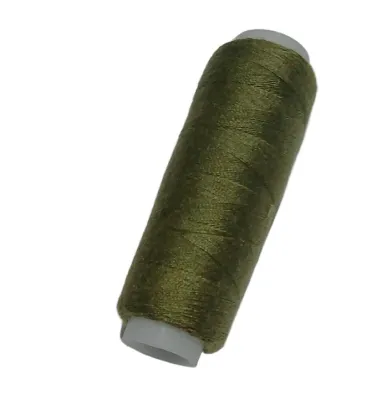
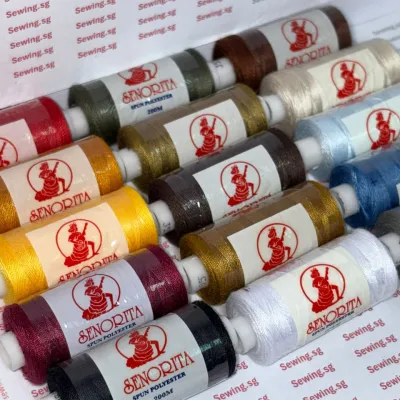
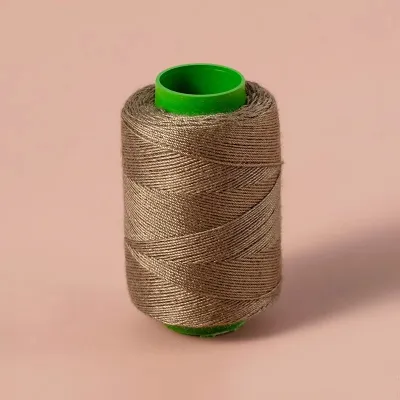
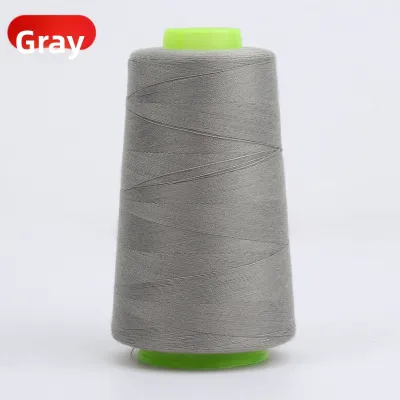
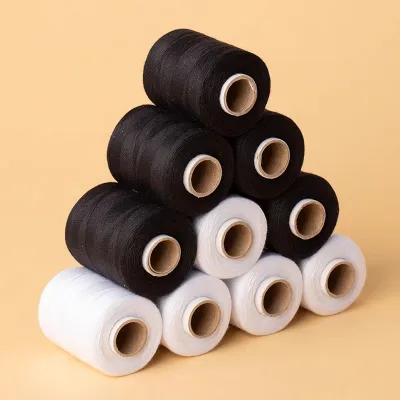
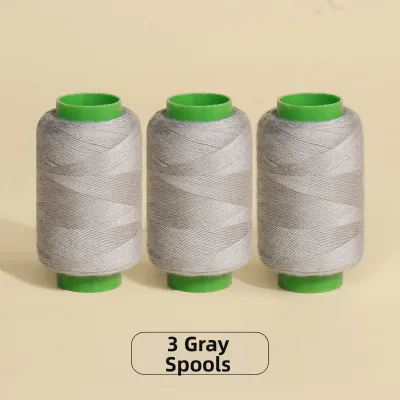
Prices are valid at publication and may change. Please refer to the product page for the latest price.
This numerical system differs completely from the strand-count system used for traditional embroidery floss. Embroidery floss is typically sold as a single, loosely twisted strand made up of six individual plies. Instead of buying different spools for different thicknesses, you simply peel away the exact number of strands you need for your project. Using a single strand creates delicate, hair-thin lines, while using all six strands produces thick, bold textures.
When reading thread labels, look closely at the formatting of the numbers. You might see a label marked “40/2” or “50/3,” where the first number represents the weight and the second number indicates the number of plies twisted together to make that thread. A simple mental model to remember is that standard utility sewing thread is usually 40wt or 50wt, which is thin and strong, whereas hand embroidery threads are categorized either by strand count or by specific sizes like pearl cotton, where lower numbers like size 5 are thicker than size 12.
Regular Sewing Thread vs. Embroidery Floss: What to Choose
When preparing for your first project, you might wonder if you can simply use the regular sewing thread already sitting in your household mending kit. While utility sewing thread can be used for embroidery, it behaves very differently from dedicated embroidery floss. Standard sewing thread is tightly twisted during manufacturing to give it high tensile strength, allowing it to hold seams together under the tension of a sewing machine. This tight twist gives it a functional, matte finish and a very thin profile.

In contrast, dedicated embroidery floss is loosely twisted to maximize its visual sheen and coverage. The loose fibers spread out slightly as they lay flat against the fabric, filling in shapes much more efficiently than sewing thread. If you attempt to fill a large shape using standard sewing thread, you will find that it requires significantly more stitches, often resulting in a stiff, dense patch of fabric that lacks the lustrous finish characteristic of traditional embroidery.
However, regular sewing thread is highly acceptable for specific embroidery applications. If your project involves intricate, fine outline stitching, delicate lettering, or subtle details that require a matte look, a high-quality 40wt or 50wt sewing thread is an excellent choice. For general decorative stitching, filling shapes, and learning classic stitches like the satin stitch or French knot, investing in dedicated embroidery floss will yield much more satisfying results.
Best Thread Types and Weights for Beginner Embroidery
For those brand new to the craft, stranded cotton embroidery floss is the most forgiving and versatile medium to learn with. Because you can split the six strands, a single skein offers a wide range of thickness options. Beginners usually find that working with two or three strands of cotton floss provides the perfect balance of visibility, ease of handling, and smooth passage through the fabric.
If you prefer not to split strands, pearl cotton (also known as coton perle) is an excellent alternative. Unlike stranded floss, pearl cotton is a non-divisible, highly twisted thread with a beautiful pearl-like sheen. It is categorized by numerical sizes, with size 5 (thick) and size 8 (medium) being the most popular for beginners. Because it does not split or fray easily, pearl cotton is incredibly easy to control and is perfect for practicing textured stitches like chain stitch or blanket stitch.
Before purchasing any thread, always check the label for key quality indicators. Look for terms like “colorfast” or “grand teint” to ensure the dye will not bleed when the finished piece is washed or exposed to moisture. Opting for 100% long-staple cotton ensures the thread is smooth and less prone to knotting, which keeps the stitching process enjoyable and ensures your hard work lasts for years.
Matching Thread Weight to Your Fabric and Needle
Achieving a professional finish requires balancing your thread weight, needle size, and fabric weave. A simple tactile check can help you verify if your combination is correct before you begin stitching. Thread your needle and pull it through a scrap piece of your fabric; the needle should slide through smoothly without requiring force, and the thread should follow easily without catching or bunching.
The eye of your needle must be carefully matched to your thread thickness. If the eye is too small, threading becomes a struggle, and the tight squeeze will scrape and weaken the thread fibers with every stitch. Conversely, if the needle eye is too large, it will punch permanent, unsightly holes in your fabric that the thread cannot fill. For two to three strands of embroidery floss, a size 7 or 8 embroidery needle (also called a crewel needle) is generally ideal.
Your fabric choice also dictates the thread weight you should use. Heavier threads, such as size 5 pearl cotton or all six strands of embroidery floss, require a fabric with a relatively loose, sturdy weave like linen, canvas, or Aida cloth. If you are working on a tightly woven fabric like cotton calico or lightweight linen, stick to finer threads like a 50wt sewing thread or one to two strands of floss to prevent the fabric from puckering and distorting.
Frequently Asked Questions (FAQ)
Is it okay to mix different thread weights in one embroidery project?
Yes, mixing different thread weights is a fantastic way to add visual interest, depth, and texture to your embroidery. For example, you can use a thicker thread like size 5 pearl cotton to create bold, raised outlines in the foreground, and a fine 50wt sewing thread to stitch delicate, subtle details in the background. When mixing weights, just remember that you may need to switch needle sizes and adjust your hand tension to keep the fabric flat and even.
Why does my embroidery thread keep fraying or breaking?
Thread fraying and breakage are usually caused by friction. If your needle eye is too small for the thread weight, it will constantly scrape the fibers as you pull them through the fabric, causing them to shred. To prevent this, ensure you are using a proper embroidery needle with a long eye, keep your working thread length under 45 centimeters to minimize wear, and avoid pulling the thread too tightly against the fabric.

Community discussion
Share your experience or ask a question. Comments are reviewed before publication.