
Selecting the right sewing needle is a critical step in ensuring clean, professional stitches and preventing damage to your fabric or sewing machine. The correct needle choice depends on two main factors: the thickness of the fabric, which dictates the needle size, and the structure of the fabric weave, which determines the needle point shape. By matching these characteristics to your material, you can avoid common sewing frustrations like skipped stitches, puckered seams, and broken threads.
Decoding Sewing Needle Size Numbers
When looking at a packet of sewing machine needles, you will almost always see two numbers separated by a slash, such as 70/10 or 90/14. This dual numbering system represents the European metric sizing alongside the American Singer sizing system. The first number (the metric size, ranging from 60 to 120) represents the shaft diameter in hundredths of a millimeter, while the second number (the American size, ranging from 8 to 19) is an arbitrary scale where lower numbers represent finer needles.
As a general rule, larger numbers indicate a thicker, stronger needle shaft designed to pierce heavy fabrics without bending. Conversely, smaller numbers indicate a very fine needle that leaves minimal holes in delicate materials. Choosing the correct size requires balancing the weight of your fabric with the thickness of your sewing thread, as the thread must fit comfortably within the needle’s eye and groove.
Products mentioned in this guide
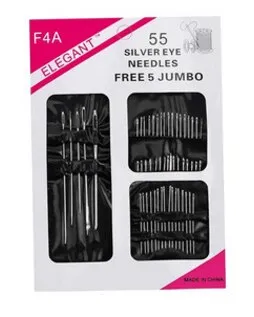
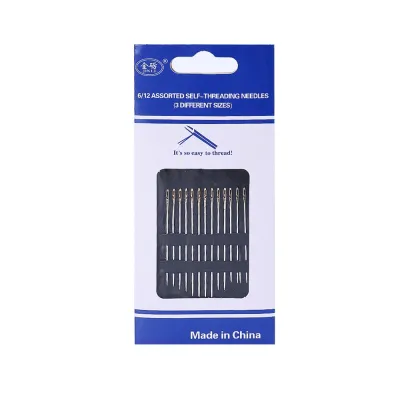
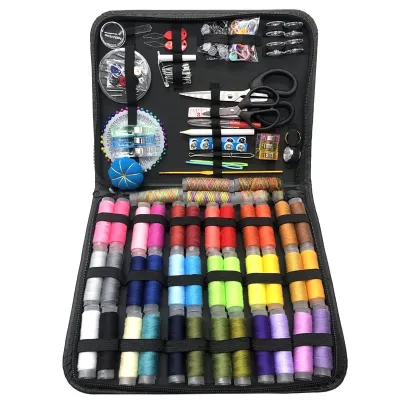
Prices are valid at publication and may change. Please refer to the product page for the latest price.
Before starting any project, it is highly recommended to perform a test stitch on a scrap piece of your project fabric. This simple check allows you to verify that the needle size is appropriate for the fabric weight and that the thread flows smoothly without shredding or bunching.
Understanding Sewing Needle Types and Point Shapes
Beyond size, the shape of the needle’s point determines how it interacts with the fibers of your fabric. Using the wrong point shape can cause permanent damage to the material, such as runs in knits or large, unsightly holes in tightly woven fabrics. Understanding the distinct roles of the primary needle types is essential for clean stitch formation.

Universal needles feature a slightly rounded point that offers a compromise between piercing and slipping between fibers. They are highly versatile and work well on most standard woven fabrics and some stable knits. However, because they are a hybrid design, they may not perform perfectly on highly specialized or delicate materials.
Ballpoint and Jersey needles are designed with a distinctly rounded tip that does not pierce fabric fibers. Instead, the rounded point slides between the loops of knit and stretch fabrics, preserving the integrity of the knit structure and preventing runs or ladders. Stretch needles are a variation of this type, featuring a specially designed scarf to prevent skipped stitches on highly elastic synthetic fabrics.
Sharp or Microtex needles have an extremely acute, narrow point designed to pierce tightly woven fabrics cleanly. This sharp tip is suitable for delicate silks, microfibers, and high-thread-count cottons, as it creates tiny, precise holes without snagging or pulling the threads.
Denim or Jeans needles feature a reinforced, thick shaft and a very sharp, sturdy point. This design provides the extra strength needed to penetrate multiple layers of heavy, densely woven fabrics like canvas, denim, and heavy twill without deflecting or breaking.
Always consult your sewing machine manual to confirm that the needle brand and system designation (such as 130/705 H) are fully compatible with your specific machine model.
Matching Sewing Needles to Specific Fabrics
Achieving a flawless seam requires a systematic approach to matching your needle to your fabric. The fundamental decision logic is straightforward: match the needle’s thickness to the weight of the fabric, and match the needle’s point shape to the fabric’s construction (woven versus knit).
Before sewing your main pieces, always test your chosen needle and thread combination on a double-layered scrap of the same fabric. This step allows you to observe the stitch quality, adjust the machine’s tension settings, and ensure the fabric feeds smoothly through the machine without puckering or slipping.
Factors such as the manufacturer’s needle labels, thread compatibility, and the machine’s feed dog mechanism will also influence your final choice. Taking a few minutes to verify these details beforehand prevents costly mistakes on your final garment or project.
Cotton and Silk (Light to Medium Wovens)
Delicate and lightweight woven fabrics like silk, chiffon, and lightweight cotton voile require a very fine needle to prevent visible punctures and snags. For these materials, a sharp or Microtex needle in size 60/8 or 70/10 is suitable, as the slender shaft and acute point slip through the fine weave without pulling the delicate threads.
For medium-weight woven fabrics, such as quilting cotton, linen, or poplin, a standard universal needle in size 80/12 is typically a suitable choice. At this size, the needle is strong enough to handle the fabric structure while ensuring that standard sewing thread passes smoothly through the needle eye without friction.
Denim and Heavy Canvas (Heavy Wovens)
Heavyweight, densely woven materials like denim, canvas, and heavy duck cloth demand a needle that can withstand intense resistance. For these projects, you should select a specialized denim needle in size 90/14 for medium-weight denim, or size 100/16 to 110/18 for thick denim seams and multiple layers of canvas.
Attempting to force a standard universal needle through thick seams can lead to immediate needle deflection, resulting in skipped stitches, uneven tension, or a broken needle. In worse cases, a bending needle can strike the needle plate, potentially damaging your machine’s timing mechanism and requiring professional repair.
Knits and Stretch Fabrics
Knit fabrics, including jersey, interlock, and spandex blends, require a needle that respects their looped structure. A ballpoint or stretch needle in size 70/10 for lightweight knits, or size 80/12 for medium-weight knits, is essential to prevent the needle from cutting the yarn fibers and causing small holes that eventually turn into runs.
When sewing highly elastic fabrics, observing how the machine feeds the material is critical. If you notice puckering or stretched, wavy seams, you may need to adjust your presser foot pressure, use a walking foot, or switch to a specialized stretch needle designed to handle highly elastic synthetic fibers.
Observable Signs You Are Using the Wrong Needle
Your sewing machine will often provide clear visual and auditory warnings when the needle is incorrect, damaged, or dull. Recognizing these signs early can save your fabric from ruin and protect your machine from internal damage.
The most common symptom of an incorrect needle is skipped stitches, which occur when the needle fails to form a loop with the bobbin thread. Other clear indicators include thread shredding or snapping, visible holes or snags left in the fabric path, and puckered seams that refuse to lie flat even after pressing.
You should also listen closely to the sound of your machine; an unusual popping, thumping, or clicking noise as the needle penetrates the fabric is a clear sign of a dull or bent needle. If you encounter any of these issues, stop sewing immediately, inspect the needle for physical damage or burrs, and replace it with a fresh needle of the correct size and type.
Frequently Asked Questions (FAQ)
How often should you change your sewing machine needle?
Sewing machine needles are consumable items that dull gradually due to friction against the fabric, thread, and the machine’s internal components. As a general guideline, a needle should be replaced after approximately 6 to 8 hours of active sewing time, or at the start of every major new project. You should also replace the needle immediately if you hear a popping sound as it pierces the fabric, notice skipped stitches, or suspect the needle has bent after striking a pin.
Can you use a universal needle for all fabric types?
No, a universal needle cannot be used successfully for all fabric types. While the universal needle is a convenient compromise design that works well on standard, medium-weight woven fabrics, it lacks the specialized characteristics needed for extreme fabric types. Using a universal needle on delicate knits can cause runs and skipped stitches, while attempting to sew heavy denim or canvas with it can lead to needle bending, breakage, and poor stitch quality.

Community discussion
Share your experience or ask a question. Comments are reviewed before publication.