
Choosing the right wall-mounted magnetic notice board for teaching with magnetic letters requires balancing magnetic pull, surface durability, and physical safety. While standard office whiteboards are designed primarily for writing and occasional display, educational boards must withstand constant physical contact, sliding plastic letters, and heavy daily use. Selecting an inadequate board can lead to frustrating lessons where letters slide out of place, or worse, a board that warps and degrades within a few months of use.
To create an effective learning environment, educators and parents must look beyond basic aesthetics. A reliable setup requires a surface that offers a strong, consistent magnetic hold across its entire area, a glare-free finish that remains legible under bright lights, and a mounting system secure enough to handle the physical interaction of young learners. Understanding these technical specifications ensures your investment supports active, hands-on phonics and spelling lessons for years to come.
Core Selection Criteria for Educational Magnetic Boards
Standard office whiteboards and educational magnetic boards may look identical on a retail shelf, but their internal construction differs significantly. Most budget-friendly office boards utilize a thin sheet of painted tin or steel laminated over a corrugated cardboard core. While lightweight and easy to hang, these boards lack the structural integrity required for educational settings. Under the pressure of children pressing down on magnetic letters, the cardboard core can easily dent, creating uneven pockets where magnets lose contact with the metal backing.
Products mentioned in this guide
![[SG Stock] Frame Cork Board Message Board Photo Wall Background Board Home Decoration](https://img.lazcdn.com/g/p/c0d5811626a3aa6dc7f7a3321ae870de.jpg_400x400q80.jpg_.webp)
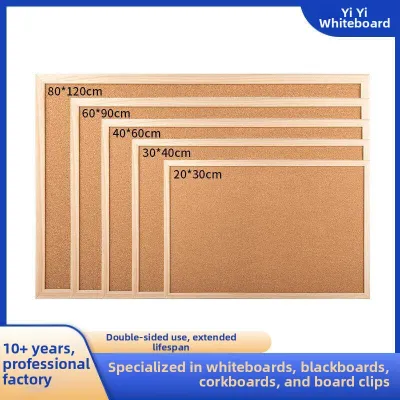
Prices are valid at publication and may change. Please refer to the product page for the latest price.
In contrast, high-quality educational boards feature a robust steel core backed by high-density fiberboard (HDF) or moisture-resistant plywood. This solid backing prevents warping and ensures the board remains perfectly flat, which is critical for maintaining a uniform magnetic field. When letters are moved across a flat, rigid surface, they maintain full surface contact, preventing them from slipping or rotating during a demonstration.
Spatial planning is another vital consideration when selecting a notice board wall setup. The board must be large enough to accommodate multiple words, sentences, or teaching aids simultaneously, without crowding the workspace. For a small home learning corner in a typical Singapore HDB flat, a compact 60cm x 90cm board provides ample space for individual instruction. For tuition centres or preschool classrooms, a larger 120cm x 180cm board is recommended, ensuring that students sitting at the back of the room can clearly distinguish individual letter shapes and color-coded vowels.
Frame durability and edge safety should never be overlooked, especially in environments with young children. Aluminum frames are the industry standard for their strength-to-weight ratio, but they must be fitted with rounded plastic corner caps to eliminate sharp edges. If you prefer a wooden frame for a warmer aesthetic, ensure the wood is fully sealed and treated to withstand local humidity, preventing the frame from splintering or warping over time.
Evaluating Magnetic Hold and Surface Quality
To understand why some magnetic letters cling tightly to a board while others slide to the bottom, you must look at the board’s material composition. Magnetic receptivity depends entirely on the thickness and quality of the ferrous metal layer beneath the writing surface. The most reliable option for educational use is a porcelain-on-steel surface, also known as ceramic steel. In these boards, a layer of ceramic glass is fused to a thick steel sheet at extremely high temperatures, resulting in a highly magnetic, scratch-resistant surface that does not wear down over time.

Another common option is painted steel, which is more budget-friendly but requires careful evaluation. Painted steel boards use a thinner metal sheet coated with a polyester or acrylic finish. While these boards offer decent magnetic hold initially, the painted surface is susceptible to scratching from the hard plastic edges of magnetic letters. Once the paint layer is scratched, moisture can penetrate the steel beneath, leading to rust and a gradual loss of magnetic efficiency.
Surface coatings also play a major role in classroom visibility and ease of maintenance. Bright fluorescent classroom lights can create harsh glare on high-gloss whiteboards, making it difficult for students to see letters clearly from certain angles. Opting for a semi-matte or low-glare finish improves visibility and reduces eye strain. Furthermore, the surface must resist ghosting—the permanent staining left behind by dry-erase markers. Porcelain surfaces are naturally non-porous and resist ghosting entirely, whereas cheaper painted surfaces absorb ink over time and require frequent deep cleaning.
Before purchasing multiple boards for a school or learning centre, you can perform a few simple, observable tests to verify magnetic strength. The easiest method is the paper-slip test: place a standard plastic magnetic letter on the board over a single sheet of copy paper. If the letter slides down or spins, the steel core is too thin to provide a reliable hold for educational activities. You should also slide a letter quickly across the board; it should move smoothly without losing attraction or stuttering along the surface.
Sizing, Mounting, and Spatial Planning
Calculating the correct board size involves assessing the physical dimensions of your teaching materials. Standard educational magnetic letters typically range from 3cm to 5cm in height. To display a simple three-letter word clearly, you need at least 15cm of horizontal space, allowing for proper spacing between letters. If you plan to display full sentences, build word families, or combine letters with flashcards, a board measuring at least 90cm x 120cm is necessary to prevent the display from feeling cluttered.
Mounting methods must be chosen based on the weight of the board and the construction of your walls. Heavy-duty boards with steel cores and HDF backings can weigh anywhere from 5kg to over 15kg, requiring secure installation. Concealed corner screws, which mount directly through the plastic corner caps into the wall, offer a clean look and prevent the board from shifting when children write on or touch it. Alternatively, Z-clips or L-brackets provide a highly secure, semi-permanent mounting system suitable for heavy commercial-grade boards.
In Singapore’s humid tropical climate, relying on adhesive mounting strips for heavy educational boards is highly discouraged. The constant moisture in the air degrades adhesive bonds over time, creating a risk that the board could suddenly fall from the wall. For lightweight, small-format boards used in temporary rental spaces, adhesive hooks may seem convenient, but mechanical fasteners like screws and wall plugs remain the only safe option for permanent wall installations.
Height placement is critical for ensuring both teacher comfort and student accessibility. For teacher-led instruction where students remain seated, the bottom of the board should align with the teacher’s waist height, roughly 90cm from the floor. If the board is intended for interactive student use in a preschool or primary school setting, the bottom of the board should be mounted much lower, around 50cm to 60cm from the floor. This allows young learners to reach and manipulate the letters comfortably without straining or standing on chairs.
Building a Conditional Shortlist for Purchase
When sourcing a wall-mounted magnetic notice board from online marketplaces or local stationery suppliers, creating a structured comparison framework helps you avoid low-quality products. Rather than relying on vague marketing terms, focus on verifiable technical specifications. The table below outlines the key differences between common board types to help you match the right material to your specific educational needs.
| Board Material | Core Type | Magnetic Strength | Scratch Resistance | Best Suited For |
|---|---|---|---|---|
| Porcelain-on-Steel | High-Density Fiberboard | Excellent (Strongest hold) | Outstanding (Highly scratch-resistant) | Daily classroom use, heavy letter manipulation |
| Painted Steel | Corrugated Cardboard or MDF | Moderate to Good | Moderate (Prone to scratching over time) | Home learning spaces, light tutoring sessions |
| Magnetic Glass | Tempered Glass with Steel Back | Weak for standard letters | Excellent | Modern offices, adult training rooms (requires rare-earth magnets) |
Be cautious of product descriptions that use ambiguous phrases like “highly magnetic” or “super strong” without specifying the actual backing material. If a listing does not explicitly state that the board has a steel core or a porcelain surface, it is highly likely a low-cost painted tin board over cardboard. Additionally, check the shipping weight of the product; a board that is unusually light for its size often indicates a lack of solid backing material, making it prone to warping in humid conditions.
Finally, review the return policies and warranty terms offered by the supplier, especially when making bulk purchases for an institution. A reputable manufacturer should offer a warranty against surface staining, ghosting, and delamination (the peeling of the writing surface from the backing core). For heavy-use educational environments, investing in a board with a multi-year surface warranty ensures you will not have to replace the unit prematurely due to surface degradation.
Installation Safety and Ongoing Maintenance
Because most residential and commercial walls in Singapore are constructed from solid concrete or brick, installing a heavy wall-mounted board requires proper tools and techniques. Standard drywall screws will not hold in concrete; instead, you must use a rotary hammer drill equipped with a masonry drill bit to create holes for plastic wall plugs (anchors). Once the wall plugs are inserted, heavy-duty screws can be driven in to secure the mounting brackets or corner mounts firmly to the wall.
Before drilling, always use a digital stud finder or wall scanner to check for hidden electrical conduits or water pipes, especially if mounting the board near a light switch or adjacent to a bathroom. If you are mounting the board onto a drywall partition in a modern office or commercial unit, you must locate the vertical timber or metal studs and secure the mounting brackets directly into them. Relying solely on plastic drywall anchors in hollow plasterboard is unsafe for heavy educational boards that will experience constant pulling forces from students.
Maintaining the board’s surface is essential for preserving both its visual clarity and its magnetic receptivity. Over time, dust, skin oils, and dry-erase marker residue can build up on the surface, creating a microscopic barrier that reduces the grip of magnetic letters. Clean the board at least once a week using a soft microfiber cloth and a dedicated whiteboard cleaning spray. Avoid using abrasive sponges, window cleaners, or household scouring powders, as these will strip away the protective topcoat and ruin the surface.
If you notice any signs of structural instability during or after installation, stop using the board immediately. Signs of concern include loose screws, a gap developing between the board frame and the wall, or the board bowing outward in the center. In such cases, remove the board from the wall and consult a professional handyman or the manufacturer to ensure the mounting hardware is appropriate for your specific wall type.
Frequently Asked Questions (FAQ)
Can I use standard refrigerator magnets on a wall-mounted notice board?
Yes, standard refrigerator magnets can be used on most steel-backed wall-mounted notice boards. However, refrigerator magnets typically utilize thick ceramic or strong neodymium magnets, which have a much stronger pull than the thin, flexible rubber magnets found on the back of educational letters. While a refrigerator magnet will stick easily to almost any magnetic board, lightweight educational letters require a high-quality steel core to prevent them from sliding down.
How do I prevent magnetic letters from sliding down the board?
If your magnetic letters are sliding down the board, start by cleaning both the board surface and the black magnetic backing of the letters with a damp microfiber cloth to remove dust and oily residues. If the sliding persists, the board’s steel core may be too thin, or the magnets on the letters may be too weak. You can resolve this by applying small pieces of self-adhesive magnetic tape to the back of the letters to increase their surface contact and magnetic grip.
Are glass magnetic boards suitable for teaching with magnetic letters?
Glass magnetic boards are generally not suitable for teaching with standard educational magnetic letters. Because tempered glass is relatively thick, it creates a significant physical gap between the magnet and the steel backing plate behind the glass. Standard plastic letters with flexible rubber magnets do not have enough magnetic strength to bridge this gap and will slide off. To use a glass board, you would need to purchase specialized letters fitted with powerful rare-earth (neodymium) magnets, which are more expensive and can pose safety hazards for young children if they become detached.

Community discussion
Share your experience or ask a question. Comments are reviewed before publication.