
Finding the right white envelope for your daily mailing needs in Singapore involves balancing paper quality, adhesive reliability, and cost-effectiveness. Whether you are running a home business, managing corporate correspondence in the Central Business District, or sending personal invitations, the envelope is the first physical touchpoint your recipient encounters. A poorly chosen envelope can tear in transit, jam your office printer, or expose sensitive financial details through thin paper. By understanding the key technical specifications and knowing how to evaluate the brands available in local retail and wholesale markets, you can secure reliable stationery that protects your documents and presents a professional image.
Key Specifications to Check When Buying White Envelopes
When browsing the stationery aisles or ordering from office suppliers, the technical specifications printed on the packaging are your best guide to quality. The most critical factor for privacy and durability is paper weight, measured in grams per square meter (GSM). Standard utility envelopes typically range from 70 GSM to 80 GSM. While 70 GSM envelopes are highly economical for high-volume, non-sensitive mailings, they are often translucent and prone to tearing under mechanical sorting. Opting for 80 GSM provides a reliable baseline for everyday business letters, offering a good balance of strength and flexibility. For confidential documents, legal contracts, or premium correspondence, look for 100 GSM to 120 GSM envelopes, which provide excellent opacity and a substantial, high-quality feel.
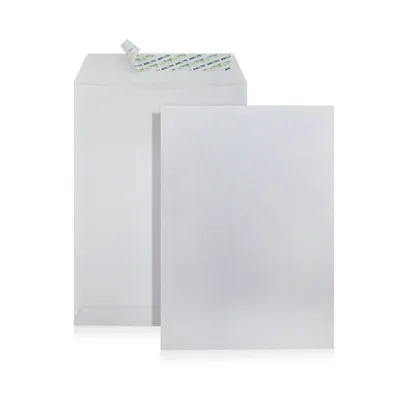
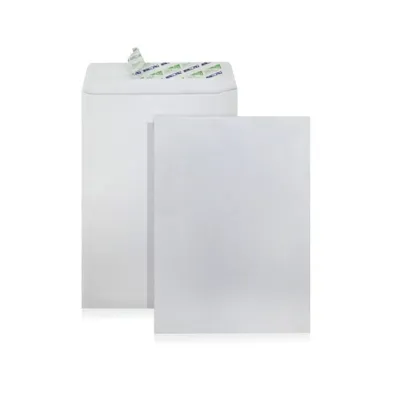
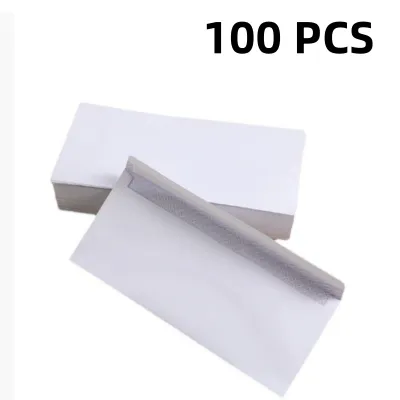
The seal mechanism is another vital consideration, especially given Singapore’s tropical climate. Gummed envelopes require moisture to activate the adhesive. While they are highly cost-effective and ideal for automated inserting machines used in large mailrooms, they are highly sensitive to humidity. In Singapore’s high relative humidity, stored gummed envelopes can prematurely stick together inside the box, rendering entire batches useless. Self-seal envelopes, also known as peel-and-seal, feature a protective paper strip over a strong adhesive layer. This strip prevents exposure to air and moisture, significantly extending the shelf life of the envelopes in humid storage conditions. Another variant is the pressure-sensitive self-seal (without a strip), which uses two latex surfaces that bond when pressed together; however, these tend to have the shortest shelf life as the latex degrades over time.
Products mentioned in this guide
Prices are valid at publication and may change. Please refer to the product page for the latest price.
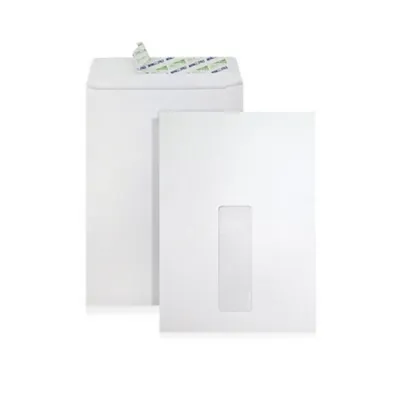
You must also choose between plain and windowed designs based on your mailing workflow. Window envelopes feature a transparent film cut-out that reveals the recipient’s address printed directly on the enclosed document. This is highly efficient for automated billing, invoices, and statements, as it eliminates the need to print separate address labels. When selecting window envelopes, ensure the window film is securely bonded to the paper edge to prevent snagging in printer rollers. Plain envelopes, on the other hand, offer a clean, uninterrupted surface ideal for hand-written addresses, printed labels, or custom logo stamps, making them the preferred choice for formal announcements and personal letters.
Finally, inspect the edge finishing and cut quality of the envelopes. High-quality manufacturing processes produce clean, sharp edges without paper burrs or loose fibers. If you plan to run envelopes through a laser or inkjet printer, clean edges are essential to prevent paper jams and misfeeds. Look for envelopes with diagonal seams or side seams that lie completely flat, as uneven seams can cause the envelope to feed crookedly or wrinkle under the heat of a printer’s fuser unit.
How to Choose the Right Envelope Brand for Your Mailing Needs
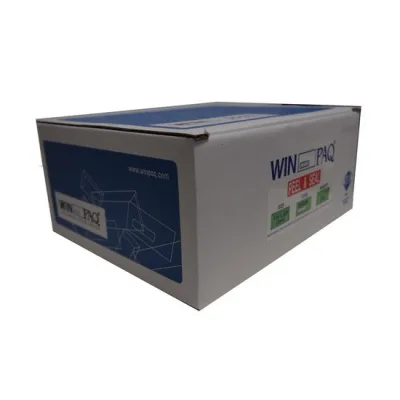
Navigating the variety of envelope brands in Singapore requires matching the brand category to your specific volume and quality requirements. High-volume office and wholesale brands focus primarily on cost-efficiency and standardization. These brands are typically sold in bulk boxes of 500 or 1,000 pieces and are designed to meet standard postal dimensions precisely. When evaluating wholesale brands, prioritize those that offer consistent paper thickness and reliable peel-and-seal strips. Because these envelopes are often stored in large quantities in office supply closets, choosing brands that package their products in sturdy, moisture-resistant boxes will help protect the adhesive from Singapore’s humid air.

For formal correspondence, executive mail, or special events, premium stationery brands are worth the investment. These brands focus on aesthetic appeal and tactile quality, often utilizing paper with a higher GSM, ultra-smooth finishes, or elegant textures like laid or wove patterns. Premium white envelopes often feature a blue or grey security tint printed on the inside. This interior pattern prevents anyone from reading the contents of the envelope when held up to a bright light, providing an extra layer of privacy for sensitive financial or personal information. While these envelopes carry a higher unit cost, their superior presentation and security features make them ideal for legal firms, financial institutions, and high-end corporate communications.
Sustainability is increasingly important for modern businesses and individuals, leading to a growing demand for eco-friendly envelope brands. When searching for sustainable options, look for brands that carry recognized environmental certifications, such as the Forest Stewardship Council (FSC) or the Programme for the Endorsement of Forest Certification (PEFC). These labels guarantee that the paper fibers are sourced from responsibly managed forests. Additionally, some brands offer envelopes made from 100% recycled post-consumer waste. When choosing recycled white envelopes, verify that the paper maintains a high brightness level and smooth texture, as some lower-quality recycled papers can have a grayish tint or visible flecks that may affect professional presentation or printer performance.
Evaluating brand consistency is crucial before committing to a long-term supplier. A reliable brand should maintain uniform quality across different production batches. When testing a new brand, check that the dimensions are exact, the window placement is identical across multiple envelopes, and the adhesive strength remains consistent from the first envelope in the box to the last. Inconsistent gluing can lead to envelopes popping open in transit, while minor variations in size can cause frequent printer jams.
Standard Envelope Sizes and Their Best Uses
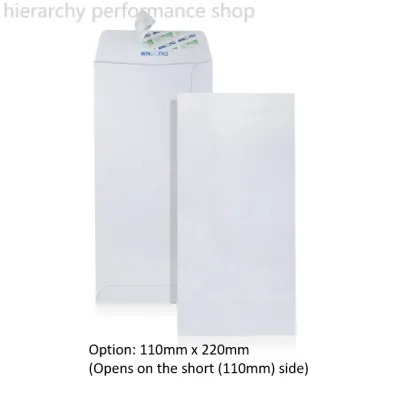
Selecting the correct envelope size is essential to ensure your documents fit perfectly without unnecessary folding, which can look unprofessional and increase postage costs. The most common size for everyday business mailing is the DL envelope, measuring 110mm by 220mm. This size is specifically designed to accommodate a standard A4 sheet of paper folded horizontally into three equal parts. DL envelopes are the standard choice for business letters, invoices, and marketing flyers, fitting easily into standard letterboxes across Singapore.
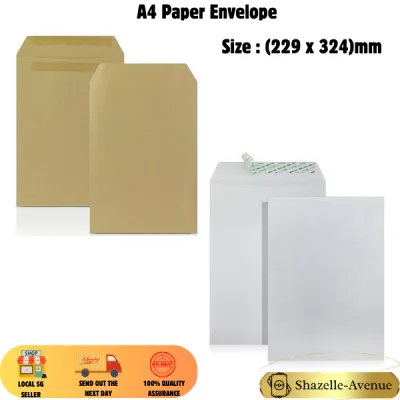
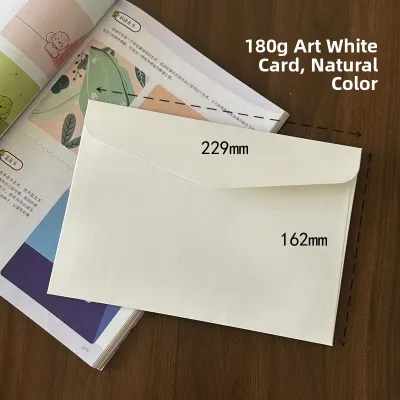
For larger documents that cannot be folded multiple times, C5 and C4 envelopes are the industry standards. A C5 envelope measures 162mm by 229mm and is designed to hold an A5 document, or an A4 sheet folded once in half. This size is commonly used for greeting cards, detailed brochures, and multi-page letters. The C4 envelope, measuring 229mm by 324mm, is sized to hold an unfolded A4 sheet of paper flat. C4 envelopes are indispensable for mailing official certificates, legal contracts, manuscripts, and photos, ensuring they arrive without any creases or folds.
When purchasing envelopes, always check the exact millimeter dimensions printed on the packaging rather than relying solely on the generic size name. Minor dimension tolerances can exist between different manufacturers. If you are using automated envelope feeders or printing directly onto the envelopes using your office printer’s bypass tray, even a two-millimeter discrepancy can cause feeding errors or misaligned text. Ensuring your envelopes match your printer’s software settings precisely will save time and minimize paper waste.
Where to Source Envelopes and Verify Quality Before Bulk Buying
In Singapore, you have several reliable channels for sourcing white envelopes, depending on your volume requirements. For small-scale personal use or immediate office needs, retail stationery stores and neighborhood bookshops are highly convenient. Purchasing a single pack of 25 or 50 envelopes allows you to conduct a physical quality check before investing in larger quantities. This hands-on trial lets you feel the paper weight, test the strength of the adhesive seal, and run a few test prints through your specific printer model to ensure there are no compatibility issues.
For businesses and high-volume users, B2B office suppliers and online marketplaces offer significant cost savings through bulk purchasing. When sourcing online, compare the unit prices in S$ and look closely at customer reviews and seller fulfillment ratings. Many local distributors offer free delivery within Singapore for orders above a certain threshold, which can add substantial value. When ordering bulk boxes of 500 or more, it is wise to request a sample or start with a minimum order to verify that the product matches the advertised specifications.
Once your bulk order arrives, perform a quick unboxing check to ensure quality consistency. Pull a few envelopes from the front, middle, and back of the box. Inspect the seams to ensure they are glued flat without any excess adhesive leaking onto adjacent envelopes. Test the peel-and-seal strip on a few samples to confirm that the glue bonds securely to the paper and cannot be opened without tearing, which is a key security feature. For window envelopes, verify that the plastic film is perfectly flat and free of wrinkles that could distort the address or cause printer jams.
Frequently Asked Questions (FAQ)
How can I prevent white envelopes from wrinkling or tearing during transit?
To prevent wrinkling or tearing, match the envelope’s paper weight to the thickness of the contents. For multi-page documents or heavy cardstock, use a minimum of 100 GSM envelopes to provide structural support. Ensure the contents fit snugly without overstuffing, as bulging envelopes are highly susceptible to catching and tearing in automated postal sorting machines. When sealing, press firmly along the entire length of the adhesive strip to ensure a complete, secure bond that prevents edges from lifting during transit.
Do self-seal envelopes expire or lose their stickiness over time?
Yes, self-seal envelopes have a limited shelf life because the adhesive can dry out or degrade over time. Typically, peel-and-seal envelopes with a protective paper strip retain their stickiness for one to two years when stored correctly. To maximize their lifespan in Singapore’s warm and humid climate, store your envelopes in a cool, dry place away from direct sunlight and fluctuating temperatures. Keep them sealed inside their original packaging or a plastic container to minimize exposure to ambient humidity, which can degrade the adhesive properties prematurely.

Community discussion
Share your experience or ask a question. Comments are reviewed before publication.