
Sourcing a premium envelope in Singapore for business correspondence, wedding invitations, or formal events requires balancing tactile elegance with functional reliability. The right envelope does more than contain a document; it establishes the tone of your communication before the recipient even opens it. In Singapore’s professional landscape, where first impressions are critical, selecting high-grade stationery involves evaluating paper weight, texture, and construction. While specific brand availability can fluctuate among local distributors, focusing on established paper mill standards and physical verification methods ensures your mailings consistently project sophistication and prestige.
Key Criteria for Evaluating Premium Envelopes
To identify a genuinely premium envelope, you must look beyond basic aesthetic appeal and evaluate the physical properties of the paper. The foundation of any high-quality envelope is its paper composition and weight, typically measured in grams per square meter (GSM). Standard office envelopes usually range from 80 to 100 GSM, which often feels flimsy and allows text to show through. For formal or professional use, look for envelopes crafted from paper weights between 120 GSM and 160 GSM. This range provides a substantial, rigid feel without adding excessive weight that could significantly increase local postage costs. Additionally, consider the fiber composition; envelopes containing cotton fibers (typically 25% to 100% cotton) offer an incredibly soft, tactile texture and superior archival quality, resisting yellowing and degradation over time.
Opacity is another critical hallmark of premium stationery. When sending sensitive business documents or highly personal invitations, you must ensure the contents remain completely confidential. Premium envelopes achieve high opacity either through the natural density of heavy-weight paper or by incorporating a dedicated interior lining. Many professional options feature a subtle, tinted security pattern printed on the inside, while formal social envelopes often utilize elegant tissue or foil linings. These linings not only prevent text show-through under bright light but also add a satisfying weight and a pleasant rustle when the envelope is handled.
Products mentioned in this guide
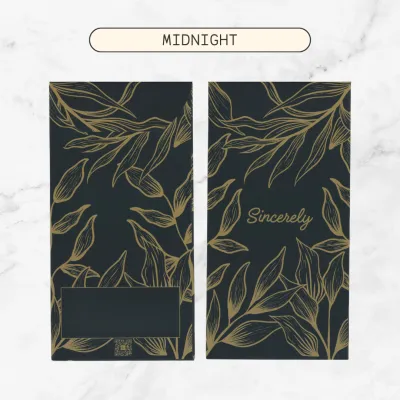
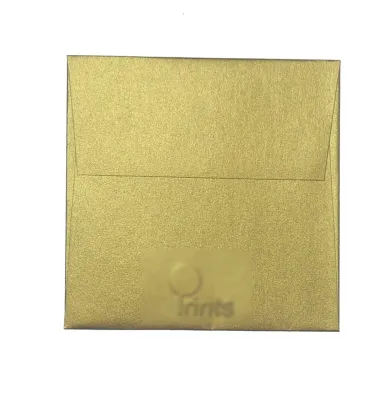
Prices are valid at publication and may change. Please refer to the product page for the latest price.
The structural integrity of the envelope relies heavily on its construction and seams. Inspect the edge finishing and flap precision closely. High-end envelopes feature clean, sharp folds and perfectly aligned seams without any visible adhesive residue or puckering. The two primary seam styles are side seams and diagonal seams. Side seams provide a clean, flat back panel that is ideal for printing corporate logos or return addresses, whereas diagonal seams offer a classic, traditional look often preferred for formal invitations. Ensure the adhesive on the flap is applied evenly and extends close to the edges to prevent the corners from lifting during transit through the postal system.
Matching Envelope Styles to Formal Use Cases
Selecting the ideal premium envelope requires matching its design characteristics to the specific context of your communication. For corporate and professional correspondence, the priority is clean lines, standard business sizes, and subtle textures that convey authority and attention to detail. Standard sizes such as DL (which fits an A4 sheet folded into thirds) or C5 (for A5 sheets or folded A4 sheets) are the industry standards in Singapore. Opt for crisp white, off-white, or light grey tones with a smooth, vellum, or subtle laid finish. A laid finish, characterized by fine horizontal and vertical lines pressed into the paper during manufacturing, offers a classic, tactile feel that pairs exceptionally well with fountain pen ink and high-quality letterheads.

For weddings, galas, and milestone social events, you can explore more expressive and decorative elements. These invitations often benefit from heavier paper weights, unique flap shapes—such as deep, pointed executive flaps—and specialized finishes. Deckled edges, which feature a torn, feathered look, lend an artisanal, handmade quality to wedding invitations. If you plan to use wax seals, ensure the envelope paper is sturdy enough to support the weight of the hot wax without warping. Additionally, verify that the paper surface is compatible with calligraphy inks; highly textured or heavily coated papers can cause ink to feather or pool, so a smooth cotton or matte finish is often the safest choice for hand-scribed addresses.
Color and finish considerations also play a major role in both readability and postal compliance. While rich, dark hues like navy, forest green, or burgundy look incredibly luxurious, they present practical challenges. Standard black ink will not be visible on dark surfaces, requiring you to use metallic gel pens, opaque white calligraphy ink, or printed white address labels. Furthermore, highly reflective metallic or pearlescent finishes can sometimes interfere with the automated optical character readers used by postal sorting machines. If you choose these striking finishes, be prepared for the possibility of manual sorting, which can occasionally extend delivery times within Singapore and international destinations.
Where to Source Premium Envelopes in Singapore
Procuring premium envelopes in Singapore involves navigating a mix of specialty paper merchants, boutique stationery shops, and custom printing studios. For those who wish to select from renowned international paper mills—such as Conqueror, Fedrigoni, or G.F Smith—specialty paper merchants are the most reliable starting point. These distributors often maintain showrooms in central business districts or industrial estates, where you can view comprehensive swatch books. While some merchants primarily cater to commercial printers and corporate clients with high minimum order quantities, many offer retail packs or are willing to sell smaller quantities to individuals planning formal events.
If you require a highly customized solution, partnering with local custom printing and invitation studios is an excellent path. These studios do not just sell blank envelopes; they provide integrated design services, bespoke sizing, and specialized printing techniques like hot foil stamping, letterpress, and embossing. Working with a local studio allows you to coordinate your envelopes perfectly with your invitation suites or corporate stationery. They can also source rare paper stocks and handle the precise alignment of custom liners, saving you the time and effort of manual assembly.
For specific international brands that may not have a prominent retail presence in Singapore, ordering directly from overseas manufacturers or authorized regional distributors is a viable alternative. When taking this route, it is crucial to plan well in advance to account for international shipping times and potential customs delays. Always verify if the seller provides protective packaging, as premium envelopes can easily suffer bent corners or moisture damage during long-transit shipping. Additionally, keep in mind that importing goods into Singapore may incur local taxes and import duties, which should be factored into your overall stationery budget.
What to Check Before Placing a Bulk or Custom Order
Before committing to a large purchase of premium envelopes, running a series of practical checks will save you from costly mistakes and production delays. First, verify printer compatibility if you plan to address or print logos on the envelopes in-house. Heavy-weight papers (above 120 GSM) and highly textured surfaces (such as linen, laid, or hammer-finish) can behave unpredictably in standard office laser or inkjet printers. Laser printers rely on heat to fuse toner to the paper, which can sometimes cause the pre-applied envelope adhesive to melt or the paper to warp. Inkjet printers, on the other hand, may struggle with slow drying times on coated or metallic papers, leading to smudging. Always check your printer’s manual for maximum paper weight specifications and run a test print with a single envelope before initiating a bulk run.
Requesting physical samples or dummy packs is an indispensable step in the procurement process. Photos on a screen cannot accurately convey the true color, texture, or weight of a premium envelope. Obtaining a physical sample allows you to perform hands-on testing with your chosen writing instruments. Test your fountain pens, calligraphy nibs, or gel pens directly on the paper to observe the drying speed, smoothness, and bleed resistance. If you plan to use a wax seal, apply a test seal to verify that the wax adheres securely to the paper fibers without peeling off too easily or causing the paper to tear.
Finally, familiarize yourself with local and international postage and mailing regulations. SingPost has specific guidelines regarding envelope dimensions, weight, and color. Non-standard sizes, square envelopes, or exceptionally thick and rigid mailers often fall outside the standard postage rates, potentially increasing your mailing costs to S$0.70 or more per piece. Dark-colored envelopes must have highly legible, contrasting address labels or ink to ensure automated sorting machines can read them. If your envelopes feature delicate embellishments like wax seals, ribbons, or string closures, they cannot pass through standard sorting rollers. These items must be hand-canceled and processed manually, which typically incurs higher postage fees and requires a visit to a local post office service counter.
Frequently Asked Questions (FAQ)
Can I use premium textured envelopes in standard office printers?
Standard office printers are generally designed for smooth, medium-weight papers, meaning textured premium envelopes can present mechanical challenges. The deep ridges of laid or linen textures can prevent printer toner from adhering evenly, resulting in patchy or faded text. Additionally, heavy-weight envelopes (above 120 GSM) may fail to feed smoothly through standard paper trays, leading to frequent paper jams or bent corners. To minimize these risks, check your printer’s specifications for maximum media weight and utilize the manual feed tray, which offers a straighter paper path. Always run a trial print with a single envelope to verify that the ink dries quickly without smudging and that the printer’s heat does not activate the flap’s adhesive.
What is the difference between gummed, peel-and-seal, and clasp closures?
The choice of envelope closure affects both the ease of assembly and the overall formality of your mail. Gummed closures feature a strip of water-soluble adhesive that must be moistened to seal; this is the traditional choice for formal invitations and is highly compatible with automated mailing machines. Peel-and-seal closures feature a self-adhesive strip protected by a release paper liner, offering maximum convenience and a strong, reliable seal that is perfect for high-volume business mailings. Clasp closures utilize a metal prong or a reusable button-and-string mechanism, making them ideal for heavy documents or packages that need to be opened and closed repeatedly. For formal events and weddings, gummed flaps are typically preferred for their classic appearance, while peel-and-seal is the standard for modern corporate efficiency.

Community discussion
Share your experience or ask a question. Comments are reviewed before publication.