
Selecting the perfect polymailer size is a balancing act that directly impacts your shipping costs, packaging speed, and customer experience. If the bag is too small, your products risk bursting through the seams during transit; if it is too large, you waste money on excess material and potentially face higher volumetric shipping fees from local couriers. To determine the correct dimensions, you must calculate the total volume of your item—including its height or thickness—rather than relying solely on its flat length and width.
By mastering a simple mathematical formula and understanding how different product shapes behave when wrapped in plastic, you can streamline your packing process. Whether you are running an e-commerce storefront from a cozy Singapore apartment or managing a dedicated warehouse, optimizing your packaging dimensions ensures your goods arrive safely while keeping your overhead costs low.
How to Measure Your Products and Calculate Polymailer Sizes
To find the absolute minimum polymailer size required for any given item, you cannot simply place the product flat on a ruler. Instead, you must account for the three-dimensional volume of the object. When a flat polymailer stretches over a thick item, it pulls material from both the width and the length of the bag.
Products mentioned in this guide
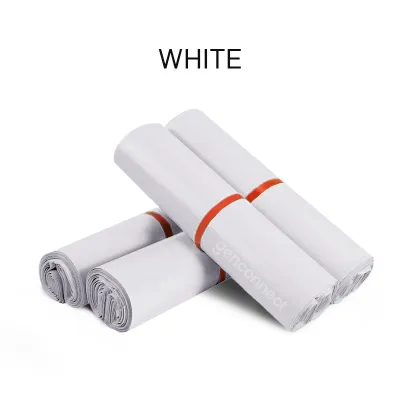
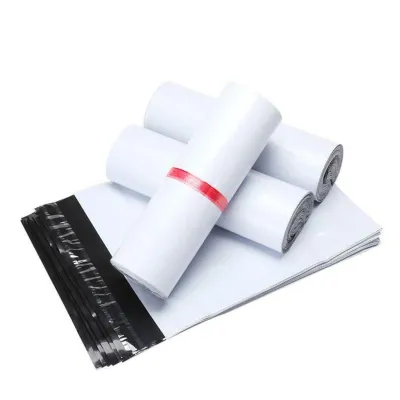
![[100pcs] White Polymailer Bags – Waterproof Tear-Resistant Courier Shipping Bags for eCommerce & Mailing](https://img.lazcdn.com/g/p/5ac19457619c8d71b03e006291511e2b.png_400x400q80.png_.webp)
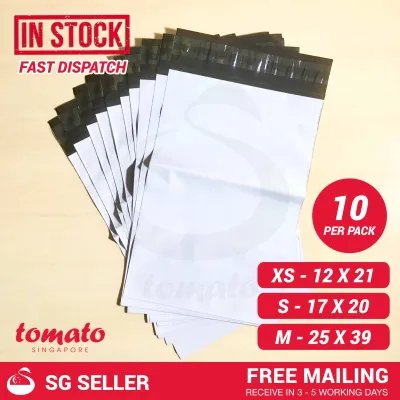
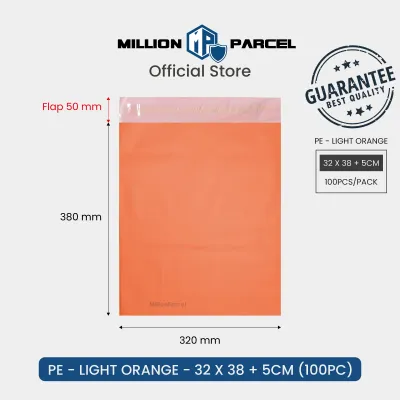
Prices are valid at publication and may change. Please refer to the product page for the latest price.
The core mathematical formula to determine the necessary dimensions is straightforward:
- Required Polymailer Width = Product Width + Product Thickness + 1 Inch Buffer
- Required Polymailer Length = Product Length + Product Thickness + 1 Inch Buffer
For example, if you are shipping a hardcover book that is 6 inches wide, 9 inches long, and 1.5 inches thick, your calculations would look like this:
- Width: 6 + 1.5 + 1 = 8.5 inches
- Length: 9 + 1.5 + 1 = 11.5 inches
In practice, you would round up to the nearest standard available size, such as a 9×12 inch mailer. When measuring your products, always use a standard ruler or flexible measuring tape. Ensure you measure the item at its absolute widest and thickest points. For compressible items like apparel or plush toys, measure them in their natural, uncompressed state, as forcing them into a tight space will put immense pressure on the bag’s seams.
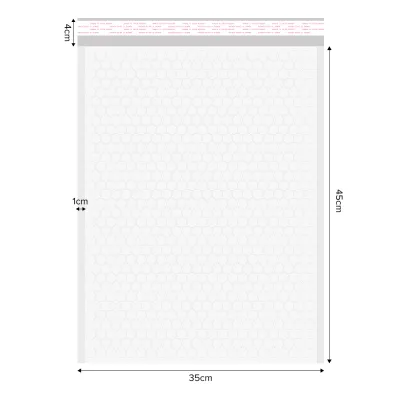
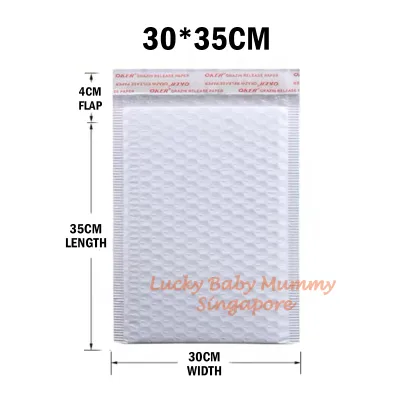
Additionally, you must understand the “adhesive flap rule.” The self-sealing strip, which typically ranges from 1.5 to 2 inches in length, is not included in the usable internal length of the mailer. When manufacturers list a polymailer as 10×13 inches, those dimensions represent the usable space of the bag when closed. The adhesive flap extends beyond that 13-inch length. Always verify with your packaging supplier whether their listed dimensions exclude the flap, as some budget manufacturers may include the flap in the total length, which effectively reduces your usable space.
Understanding Polymailer Thickness: What "Mil" Means for Protection
Selecting the right dimensions is only half the battle; you must also choose the correct thickness to ensure your package survives the shipping journey. In the packaging industry, polymailer thickness is measured in “mils.” One mil is equal to one-thousandth of an inch (0.001 inches), or approximately 25.4 microns. A higher mil count directly translates to greater tear strength, puncture resistance, and overall durability.

Standard polymailers typically range from 2.0 to 2.5 mil. This thickness is highly effective for lightweight, soft, and non-abrasive items. They offer sufficient protection against dust, dirt, and moisture without adding unnecessary weight to your shipments.
Heavy-duty polymailers, which measure 3.0 mil or thicker, are designed for more demanding shipping scenarios. These thicker bags are essential when shipping items with sharp corners, dense materials, or high-value goods that require complete opacity for privacy. The thicker plastic prevents the contents from being visible through the bag when held up to the light.
However, choosing a thicker material involves clear trade-offs. Thicker polymailers are inherently stiffer and less flexible, making them harder to fold and wrap tightly around irregularly shaped items. While the weight difference per bag is minimal, shipping thousands of heavier 3.0 mil mailers can slightly increase cumulative shipping weights, which is a key consideration for high-volume sellers monitoring courier weight thresholds.
It is also helpful to know that aesthetic choices, such as pastel colors, custom branding, or printed patterns, do not influence the physical strength or dimensions of the plastic. Focus first on securing the correct mil thickness for your product’s physical profile, then select your preferred visual design.
Size and Thickness Guidelines for Common E-Commerce Products
To simplify your purchasing decisions, it helps to categorize your inventory into specific product types. Different items place different physical demands on a polymailer, requiring tailored combinations of size and thickness.
Flat and Flexible Items For items such as t-shirts, light apparel, documents, and softcover journals, a standard 2.0 to 2.5 mil polymailer is ideal. Because these items have minimal thickness, you do not need to add a massive buffer. Aim for a snug fit. If the mailer is too loose, the item will slide around inside, creating friction that can wear down the plastic or cause tears during transit.
Bulky or Semi-Rigid Items Products like boxed stationery sets, small electronics, and plush toys require a thickness of 2.5 to 3.0 mil. These items possess a distinct three-dimensional shape that forces the polymailer to stretch in multiple directions simultaneously. You must provide a generous width and length allowance—often adding 2 inches of buffer instead of 1—to accommodate the volume without overstretching the polyethylene.
Sharp, Heavy, or Dense Items If you are shipping hardcover books, metal pens, or tools, you must prioritize puncture resistance. Opt for heavy-duty mailers of 3.0 mil or thicker. Even with thick plastic, sharp corners can easily pierce the bag during rough handling. To prevent “corner blowouts,” wrap the sharp edges or corners in protective tissue paper or bubble wrap, and secure them with packaging tape before placing the item inside the mailer.
Always check the manufacturer’s specified weight limits for your chosen polymailer size. Dimensions alone do not guarantee that the seams or the adhesive seal can support a heavy object’s mass.
When to Choose Gusseted or Expandable Polymailers
While standard flat polymailers are highly versatile, they struggle to accommodate bulky, boxy, or multi-item orders. When you force a thick, rectangular object into a flat bag, the sides pull inward, creating extreme tension along the side seams. This is where gusseted polymailers become necessary.
Gusseted polymailers feature built-in folds along the sides or the bottom. When an item is inserted, these folds expand outward, transforming the flat bag into a three-dimensional packaging solution. This structural design allows the bag to wrap cleanly around boxy items, such as shoe boxes, board games, or stacked apparel, without putting undue stress on the heat-sealed edges.
When measuring for a gusseted mailer, you must calculate the depth of the gusset. The formula adjusts slightly: the width of the bag should closely match the width of your product plus its depth. Ensure you do not force the gusset to expand to its absolute physical limit, as this can still lead to seam failures if the package is dropped or stacked under heavier boxes in a delivery vehicle.
While gusseted bags carry a slightly higher unit cost than flat mailers, they offer significant advantages. They allow you to ship larger volumes in a single parcel, reducing the need for expensive cardboard boxes. Furthermore, they store completely flat, preserving valuable storage space in your home or warehouse.
Frequently Asked Questions (FAQ)
Does the listed polymailer size include the adhesive flap?
No, the advertised dimensions of a polymailer (such as 10×13 inches or 25×33 cm) refer strictly to the usable internal space of the bag. The adhesive flap is an additional extension of plastic, usually measuring between 1.5 to 2 inches, that folds over to seal the opening. You should never include this flap when calculating whether your product’s length will fit inside the mailer.
What happens if I choose a polymailer that is too tight?
Using an undersized polymailer puts excessive tension on the heat-sealed side seams, making them highly susceptible to splitting during transit. Additionally, stretching the plastic too tightly can pull it thin, reducing its opacity and compromising the privacy of your shipment. It also makes it incredibly difficult to fold and seal the adhesive flap cleanly, which can allow moisture, dust, or rain to enter the package.
Can I use a standard polymailer for fragile items without a box?
Standard polymailers offer excellent protection against rain, dirt, and scuffs, but they provide virtually zero protection against drops, impacts, or heavy pressure. Fragile items, such as glass ink bottles, delicate ceramic stationery holders, or sensitive electronics, should never be shipped in a standard polymailer alone. Instead, place these items in a sturdy corrugated box with protective cushioning, or use a padded bubble mailer for semi-fragile goods.

Community discussion
Share your experience or ask a question. Comments are reviewed before publication.