
Finding the perfect planner notebook in Singapore often feels like a balancing act between aesthetic appeal and functional performance. The truth is that there is no single “best” paper quality that suits everyone; the ideal paper depends entirely on your primary writing instrument, your planning style, and how you interact with your pages daily. A notebook that feels luxurious under a ballpoint pen might cause frustrating smudges for a left-handed gel pen user, while a paper that handles wet fountain pen inks beautifully might require a patient wait for the ink to dry. This guide provides a practical framework to evaluate planner notebook options available in local boutiques and online marketplaces, focusing on observable paper specifications and hands-on testing methods so you can make an informed decision.
Key Paper Specifications That Define Writing Quality
When comparing planner notebooks, understanding the technical specifications listed on the packaging or product description helps you predict how the paper will perform. These specifications are not just marketing jargon; they represent physical properties that directly influence your daily writing experience.
The most common metric you will encounter is GSM, or grams per square meter, which measures the weight and density of the paper. While many associate a higher GSM with premium quality, this number primarily dictates the paper’s opacity and resistance to show-through, also known as ghosting. Standard planner paper typically ranges from 50 GSM to 120 GSM. Thinner papers, often around 52 GSM to 68 GSM, can be incredibly durable and allow for a slim, lightweight planner with hundreds of pages, but they will naturally show a shadow of your writing on the reverse side. Conversely, papers of 100 GSM to 120 GSM or higher offer a more substantial, opaque feel, making them highly resistant to ghosting but resulting in a thicker, heavier notebook.
Products mentioned in this guide
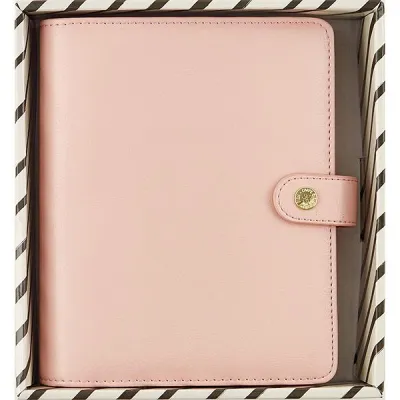
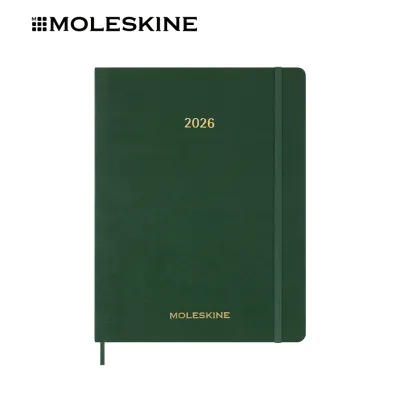

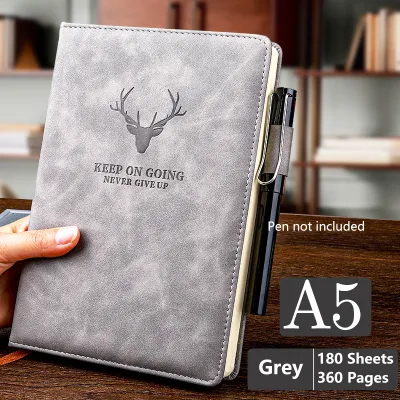
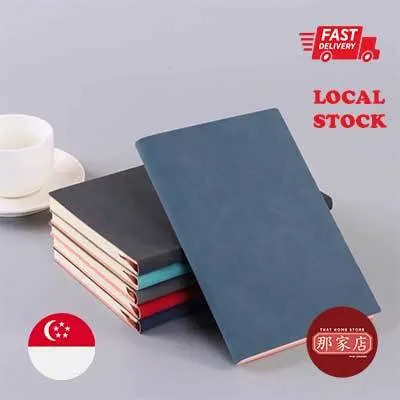
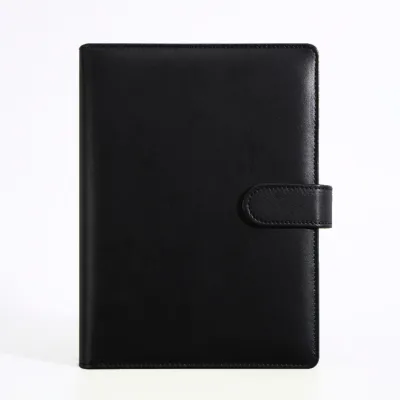
Prices are valid at publication and may change. Please refer to the product page for the latest price.
Beyond weight, the paper’s finish—whether it is smooth, coated, or textured—plays a critical role in how ink behaves. Coated papers have a microscopic barrier that prevents ink from immediately sinking into the fibers, which keeps lines crisp and colors vibrant but extends the drying time. Uncoated or slightly textured papers, often referred to as having a “tooth,” absorb ink rapidly, which is excellent for preventing smudges but can cause wet inks to spread or feather along the paper fibers.
The shade of the paper also impacts your long-term comfort. Bright white paper offers high contrast, making colorful inks pop, but it can reflect more light and cause eye strain during extended planning sessions under bright office or study lights. Cream, ivory, or off-white shades are gentler on the eyes and provide a classic, warm aesthetic, though they can slightly alter the perceived color of your inks.
Finally, the binding type determines how much of the paper’s surface is actually usable. A planner with a stiff, glued spine can make it difficult to write near the inner margins, forcing you to hold the book down constantly. Stitched bindings designed to lay completely flat, or spiral and wire-bound options, ensure that you can write comfortably across the entire double-page spread without creasing the paper or fighting the spine.
Matching Paper Characteristics to Your Writing Instruments
Your choice of writing instrument should be the primary driver when selecting a planner notebook. Different inks interact uniquely with paper fibers, meaning a mismatch can lead to bleeding, feathering, or excessive drying delays.

Fountain Pens and High-Flow Wet Inks
Fountain pens, rollerballs, and other high-flow wet inks require paper that can manage a significant volume of liquid without letting it soak through to the next page. For these tools, look for paper that features specialized sizing—an additive used during paper manufacturing to reduce absorbency—or a light coating that keeps the ink on the surface.
When shopping, check manufacturer labels and product descriptions for terms like “fountain pen friendly,” “ink resistant,” or “hard-sized.” These indicators suggest the paper has been treated to prevent feathering, which is the spiderweb-like spreading of ink along the paper fibers. While a higher GSM can help prevent the ink from bleeding through to the other side, the surface treatment is actually more important; even a thin 52 GSM paper can handle fountain pens beautifully if it has the correct surface sizing.
Keep in mind that there is a distinct trade-off when using highly coated, fountain pen-friendly papers. Because the ink sits on top of the coating rather than absorbing into the page, drying times will be noticeably longer. If you plan on the go or need to close your planner quickly, you may need to adjust your writing speed, use a sheet of blotting paper, or opt for a slightly more absorbent paper that balances ink control with faster drying.
Gel Pens, Ballpoints, and Highlighters
If your daily planning relies on gel pens, ballpoints, or quick-drying fine liners, your paper requirements are quite different. These instruments typically use thicker or faster-drying inks that do not require heavy surface coatings to behave well.
For gel pens, which are highly popular for color-coding in Singapore’s fast-paced work and study environments, a moderately textured or uncoated paper is often ideal. The slight texture helps pull the ink from the pen tip and speeds up absorption, significantly reducing the risk of smudging as your hand moves across the page. Ballpoint pens also perform exceptionally well on slightly textured paper, as the surface “tooth” provides the necessary friction for the ballpoint to roll smoothly without slipping.
Highlighters and mild water-based markers require careful management. Standard planner paper can easily handle a single swipe of a highlighter, but repeated layers or heavy pressure can saturate the fibers, leading to ghosting or page degradation. If you use highlighters extensively, look for planners with a minimum of 80 GSM to 90 GSM to ensure the paper maintains its structural integrity. Additionally, keeping a loose sheet of cardstock or a plastic protective sheet behind your active page can prevent any accidental ink transfer to the subsequent sheets when applying heavy marker accents.
How to Verify Paper Quality Before Purchasing
With many planners purchased online or sealed in plastic wrap at retail stores in Singapore, verifying paper quality requires a mix of careful research and practical testing strategies.
Start by analyzing the product specifications provided by the manufacturer. Look for explicit details beyond just the brand name. A reputable planner brand will often state the exact GSM, the paper’s origin, and whether it is acid-free. Acid-free paper is highly desirable as it resists yellowing and degradation over time, ensuring your records remain intact for years. If a listing lacks these details, it is a sign that the paper may be standard utility-grade stock that has not been optimized for diverse writing instruments.
If you are shopping in a physical stationery boutique, look for display models or sample sheets. Many local retailers provide test notebooks specifically for customers to try. When testing, perform a simple “swipe and ink” test using your own daily pens. Write a few words, draw a solid block of ink, and highlight over a line of text. Observe how quickly the ink dries, whether the lines remain sharp or begin to feather, and turn the page to check for ghosting or bleed-through. This hands-on test is the most reliable way to ensure compatibility with your specific writing style.
When shopping online through local ecommerce platforms or international specialty sites, leverage the community’s collective experience. Search user reviews and stationery forums specifically for terms like “bleed-through,” “ghosting,” or “feathering.” Pay close attention to reviews that mention the exact pen models and nib sizes you use, as a paper that performs perfectly with a fine gel pen might struggle under a broad fountain pen nib.
If you are still uncertain about a premium planner’s paper, consider purchasing a smaller, pocket-sized notebook from the same brand or product line first. This allows you to conduct a thorough, low-risk test of the paper’s performance with your entire stationery collection before committing to a full-size, year-long planner.
Decision Framework: Selecting Your Ideal Planner Notebook
To simplify your decision, use this conditional framework to match your writing habits with the right paper specifications:
Choose a high-GSM, coated paper planner if your primary writing tools are fountain pens, liquid ink rollerballs, or wet markers, and you prioritize crisp lines and zero bleed-through over instant drying times. This combination ensures your inks look their best, though you should be prepared to use blotting paper occasionally.
Choose a standard-weight, slightly textured paper planner if you rely on gel pens, ballpoints, and quick-drying fine liners. This setup is optimized for rapid daily logging, quick page-turning, and minimal smudging, making it highly practical for busy schedules.
Choose a specialized mixed-media planner with heavy, cardstock-like pages (typically 120 GSM to 160 GSM) if you frequently combine traditional planning with creative journaling, heavy markers, light watercolors, or adhesive inserts and photos. The extra thickness prevents the pages from buckling or tearing under wet media.
Before making your final selection, always verify the binding style and paper grain direction. If you require your planner to lay completely flat for double-page spreads, scanning, or comfortable writing near the margins, prioritize thread-bound or lay-flat designs over standard glued bindings, regardless of the paper weight.
Frequently Asked Questions (FAQ)
Does a higher GSM always guarantee no bleed-through?
No, a higher GSM does not automatically guarantee that ink will not bleed through the paper. While a higher GSM indicates a heavier, thicker sheet that is excellent at reducing show-through or ghosting, bleed-through is primarily controlled by the paper’s surface treatment and internal sizing. An uncoated, highly absorbent 120 GSM paper can still allow wet fountain pen inks or markers to penetrate deep into the fibers and bleed through to the other side. Conversely, a well-sized, lightly coated 68 GSM paper can successfully resist bleed-through from wet inks despite being much thinner.
How can I adapt my current planner if the paper bleeds with my favorite pen?
If you have already committed to a planner and find that your favorite pen bleeds or ghosts, you can use several practical workarounds. First, try switching to a drier ink formulation, such as a ballpoint pen or a gel pen with a finer tip, which deposits less liquid onto the page. Second, place a removable sheet of dark cardstock or a plastic writing board directly behind the page you are writing on; this prevents ink from transferring to the next sheet and provides a firmer writing surface. Finally, adjust your writing pressure and speed, as lingering too long on a single stroke allows more ink to saturate the paper fibers.

Community discussion
Share your experience or ask a question. Comments are reviewed before publication.