
Choosing the right pizza box packaging requires matching the nominal box size directly to the diameter of your pizza, while adjusting depth and board weight for your specific crust thickness and topping weight. For standard round pizzas, an 8-inch, 10-inch, 12-inch, 14-inch, or 16-inch pizza should go into a box of the exact same nominal size to prevent transit damage and heat loss. Selecting the correct dimensions ensures your product arrives in pristine condition, maintaining the ideal balance between heat retention and moisture control.
The Baseline Rule: Matching Diameter to Box Size
The standard industry rule for pizza box packaging is straightforward: the nominal box size is designed to fit a pizza of the exact same diameter. A 12-inch pizza belongs in a 12-inch box, and a 14-inch pizza belongs in a 14-inch box. This 1:1 ratio is engineered to provide just enough clearance for the pizza to be placed and removed easily without leaving excess empty space.
Sizing up to a larger box to create a “buffer” introduces significant operational risks. When a pizza is placed in an oversized box, it slides during transit. This movement causes toppings to slide off, crusts to collide with the walls, and grease to smear across the interior, ruining the presentation. Furthermore, empty space inside the box accelerates heat loss, delivering a lukewarm product to your customer. Conversely, sizing down compresses the crust, damages the toppings, and forces cheese to stick to the cardboard walls. Diameter remains the primary, non-negotiable specification for standard round pizzas.
Products mentioned in this guide

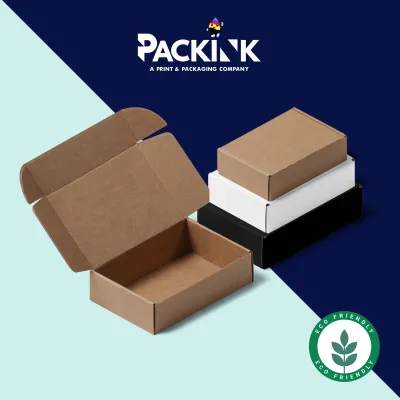
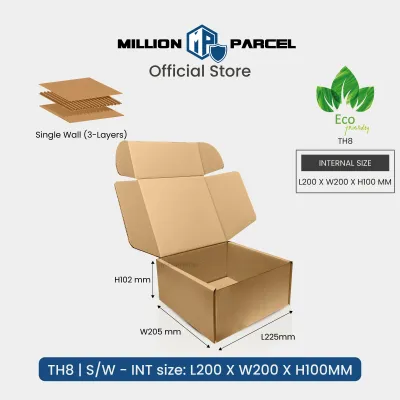
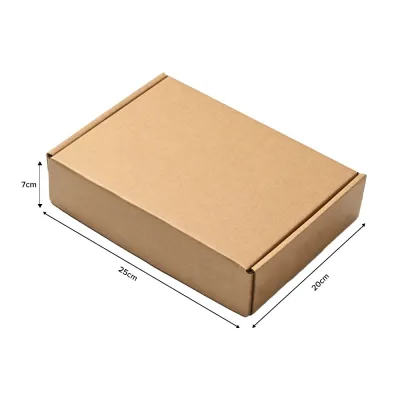
![[CLEARANCE] Macaron Colored Corrugated Box / Pizza box / aeroplane box / gift box / mystery box](https://img.lazcdn.com/g/p/bc17ee2d7440f1940e205ed80b16bfa0.jpg_400x400q80.jpg_.webp)
Prices are valid at publication and may change. Please refer to the product page for the latest price.
Standard Dimensions Decoded: Menu Pairings for 8 to 18 Inches
Different pizza sizes serve distinct dining occasions. Matching your menu categories to standard industry dimensions simplifies procurement and keeps packaging costs predictable.

Small and Personal Pizzas (8 to 10 Inches)
Boxes in the 8-to-10-inch range are the standard choice for personal pan pizzas, kids’ menu items, and appetizer-sized flatbreads. These smaller boxes require significantly less physical storage space in your kitchen, which is a vital consideration in space-constrained commercial kitchens. However, because personal pizzas are often ordered individually rather than shared, high-volume operations typically experience higher unit counts per order. This requires careful inventory tracking to ensure you do not run out of small boxes during peak dining hours.
Medium and Large Pizzas (12 to 14 Inches)
Representing the core volume for most pizzerias, 12-inch and 14-inch boxes are the industry standard for regular and large sharing pies. These sizes are ideal for standard hand-tossed or thin-crust menus. They offer an optimal balance of material cost and structural integrity. Because they are the most widely manufactured sizes, they are highly cost-effective, typically ranging from S$0.40 to S$0.80 per unit depending on order volume and custom printing options.
Extra-Large and Party Pizzas (16 to 18 Inches)
Designed for family-sized portions, party-cut pizzas, or extra-large New York-style slices, 16-to-18-inch boxes require careful material selection. As the surface area of the lid increases, the box becomes more susceptible to structural failure. For these oversized menu offerings, you must prioritize board stiffness. Standard cardboard can sag in the center under its own weight or from the steam rising off a hot pizza, directly contacting the cheese and ruining the presentation.
Beyond Diameter: Why Box Depth and Board Weight Matter
While diameter dictates the width of your packaging, box depth and board weight determine whether your pizza survives the delivery journey intact.
Box Depth (Height)
Standard pizza boxes typically feature a depth of 1.5 to 2 inches, which is perfect for thin-crust, hand-tossed, and moderately topped pizzas. However, deep-dish, stuffed-crust, or thick-crust styles require a depth of 2.5 to 3 inches. If your box is too shallow, the lid will press down on the pizza, crushing the toppings and causing cheese to stick to the cardboard.
Board Weight and Flute Types
Most pizza box packaging is constructed from corrugated cardboard, which uses a wavy inner layer (flute) sandwiched between two flat liners. The flute profile impacts heat retention, grease resistance, and stacking strength:
- E-Flute: A thin profile (approx. 1.6 mm) that offers excellent print quality and takes up less storage space. It is highly suitable for smaller, lighter pizzas.
- B-Flute: A thicker profile (approx. 3.2 mm) that provides superior insulation and stacking strength. This is the preferred choice for medium to large pizzas.
In high-density delivery environments where delivery riders stack multiple orders in thermal bags, B-flute boxes prevent the bottom boxes from collapsing under the weight of those above. Choosing the right flute profile allows you to avoid over-specifying and overpaying for heavy double-wall boxes when a standard single-wall B-flute box provides sufficient support.
Adjusting Specifications for Crust Types and Topping Volume
Your specific menu ingredients and crust styles should directly influence your packaging specifications. Standard templates do not always accommodate specialty pizzas.
Stuffed Crusts and Raised Edges
If your menu features stuffed crusts or heavily raised Neapolitan-style edges, the outer perimeter of the pizza will be taller and wider than a standard flat crust. In these cases, you may need to select a box with a slightly larger depth or choose a box diameter that is one size up while using a physical insert (such as a pizza saver tripod) to keep the lid from sagging.
Heavy Toppings and Moisture
Toppings with high moisture content—such as fresh tomatoes, pineapple, heavy sauces, or wet cheeses like fresh mozzarella—release steam and grease during transit. This moisture can soften the cardboard, leading to bottom sagging and structural failure. To prevent this, pair your boxes with grease-resistant paper liners. To verify the performance of your packaging, conduct an observable trial: place a hot, freshly baked specialty pizza with heavy toppings into a sample box, stack three weighted boxes on top, and observe the box after 15 minutes. If you notice structural softening, steam condensation, or grease bleed-through, you must upgrade to a heavier board weight or introduce more efficient liners.
Square vs. Round Boxes
Square boxes are the standard choice for almost all pizzas due to their ease of assembly and cost-effective manufacturing. However, they are also highly functional for non-round menu items. If you serve Sicilian, Detroit-style, or party-cut rectangular pizzas, square boxes provide the necessary corner clearance. Round boxes exist but are typically more expensive and harder to source, making square boxes the practical default for almost every pizzeria.
Frequently Asked Questions (FAQ)
Can I use one universal box size for all my menu items?
Using a single large box size for all menu items is generally inefficient. While it simplifies inventory, placing a small pizza in a large box allows the food to slide around, leading to displaced toppings and rapid heat loss. Additionally, you will pay a premium for larger materials, increasing your overall packaging costs unnecessarily.
Do I need special ventilation holes in my pizza boxes?
Yes, ventilation holes are critical for maintaining food quality during delivery. These vents allow trapped steam to escape, preventing the pizza crust from becoming soggy. Ventilation is especially vital in high-humidity climates where condensation forms quickly inside sealed cardboard containers.

Community discussion
Share your experience or ask a question. Comments are reviewed before publication.