
Quick Answer: Navigating Personalised Notebook Choices
Finding the right personalised notebook depends on balancing your aesthetic goals with your writing preferences. If your priority is a classic, tactile feel with premium paper and subtle, elegant branding, traditional retail stationery brands offering monogramming services are usually a strong fit. Conversely, if you require complete creative control over the cover artwork, custom photos, or highly specific internal page layouts, print-on-demand services provide the necessary design flexibility.
These two paths involve distinct trade-offs. Traditional brands offer time-tested paper stocks and durable cover materials like bookcloth or leatherette, but limit your personalization to foil-stamped initials or custom elastic bands. Print-on-demand platforms allow for full-wrap cover designs but may use standard digital printing paper that does not always handle wet inks or fountain pens gracefully. To avoid disappointment, always verify the exact paper weight, surface finish, and binding style on the manufacturer’s official product pages or design tools before finalizing your order.
Comparing Personalization Methods: Retail Monogramming vs. Full Custom Printing
When selecting a personalised notebook, understanding the structural differences between retail monogramming and full custom printing is essential for setting realistic expectations. Traditional premium stationery brands approach personalization as an elegant embellishment to an existing, high-quality product. Their customization options typically focus on hot foil stamping, blind debossing, or selecting specific accent colors for elastic closures and ribbon markers. The cover materials themselves remain highly traditional, featuring options such as genuine leather, textured leatherette, or woven bookcloth. This method preserves the structural integrity of the notebook, ensuring that the cover retains its premium feel and ages gracefully over years of daily handling.
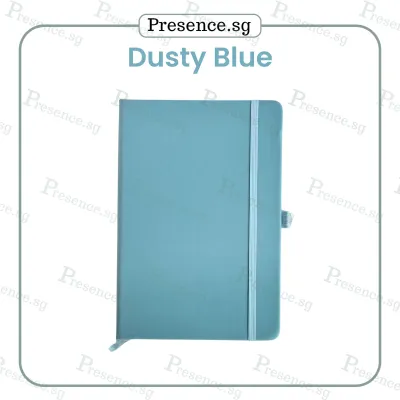
Products mentioned in this guide
![Personalised Notebook / Diary / Christmas Gift / Teachers Day Gift / Free Name Engraving [Dear J]](https://img.lazcdn.com/g/p/4e26f0ef15139aff03b41fc0e2352a5d.jpg_400x400q80.jpg_.webp)
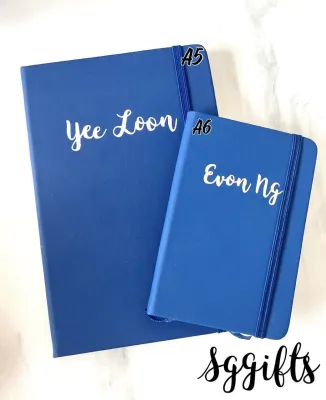
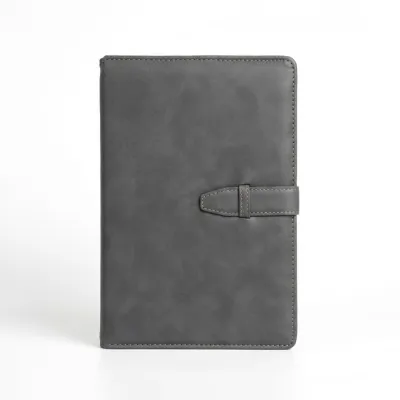
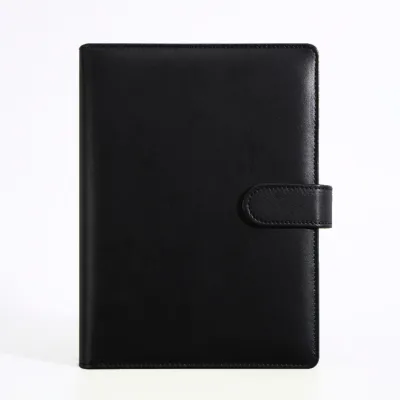
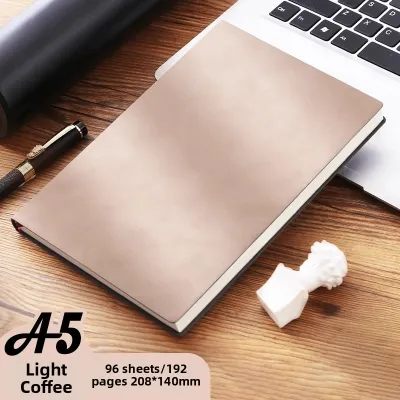
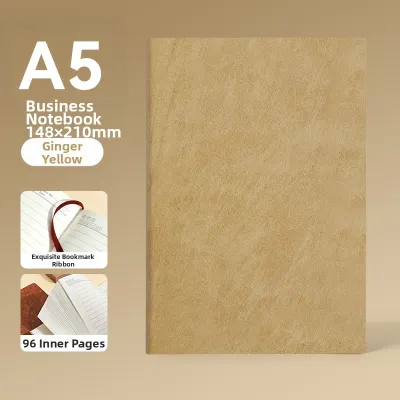
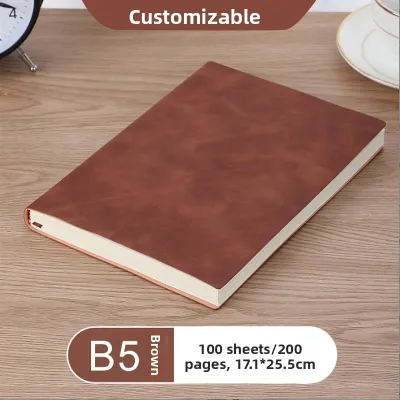
Prices are valid at publication and may change. Please refer to the product page for the latest price.

In contrast, print-on-demand services treat the notebook as a blank canvas for digital expression. These platforms allow you to upload high-resolution images, custom illustrations, or complex corporate branding to cover the entire front, back, and spine of the notebook. While this offers unparalleled artistic freedom, the cover materials are structurally different. Instead of textured fabrics, these notebooks usually feature heavy cardstock or board wrapped in a printed paper cover, which is then sealed with a protective gloss or matte laminate. While visually striking, these laminated surfaces can be prone to edge curling, scuffing, or peeling over time, particularly when carried daily in a crowded bag. In Singapore’s humid climate, paper storage and cover durability are also key considerations; laminated covers from print-on-demand services may warp more easily if exposed to high humidity, making thread-sewn, bookcloth-bound notebooks a more stable choice for long-term archiving.
Before committing to a print-on-demand service, it is crucial to perform several verification checks within their online design interface. Pay close attention to the designated bleed margins, which represent the areas of the cover that will be trimmed during the binding process. Placing critical text or design elements too close to these margins can result in them being cut off. Additionally, verify the platform’s minimum image resolution requirements—usually at least 300 dots per inch (DPI)—to prevent your custom cover from appearing pixelated or blurry when printed.
Finally, keep in mind that digital previews on computer screens do not always accurately match the physical product. Screen calibrations can make colors appear brighter or more saturated than they will look when transferred to paper or laminate. If you are ordering notebooks for a significant project, a corporate event, or as high-value gifts, ordering a single test copy is a prudent step to verify the physical color accuracy, texture, and overall alignment before placing a larger order.
Evaluating Paper Quality: Weight, Texture, and Ink Compatibility
The utility of any notebook ultimately rests on the quality of its paper, which must be carefully matched to your chosen writing instruments. Paper quality is not a single, universal standard; rather, it is a combination of weight, texture, and chemical treatment that dictates how ink behaves on the page. When comparing brands, the first specification to examine is the paper weight, measured in grams per square meter (GSM). Standard notebooks often feature paper ranging from 70 GSM to 100 GSM, which is highly adequate for dry writing instruments like standard ballpoint pens, hard-lead pencils, or light gel pens. However, if you prefer wetter inks, such as those from rollerballs, fountain pens, or artistic markers, you should look for brands offering paper weights of 120 GSM to 160 GSM to minimize the risk of ink bleeding through to the opposite side of the page.
Texture and surface finish play an equally critical role in your writing experience. Paper generally falls into two categories: coated (smooth) and uncoated (toothy). Coated papers have a microscopic sealant layer that prevents ink from absorbing too quickly. This characteristic keeps lines crisp, prevents feathering, and allows ink colors to appear vibrant, but it also significantly increases drying times, making it a potential challenge for left-handed writers. Uncoated papers, on the other hand, offer a tactile “tooth” or resistance that many pencil and ballpoint users enjoy. The ink absorbs rapidly into the fibers, which virtually eliminates smudging but can cause wetter inks to spread out, creating fuzzy edges known as feathering.
To ensure your chosen notebook can handle your writing style, look for specific manufacturer claims regarding ink compatibility. High-quality stationery brands often explicitly state whether their paper is resistant to bleed-through (ink soaking completely through the sheet), feathering (ink spreading horizontally), and ghosting (the shadow of writing being visible on the reverse side of the page). If you are uncertain, check if the brand offers small paper sample packs or swatches, which allow you to run a physical test with your own pens before investing in a fully customized notebook.
The binding method is another critical factor that interacts directly with paper quality and usability. A notebook’s ability to lay flat when open depends on how the pages are secured. Traditional premium notebooks often utilize thread-sewn binding (Smyth sewn), where folded groups of pages are stitched together. This method is highly durable and allows the notebook to open flat naturally, providing a seamless writing surface across the center fold. Many print-on-demand services, however, rely on perfect binding, where individual pages are glued directly to the spine. While cost-effective, perfect-bound notebooks can be stiff, requiring you to hold the pages down constantly while writing, and they may crack or lose pages over extended use.
Decision Framework: Which Brand Type Fits Your Needs?
To finalize your choice, it helps to evaluate your primary use case against the strengths and limitations of each brand category.
Choose traditional retail premium brands if your primary focus is a refined, tactile writing experience. These brands are ideal for daily journaling, professional meeting notes, or executive gifts where subtle elegance is favored. You will benefit from consistent, high-grade paper stocks that have been thoroughly tested for ink compatibility, housed within durable, classic covers. The personalization here is minimal but sophisticated, typically consisting of a neatly debossed name or initials in gold, silver, or blind foil on the cover.
Choose print-on-demand services if your goal is complete creative expression, promotional branding, or highly customized internal layouts. This path is well-suited for artists wanting to showcase their work on a cover, businesses creating custom merchandise, or individuals designing highly specific planners, habit trackers, or custom-ruled pages. While you may compromise slightly on the tactile feel of the cover materials and the absolute durability of the binding, you gain the ability to make the notebook entirely unique from cover to cover.
Verify first if you intend to use heavy ink, fountain pens, or wet media. Regardless of the brand type, you must actively check the manufacturer’s technical specifications for paper weight and sizing. Do not assume that a premium price tag automatically guarantees compatibility with wet inks; some luxury brands optimize their paper for smoothness rather than ink absorption, which can lead to long drying times or feathering with specific fountain pen inks.
Neither option may fit if you require a highly specialized combination, such as archival-grade, hand-torn cotton paper bound within a full-wrap custom-printed fabric cover. Mainstream commercial brands and standard print-on-demand services operate on automated machinery that limits material combinations. For these highly specific requirements, you will likely need to source your notebook from niche, independent bookbinders who can hand-assemble custom materials to your exact specifications, though this will naturally come at a higher cost and longer production time.
Frequently Asked Questions (FAQ)
Can I use fountain pens in any personalised notebook?
Not all personalised notebooks are compatible with fountain pens. Fountain pen inks are water-based and require paper with specific sizing (a chemical treatment that controls ink absorption) and sufficient weight to prevent feathering and bleed-through. Many print-on-demand notebooks use standard digital printing paper that absorbs wet ink too quickly, leading to blurry lines and ruined reverse pages. Before purchasing, check the manufacturer’s paper specifications for explicit mentions of fountain pen compatibility, or opt for brands that offer premium paper weights of 100 GSM or higher with a smooth, coated finish.
Do custom-printed covers affect the durability of the notebook?
Yes, custom-printed covers generally have different durability characteristics compared to traditional bookcloth or leatherette. Print-on-demand covers usually consist of printed paper wrapped over board and sealed with a plastic laminate. Over time, frequent handling, friction inside bags, and exposure to moisture can cause the laminate to scuff, peel at the corners, or bubble. Traditional materials like bookcloth or synthetic leather do not rely on printed layers, making them more resistant to wear and tear. To maximize durability, look for custom brands that offer scratch-resistant matte finishes or reinforced corners.
Is there a minimum order quantity for personalised notebooks?
Minimum order quantities depend entirely on the personalization method and the vendor’s business model. Traditional retail brands that offer simple monogramming or foil stamping almost always allow single-unit purchases, making them excellent for personal gifts, with prices often starting around S$20 to S$40 depending on the cover material. Print-on-demand services that print custom covers also frequently offer single-unit ordering, though the price per unit is typically higher. However, if you require fully customized internal page layouts, specialized paper stocks, or custom-dyed cover materials, commercial printers may require a minimum order quantity ranging from 10 to 100 units to offset the setup costs of the printing machinery.

Community discussion
Share your experience or ask a question. Comments are reviewed before publication.