
Choosing between PaperOne A3 80GSM and 100GSM paper depends on whether your priority is cost-effective, high-volume single-sided printing or premium, high-opacity double-sided presentations. While 80GSM serves as the standard workhorse for everyday office drafts and large-format architectural layouts, 100GSM offers the structural integrity and density required to prevent ink show-through and withstand frequent handling. Before committing to a bulk purchase, you must verify your printer’s tray specifications to ensure compatibility with heavier paper weights.
Because A3 paper is twice the size of standard A4 paper, physical characteristics like stiffness, weight distribution, and structural sag become much more pronounced. A flimsy sheet of A3 can easily curl or sag when held, whereas a heavier sheet maintains its flat profile. This makes the choice of grams per square meter (GSM) highly consequential for professional presentation and mechanical handling.
Core Differences Between 80GSM and 100GSM PaperOne A3
GSM, or grams per square meter, is the standard metric used to measure paper density and weight. A sheet of PaperOne A3 80GSM is lighter, thinner, and more flexible, making it the standard choice for general office copying. In contrast, the 100GSM variant is roughly 25% heavier per unit area, resulting in a noticeably thicker sheet with increased bending resistance.
Products mentioned in this guide
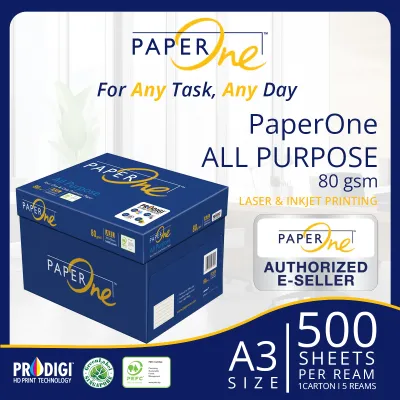
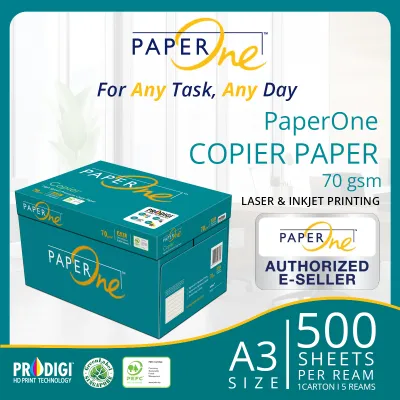
Prices are valid at publication and may change. Please refer to the product page for the latest price.
Stiffness is a critical factor when dealing with the large surface area of A3 sheets. Because gravity acts more heavily on a larger sheet, 80GSM paper will exhibit more “flop” or sag when held by one edge. The 100GSM paper remains relatively rigid, which is essential for posters, charts, and presentation boards that need to stand upright or be held without bending.
Opacity levels also differ significantly between the two weights. The 80GSM paper has moderate opacity, meaning high-contrast text or dark graphics printed on one side will likely show through to the reverse side. The 100GSM paper provides much higher opacity, making it the practical minimum for double-sided printing where clean readability on both sides is required.
Both weights typically feature a smooth surface finish designed to optimize toner transfer in laser printers and ink drying in inkjet systems. However, the extra fiber density in 100GSM paper allows it to absorb heavier ink loads, such as solid color blocks or high-density charts, with less risk of paper warping, cockling, or buckling during the drying process.
Checking Your Printer’s A3 Tray Compatibility
Before purchasing 100GSM A3 paper, checking your hardware’s specifications is essential. Not all office printers or desktop copiers handle heavier media weights equally across all input trays, and using incompatible weights can lead to persistent feed issues.

To locate your printer’s maximum paper weight limit, consult the user manual or the manufacturer’s online specification sheet. Look for the “Media Weight” or “Paper Weight Support” section, which is typically broken down by input source. The limits are explicitly stated in GSM for each specific tray.
Standard bottom paper cassettes are designed for high-speed feeding of standard office paper, usually up to 80GSM. Pushing heavier 100GSM paper through these tight, curved internal paper paths can sometimes lead to misfeeds. In contrast, bypass trays or multipurpose trays usually feature a straighter, more direct paper path designed specifically to handle thicker, stiffer media up to 120GSM or higher.
If your printer is struggling with 100GSM paper, you may observe specific physical symptoms. These include roller slipping, where the pickup rollers spin but fail to pull the sheet forward, and double-feeding, where the friction pads fail to separate the thicker sheets. You might also notice severe paper curling and static buildup after the paper passes through the high-heat fuser unit of a laser printer.
Best Use Cases for PaperOne A3 80GSM
PaperOne A3 80GSM is the standard utility paper for high-volume environments. Its primary advantage lies in its balance of lightweight handling and cost efficiency, making it ideal for everyday tasks where premium thickness is not required.
Architectural firms, engineering offices, and design studios frequently print large-scale schematics, CAD drawings, and rough layouts on 80GSM paper. Because these documents are typically printed single-sided and used for temporary reference or internal redlining, the extra thickness of 100GSM is unnecessary.
For standard text documents, spreadsheets, and simple diagrams where the reverse side remains blank, 80GSM provides excellent clarity and contrast. It is the most practical choice for high-volume internal drafting, everyday office memos, and single-sided reports where show-through is not a concern.
A3 documents are physically large and can quickly fill up filing cabinets, archival boxes, and binders. Because 80GSM paper is thinner, a stack of 500 sheets takes up significantly less vertical space and weighs less than a corresponding stack of 100GSM paper. This reduces the physical strain on shelving units and maximizes storage capacity in space-constrained offices.
Best Use Cases for PaperOne A3 100GSM
PaperOne A3 100GSM is engineered for applications where presentation quality, durability, and visual appeal are paramount. The extra weight transforms the tactile experience of handling the document, making it feel more substantial and professional.
When printing double-sided reports, brochures, or manuals, high opacity is non-negotiable. The 100GSM weight ensures that text and graphics on the reverse side do not bleed through or distract the reader, maintaining a clean, professional appearance on both sides of the sheet.
When presenting design proposals, marketing materials, or physical portfolios to clients, the tactile feel of the paper influences their perception of your work. The stiffness and premium weight of 100GSM paper convey attention to detail and quality, making it ideal for client-facing presentations and large-format posters.
Large-format posters, temporary signage, flowcharts, and documents that will be passed around, pinned to boards, or frequently handled require extra structural integrity. The 100GSM paper resists tearing, edge fraying, and dog-earing much better than standard 80GSM paper, ensuring your documents remain presentable over time.
Evaluating Cost, Storage, and Bulk Purchasing
When managing office supplies or procurement, the financial and logistical differences between these two weights become highly apparent, especially when purchasing in bulk.
Generally, a ream of 100GSM A3 paper carries a higher price point than a ream of 80GSM paper due to the increased raw material used in its manufacture. For large-scale print runs, this price difference scales up, making 80GSM the clear choice for minimizing operational expenses when premium quality is not required.
A3 paper is heavy, and stocking 100GSM paper increases the physical weight load on office shelving and storage cabinets. It is important to verify that your storage facilities and shelving units can safely support the added weight of multiple cartons of 100GSM paper before ordering in bulk.
When sourcing PaperOne A3 paper, check local office supply distributors or online marketplaces for current S$ pricing and bulk delivery options. Many suppliers offer volume discounts or free delivery for bulk orders, which can help offset the higher cost of 100GSM paper. Ensure you verify the packaging condition upon delivery, as large A3 reams are susceptible to corner damage if handled roughly during transit.
Final Decision Framework: Which Weight to Choose?
To make the final decision, evaluate your specific printing environment and output goals against these clear criteria:
- Choose 80GSM if: Your primary tasks involve high-volume, single-sided printing, such as internal CAD drafts, temporary schematics, or everyday office paperwork. This option minimizes your ongoing stationery costs, reduces physical storage space, and is highly compatible with standard printer trays without requiring manual bypass feed adjustments.
- Choose 100GSM if: You are producing client-facing deliverables, double-sided marketing materials, physical portfolios, or documents that require frequent handling and a premium tactile feel. The superior opacity and stiffness prevent show-through and ensure a professional presentation.
- Verify first if: Your printer's user manual explicitly supports 100GSM paper in its standard cassettes, or if you will need to utilize the bypass tray for reliable feeding. Additionally, if your projects involve heavy ink saturation, perform a test print on a single sheet to observe drying times and check for any paper warping before proceeding with a large print job.
Frequently Asked Questions (FAQ)
Can I mix 80GSM and 100GSM paper in the same A3 print job?
Mixing different paper weights within a single, continuous print job is generally not recommended unless your printer is specifically designed with advanced multi-tray routing capabilities. Standard office printers calibrate their feed rollers and tension settings based on a uniform paper thickness. Mixing 80GSM and 100GSM sheets in a single input tray can lead to paper jams, double-feeding, or alignment errors as the pickup mechanism struggles to adjust to the alternating thicknesses. If your document requires mixed stocks, configure your print driver to pull from separate, designated trays for each paper type, or feed the heavier sheets manually through the multipurpose bypass tray.
Does PaperOne A3 100GSM prevent ink bleeding for marker or pen sketches?
While PaperOne A3 100GSM offers excellent opacity and handles standard inkjet and laser printer inks exceptionally well, it is still classified as standard copy and print paper, not dedicated art paper. Heavy ink applications from alcohol-based markers, fountain pens, or thick calligraphy inks may still experience some feathering or bleeding depending on the specific chemical composition of the ink. For artistic projects, sketches, or heavy marker work, it is highly recommended to perform an initial trial on a single sheet to observe how the ink spreads and dries. If significant bleeding or feathering occurs, you may need to transition to a specialized mixed-media or high-density sketch paper designed specifically for wet mediums.

Community discussion
Share your experience or ask a question. Comments are reviewed before publication.