
Finding the right diary notebook for your 2026 journaling needs requires looking beyond cover designs and focusing on paper quality. Because independent, standardized testing across all popular brands is rarely available, declaring a single brand as universally superior is misleading. Instead, the right choice depends entirely on your specific writing instruments, ink types, and journaling habits. This guide breaks down the essential dimensions of paper performance, categorizes common notebook types, and provides a practical framework to help you evaluate and select the best paper quality for your daily writing.
Key Dimensions for Evaluating Diary Notebook Paper Quality
To make an informed decision, it is helpful to understand the technical specifications that manufacturers use to describe paper. The most common metric is Grams per Square Meter (GSM), which measures paper weight and thickness. Standard diary notebooks typically range from 50 GSM to 160 GSM. While a higher GSM generally indicates thicker, more opaque paper that resists tearing, it also adds significant bulk and weight to the notebook, making it less portable for daily carry.
Surface texture and coating play an equally critical role in how a pen behaves on the page. Coated papers feature a microscopic barrier that prevents ink from soaking immediately into the fibers. This preservation of ink on the surface enhances color vibrancy and prevents feathering, but it also extends drying times, which can lead to smudging. Conversely, uncoated or “toothy” papers offer more tactile feedback and absorb ink rapidly, making them excellent for quick note-taking but more prone to ink spreading.
Products mentioned in this guide
![[SG STOCK] 2026 2025 Agenda Notebook Daily Weekly Monthly Planner Diary Log Calendar Schedule Note School Office Supplies](https://img.lazcdn.com/g/p/4c39de1838fcfd6cb576fab7de70f7ff.jpg_400x400q80.jpg_.webp)

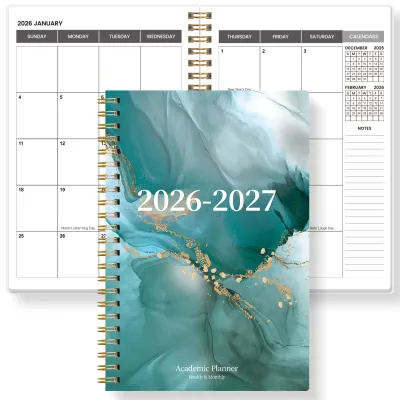
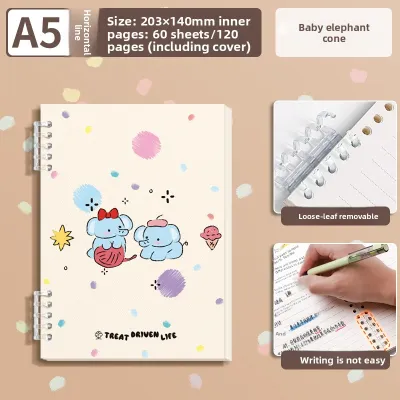
Prices are valid at publication and may change. Please refer to the product page for the latest price.
Paper color is another factor that affects both aesthetics and comfort. Bright white paper provides high contrast, making colored inks stand out vividly, but it can cause eye strain under bright light. Cream, ivory, or off-white papers offer a softer contrast that is gentler on the eyes during long writing sessions, though they may slightly alter the appearance of lighter ink colors.
Finally, understanding how paper handles ink requires distinguishing between bleed-through, feathering, and ghosting. Bleed-through occurs when ink penetrates completely through the sheet to the other side. Feathering is the lateral spreading of ink along the paper fibers, creating fuzzy lines. Ghosting, or show-through, is when the writing is visible as a shadow on the reverse side of the page without the ink actually breaking through the surface.
How Popular Notebook Categories Differ in Paper Performance
Diary notebooks generally fall into distinct categories based on their intended use and paper characteristics. Fountain pen and wet-ink optimized notebooks are engineered specifically to handle liquid inks without feathering or bleeding. These papers often feature specialized sizing agents or clay coatings that keep the ink on the surface. Even at lower weights, such as 52 GSM or 68 GSM, highly engineered papers can resist bleed-through remarkably well, though they may exhibit significant ghosting.

Everyday ballpoint and gel-ink notebooks are designed for rapid, daily note-taking. They typically feature uncoated or lightly calendered paper ranging from 70 GSM to 90 GSM. This paper prioritizes fast absorption to prevent smudging as you write and turn pages quickly. Because ballpoint ink is oil-based and viscous, it does not require heavy coatings to stay contained, making these notebooks highly functional, portable, and cost-effective for general office or school use.
Mixed-media and heavy-duty journals are built to withstand creative journaling techniques that go beyond standard writing. These notebooks feature heavyweight paper, often starting at 120 GSM and reaching up to 160 GSM or more. The paper is thick enough to handle wet media like markers, brush pens, and light watercolor washes without buckling or pilling. The surface is often slightly textured to grab dry media like graphite or colored pencils, and it can endure repeated erasing without tearing the fibers.
Matching Paper Quality to Your Journaling Tools and Style
Selecting the right paper requires analyzing your primary writing instrument. If your daily carry consists of fountain pens, broad gel pens, or liquid ink rollers, prioritize coated papers or high-GSM options that list ink resistance as a key feature. This ensures your lines remain sharp and do not bleed into the next day’s entry.
If you prefer the convenience of ballpoint pens or quick-drying gel pens, a standard-weight, uncoated paper is often the most practical choice. The natural texture of the paper provides just enough friction for a controlled writing experience, and the fast absorption rate prevents ink from transferring to your hand or the opposite page when you close the diary.
For those who incorporate sketching, scrapbooking, or watercolor elements into their 2026 diary, heavyweight mixed-media paper is indispensable. This paper resists warping when wet and provides the structural strength needed to support glued ephemera, photos, or heavy tape without tearing or sagging over time.
Do not overlook the relationship between paper weight and notebook binding. Thick, high-GSM papers require robust binding methods, such as thread-sewn lay-flat binding, to remain open comfortably. If a notebook uses stiff glue or tight stitching with heavy paper, the pages may constantly spring back, making it difficult to write near the inner margins.
Practical Steps to Verify Paper Quality Before and After Purchase
Before buying, carefully inspect the product packaging and manufacturer specifications. Look for explicit details such as the exact GSM, paper type (e.g., wood-free, cotton blend), and any specific certifications. Avoid relying solely on vague marketing terms like “premium quality” or “luxury feel,” which do not correlate with technical performance.
Once you have the notebook, perform a controlled ink test on an inconspicuous page, such as the very last sheet or an index page. Write a few lines using your favorite pens, varying the pressure and ink flow. Observe how long the ink takes to dry completely, and check the reverse side of the page for any signs of feathering, ghosting, or direct bleed-through.
Examine the physical construction by opening the notebook to various sections. Turn the pages to ensure they move smoothly along the spine without catching or resisting. Check if the paper grain runs parallel to the spine, which allows the pages to drape naturally rather than stiffly springing back or cracking at the fold.
If you notice severe manufacturing defects, such as uneven paper thickness, wavy pages from moisture exposure, or strong chemical odors from adhesives or bleaching agents, stop using the notebook. These issues can degrade your writing instruments or deteriorate over time, so it is best to consult the retailer or manufacturer for a replacement.
Frequently Asked Questions (FAQ)
Does a higher paper weight always mean better quality for journaling?
Not necessarily. While a higher GSM (Grams per Square Meter) increases opacity and prevents ink from bleeding through, it also makes the notebook significantly thicker and heavier, reducing portability. Furthermore, paper weight alone does not guarantee ink compatibility; a lightweight, highly coated paper can resist fountain pen ink much better than a heavy, uncoated paper that absorbs ink like a sponge.
How can I prevent ink from bleeding through my diary notebook?
If your current diary notebook suffers from bleed-through, you can place a sheet of heavy blotter paper or a plastic pencil board (shitajiki) directly beneath the page you are writing on to protect the subsequent sheets. Additionally, switching to a drier writing instrument, such as a fine-tip ballpoint pen or a quick-drying gel pen, will significantly reduce the amount of liquid absorbed by the paper fibers.

Community discussion
Share your experience or ask a question. Comments are reviewed before publication.