
Organising a home or preparing for a major move requires more than just gathering random containers; it demands a strategic approach to paper box storage. Selecting the correct carton dimensions is the single most important factor in keeping your belongings safe, maximizing vertical space, and preventing physical strain during handling. In Singapore’s compact living environments, such as HDB flats and condominiums, efficient space utilization is paramount, making precise box selection a necessity rather than an afterthought.
To choose the right paper box size, you must match the weight and density of your household items to the structural capacity of the box. Heavy, high-density items like books and documents belong in small, thick-walled cartons, while light, bulky items like pillows and blankets should be packed into larger boxes. Failing to balance volume and weight leads to box failures, damaged goods, and highly inefficient stacking in your storage areas.
The Core Principle: Matching Box Size to Item Weight and Density
The fundamental rule of packing is that the heavier and denser an item is, the smaller the box should be. This weight-to-volume ratio determines how well a carton maintains its shape under pressure. When you pack heavy items into a large box, the total weight quickly escalates beyond safe lifting limits, and the bottom flaps are highly likely to rupture during transport.
Products mentioned in this guide
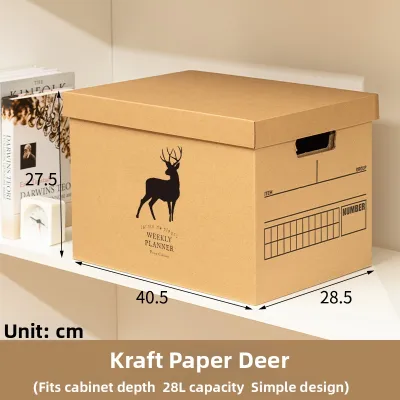
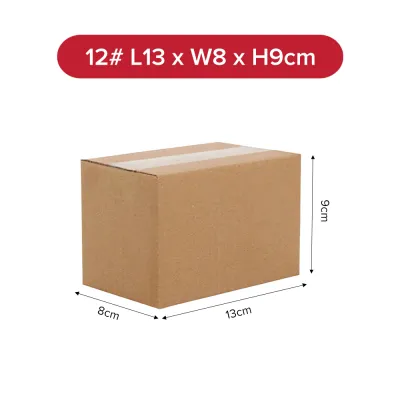
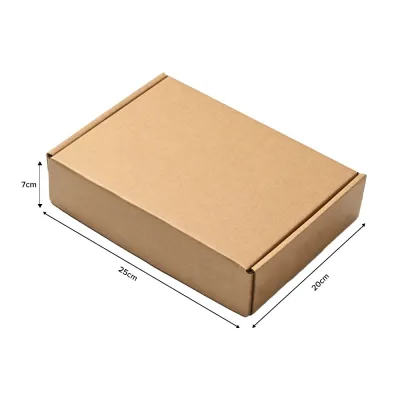
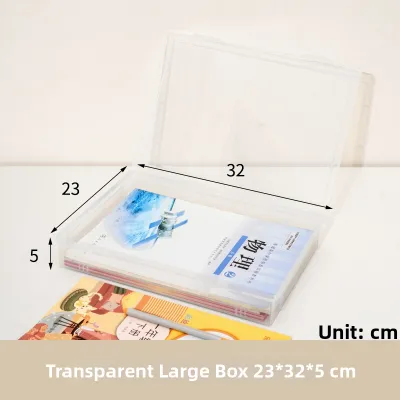
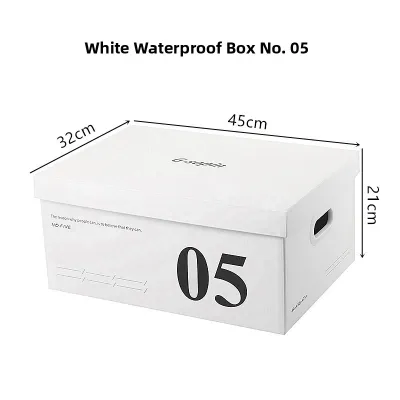
Prices are valid at publication and may change. Please refer to the product page for the latest price.
Conversely, packing light, bulky items into small boxes is highly inefficient. It increases the total number of boxes you need to store, purchase, and move, cluttering your living space or self-storage unit. By reserving large boxes strictly for low-density items, you ensure that every carton remains at a manageable weight while utilizing its full volume.
Stacking physics also play a critical role in paper box storage. In tight storage spaces, you must stack boxes vertically to maximize floor area. If a large, weak box is placed at the bottom of a stack, the weight of the boxes above will cause it to buckle and collapse. Placing heavy, small boxes at the bottom and lighter, larger boxes on top creates a stable, safe pyramid that prevents tipping and structural collapse.
Recommended Paper Box Sizes for Common Household Items
Standard paper boxes generally fall into three primary size categories: small, medium, and large. Local packaging suppliers typically measure these in millimeters or centimeters, and understanding these baselines helps you plan your storage needs room by room. Each category is engineered to handle specific weight ranges and structural demands.

Using these standard categories systematically allows you to color-code or label your boxes by room and weight class. This structured approach simplifies the retrieval process and ensures that anyone handling the boxes knows exactly how much physical effort is required to lift them.
Small Boxes for Heavy and Dense Items
Small boxes, typically measuring around 30 x 20 x 20 cm to 35 x 25 x 25 cm, are designed specifically for high-density belongings. These items include books, academic textbooks, tax files, legal documents, hand tools, and canned kitchen goods. Because these items pack tightly together with very little empty space, their combined weight accumulates rapidly.
Limiting these dense items to small cartons keeps the total weight of each box under 15 to 20 kilograms, which is the standard safety limit for manual lifting. Packing a large box with books can easily result in a package weighing over 40 kilograms, posing a severe risk of lower back injury and guaranteed box failure.
When storing exceptionally heavy items, always verify the manufacturer’s weight rating on the box. If you are packing a massive collection of reference books or heavy metal tools, look for small boxes constructed from heavy-duty, double-walled cardboard to ensure the bottom does not blow out when lifted.
Medium Boxes for Fragile and Medium-Weight Items
Medium boxes, usually ranging from 40 x 30 x 30 cm to 45 x 45 x 40 cm, are the most versatile cartons in any storage setup. They are ideal for medium-weight household goods, including kitchenware, small home appliances like blenders and rice cookers, shoes, toys, and framed decor.
Because medium-weight items often have irregular shapes, packing them leaves empty voids inside the box. To protect fragile items like ceramic plates or glassware, you must use internal cushioning materials such as bubble wrap, packing paper, or foam peanuts. The medium box size provides just enough room for both the items and their protective wrapping without becoming excessively heavy.
When packing a medium box, always place the heaviest items at the bottom to establish a low center of gravity. Fill any remaining upper space with lighter items or crumpled packing paper. This careful weight distribution prevents items from shifting during movement and protects fragile pieces from being crushed by heavier objects inside the same carton.
Large Boxes for Bulky and Light Items
Large boxes, typically measuring 50 x 50 x 50 cm or larger, are reserved exclusively for lightweight, high-volume household items. This category includes bedsheets, winter coats, comforters, pillows, cushions, and large plush toys. These items take up a significant amount of physical space but contribute very little to the overall weight of the package.
Never use large boxes for heavy items. A large box filled with kitchenware or books is practically impossible to move safely and will collapse immediately if stacked. By keeping large boxes dedicated to soft, light goods, you can easily carry them despite their bulky dimensions.
Because large boxes have a wider surface area, their top and bottom flaps experience significantly more leverage and stress. To secure these boxes, use high-quality packaging tape (typically costing around S$2 to S$4 per roll from local suppliers) and apply it in an “H-tape” pattern. This involves sealing the center seam and both exposed side edges of the flaps, reinforcing the box against dust, humidity, and structural splitting.
How to Read Box Dimensions and Verify Material Strength
When purchasing paper boxes for storage, you must understand how manufacturers list dimensions. Box measurements are almost always presented as Length x Width x Height (L x W x H). It is critical to distinguish between internal and external dimensions. External dimensions dictate how much physical space the box occupies in your room or vehicle, while internal dimensions tell you what will actually fit inside.
For standard single-wall boxes, the difference between internal and external measurements is minimal. However, for heavy-duty double-wall boxes, the thickness of the cardboard can reduce the internal length and width by 10 mm to 15 mm. If you are storing precise items, such as A4 arch files or specific electronic equipment, always check the internal dimensions to ensure a perfect fit.
Cardboard strength is determined by its corrugated construction. Corrugated cardboard consists of a fluted paper sheet glued between flat outer liners.
- Single-Wall Cardboard (3-Ply): Consists of one layer of fluted paper between two flat liners. This lightweight option is suitable for light to medium items that will not be stacked exceptionally high.
- Double-Wall Cardboard (5-Ply): Features two layers of fluted paper separated by an extra flat liner. This construction is highly recommended for heavy items, long-term storage, and high vertical stacking.
To verify a box’s strength without guessing, look for the Box Maker’s Certificate (BMC) printed on the bottom flap of commercial cartons. This circular stamp provides official testing data, including the Edge Crush Test (ECT) rating or the Bursting Test rating. An ECT rating of 32 is standard for light household storage, while a rating of 44 ECT or higher indicates a heavy-duty carton capable of bearing significant stacking loads.
Common Box Sizing Mistakes That Waste Space or Cause Damage
One of the most frequent mistakes in paper box storage is overpacking. This occurs when users try to squeeze too many items into a single carton, forcing the sides to bulge. Bulging boxes cannot be stacked flat, which ruins the structural integrity of your entire storage layout and increases the risk of the stack toppling over.
Underpacking is equally problematic. Leaving large empty voids inside a box means there is no internal support to resist downward pressure. When another box is stacked on top, the empty space causes the top flaps of the lower box to cave in, leading to a collapsed stack and potential damage to neighboring items. Always fill empty pockets with crumpled paper, bubble wrap, or clean towels to maintain flat, stackable surfaces.
In Singapore’s tropical climate, high ambient humidity is a silent threat to paper box storage. Cardboard is highly hygroscopic, meaning it readily absorbs moisture from the air. Over time, high humidity can reduce a cardboard box’s structural compression strength by up to 50%, causing seemingly sturdy boxes to sag, soften, and fail under loads they previously supported.
Before loading any box, perform a quick physical inspection to verify its integrity. Check for creases, punctures, or signs of previous water damage, which permanently weaken the corrugated fibers.
The Thumb Press Test: Press your thumb firmly into the center of the box’s largest panel. If the cardboard yields easily, feels spongy, or leaves a permanent deep indentation, the fibers have absorbed excessive moisture or have fatigued. Such boxes should be retired from heavy-duty stacking and reserved only for very light, non-fragile items.
Frequently Asked Questions (FAQ)
Can I use the same box size for all my household items?
Using a single box size for all your household items is highly inefficient and physically risky. If you use only large boxes, you will inevitably overpack them with heavy items, making them dangerous to lift, or underpack them, wasting valuable storage space and causing the boxes to collapse when stacked. If you use only small boxes, bulky items like pillows and blankets will not fit, forcing you to manage an unmanageable number of tiny packages. A successful storage system relies on a balanced mix of small, medium, and large boxes tailored to the specific weight and volume of your belongings.
How do I know if a paper box is strong enough for my items?
The most reliable way to verify a box’s strength is to check the Box Maker’s Certificate printed on the bottom flap, which lists the manufacturer’s official weight limit and Edge Crush Test (ECT) rating. For unmarked or recycled boxes, perform a manual inspection by pressing firmly against the sides and bottom. If the cardboard feels soft, sags under light pressure, or shows deep creases along the corners, its structural integrity is compromised. For heavy items or long-term storage in humid environments, always choose brand-new, double-wall corrugated cartons rather than relying on worn, single-wall boxes.

Community discussion
Share your experience or ask a question. Comments are reviewed before publication.