
Selecting the correct packaging is a critical step for e-commerce merchants, home businesses, and anyone preparing for a major move. When browsing packaging options like Packink cartons, understanding how to interpret size specifications ensures your items remain secure during transit while keeping shipping costs manageable. Standard carton dimensions are always presented in a specific sequence, and knowing how to read these numbers prevents costly ordering mistakes.
To choose the right box, you must look beyond the basic numbers on the product page. Factors such as internal versus external measurements, board thickness, and structural design all play a role in how well a carton protects its contents. This guide breaks down how to read carton dimensions, match different box sizes to your specific shipping scenarios, and measure your items accurately for a perfect fit.
How to Read Carton Dimension Specifications
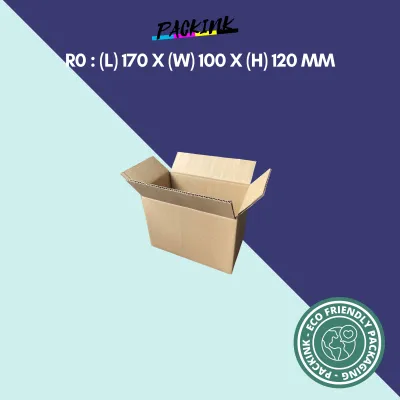
When looking at carton specifications, dimensions are universally listed in the following order: Length x Width x Height (L x W x H). Length is always the longer side of the box opening, while Width is the shorter side of the opening. Height represents the vertical depth of the box from the top opening down to the bottom panel. Misinterpreting this order can lead to purchasing boxes that do not open or stack the way you planned.
Products mentioned in this guide
![[WHOLESALE Carton 100pcs] Mailer Box | Carton Box | Ecommerce Box | Courier Box | Carton Mailer Box | Carton Box | Packaging | Ecommerce Business | Pizza Box | Eco Friendly Pizza Box | Carton Box | Kraft Paper Packaging Box | Kraft box | Paper Box | Part](https://img.lazcdn.com/g/p/74ff5694e0f15243a0d91054f7ead6bf.jpg_400x400q80.jpg_.webp)
Prices are valid at publication and may change. Please refer to the product page for the latest price.
There is a critical difference between inside dimensions and outside dimensions. Inside dimensions measure the actual usable space available for your products and protective padding. Outside dimensions measure the exterior footprint of the box, which determines how much space the carton occupies in a delivery vehicle or storage facility.
Corrugated cardboard thickness directly impacts these measurements. The wavy middle layer of a cardboard sheet, known as the flute, comes in various profiles that determine the overall thickness of the board. Because the cardboard itself takes up physical space, the internal dimensions of a assembled carton will always be slightly smaller than the external dimensions. For heavy-duty or double-wall boxes, this difference can be as much as 5 to 10 millimeters, which can prevent a tight-fitting item from sliding inside.
Matching Carton Sizes to Your Packing Scenarios
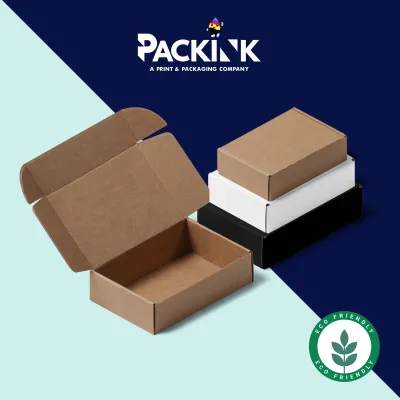
Different shipping and storage tasks require specific carton styles and sizes to balance protection and cost. Small mailer and dispatch boxes are highly popular among local e-commerce sellers. These compact, self-locking cartons are ideal for lightweight items such as cosmetics, jewelry, small electronics, and fashion accessories. Their rigid walls provide excellent corner protection without adding unnecessary weight to your shipments.

Medium cartons serve as the standard workhorses for everyday shipping and household organization. These boxes are perfectly sized for items like footwear, books, kitchenware, and medium-sized electronics. Because they are easy to handle and stack, they are widely used by courier services across Singapore for standard residential and commercial deliveries.
Large and heavy-duty cartons are reserved for bulky goods, household moves, or long-term archival storage. These boxes are designed to hold substantial weight without buckling. They are ideal for shipping multiple items in a single consignment, packing larger home appliances, or organizing heavy files in an office setting. Choosing a large box with reinforced walls ensures that heavier loads remain structurally sound during transport.
Essential Specifications Beyond Basic Dimensions
To ensure your packaging can withstand the rigors of transit, you must evaluate the structural specifications of the corrugated board. Single-wall construction consists of a single fluted medium glued between two flat linerboards, offering a lightweight and cost-effective solution for standard shipments. Double-wall construction adds a second layer of fluting and an extra linerboard, significantly increasing stacking strength and puncture resistance for fragile or heavy items.
When comparing options on a product page, pay close attention to manufacturer-provided weight limits and strength ratings. The Edge Crush Test (ECT) rating indicates how much top-to-bottom pressure a box can withstand before crushing, which is vital for stacking cartons in warehouses or delivery vans. Always verify these ratings against the total weight of your packed items to prevent the bottom boxes in a stack from collapsing.
Box closure methods and flap designs also affect structural integrity and packing efficiency. Regular Slotted Cartons (RSC) are the most common style, where the outer flaps meet in the center and require packaging tape to seal. For a more premium presentation, folder-type mailers feature tuck-in flaps that lock into place without requiring excessive tape, making them a preferred choice for direct-to-consumer brands.
A Practical Workflow for Measuring and Selecting
To avoid ordering the wrong box size, follow a systematic measurement process before finalizing your purchase. Start by placing your item, or the group of items you plan to pack together, on a flat surface. Measure the absolute widest, longest, and tallest points of the item, making sure to include any protruding parts, handles, or irregular corners in your measurements.
Next, calculate the necessary clearance for protective void fill and cushioning materials. Fragile items require a consistent buffer zone of bubble wrap, packing paper, or air pillows on all sides to absorb shocks during transit. Add this buffer thickness to your initial item measurements to determine the minimum internal dimensions your carton must have.
Finally, compare your calculated target dimensions against the internal specifications listed on the product page. Selecting a box that is too tight risks damage to your items, while an oversized box leads to higher shipping fees due to volumetric weight calculations. Aim for a snug fit that accommodates your protective packaging without leaving empty space that allows items to shift around.
Frequently Asked Questions (FAQ)
Why do inside and outside dimensions matter when buying cartons?
Inside dimensions tell you whether your product and its protective wrapping will physically fit inside the box. Outside dimensions are used by logistics providers and couriers to calculate volumetric weight, which directly determines your shipping costs. Using a box with unnecessarily large outside dimensions can significantly increase your delivery fees, even if the actual weight of the package is very light.
How much extra space should I add for packing materials?
For standard, non-fragile items, adding a clearance of 1 to 2 centimeters on all sides is usually sufficient for basic wrapping. For highly fragile items like glassware, ceramics, or sensitive electronics, you should aim for a buffer of 3 to 5 centimeters on all sides. This extra space allows for multiple layers of bubble wrap or molded foam inserts to protect the contents from drops and vibrations.
Is a thicker carton always the better choice for heavy items?
While thicker double-wall cartons generally offer superior puncture resistance and stacking strength, thickness alone does not guarantee a higher weight capacity. The quality of the paper liners and the overall manufacturing standards play a major role in box durability. Always check the manufacturer’s specified weight limits and Edge Crush Test (ECT) ratings on the product page to ensure the carton is rated for your specific load.

Community discussion
Share your experience or ask a question. Comments are reviewed before publication.