
To determine the correct packing list envelope size for your shipping documents, you must match the folded dimensions of your paperwork with the internal “usable space” of the envelope, rather than its external advertised dimensions. For standard A4 shipping documents folded into quarters, a 115 mm x 150 mm envelope (often labeled as A6) is the industry standard. If you use 4×6 inch thermal shipping labels, you will need a slightly larger 120 mm x 180 mm or 130 mm x 180 mm pouch to allow for seam clearances. Ensuring a proper fit prevents torn documents, scanning failures, and packing delays in your fulfillment workflow.
Selecting the wrong size can lead to wasted materials, slower packing times, or documents that slide out during transit. By understanding how paper sizes correspond to physical envelope dimensions, you can streamline your dispatch process and ensure your packages arrive with all necessary paperwork intact.
Understanding Standard Document Sizes vs. Envelope Dimensions
In global trade and local logistics, shipping documents generally follow standard paper sizes. In Singapore, most invoices, packing slips, and customs declarations are printed on standard ISO A4 paper (210 mm x 297 mm) or A5 paper (148 mm x 210 mm). Meanwhile, modern e-commerce operations heavily rely on thermal printers that output shipping labels in standard commercial sizes, most commonly 4×6 inches (approximately 102 mm x 152 mm) or 5×7 inches (approximately 127 mm x 178 mm).
Products mentioned in this guide
![100pcs [A5 Size = 17cm x 25cm] Packing List Clear No Print Adhesive Packing List Envelopes / Plastic Poly Shipping labels Pouches Bag](https://img.lazcdn.com/g/p/c34146c5328151e860c8bdbc29e7358c.jpg_400x400q80.jpg_.webp)
![【PACKING LIST】BULK BUY 1000 [17cm x 25cm] Zipper Resealable Adhesive Clear Envelopes | Waterproof Plastic Poly Shipping labels Peel and Seal Zip Pouches Bag for protecting invoices receipts and documents mailing packing Slip](https://img.lazcdn.com/g/p/5c483780ed37df8e0857f9cbbc5fa958.jpg_400x400q80.jpg_.webp)
![100pcs [ 17cm x 25cm ] A5 Size Zipper Resealable Zip to Seal close Plastics Clear Packing List Slip Envelope Mailing Back Adhesive Pouch Bag](https://img.lazcdn.com/g/p/b45b0faf86ea016d49b836c2e18c3747.jpg_400x400q80.jpg_.webp)
Prices are valid at publication and may change. Please refer to the product page for the latest price.
A common point of confusion for business owners is that the dimensions listed by envelope manufacturers almost always refer to the physical outside measurements of the pouch. For example, an envelope advertised as 115 mm x 150 mm describes the total exterior footprint of the plastic or paper sleeve. This outer measurement does not represent the size of the document that can actually fit inside.
To find the true capacity of a packing list envelope, you must calculate its “usable space” by accounting for the manufacturing seams and the closure flap. Most adhesive pouches feature a sealed border on three sides, typically measuring about 10 mm to 15 mm in width, along with a top lip that folds over to seal the opening. To ensure your documents slide in smoothly without catching or tearing, you should subtract at least 10 to 15 mm from both the stated width and height of the manufacturer’s dimensions.
By applying this subtraction rule, a standard 115 mm x 150 mm (A6) envelope actually offers a usable internal space of roughly 100 mm x 135 mm. This is the perfect size for an A4 sheet folded cleanly into quarters, but it is too tight for an unfolded 4×6 inch thermal label. Keeping this distinction in mind prevents the common headache of receiving bulk orders of envelopes that are just a few millimeters too small for your printed labels.
Key Specifications That Affect Your Choice
Beyond raw dimensions, several technical specifications dictate how well a packing list envelope will perform in your daily operations. Choosing the right combination of materials, visibility, and adhesives will protect your documentation from the elements and keep your fulfillment line moving quickly.

Material and Thickness (Poly vs. Paper)
The choice between clear polyethylene (poly) and paper envelopes depends heavily on your shipping environment and sustainability goals. Polyethylene envelopes are highly water-resistant and virtually tear-proof, making them the preferred choice for shipments exposed to the elements. In Singapore’s humid climate and frequent tropical downpours, a poly pouch ensures that delivery notes and customs papers remain bone-dry even if a parcel is left at a drop-off point or handled in the rain.
Paper-based document pouches offer an eco-friendly, fully recyclable alternative that appeals to environmentally conscious brands. However, standard paper is susceptible to moisture damage and tear risks during rough transit. If you opt for paper, it is wise to look for water-resistant coatings and verify the structural integrity of the seams. Rather than relying solely on thickness measurements like microns or mil, request physical samples to test actual tear resistance, as material formulation often matters more than thickness alone.
Window vs. Fully Clear Design
The visibility design of your document pouch affects both scanning efficiency and customer privacy. Fully clear poly envelopes allow logistics personnel and automated sorting machines to view and scan the enclosed document from any angle. While highly convenient, clear plastic can sometimes create surface glare under bright warehouse lighting, or cause barcode misreads if the plastic becomes heavily wrinkled during application.
In contrast, windowed envelopes—often made of paper with a small clear film window—only expose the specific section of the document containing the delivery address and barcode. This design keeps itemized pricing, product lists, and sensitive customer information hidden from public view during transit. However, using windowed envelopes requires strict folding discipline, as the barcode must align perfectly with the window to avoid manual scanning delays at sorting hubs.
Closure Types and Adhesive Strength
For high-volume e-commerce fulfillment, the speed of the packing process is directly tied to the envelope’s closure mechanism. Peel-and-seal closures, featuring a self-adhesive strip protected by a removable release liner, are the industry standard for rapid application. They eliminate the need for separate tape or moisture, allowing packers to seal and secure documents in a matter of seconds.
The strength of the adhesive backing must be carefully matched to the surface material of your shipping containers. Standard adhesives work exceptionally well on clean, virgin cardboard and plastic mailers, but they can struggle to bond securely to recycled corrugated boxes, which often have loose surface fibers. If the adhesive is too weak, the envelope can peel away or pop open during transit, leading to lost documentation and delivery failures. Always verify that the adhesive formulation is rated for the specific box materials used in your warehouse.
Matching Envelope Sizes to Your Fulfillment Workflow
Your choice of envelope size should align seamlessly with your existing printing habits and order volumes. If your business regularly processes multi-page invoices or detailed packing lists, folding A4 sheets into quarters to fit small A6 envelopes can become a major bottleneck. The folded paper becomes thick and springy, making it difficult to slide into a small pouch quickly. For multi-page documents, switching to an A5 or half-letter size envelope allows you to fold the sheets just once, saving time and keeping the package profile flat.
For single-page thermal shipping labels measuring 4×6 inches, avoid purchasing envelopes with those exact dimensions. Instead, opt for a slightly oversized pouch, such as a 120 mm x 180 mm or 130 mm x 200 mm size. The extra clearance provides a comfortable margin that allows packers to drop the label inside instantly without needing to fold, trim, or force the paper, which significantly boosts hourly packing rates.
To keep your packaging costs manageable, look for opportunities to simplify your purchasing decisions. If you primarily ship lightweight, single-page documents, there is no need to pay a premium for ultra-thick, industrial-grade pouches. A standard thickness of 50 to 60 microns is highly durable for typical transit routes and helps you avoid overpaying for unnecessary specifications.
Before committing to a bulk purchase of thousands of units, it is highly recommended to order a small trial batch. Test these samples on your actual shipping boxes, run them through your standard folding and packing routine, and confirm that your local courier services can scan the barcodes easily through the material. This small step prevents costly compatibility issues down the line.
Common Sizing and Application Mistakes to Avoid
Even with the correct envelope size, simple application mistakes can lead to lost documents or shipping delays. One of the most frequent errors is ignoring the fold allowance when dealing with thicker paper stocks or multiple pages. When paper is folded, it gains thickness, which naturally pulls the sides of a flat envelope inward and reduces its effective width. If you regularly send thick document packets, consider sourcing gusseted or expandable pouches rather than forcing flat envelopes to their bursting points.
Another common pitfall is overstuffing flat envelopes beyond their intended capacity. Forcing too many pages into a standard pouch puts immense pressure on the side heat-seals, making them highly vulnerable to splitting open when packages are stacked or jostled in delivery vehicles. If a document cannot slide in with gentle guidance, it is a clear sign that you need to step up to the next envelope size.
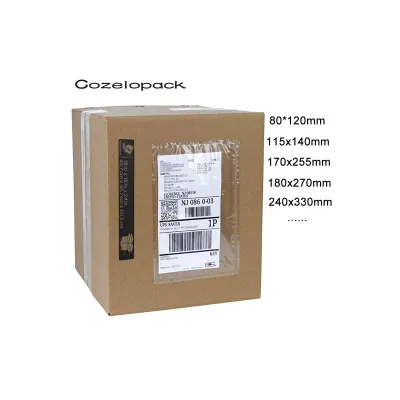
Finally, pay close attention to where the envelope is placed on the shipping box. Packers working under tight deadlines may accidentally stick the envelope across the box’s center seams, over heavy packing tape, or directly on top of metal staples. These uneven surfaces create ridges, creases, and trapped air bubbles beneath the barcode. When the package passes through automated sorting facilities, these physical distortions warp the barcode lines, preventing optical scanners from reading the tracking data and forcing slow, manual interventions. Always apply the envelope to a flat, smooth, and clean section of the carton.
Frequently Asked Questions (FAQ)
Can I use a standard A4 envelope for a packing list without folding?
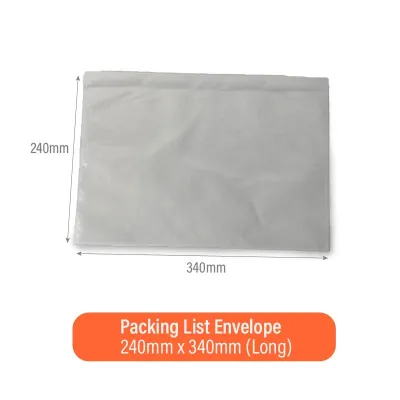
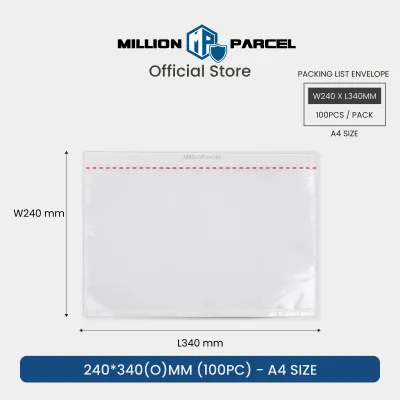
Yes, you can use full-sized A4 packing list envelopes (typically measuring around 235 mm x 325 mm) if your shipping cartons are large enough to accommodate them. However, these large pouches are often impractical for small or medium-sized parcels, as they can easily overhang the edges, catch on conveyor belts, or get torn off during automated sorting. If your document content is relatively short, printing on A5 paper or folding your A4 document in half to use an A5 envelope is a much more efficient approach that saves box space, reduces plastic waste, and presents a cleaner, more professional appearance.
Do clear poly envelopes interfere with barcode scanners?
Generally, modern laser and image-based scanners used by logistics providers can read barcodes through clear polyethylene envelopes without any issues. However, problems can occur if the envelope is applied poorly, resulting in deep wrinkles, creases, or trapped air bubbles directly over the barcode. Additionally, high-gloss plastic can sometimes reflect bright warehouse lighting or direct sunlight, causing glare that prevents the scanner from registering the code. To ensure reliable scanning, make sure your packing team applies the envelopes smoothly to a flat surface and that the printed document inside faces outward clearly without any folds obscuring the text.

Community discussion
Share your experience or ask a question. Comments are reviewed before publication.