
Selecting the correct packing box size is critical to ensuring your items arrive undamaged. To make the right choice, you must match the physical dimensions and weight of your goods to the internal space and structural strength of the carton. Using a box that is too small forces you to skimp on protective cushioning, while an oversized box increases shipping costs and allows items to shift during transit.
For most everyday packing tasks, matching the item type to the appropriate box category is straightforward. Small boxes are designed for heavy, dense objects like books, whereas large boxes are reserved for lightweight, bulky items like bedding. By understanding how manufacturers measure these containers and how to calculate the necessary space for protective padding, you can protect your valuables and optimize your shipping or storage costs.
Understanding Standard Packing Box Dimensions and Measurements
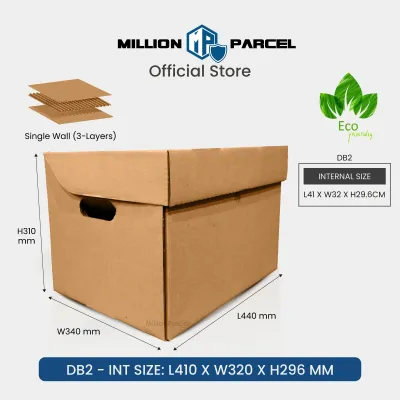
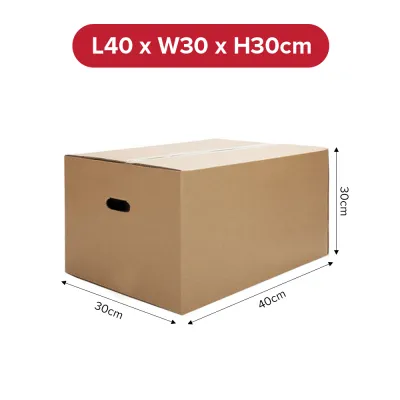
When browsing packaging supplies, you will consistently see dimensions listed in a three-number format: Length x Width x Height (LxWxH). Length is always the longest side of the box’s opening. Width is the shorter side of the opening, and Height is the vertical depth of the box from the top opening to the bottom panel. Understanding this convention prevents confusion when comparing different carton shapes, especially when dealing with long, shallow boxes versus tall, narrow ones.
Products mentioned in this guide
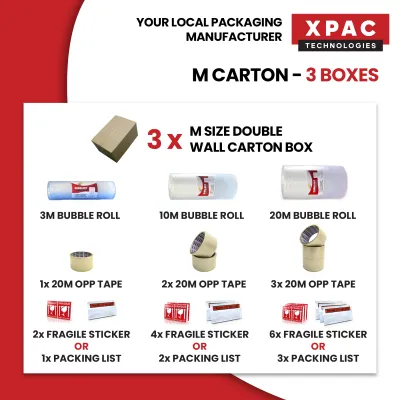
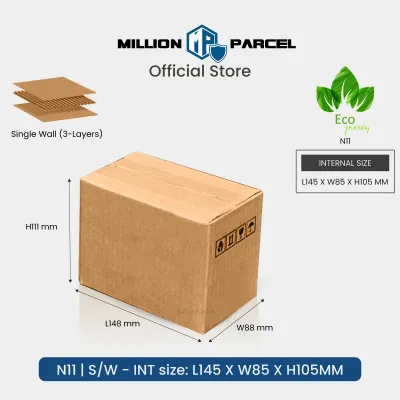
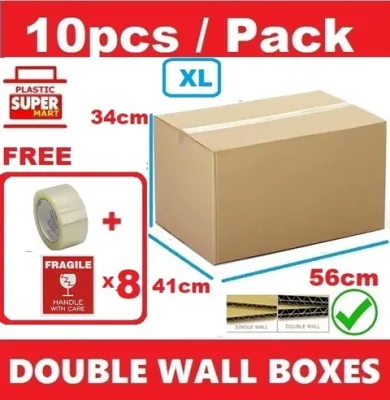
Prices are valid at publication and may change. Please refer to the product page for the latest price.
While packaging suppliers offer hundreds of custom shapes, they generally group their inventory into standard size categories. Small boxes typically range from 30x20x20 cm to 35x35x25 cm. Medium boxes usually span from 40x30x30 cm to 45x45x40 cm. Large boxes often measure between 50x50x40 cm and 60x40x40 cm, while extra-large boxes exceed 60 cm on their longest side. These size brackets are non-exhaustive industry examples, as exact dimensions vary significantly from one manufacturer to another.
The most common mistake buyers make is failing to distinguish between external and internal dimensions. External dimensions dictate how much physical space the box occupies in a delivery vehicle, shipping container, or storage unit in Singapore, and carriers use these numbers to calculate volumetric shipping rates. Internal dimensions, however, represent the actual usable space inside the box. Because corrugated cardboard has a physical thickness, the internal dimensions are always smaller than the external ones. Always verify the internal specifications before purchasing to ensure your items will fit comfortably.
Matching Box Sizes to Specific Item Categories
Different items require different physical support structures. Choosing a box size based solely on what fits can lead to damaged goods, broken boxes, or physical strain during a move.

Heavy and Dense Items
High-density items such as books, files, tools, and canned goods must always be packed into small boxes. Because these objects pack tightly together with very little empty space, their combined weight accumulates rapidly. Keeping these items in smaller cartons ensures that the total weight remains manageable for safe manual lifting, typically under 15 to 20 kg per box.
Attempting to pack heavy items into large or extra-large boxes introduces severe safety risks. The weight of the contents can easily exceed the structural limits of the cardboard, leading to a sudden bottom blowout where the contents spill out during transit. Furthermore, heavy boxes are highly susceptible to handle tearing and can cause serious lifting injuries.
Bulky and Lightweight Items
Conversely, items that take up significant volume but have very little mass should be packed into large or extra-large boxes. This category includes bedding, pillows, winter clothing, cushions, and plush toys. Using small boxes for these items is highly inefficient, as you would need dozens of individual cartons to pack a single room’s soft goods.
When packing bulky items, you can gently compress them to maximize the space inside the box. However, avoid over-compressing to the point where the cardboard walls begin to bulge or bow outward. Bulging boxes lose their structural stacking strength, making them unstable when loaded onto a moving truck or stored in a storage facility.
Fragile and Irregularly Shaped Items
Delicate objects like electronics, glassware, lamps, and decorative pieces require a completely different sizing strategy. For these items, you must never choose an exact-fit box. If an item rests directly against the cardboard wall of the box, any external impact or shock during transit will transfer directly to the fragile object, causing it to break.
Instead, select a box that is significantly larger than the item itself to establish a protective buffer zone. This empty space around the item must be filled with cushioning materials to absorb shocks. Irregularly shaped items also require larger boxes to accommodate their widest protruding points without forcing the cardboard to stretch or tear.
Decoding Board Thickness and Weight Capacity Specs
A box’s physical size does not dictate its strength. A massive box made of thin cardboard will collapse under a fraction of the weight that a small, heavy-duty box can easily support. To choose the right carton, you must understand the basics of corrugated board construction.
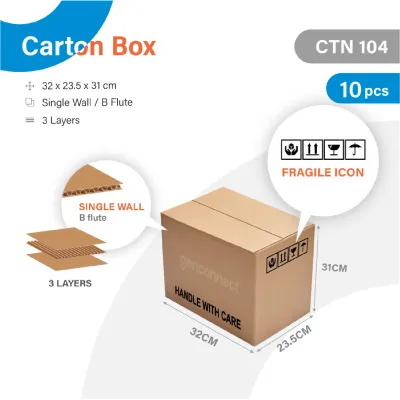
The most common options are single-wall and double-wall boards. Single-wall cartons feature a layer of fluted paper sandwiched between two flat liner sheets. These are lightweight, cost-effective, and suitable for shipping standard ecommerce orders, packing lightweight household items, or everyday storage. Double-wall cartons add a second layer of fluted paper and a third liner sheet, providing exceptional stacking strength, puncture resistance, and cushioning. Double-wall boxes are highly recommended for fragile items, heavy loads, and long-term storage where boxes will be stacked on top of one another.
When purchasing boxes in bulk, use this checklist to verify weight limits and material specifications:
- Check the wall type: Confirm whether the product listing specifies single-wall or double-wall construction.
- Verify the maximum load capacity: Look for the manufacturer's recommended weight limit, often expressed in kilograms (e.g., up to 10 kg for light single-wall, or up to 30 kg for heavy-duty double-wall).
- Assess the Edge Crush Test (ECT) rating: If listed, a higher ECT rating indicates superior vertical stacking strength.
- Match the box to the stacking environment: If you plan to stack boxes several layers high in a warehouse or storage unit, prioritize double-wall options to prevent the bottom boxes from buckling.
While browsing technical specifications, you may encounter specific flute letter designations such as A, B, C, or E flutes. For standard consumer decisions, moving, and general shipping, these exact letter designations have minimal practical impact and can be safely ignored. Focus instead on whether the box is single-wall or double-wall and its stated weight capacity.
Measuring Items and Allowing Space for Protective Padding
To find the perfect box size, you must measure your items accurately and account for the space required by protective packaging materials.
Start by using a tape measure to determine the maximum length, width, and height of the item you want to pack. For oddly shaped objects, measure the absolute furthest points in each direction. Imagine the item is sitting inside a tight rectangular block, and measure the dimensions of that block.
Once you have the item’s dimensions, apply the “buffer rule” by adding a margin of 5 to 10 cm to each of the three measurements. This extra space is crucial for accommodating void fill materials like bubble wrap, packing peanuts, or crumpled kraft paper. For example, if your item measures 20x15x10 cm, adding a 5 cm buffer to each side means you should search for a box with internal dimensions of at least 25x20x15 cm. For highly fragile items, a 10 cm buffer is safer, requiring a box size of 30x25x20 cm.
Avoid the temptation to buy excessively large boxes “just in case.” Oversized boxes create two major problems. First, shipping carriers calculate costs based on dimensional weight, meaning you will pay significantly more to ship a large box filled mostly with air. Second, excess empty space increases the risk of damage; if you do not fill the void completely with packing materials, your items will slide and bounce around during transit, leading to potential breakage.
Frequently Asked Questions (FAQ)
Can I use one extra-large box instead of multiple small ones for heavy items?
No, you should avoid this practice entirely. Consolidating heavy items like books or tools into a single extra-large box will likely exceed the structural burst strength of the cardboard. This increases the risk of a bottom blowout during transport and makes the box extremely difficult and dangerous to lift, potentially causing physical injuries.
Do external and internal box dimensions differ significantly?
Yes, they do, particularly with heavy-duty packaging. While the difference in a standard single-wall box might only be a few millimeters, a double-wall corrugated box can reduce the internal usable space by 1 to 2 cm on each side compared to its external measurements. Always base your packing calculations on the supplier’s listed internal dimensions to ensure your items fit.

Community discussion
Share your experience or ask a question. Comments are reviewed before publication.