
Nylon spandex fabric is a highly versatile synthetic textile blend that has become a staple in modern garment making. Known for its exceptional elasticity, durability, and smooth hand feel, this fabric is the go-to choice for activewear, swimwear, and form-fitting fashion. However, sewing with this slippery, stretchy material requires a solid understanding of its unique characteristics before you begin your project. Knowing how to evaluate blend ratios, select the correct sewing machine settings, and care for the finished garment will make the difference between a professional-looking piece and a frustrating sewing experience.
Understanding Nylon Spandex: Composition and Blend Ratios
To understand how this fabric performs, you must first look at its component fibers. Nylon, a synthetic polyamide, provides the fabric with its remarkable strength, abrasion resistance, and smooth, cool-to-the-touch surface. Spandex, also known generically as elastane or by the brand name Lycra, is an incredibly elastic polyurethane fiber that can stretch several times its original length and snap back instantly. Combining these two fibers creates a material that is both highly elastic and exceptionally durable.
The specific blend ratio of nylon to spandex dictates how the fabric behaves under tension. A higher spandex percentage, typically between 15% and 20%, yields a high-compression fabric with maximum stretch, making it ideal for athletic wear and swimsuits. Conversely, a lower spandex percentage of 5% to 10% results in a lighter, more relaxed stretch that is better suited for casual wear, linings, or lightweight tops where drape is preferred over compression.
Products mentioned in this guide
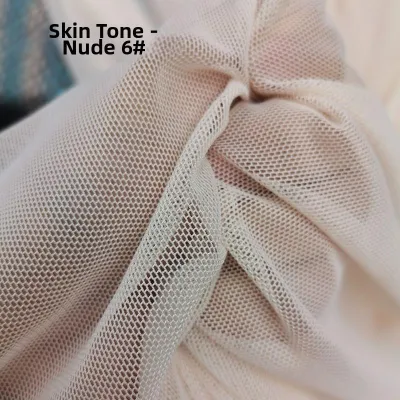
Prices are valid at publication and may change. Please refer to the product page for the latest price.
It is important to remember that material names alone do not guarantee a specific level of performance or thickness. Different manufacturers use varying yarn thicknesses and knitting techniques, meaning two fabrics with the exact same fiber ratio can feel entirely different. Always check the specific fabric label, weight specifications, and manufacturer descriptions for exact fiber percentages and recommended use cases before purchasing.
How Nylon Spandex Behaves: Stretch, Drape, and Handling
Stretch and Recovery
Before cutting into your fabric, you must determine whether it has two-way or four-way stretch. Two-way stretch fabrics expand crosswise from selvage to selvage but offer little to no stretch along the lengthwise grain. Four-way stretch fabrics expand both crosswise and lengthwise, which is essential for garments that must accommodate multidirectional body movements, such as leggings or leotards.

Equally important is the fabric’s recovery, which is its ability to snap back to its original shape after being stretched. You can test this by holding a ten-centimetre sample of the fabric against a ruler, stretching it to its limit, and releasing it. If the fabric does not return to its exact ten-centimetre starting length immediately, it has poor recovery, which can lead to sagging seams, baggy knees, or distorted waistbands over time.
Slippery Surface and Drape
The smooth, low-friction surface of nylon gives the fabric a sleek, polished appearance and a fluid, body-skimming drape. However, this slippery texture makes handling the fabric during the cutting and sewing stages highly challenging. The fabric layers tend to slide against one another, which can easily lead to uneven cuts or misaligned seams if not properly secured.
Edge Curling
Knit nylon spandex is notorious for curling at the cut edges, particularly along the crosswise grain. This curling is a natural result of the tension applied to the yarns during the knitting process. When the fabric is cut, the tension is released, causing the edges to roll tightly toward either the right or wrong side of the fabric, which can make aligning your seam lines incredibly tedious.
Breathability and Moisture Management
Nylon fibers naturally wick moisture away from the skin, allowing sweat to evaporate quickly. However, because both nylon and spandex are synthetic, non-porous fibers, the overall breathability of the fabric depends heavily on its knit structure and weight. In warm, humid environments like Singapore, a dense, heavy-weight knit can trap body heat, whereas an open-mesh or lightweight knit construction will feel significantly cooler and more breathable.
Matching the Fabric to Your Sewing Project
Evaluating Blend Ratios for Use Cases
Matching the fabric’s blend ratio to your specific garment design is crucial for comfort and functionality. For high-performance athletic wear, compression leggings, and athletic swimwear, prioritize blends containing 15% to 22% spandex to ensure the garment holds its shape and provides adequate muscle support. For everyday t-shirts, summer dresses, and lightweight loungewear, a blend with 5% to 10% spandex offers comfortable ease of movement without feeling overly restrictive.
Fabric Weight (GSM)
Fabric weight is measured in grams per square meter (GSM), which serves as a reliable indicator of thickness and opacity.
- Lightweight (100–150 GSM): Best for lightweight tops, rash guards, or garment linings.
- Mediumweight (150–220 GSM): Ideal for standard t-shirts, casual dresses, and lightweight activewear.
- Heavyweight (220–300+ GSM): Essential for high-compression leggings, athletic shorts, and structured swimwear to ensure the fabric remains completely opaque when stretched.
To verify opacity before buying, perform a simple hand stretch test. Place your hand underneath a single layer of the fabric and stretch it firmly; if you can clearly see the outline of your fingers or your skin tone through the fibers, the fabric may not be suitable for fitted, squat-proof lower garments.
Knit vs. Woven Construction
While the vast majority of nylon spandex fabrics are knit (such as tricot, jersey, or interlock) to maximize stretch and flexibility, woven nylon spandex blends also exist. Woven stretch fabrics are constructed by weaving nylon warp threads with spandex weft threads, resulting in a durable, structured fabric with just enough give to allow comfortable movement. Woven blends are excellent for tailored hiking trousers, utility jackets, and structured skirts that require durability and water resistance without the high elasticity of a knit.
Verifying Specifications
Never rely solely on generic fabric names when purchasing online or in-store. Always verify the manufacturer’s stated stretch percentage, weight, and recommended garment types. If you are shopping in person, pull a small section of the fabric to test its elasticity and check how quickly it recovers its shape.
Machine Setup and Sewing Techniques for Success
Needle Selection
Standard universal sewing machine needles will pierce and break the tightly knit synthetic fibers of nylon spandex, resulting in skipped stitches, runs, or fabric damage. Instead, always use a ballpoint (jersey) needle or a dedicated stretch needle. Stretch needles feature a specially designed scarf that prevents skipped stitches on highly elastic fabrics, while the rounded tip of a ballpoint needle slides smoothly between the knit loops rather than cutting through them. Use a size 75/11 for lightweight fabrics and a 90/14 for heavier weights.
Thread Choice
Avoid using traditional cotton thread, as it lacks elasticity and will snap the first time your finished garment is stretched. High-quality polyester thread is the standard choice because it possesses a slight natural elasticity and excellent strength. For the bobbin or the loopers of a serger, you can also use wooly nylon thread, which expands and contracts with the fabric to create incredibly soft, durable, and flexible seams.
Stitch Types
Sewing a standard straight stitch on stretch fabric is a recipe for popped seams. You must use stitches that can expand alongside the fabric.
- Narrow Zigzag: A classic choice for standard sewing machines; set the width to 0.5mm–1.0mm and the length to 2.0mm–2.5mm.
- Three-Step Zigzag: Excellent for stitching elastic bands directly to the fabric, as it distributes tension evenly.
- Lightning Stitch: A specialty stretch stitch available on many modern machines that looks like a slightly angled straight line but stretches easily.
- Overlock Stitch: If you own a serger, a four-thread overlock stitch is the gold standard for joining seams, as it trims, finishes, and stretches perfectly in one step.
Always test your selected stitch on a scrap piece of the identical fabric first to ensure the tension is balanced and the seam does not pucker.
Machine Feet and Tension
A standard presser foot can push the top layer of slippery fabric forward while the machine’s feed dogs pull the bottom layer backward, causing wavy, distorted seams. To prevent this, use a walking foot (even feed foot), which feeds both layers of fabric through the machine at the exact same rate. Alternatively, a Teflon or roller foot can help reduce friction on sticky or shiny nylon surfaces. If you notice the fabric waving or stretching out of shape as you sew, reduce the presser foot pressure slightly.
Cutting and Pinning
Because nylon spandex is highly prone to shifting, avoid using traditional dressmaking shears, which lift the fabric off the table and cause distortion. Instead, lay the fabric completely flat on a self-healing cutting mat and use a sharp rotary cutter paired with heavy pattern weights to hold the paper pattern pieces in place. When joining pieces, avoid standard thick pins that can snag the knit fibers or leave permanent holes; instead, use extra-fine silk pins or plastic sewing clips to hold your edges secure.
Washing and Care Instructions to Preserve Elasticity
Washing Guidelines
To maintain the structural integrity and elasticity of your handmade garments, always wash them in cold water on a gentle or delicate cycle. Avoid harsh laundry detergents, chlorine bleach, and fabric softeners. Fabric softeners leave a thin chemical coating on the synthetic fibers that clogs the knit structure, reducing the fabric’s natural moisture-wicking capabilities and gradually degrading the elastane fibers, which leads to premature loss of stretch.
Drying Methods
Never expose nylon spandex garments to the high heat of a tumble dryer. High temperatures will melt, weaken, or break the delicate spandex fibers, permanently destroying the fabric’s recovery and leaving your garments stretched out and misshapen. Instead, gently squeeze out excess water—never wring or twist the fabric tightly—and lay the garment flat to dry on a clean towel, or hang it to air dry out of direct sunlight.
Ironing and Pressing
Nylon and spandex are highly heat-sensitive synthetic materials that can easily scorch, melt, or develop an unsightly permanent shine if exposed to high heat. If pressing is necessary during the construction process, set your iron to the lowest synthetic heat setting and always use a clean press cloth between the iron soleplate and the fabric. Avoid using heavy steam directly on high-spandex areas, and always test your iron temperature on a scrap piece of fabric first to ensure it will not damage the fibers.
Frequently Asked Questions (FAQ)
Is nylon spandex suitable for swimwear?
Yes, nylon spandex is one of the most popular fabrics used for swimwear due to its exceptional stretch, body-hugging fit, and smooth, comfortable texture. However, untreated nylon is susceptible to fading and degradation from prolonged exposure to chlorine, saltwater, and ultraviolet (UV) radiation. If you are sewing swimwear, check the manufacturer’s specifications to ensure the fabric is explicitly labeled as chlorine-resistant or treated with UV protection to prolong the lifespan of your garment.
Does nylon spandex fray when cut?
Because nylon spandex is a knit fabric, the cut edges will not fray or unravel in the way that woven fabrics do. This means you do not technically need to finish the raw edges to prevent shedding. However, knit edges are highly prone to curling, which can make sewing seams difficult and cause the inside of the garment to look untidy. Using a serger or finishing the edges with a zigzag stitch can help flatten the seams and provide a clean, professional interior finish.
Can I dye nylon spandex fabric at home?
Nylon is a synthetic fiber that accepts acid dyes and specialty synthetic dyes relatively well, allowing you to achieve vibrant colors at home. However, the dyeing process typically requires sustained high heat near boiling temperatures to set the dye. This high heat can easily damage, weaken, or melt the spandex component of the blend, resulting in a loss of elasticity. If you decide to dye the fabric, always test a small scrap first to verify how the stretch and recovery are affected before dyeing your entire yardage.

Community discussion
Share your experience or ask a question. Comments are reviewed before publication.