
Finding the right notebook for wet ink instruments like fountain pens and markers requires looking beyond cover designs and brand names. The interaction between liquid ink and paper fibers determines whether your writing remains crisp and legible or spreads into a fuzzy, illegible mess. To prevent bleed-through (ink soaking through to the back of the page) and feathering (ink spreading sideways along the paper fibers), you must evaluate how a notebook’s paper is manufactured, treated, and finished.
In humid climates like Singapore, this choice becomes even more critical. High ambient humidity naturally slows down ink drying times, meaning that paper coatings that perform well in dry environments might lead to prolonged smudging issues locally. Understanding the physical properties of paper allows you to select a notebook that matches your specific writing tools, ensuring that your thoughts are preserved cleanly on both sides of the sheet.
Understanding Paper Properties That Control Ink Behavior
To evaluate notebook paper quality objectively, you need to understand three primary physical characteristics: weight, sizing, and finish. These properties dictate how paper fibers react when they come into contact with liquid inks, whether from a fine-line marker, a broad fountain pen nib, or a highly saturated art illustrator.
Products mentioned in this guide
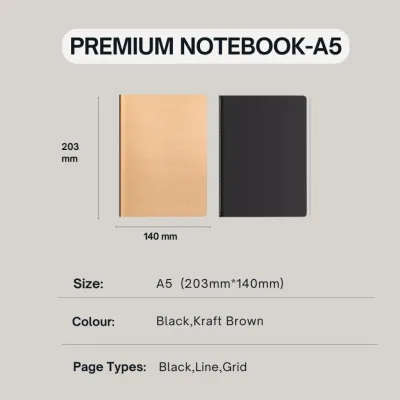
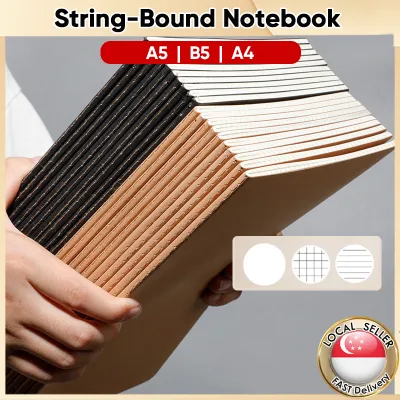
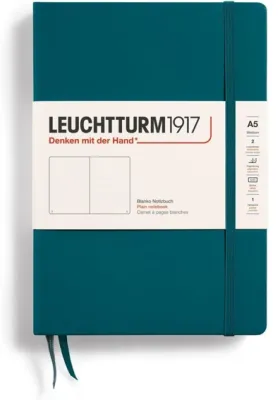
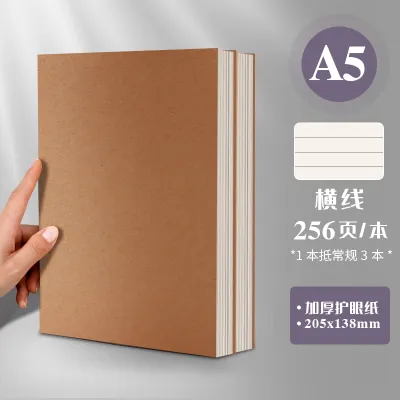
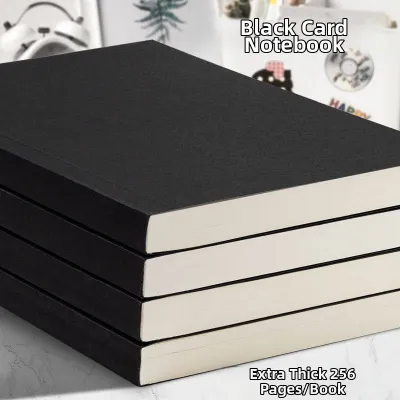
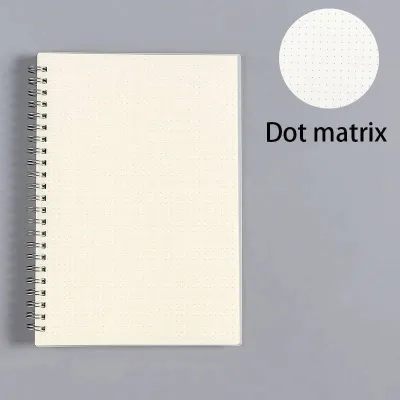
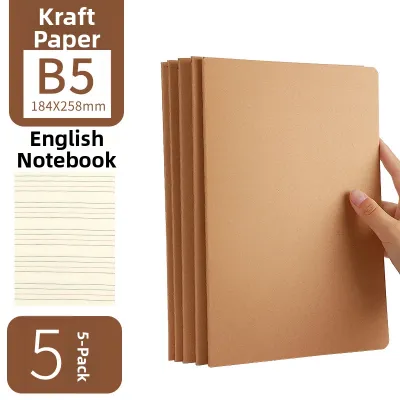
Prices are valid at publication and may change. Please refer to the product page for the latest price.
Paper weight is measured in grams per square meter (GSM). While many people assume that a higher GSM automatically equals better paper, weight primarily determines the physical thickness of the sheet. A higher GSM provides a thicker barrier, which helps prevent “ghosting” (the shadow of writing visible on the reverse side) and physical bleed-through. However, weight alone does not prevent ink from spreading or feathering on the surface; a thick, untreated sheet can still absorb ink like a sponge.
Sizing is the chemical treatment applied to paper during manufacturing to control its water resistance. Internal sizing is mixed into the paper pulp, while surface sizing is applied to the finished sheet. Sizing acts as a barrier that slows down ink absorption, forcing the liquid to sit on top of the paper rather than soaking immediately into the fibers. This control is what prevents feathering, keeping your lines sharp and precise. However, heavily sized papers also cause ink to dry much slower, which can be a challenge for left-handed writers or those using notebooks on the go.
The finish of the paper refers to its surface texture, often described as ranging from smooth to toothy. Smooth papers, such as those that are hot-pressed or calendared, allow fountain pen nibs and marker tips to glide effortlessly without catching. This smooth surface minimizes friction and helps maintain consistent ink flow. Toothy papers have a more textured, rough surface that provides tactile feedback. While excellent for pencils and dry media, highly textured papers can cause wet inks to pool unevenly or wear down delicate felt-tip markers prematurely.
The raw material of the paper also plays a significant role in how it interacts with wet inks. Wood pulp papers are common and highly versatile, but their performance depends heavily on how finely the pulp is ground and processed. Cotton-content papers, while luxurious and highly durable, are naturally more absorbent and require precise sizing to prevent wet inks from feathering. Understanding whether a notebook uses wood-free paper, recycled fibers, or cotton blends can help you anticipate how it will behave under a wet nib.
Matching Notebook Paper Types to Your Ink and Pen
Different writing instruments require different paper characteristics to perform optimally. By grouping common notebook papers into distinct categories, you can easily identify which type will work best with your preferred tools.

Heavily sized and coated papers are the gold standard for wet fountain pens, broad nibs, and highly saturated inks. These papers often have a smooth, almost glassy finish that resists liquid penetration. When you write on this paper, the ink pools slightly on the surface, allowing shading and sheen properties of specialty fountain pen inks to stand out beautifully. The primary trade-off is drying time. Because the ink cannot soak quickly into the fibers, it remains wet on the surface for longer, making it susceptible to smudging if you close the notebook too quickly. This effect is amplified in humid tropical environments, where moisture in the air further delays evaporation.
Lightly sized and mid-weight papers (typically ranging from 70 GSM to 90 GSM) offer a balanced compromise for everyday writing. These papers are designed to handle standard fountain pens with fine or medium nibs, gel pens, and fine-liner markers. They absorb ink just enough to allow for relatively fast drying times while still maintaining enough surface resistance to prevent major feathering. While you might experience minor ghosting on the reverse side of the page, actual bleed-through is usually minimal unless you use an exceptionally wet ink or a broad marker.
Unsized or highly absorbent papers, such as standard recycled utility paper or cheap sketchbooks, should generally be avoided for wet media. These papers lack the chemical barriers necessary to control liquid spread. When wet ink touches the surface, it immediately wicks along the loose fibers, causing severe feathering that distorts your handwriting. The ink also penetrates deep into the sheet, leading to immediate bleed-through that ruins the subsequent pages. While these notebooks are perfectly fine for ballpoint pens or graphite pencils, they are highly frustrating for anyone using fountain pens or liquid ink markers.
The formulation of the ink itself is just as important as the paper type. Dye-based inks, which are common in standard fountain pen cartridges, tend to soak deeper into paper fibers and are more prone to feathering on low-quality sheets. Pigment-based and iron gall inks, on the other hand, contain solid particles or chemical compounds that tend to bind to the surface of the paper rather than soaking in. This means that even on slightly more absorbent, mid-weight papers, a pigment-based ink may resist feathering and bleed-through much better than a standard dye-based ink.
How to Test Notebook Paper Before Committing to a Purchase
Because paper formulations can change and individual ink formulas vary widely, conducting a personal paper test is the most reliable way to ensure compatibility before committing to a new notebook brand. If you are testing a notebook in a retail store that offers sample sheets, or if you have just purchased a new journal, dedicate the very last page to a standardized testing protocol.
Begin with a swatch test to evaluate surface behavior. Draw a series of straight lines using your most common writing instruments, observing how quickly the ink settles. Next, draw a few solid dots and hold the pen down for a second to create a small pool of ink. Watch the edges of these lines and pools closely under good lighting. If the edges remain sharp and clean, the paper has excellent sizing. If you notice tiny, hair-like branches spreading outward from the ink, the paper is feathering and may not be suitable for wet nibs.
Next, perform a bleed-through and ghosting check. Turn the page over and examine the reverse side. Ghosting is normal for thinner papers and is simply a visual shadow, but actual bleed-through occurs when spots of ink physically penetrate to the back of the sheet. If you see distinct droplets of ink on the reverse side, or if the ink has transferred onto the following page, the paper cannot handle that specific pen and ink combination.
Finally, conduct a drying time and smudge test. Write a few words and gently run your finger across the text after five, ten, and fifteen seconds. Note how long it takes for the ink to dry completely. This test is particularly important if you plan to use the notebook for rapid note-taking, as highly coated papers that require more than twenty seconds to dry can easily lead to accidental smudges during busy meetings or lectures.
When conducting these tests, vary your writing speed and nib pressure to simulate real-world usage. A slow, deliberate stroke deposits significantly more ink onto the page than a quick, light scribble, making it a much tougher test for the paper’s sizing. If you use multi-colored inks or dual-tip markers, test each color individually, as different dyes and pigments can alter the ink’s surface tension and cause varying degrees of feathering on the exact same sheet of paper.
Decision Framework: Choosing the Right Notebook for Your Tools
Selecting the perfect notebook involves balancing your writing instruments, your writing style, and your environmental conditions. Use the following guidelines to narrow down your choices based on your primary tools.
If your primary tools are alcohol-based markers, heavy highlighters, or very wet fountain pens with broad or stub nibs, prioritize heavily coated papers or high-GSM options (typically 100 GSM and above). These papers provide the physical thickness and chemical resistance needed to contain high volumes of liquid. Be prepared for longer drying times, and consider keeping a sheet of blotting paper inside your notebook to absorb excess ink before closing the cover.
If you prefer standard fountain pens with fine or medium nibs, gel pens, or fine-liners, and you value fast drying times, look for mid-weight, lightly sized papers (around 80 GSM to 90 GSM). These papers offer the best balance for daily journaling and note-taking, allowing you to write quickly on both sides of the page without waiting excessively for the ink to dry or worrying about severe feathering.
When dealing with highly saturated inks, custom ink blends, or multi-media projects, always verify the manufacturer’s specifications regarding paper treatment. If you are unsure, test a single notebook or purchase a loose-leaf pack of the same paper type before investing in a premium bound journal. This step ensures that your specific combination of pen, ink, and writing pressure will deliver the clean, crisp results you expect.
Frequently Asked Questions (FAQ)
Does a higher GSM always guarantee no bleed-through for fountain pens?
No, a higher GSM does not guarantee that paper will resist bleed-through. While weight determines the thickness of the sheet, it is the chemical sizing and surface treatment that control how the paper absorbs liquid. An unsized, highly absorbent 120 GSM paper can still suffer from severe bleed-through and feathering because the fibers act like a sponge. Conversely, a well-sized, high-quality 52 GSM or 68 GSM paper can handle wet fountain pen inks beautifully without any bleed-through, even though you will experience some visual ghosting due to the thinness of the sheet.
What adjustments can I make if my current notebook paper causes slight feathering?
If your favorite notebook is causing minor feathering, you can make several adjustments to your writing setup without needing to replace the paper. First, try switching to a finer nib size or a drier ink formulation, as some inks are specifically designed to flow less freely. Second, reduce your writing pressure; pressing too hard can force ink deeper into the paper fibers and break through the surface sizing. Finally, ensure your hands do not transfer natural oils onto the page before writing, as these oils can disrupt how the paper absorbs ink and lead to localized feathering.

Community discussion
Share your experience or ask a question. Comments are reviewed before publication.