
Finding the notebook brand with the ideal paper quality is not about searching for a single, universal winner. Instead, paper performance depends entirely on how a manufacturer’s specifications interact with your specific writing instruments and inks. A notebook that offers a flawless, feather-free experience for a fountain pen user might cause frustrating smudges for someone writing with a gel pen, while a highly absorbent paper that dries instantly might feel scratchy or bleed when paired with a wet rollerball. To find your ideal notebook, you must evaluate key physical properties like weight, sizing, and texture, matching them to your daily writing tools.
Key Specifications That Define Paper Quality
Paper weight, measured in grams per square meter (GSM), is the most common specification on a notebook’s label. While a higher GSM generally indicates a thicker, more opaque sheet that reduces show-through (ghosting), it is not a direct guarantee of ink resistance. A heavy paper can still allow ink to bleed if its internal fiber structure is loose or lacks proper treatment.
Bleed-through occurs when ink penetrates entirely through the paper fibers to the reverse side of the page. Surface sizing and coatings are chemical treatments applied during manufacturing to regulate how much liquid the paper absorbs. Highly sized or coated papers resist liquid penetration, forcing the ink to sit on top of the page and dry via evaporation rather than soaking in.
Products mentioned in this guide
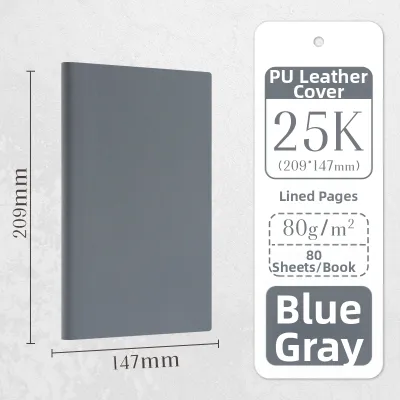
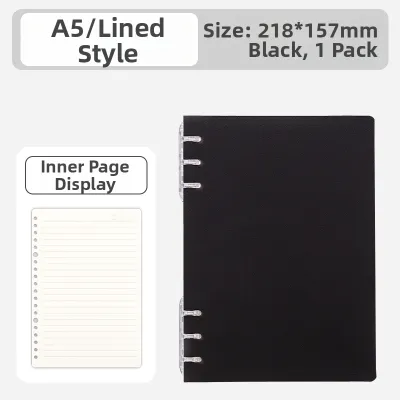
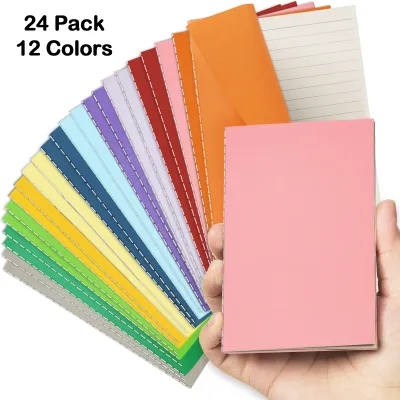
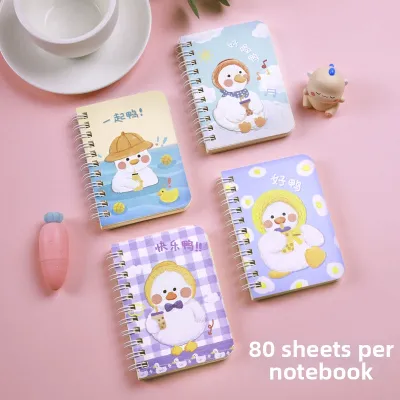
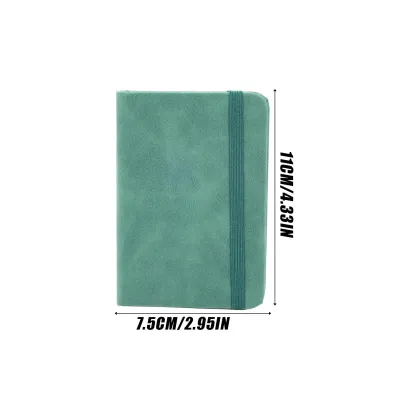
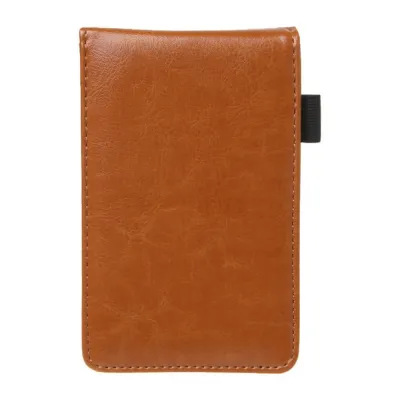
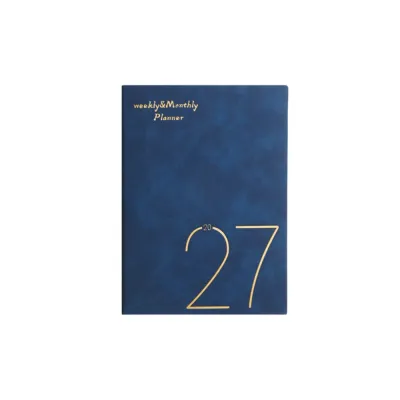
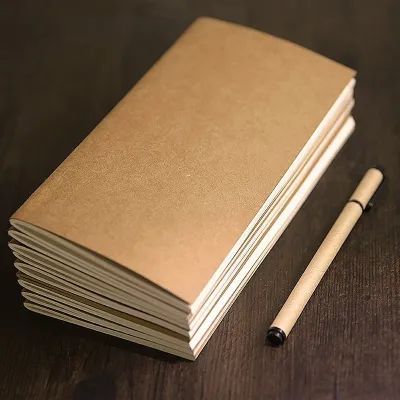
Prices are valid at publication and may change. Please refer to the product page for the latest price.
While heavy sizing prevents feathering—where ink spreads along the paper fibers like tiny spiderwebs—it significantly extends drying times. Uncoated papers, by contrast, absorb ink rapidly but are far more prone to feathering and bleeding if paired with wet writing instruments.
Paper shade is another crucial factor, ranging from bright, high-contrast white to warm cream and ivory tones. Bright white paper maximizes the contrast and color accuracy of your inks, making vibrant colors pop, but it can cause eye strain during long writing sessions under bright study lights. Warmer cream and ivory tones absorb more blue light, offering a softer, more comfortable reading and writing experience, though they can subtly alter the perceived color of your ink.
Matching Paper Characteristics to Your Pen and Ink
Fountain pens require paper with exceptional absorbency control. Because fountain pen inks are water-based and delivered in relatively high volumes, standard copy paper or poorly sized notebook pages will quickly pull the ink deep into the fibers, causing severe feathering and bleed-through. Look for papers specifically treated with surface sizing that allows the ink to pool slightly, preserving crisp lines and showcasing ink properties like shading or sheen.

Gel and rollerball pens present a different challenge. These pens use water-based or gelled inks that flow smoothly but require a balance of absorption and drying speed. If the paper surface is too heavily coated or non-absorbent, gel ink will sit on top of the page for an extended period, leading to accidental smudges as your hand moves across the sheet. This smudging issue is particularly acute for left-handed writers, whose hands naturally drag across recently written text. For these users, a medium-weight, semi-absorbent paper is ideal, as it allows the gel ink to set within a few seconds while still maintaining clean, sharp lines without excessive feathering.
Ballpoint pens and pencils thrive on entirely different paper characteristics. Because ballpoints rely on a viscous, oil-based ink and require physical pressure to roll the ball tip, they perform best on paper with a slight texture or “tooth.” Highly coated, ultra-smooth papers can cause ballpoint tips to slip, resulting in skipped lines or uneven ink delivery. Pencils similarly require a textured surface to shave off the graphite core as you write. A paper with a moderate tooth grabs the graphite effectively, producing dark, legible lines. If the paper is too smooth or heavily coated, the graphite will struggle to adhere, resulting in faint writing and rapid smudging when pages rub against each other.
What to Look for When Evaluating Notebook Brands
When browsing notebook options online or in stationery shops in Singapore, you will frequently encounter marketing terms like “fountain pen friendly,” “ink-proof,” or “bleed-resistant.” It is important to treat these claims as general guidelines rather than absolute guarantees, as manufacturers test their products under specific, often undisclosed, pen and ink conditions. A paper labeled “fountain pen friendly” might handle a fine-nib pen with dry ink perfectly, but struggle when subjected to a broad nib or a highly saturated, wet ink.
Beyond the paper itself, the binding method of a notebook significantly impacts your overall writing experience. Stitched bindings, such as Smyth-sewn or thread-bound designs, allow the notebook to open completely flat on your desk. This lay-flat capability ensures you can write comfortably across the entire width of the page without fighting a springing cover or struggling to write near the inner margin. Glued or perfect-bound notebooks, while often more affordable, tend to resist laying flat and may require you to hold the pages down constantly. Over time, forcing these notebooks flat can crack the spine, leading to loose pages. Spiral or wire-bound notebooks offer excellent lay-flat performance and allow you to fold the book back on itself, though the physical rings can sometimes interfere with your hand placement depending on whether you are left- or right-handed.
Pay close attention to paper dimensions and ruling formats to ensure they match your writing style. Standard international sizes like A5 or B6 offer a great balance of portability and writing space, fitting easily into bags for daily commutes. Ruling options—such as lined, grid, dot grid, or blank—should align with your tasks; dot grids are highly versatile for combining structured writing with quick sketches or diagrams. Finally, look for environmental or manufacturing certifications if sustainability is a priority. Certifications from organizations like the Forest Stewardship Council (FSC) indicate that the paper is sourced from responsibly managed forests. Some premium brands also specify the exact paper mill or country of origin, which can serve as a reliable indicator of consistent quality control across different production batches.
How to Test and Verify Paper Quality Before Committing
Before purchasing multiple notebooks or committing to a single brand for long-term journaling, it is highly beneficial to perform a structured paper test. If you are shopping in a physical boutique that offers tester notebooks, or if you have just received a single copy, dedicate the very last page to a comprehensive pen test. This hands-on evaluation provides immediate, objective feedback that no online review can fully replicate.
Begin by conducting a systematic swatch test using the exact pens and inks you plan to use daily. Draw a series of solid lines, write a few sentences at your normal writing speed, and create a small, saturated block of color. Immediately start a timer to measure the exact drying time, checking the ink at three-second intervals to see when it stops smudging under a light finger swipe. Once the ink has dried completely, examine the edges of your writing closely under good lighting. Look for any signs of feathering, where the ink bleeds outward into the surrounding fibers, making the text look fuzzy. If the lines remain sharp and crisp, the paper’s surface sizing is performing well for that specific ink and nib combination.
Next, turn the page over to evaluate the reverse side. Check for two distinct phenomena: ghosting (also known as show-through) and actual bleed-through. Ghosting occurs when you can see the shadow of the writing through the paper, which is common in thinner papers but still allows you to write on both sides. Bleed-through, where wet ink spots physically penetrate the sheet, means you will only be able to use one side of each page. Finally, assess the physical texture or “tooth” of the paper by running your fingertips across an unwritten section, then writing a few words with your eyes closed. Pay attention to the feedback your pen sends to your hand. If the pen glides too quickly without control, the paper may be too slick; if you feel a scratchy resistance or hear a distinct scraping sound, the paper may be too rough for your writing pressure.
Decision Framework: Choosing the Right Notebook for Your Needs
To simplify your selection process, you can use a structured decision framework based on your primary writing tools. If your daily writing involves wet fountain pens, broad rollerballs, or heavy ink applications, prioritize heavily sized, high-GSM paper (typically 100 GSM or above). This combination ensures that your ink will not bleed through to the next page, allowing you to use both sides of the sheet comfortably, even if you have to wait a few extra seconds for the ink to dry.
If your preferred writing instruments are gel pens or fine-liner pens, look for smooth, medium-weight paper (around 80 GSM to 90 GSM) with moderate sizing. This specification provides a smooth writing surface that allows the gel ink to dry relatively quickly, minimizing the risk of smudging while still preventing the ink from feathering or showing through excessively.
For those who primarily use standard ballpoint pens, mechanical pencils, or wooden pencils, standard uncoated paper with a noticeable texture is the most practical choice. These papers provide the necessary friction for reliable ink transfer and graphite adhesion, and they are often lighter in weight, making the notebooks highly portable and cost-effective for daily note-taking and rapid drafting.
If you enjoy using specialized inks, such as shimmering inks with suspended glitter particles, high-sheening inks, or iron gall formulas, always verify paper compatibility on a small scale first. Highly coated papers are excellent for showing off sheen and shimmer because they keep the particles on the surface, but some chemical coatings can react unpredictably with acidic or highly pigmented inks, altering their color or causing unexpected drying issues.
Frequently Asked Questions (FAQ)
Does a higher GSM always guarantee better paper for fountain pens?
No, a higher GSM (Grams per Square Meter) does not automatically guarantee that a paper will perform well with fountain pens. While a thicker, heavier paper is more opaque and less likely to show ghosting, its resistance to ink feathering and bleed-through is primarily determined by its surface sizing and chemical coatings. A thin, highly sized 52 GSM or 68 GSM paper can handle wet fountain pen inks beautifully without any feathering, whereas a thick, unsized 120 GSM sketch paper might act like a sponge, causing ink to spread rapidly and bleed through to the next page.
Why does ink smudge on some premium notebooks?
Ink smudging on premium notebooks is usually the result of a deliberate design trade-off between ink control and drying speed. High-quality notebooks designed for wet inks often feature smooth, non-porous coatings or heavy sizing that prevents the ink from absorbing deeply into the paper fibers. While this keeps the lines crisp and prevents bleed-through, it forces the liquid ink to sit on top of the page and dry slowly through evaporation. If you write quickly or close the notebook too soon, this pooled ink will easily smudge.

Community discussion
Share your experience or ask a question. Comments are reviewed before publication.