
Finding the perfect notes book in Singapore often comes down to how well the paper handles your favorite pens. Whether you are jotting down quick meeting minutes, sketching diagrams, or keeping a daily journal, few things are as frustrating as turning the page only to find your previous writing has bled through or left a dark, distracting shadow. Because paper performance is a dynamic interaction between the paper’s physical properties and the specific writing instrument you use, there is no single brand that universally prevents these issues.
To make an informed decision, you must understand how paper weight, coatings, and fiber density interact with different ink types. In Singapore’s humid climate, paper can naturally absorb ambient moisture over time, which can subtly alter how ink dries and spreads on the page. By learning what specifications to look for on product labels and how to match your pens to the right paper grade, you can easily find a notebook that keeps your writing clean, legible, and contained to a single side of the sheet.
Understanding Bleed-Through vs. Ghosting in Notebook Paper
To choose the right paper, you must first distinguish between two common but distinct phenomena: bleed-through and ghosting. While both issues result in your writing being visible on the reverse side of a page, they are caused by entirely different physical processes and require different solutions.
Products mentioned in this guide
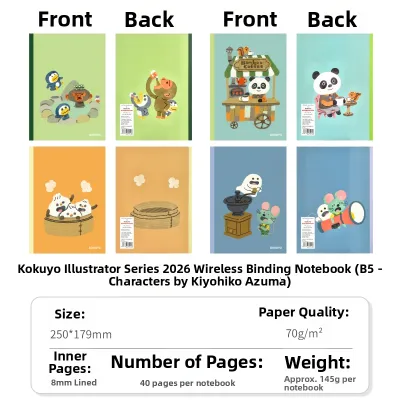
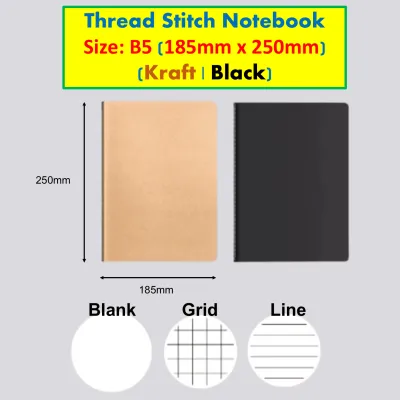
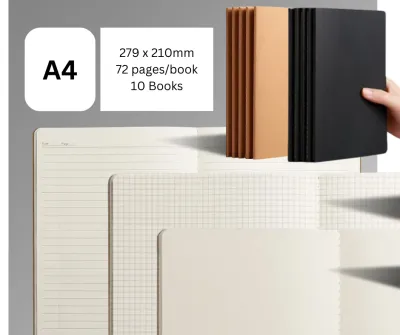
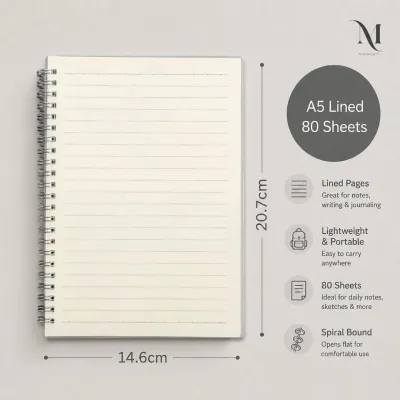

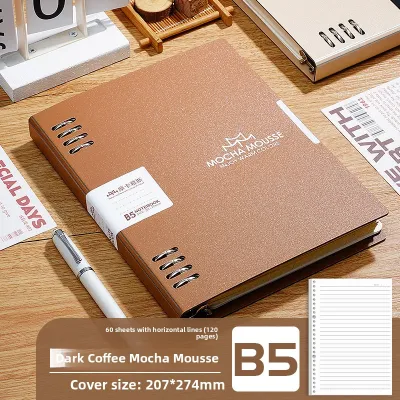
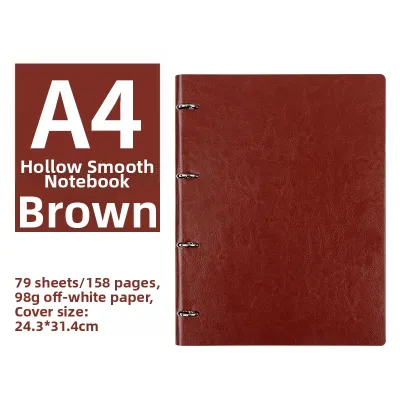
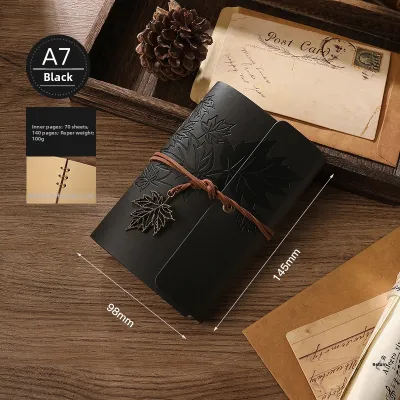
Prices are valid at publication and may change. Please refer to the product page for the latest price.
Bleed-through occurs when ink physically penetrates the paper fibers, traveling completely from the writing surface to the back of the sheet. In severe cases, the ink may even transfer onto the subsequent page of your notes book. This is a structural failure of the paper’s resistance to liquid, often caused by highly absorbent, loosely packed fibers or a lack of protective surface treatments. When bleed-through happens, the reverse side of the page becomes virtually unusable, forcing you to skip pages and waste paper.
Ghosting, also known as show-through, is a visual effect rather than a physical penetration of ink. It occurs when the shadow or outline of your writing is visible through the page, even though the ink itself remains safely on the front surface. Ghosting is primarily a function of paper opacity and thickness. If the paper is thin or highly translucent, dark inks will naturally show through as a grey or colored shadow. Unlike bleed-through, ghosted pages are still physically dry and writable, though the visual clutter can make reading your notes uncomfortable.
Key Paper Specifications to Check Before Buying
When browsing the stationery aisles in Singapore, you cannot always test the paper before purchasing. Fortunately, manufacturers print key technical specifications on notebook bands, back covers, or online product listings that can help you predict how the paper will behave.

Paper weight, measured in grams per square meter (GSM), is the most common metric available. Standard office copy paper typically ranges from 70 GSM to 80 GSM, while premium notebooks generally feature paper weights between 80 GSM and 120 GSM. As a general rule, higher GSM indicates thicker, heavier paper, which naturally increases opacity and reduces ghosting. However, GSM alone does not guarantee resistance to bleed-through; a heavy paper with loose fibers can still absorb wet ink like a sponge.
To prevent bleed-through, you must look for paper that has undergone sizing or coating. Sizing is a chemical treatment applied during manufacturing (either mixed into the pulp or applied to the dry sheet’s surface) that reduces the paper’s tendency to absorb liquids. Coated papers, such as those with satin, silk, or clay finishes, create a smooth barrier that keeps ink sitting on top of the page rather than soaking in. This surface treatment slows down absorption, which dramatically reduces bleed-through and feathering, though it may slightly increase the time it takes for wet inks to dry.
Paper texture, often referred to as “tooth,” also plays a role in ink behavior. Smooth, highly calendered papers have very little tooth, allowing pens to glide effortlessly across the surface with minimal friction. This smoothness helps prevent ink from pooling in microscopic valleys, resulting in sharp, crisp lines. Toothy or rough papers grab more ink from the pen tip, which can lead to localized pooling and a higher risk of bleed-through, especially when using wet rollerball or fountain pens.
Evaluating Popular Notebook Brands Available in Singapore
When shopping at local stationery hubs, specialty bookstores, or lifestyle shops in Singapore, you will encounter several distinct categories of notebooks. Evaluating these categories based on their typical paper specifications will help you narrow down your choices.
Japanese stationery brands are highly regarded for their meticulous paper engineering. Many of these brands offer notebooks specifically designed for multi-pen use, often featuring proprietary paper lines that are exceptionally smooth and highly sized. When evaluating these brands, look for product lines explicitly labeled as “fountain pen friendly” or those featuring specialized smooth paper. While these papers are often thin (sometimes as light as 52 GSM to 68 GSM), their advanced surface sizing prevents bleed-through remarkably well, though you may experience moderate ghosting due to the thinness of the sheets.
Minimalist and lifestyle brands, which are widely available in Singapore’s shopping malls, often focus on clean aesthetics, lay-flat bindings, and sustainable materials. These notebooks frequently utilize standard 80 GSM to 90 GSM uncoated paper, which sometimes includes recycled fibers. While these pages offer a pleasant, slightly toothy writing experience that is excellent for dry ballpoint pens and pencils, they tend to be highly absorbent. If you use wet gel pens or liquid ink rollerballs, these papers are highly susceptible to both ghosting and minor bleed-through.
Premium imported journals and diaries, often originating from Europe, typically feature structured layouts, durable hardcovers, and paper weights ranging from 80 GSM to 120 GSM. Many of these brands use acid-free, ivory-colored paper. The cream or ivory tint is highly beneficial because it reduces the visual contrast between the paper and the ink shadow, making ghosting far less noticeable than it would be on stark white paper. When evaluating these premium options, check the packaging for terms like “ink-proof” or “high opacity” to ensure the paper has been treated to handle wet writing instruments.
To make the best decision, use a simple framework: if you write primarily with wet inks, prioritize specialized high-GSM or coated paper lines. If you prefer everyday dry ballpoint pens, standard uncoated lines from lifestyle or minimalist brands will offer excellent cost-efficiency and fast drying times without any performance issues.
Matching Your Pen and Ink Type to the Right Paper
Your choice of writing instrument is the single most important factor in how a notebook’s paper behaves. Matching the ink delivery system of your pen to the physical characteristics of the paper is essential for a clean writing experience.
Fountain pens and liquid-ink rollerballs deliver a high volume of water-based ink to the page. Because this ink is highly fluid, it requires paper with excellent sizing and a dense fiber structure. If you write with these instruments, avoid standard uncoated papers under 90 GSM, as they will almost certainly suffer from feathering (where the ink spreads sideways along the fibers) and severe bleed-through. Instead, seek out coated papers or heavy-duty sheets of 100 GSM and above.
Gel pens are incredibly popular in Singapore for daily writing, utilizing water-based gel inks that carry heavy pigment loads. These pens require smooth paper with moderate absorption. If the paper is too heavily coated, the gel ink will pool on the surface and smudge easily, especially in high-humidity environments where drying times are naturally extended. If the paper is too absorbent, the highly pigmented gel ink will sink deep into the fibers, causing noticeable ghosting. An 80 GSM to 90 GSM smooth, uncoated or lightly sized paper typically provides the ideal balance for gel pens.
Ballpoint pens are the most forgiving writing instruments available. They use thick, oil-based inks with high viscosity that sit on top of the paper fibers rather than soaking into them. Because very little liquid is transferred to the page, ballpoint pens rarely cause bleed-through or ghosting, even on cheap, thin, or recycled 70 GSM paper. If you exclusively use ballpoints, you can choose almost any notes book based on design, binding, and price without worrying about paper specifications.
How to Test a Notebook for Bleed-Through and Ghosting
Because paper and ink chemistry can vary, the most reliable way to ensure compatibility is to conduct a quick, systematic pen test on any new notes book before committing it to daily use.
To begin, select a small, inconspicuous area of the notebook, such as the very last page or the inside back cover. Gather the pens you use most frequently, making sure to include the wettest pen, the thickest gel pen, and the heaviest highlighter in your collection. This ensures your test represents the absolute worst-case scenario for the paper.
Write a few words with each pen, using your normal writing pressure. Next, draw a small, solid block of color with your wettest pen and run your highlighter across a line of text twice to simulate heavy usage. As you write, observe how quickly the ink dries and check for any immediate feathering along the edges of your letters.
Once the ink has dried completely, turn the page and examine the reverse side under direct, bright light. Check first for physical ink spots (bleed-through). If you see distinct dots of color on the back, the paper’s sizing is insufficient for that specific pen and ink combination. Next, look at the overall shadow of the writing (ghosting). If the shadow is faint and does not interfere with your ability to read text, the notebook is suitable for double-sided writing.
If a notebook fails your test with wet pens, do not throw it away. You can easily repurpose it for dry ballpoint pens, colored pencils, or graphite pencils, all of which will perform beautifully without any risk of showing through the page.
Frequently Asked Questions (FAQ)
Does higher GSM always guarantee no ghosting?
No, a higher GSM does not automatically guarantee that you will not experience ghosting. While GSM measures the weight of the paper, ghosting is primarily determined by the paper’s opacity and fiber density. A 100 GSM paper made with highly translucent fibers or lacking opacifying mineral fillers can still show significant ghosting. Conversely, a well-engineered, highly dense 80 GSM paper with a light cream tint can resist ghosting much better than a heavier, lower-quality white sheet.
Can I use highlighters on standard notebooks without bleed-through?
Standard notebook paper of 70 GSM to 80 GSM often struggles with highlighters because they deposit a large volume of liquid ink in a single stroke, particularly where the tip pauses at the end of a line. To prevent highlighter bleed-through, look for notebooks with at least 90 GSM paper that features a light surface coating. Alternatively, you can switch to dry highlighters, gel-based highlighters, or mild pastel highlighters, which deliver less moisture to the page than traditional fluorescent wet markers.

Community discussion
Share your experience or ask a question. Comments are reviewed before publication.