
Choosing the right name stickers for primary school children requires matching their changing developmental stages, reading abilities, and organizational skills from Primary 1 through Primary 6. In the early years, large, high-contrast labels help young students identify their belongings in a crowded classroom or busy school canteen. As children transition to upper primary levels, their needs shift toward discreet, minimalist designs that fit smaller stationery items like mechanical pencils, rulers, and scientific calculators.
By aligning sticker sizes, materials, and designs with your child’s specific grade level, you can prevent lost property while respecting their growing desire for personal expression. This guide outlines how to select the most practical, durable, and age-appropriate name stickers for every stage of the primary school journey.
Matching Sticker Size and Font to Your Child's Reading Stage
Early readers in the lower primary grades benefit most from bold, clean, sans-serif fonts. Avoid highly stylized scripts, cursive, or elaborate decorative lettering that can confuse a child who is still mastering basic letter shapes. Clear, standard print fonts ensure that both your child and their teachers can read the label instantly from a distance.
Products mentioned in this guide
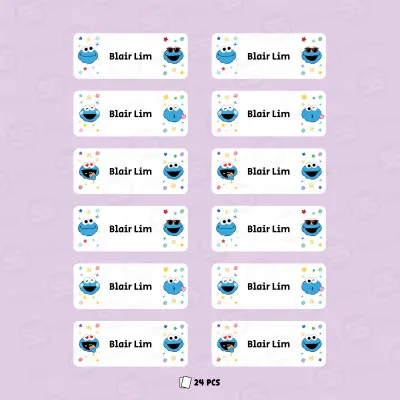
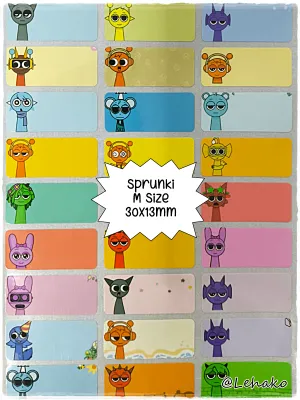
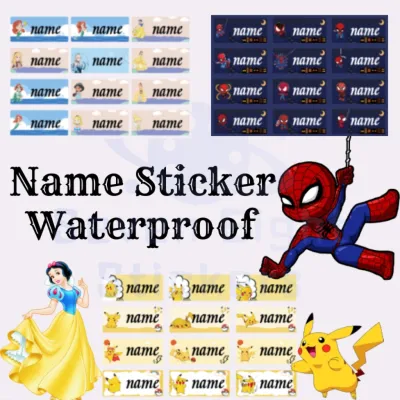
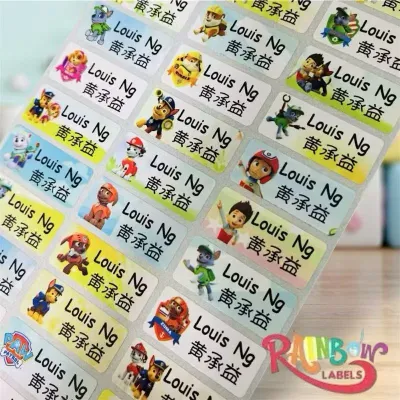
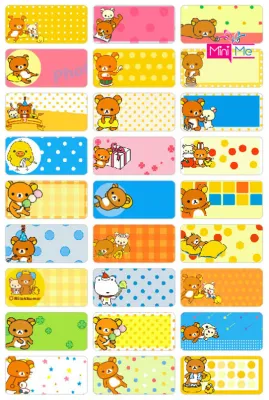
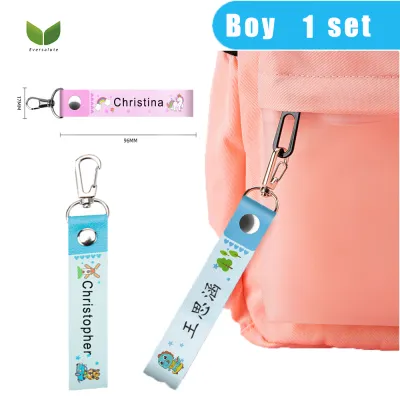
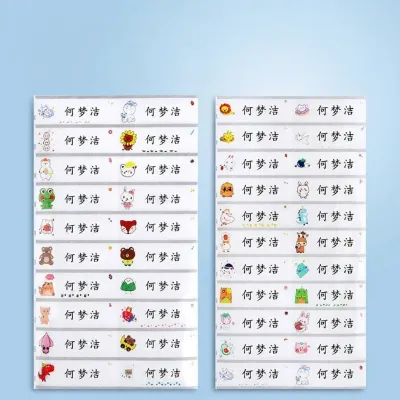
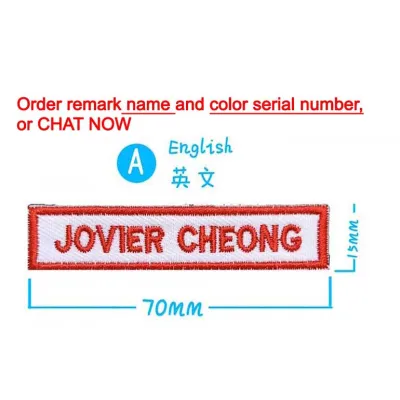
Prices are valid at publication and may change. Please refer to the product page for the latest price.
Visual contrast is critical for quick recognition on busy classroom tables. A dark font printed on a solid, light-colored background, or a bright white font on a solid dark background, ensures the name stands out clearly. Avoid busy, multi-colored background patterns directly behind the text, as these can obscure the letters and make the name difficult to read under fluorescent classroom lighting.
Character count and letter spacing must be carefully managed to prevent the text from becoming cramped. If your child has a long double-barrelled name or multiple middle names, a standard small sticker will compress the text into illegibility. For longer names, opt for wider label dimensions, or use a recognizable short form or first name paired with a surname initial to keep the print clear and legible.
Before purchasing a large batch of labels, verify the print quality and resolution. Look for high-resolution printing that does not blur or bleed at the edges of the letters. Sharp, crisp text is much easier for a young child to read, especially when scanning a pile of identical lunchboxes or water bottles during recess.
Primary 1 and 2: Prioritizing High Visibility and Durability
Lower primary students are adjusting to a fast-paced school environment where they must manage their own belongings, often for the first time. Large, brightly colored name stickers are essential for major daily items such as water bottles, lunchboxes, insulated food jars, and school bags. These high-visibility labels allow children to spot their items quickly in a crowded classroom or lost-and-found bin.

At this stage, durability is paramount because lower primary school supplies undergo rigorous daily handling, frequent drops, and constant washing. Select stickers made from thick, scratch-resistant vinyl or synthetic materials that can withstand rough treatment without tearing or fading. A protective laminate layer over the print is highly recommended to prevent the ink from wearing off over time.
Waterproof properties are non-negotiable for food and drink containers. Ensure the labels are rated to survive daily hand-washing with dish soap and warm water without peeling at the corners. The adhesive must be strong enough to resist the condensation that forms on cold water bottles during hot school afternoons.
Keep the graphic design simple and functional to avoid unnecessary distractions. While children may want their favorite cartoon characters, overly busy designs can detract from the name itself. A simple, solid-colored background with a small, easily identifiable icon—such as a star, an animal, or a simple geometric shape—helps a young child recognize their sticker even before they can fully read their own name.
Primary 3 and 4: Balancing Personalization and Item Size
As children enter middle primary, their school supplies become more varied and smaller in size. They begin using specialized stationery like mathematical instrument sets, art folders, multiple notebooks, and correction tapes. Consequently, the large stickers used in lower primary are no longer practical for these compact items.
Transition to medium-sized stickers that fit neatly onto the spines of textbooks, the covers of exercise books, and the flat surfaces of pencil cases. These mid-sized labels provide enough space for legible text while remaining compact enough not to overlap edges or peel off easily from narrow surfaces. Investing in a comprehensive multi-pack, which typically costs between S$10 and S$25, ensures you have the right label size for every item.
Middle primary is also the stage where children develop distinct personal interests, hobbies, and aesthetic preferences. Introduce themed or character-based designs that reflect their personality, whether they prefer sports motifs, space themes, or specific color palettes. Ensure that these decorative elements are placed along the border so they do not obscure the printed name.
To manage this diverse range of school gear, look for multi-pack assortments. These packs typically contain a mix of large, medium, and small round or rectangular stickers. Having a variety of sizes on hand allows you to label everything from a wide plastic art folder to a slim ruler using the same cohesive design theme.
Primary 5 and 6: Opting for Subtle and Compact Labels
Upper primary students generally prefer a much more mature and understated look for their school gear. Large, colorful stickers with cartoon icons are often rejected as being too childish. Instead, older children appreciate minimalist designs that blend seamlessly with their high-quality stationery, calculators, and electronic devices.
Opt for small, ultra-slim, or discreet labels designed specifically for individual pens, mechanical pencils, slim rulers, and scientific calculators. These micro-labels fit perfectly on narrow cylindrical barrels without wrapping around and overlapping, which can cause the edges to lift and collect dirt.
Neutral color palettes, simple geometric borders, or clear transparent backgrounds are ideal for this age group. Transparent stickers with black or white text are particularly effective because they allow the original design and color of the stationery to show through, creating a clean, professional appearance.
Respect your child’s input during the selection process. Allowing them to choose simple, elegant fonts and minimalist layouts encourages them to take responsibility for their belongings. At this stage, the primary goal of the label is simple identification in case of loss, rather than visual guidance for a developing reader.
Material and Adhesive Checks for School Supplies
Before purchasing any name stickers, it is crucial to verify the material specifications and adhesive properties to ensure they are fit for purpose. For items like water bottles and lunchboxes, look for explicit waterproof and dishwasher-safe claims on the packaging. These specifications indicate that the adhesive can withstand high temperatures and moisture without peeling.
Check the adhesive type based on how the item will be used. For personal items that will be kept long-term, a permanent, high-tack adhesive is ideal. However, for shared classroom materials, rented textbooks, or expensive calculators that might be resold or handed down, look for removable or residue-free adhesives that can be peeled off cleanly without leaving a sticky, stubborn film.
Safety is a key consideration, especially for items that come into direct contact with food or are handled constantly by younger children. Review the product details for non-toxic material certifications, ensuring the stickers are free from harmful chemicals like phthalates, BPA, and lead. This is particularly important for lunchbox lids and water bottle caps where hands and mouths frequently touch.
Consider the texture of the surface you are labeling. Standard adhesive stickers adhere best to smooth, flat, non-porous surfaces like plastic, metal, and laminated paper. If you need to label textured plastics, matte-finished metal flasks, or silicone sleeves, verify that the sticker manufacturer specifies compatibility with these challenging materials, as standard adhesives may lift quickly.
Sticker Profiles by Primary School Stage
To help you quickly identify the most suitable labeling strategy for your child, the following table summarizes the recommended sticker profiles for each primary school stage.
| Grade Level | Primary Use Cases | Recommended Size | Design Style | Key Material Feature |
|---|---|---|---|---|
| Lower Primary (P1–P2) | Water bottles, lunchboxes, school bags, large folders | Large (approx. 30mm x 40mm or larger) | High-contrast, bold fonts, simple recognizable icons | Heavy-duty, scratch-resistant, fully waterproof vinyl |
| Middle Primary (P3–P4) | Textbooks, exercise books, art folders, pencil cases | Medium (approx. 15mm x 30mm) | Themed borders, hobby-based graphics, clear text | Multi-size assortments, standard water-resistant laminate |
| Upper Primary (P5–P6) | Pens, pencils, rulers, scientific calculators, personal devices | Small/Slim (approx. 5mm x 20mm) or transparent | Minimalist, neutral colors, clear backgrounds, simple fonts | Residue-free adhesive, ultra-thin profile, discreet finish |
Frequently Asked Questions (FAQ)
How do I safely remove sticky residue left by old name labels?
Removing stubborn adhesive residue from plastic or metal school supplies requires a gentle, step-by-step approach to avoid scratching the surface. Start by soaking the affected area in warm, soapy water for a few minutes to soften the glue, then gently rub it with a soft microfiber cloth. For more persistent residue, apply a small drop of mild cooking oil or eucalyptus oil to the spot, let it sit for a minute, and wipe it away. Always test any oil or mild solvent on a small, hidden area of the item first to ensure it does not discolor or degrade the plastic.
Can I use the same name stickers for fabric school uniforms and hard stationery?
Standard vinyl or paper name stickers are not designed for fabric and will quickly peel off during a single wash cycle. Fabric items like school uniforms, physical education (PE) attire, socks, and canvas school bags require specialized labels that can flex with the material. Look for iron-on labels that use heat-activated adhesive to fuse with the fabric fibers, or stick-on fabric labels specifically rated for laundry use. These specialized textile labels are engineered to withstand the agitation, water, and detergents of a washing machine without fraying or detaching.
What is the best technique for applying stickers to curved water bottles?
Applying a flat sticker to a curved surface like a water bottle without creating wrinkles or air bubbles requires careful preparation. First, clean the surface thoroughly with rubbing alcohol or warm soapy water to remove any oils, dust, or moisture, and let it dry completely. When applying the sticker, align it carefully and press down firmly on the exact center first. Using your thumb, smooth the sticker outward from the center to the edges, pushing any trapped air bubbles out as you go. For highly contoured bottles, choosing smaller or more flexible stickers will naturally prevent creasing along the curves.

Community discussion
Share your experience or ask a question. Comments are reviewed before publication.