
MUJI notebooks have earned a dedicated following in Singapore for their clean, minimalist aesthetic, but deciding whether they justify their price premium over other local options requires looking closely at how you write. While some writers find the smooth texture and consistent performance of MUJI paper ideal for daily notes, others might find that alternative brands offer better value or superior compatibility with specific inks. Ultimately, the right choice depends on your preferred writing tools, your budget, and how you plan to use each page, rather than a single universal standard of quality.
Evaluating a notebook goes beyond its cover design. The interaction between your pen’s ink and the paper fibers determines whether your writing experience feels effortless or frustrating. In Singapore’s retail landscape, stationery options range from highly economical school exercise books to imported specialty journals. Understanding how MUJI fits into this spectrum allows you to make an informed purchase that balances cost, utility, and tactile satisfaction.
Defining the Comparison: MUJI and Common Market Alternatives
MUJI notebooks are widely recognized for their stripped-back design, featuring plain cardboard or flexible plastic covers without loud branding. This minimalist approach extends to the paper inside, which typically comes in several standard ruling styles, including lined, grid, dot grid, and entirely blank sheets. The binding formats are equally diverse, ranging from thread-bound lay-flat designs to wire-bound spirals and simple staple-bound booklets. Most MUJI paper features a light cream or off-white hue, which is designed to reduce eye strain during long writing sessions compared to high-brightness bleached white paper.
Products mentioned in this guide
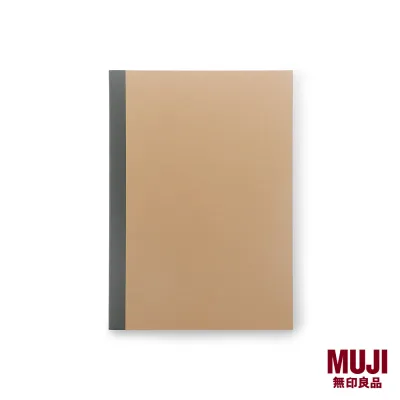
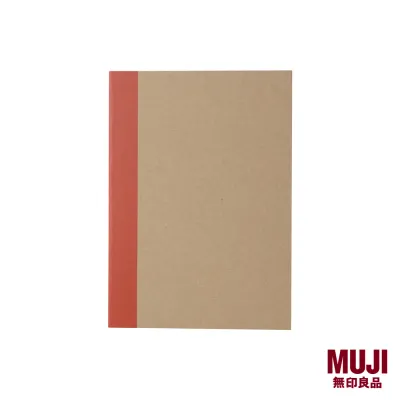
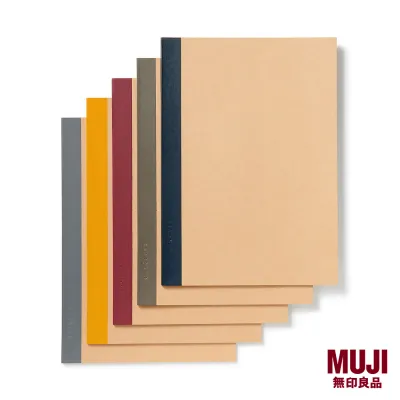
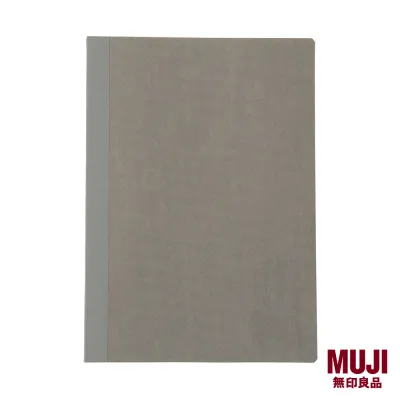
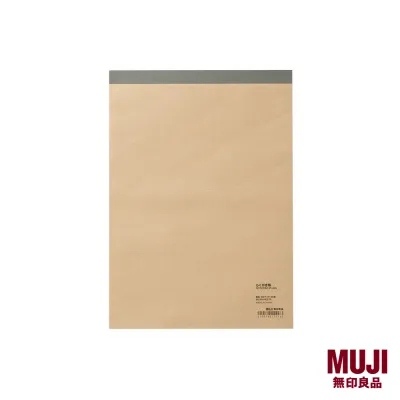
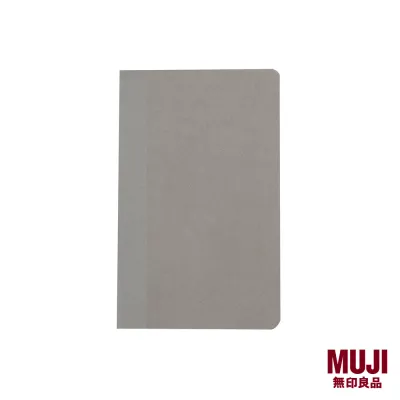
Prices are valid at publication and may change. Please refer to the product page for the latest price.
In addition to standard wood-free paper, the brand also offers recycled paper options. These recycled notebooks often have a slightly rougher texture and a greyish or light brown tint, which appeals to eco-conscious writers but may affect ink color accuracy. The plantation-derived paper options, by contrast, are typically smoother and brighter, making them more suitable for precise color work with multi-colored gel pens.
When shopping in Singapore, you will encounter several categories of alternatives to MUJI. On one end of the spectrum are budget-friendly supermarket brands and local bookstore exercise books, which are highly accessible and cost-effective for high-volume writing. On the other end are specialized premium imported notebooks, often sourced from Japan or Europe, which cater to fountain pen enthusiasts and professional sketchers. These premium options often feature proprietary paper coatings and heavier paper weights designed to handle wet inks without degrading.
To make an accurate comparison between these options, you must learn to read product labels and packaging specifications. The most critical metric to look for is the paper weight, measured in GSM (grams per square meter), which indicates the density and thickness of the paper. Additionally, verify the physical dimensions—such as standard ISO sizes like A4, A5, B5, or A6—and the total sheet count. Checking these details on the back cover or the online product listing ensures you are comparing notebooks of equivalent size and capacity rather than relying solely on visual impressions.
Core Dimensions for Evaluating Paper Quality and Texture
To truly understand how a notebook performs, you can conduct simple, physical tests using your own writing instruments. The first dimension to evaluate is texture, often referred to as the “tooth” of the paper. Tooth describes the microscopic roughness of the paper surface. Pencils and traditional ballpoint pens generally perform better on paper with a slight tooth, as the friction helps wear down the graphite or roll the ball smoothly. Conversely, gel pens and fine-liners often feel more satisfying on highly calendered, ultra-smooth paper where the tip can glide without resistance.

Ink compatibility and bleed-through represent the second major dimension of paper quality. When testing a new notebook, find a sample page at the very back to observe how the paper reacts to your favorite pens. Pay close attention to drying time, which can be influenced by Singapore’s high relative humidity; highly coated papers may keep ink wet on the surface for longer, leading to accidental smudges. Look closely for feathering, which occurs when ink spreads sideways along the paper fibers, creating fuzzy, distorted lines instead of sharp, clean strokes.
High humidity can also cause stored paper to absorb moisture from the air over time, making it softer and more prone to feathering or ink bleeding than when it was freshly unwrapped. Storing notebooks in dry drawers or using protective covers can help maintain the original paper quality and texture.
Bleed-through is a more severe issue where ink penetrates completely through the sheet, making the reverse side unusable. This is distinct from show-through, or “ghosting,” which is the third dimension to evaluate. Ghosting occurs when the paper is thin or highly translucent, allowing you to see the shadow of your writing from the other side even though the ink has not physically broken through. You can check for ghosting by holding a written page up to bright overhead lighting or a window to see if the contrast interferes with readability on the reverse side.
Assessing the Price Premium: When to Pay More
Deciding whether to pay a premium for MUJI or other high-end notebooks depends heavily on your specific use cases. If you are keeping an archival journal, preparing professional meeting notes, or maintaining a long-term reference planner, investing in higher-quality paper is highly justified. Premium papers are often acid-free, meaning they resist yellowing and crumbling over several years. The structural integrity of the binding also ensures that pages do not detach over months of frequent handling, preserving your hard work.
Thread-bound notebooks allow the book to lie completely flat, which maximizes the usable writing area and prevents hand strain near the margins. Spiral bindings offer flexibility as they can be folded back 360 degrees, making them ideal for tight spaces like small lecture hall desks or public transport commutes in Singapore, though the metal or plastic coils can sometimes interfere with your wrist while writing.
Conversely, there are many scenarios where standard, budget-friendly notebooks are entirely sufficient. For rough drafting, temporary mathematical calculations, high-volume school scratchpads, or daily brain dumps that you plan to discard, paying extra for premium paper texture is unnecessary. In these cases, the physical sensation of writing and the long-term durability of the paper do not impact the utility of the task. Standard utility paper allows you to write freely without feeling like you are wasting expensive stationery.
To evaluate the true value of a notebook, calculate the cost per page rather than looking only at the retail price. Take the total price in S$ and divide it by the number of sheets to find the unit cost. For example, a notebook costing S$4.00 with 80 sheets has a cost of S$0.05 per sheet, whereas a budget notebook costing S$1.50 with 60 sheets costs S$0.025 per sheet. Combine this calculation with an assessment of the binding durability—such as checking if the spine is stitched securely or merely glued—to determine if the price premium translates to a lower cost-in-use over time.
Decision Framework: Choosing Your Ideal Notebook
To simplify your next stationery purchase in Singapore, you can use a straightforward, condition-based decision framework. Choose MUJI notebooks if you value a clean, minimalist aesthetic, prefer consistent baseline paper quality for everyday gel or ballpoint pens, and want standard sizing that fits easily into standard protective covers. MUJI’s paper is highly reliable for standard office and school work, offering a smooth writing surface that handles common black and blue gel inks exceptionally well without excessive ghosting.
You should choose premium alternative brands if your writing style demands highly specialized paper characteristics. For instance, if you regularly use wet fountain pens, heavy markers, or light watercolor washes, you will require notebooks with a high GSM rating or specialized ink-resistant coatings that prevent feathering and bleed-through. These premium lines also offer niche layouts, such as specific dot grid spacings or specialized engineering grids, which are rarely found in standard minimalist collections.
Opt for budget alternatives if your primary goal is high-volume, disposable note-taking where paper texture, archival longevity, and aesthetic appeal are low priorities. These economical options are perfect for students tackling practice exams, temporary lists, or quick sketches. Before making any bulk purchase, always verify compatibility by testing your specific pens on a single sheet or checking the manufacturer’s specifications for ink limitations, ensuring your tools and paper work in perfect harmony.
Frequently Asked Questions (FAQ)
Do standard notebooks work well with fountain pens?
Standard notebook paper is often not optimized for the high volume of liquid ink delivered by fountain pens. Because standard paper fibers are typically more absorbent and less tightly bound, wet fountain pen inks are highly likely to feather across the page or bleed through to the reverse side. To ensure a good writing experience, look for notebooks that explicitly state they are compatible with fountain pens, or test a single page with your specific nib size and ink formula before committing to a full journal.
How can I check the paper weight of a notebook before buying?
The easiest way to verify paper weight is to look for the GSM (grams per square meter) specification, which is commonly printed on the back cover label or listed in the product details on online marketplaces. If the GSM is not explicitly stated, you can estimate the weight in-store by gently feeling a single page between your thumb and forefinger. Compare its stiffness, thickness, and resistance to bending against a known reference notebook to gauge whether it will meet your writing needs.

Community discussion
Share your experience or ask a question. Comments are reviewed before publication.