
Finding the most suitable notebook for your writing instruments is a balancing act between paper chemistry and ink formulation. The ideal choice among Moleskine, Leuchtturm1917, and Rhodia depends heavily on your specific nib size, ink wetness, and marker type, as each brand utilizes distinct paper weights, surface treatments, and manufacturing standards. To avoid feathering, ghosting, or prolonged drying times, writers must evaluate how these papers interact with different mediums. This guide establishes a practical framework for analyzing paper specifications, assessing each brand’s observable performance, and testing your tools to ensure a seamless writing experience.
Understanding Paper Specifications for Ink Performance
To make an informed decision when purchasing a premium notebook, it is essential to understand the technical specifications that dictate how paper behaves under wet ink. The most common metric found on notebook labels is paper weight, measured in Grams per Square Meter (GSM). While a higher GSM generally indicates a thicker, heavier sheet that resists bleed-through, weight alone does not guarantee ink compatibility. The internal structure and density of the paper fibers play an equally critical role in preventing liquid from penetrating to the reverse side of the page.
Sizing and surface coatings are the primary defenses against ink feathering and bleeding. Sizing refers to chemical additives—such as starch, rosin, or synthetic polymers—introduced during manufacturing to control the paper’s absorbency. Unsized or lightly sized paper acts like a sponge, pulling ink rapidly into its fibers through capillary action, which causes the crisp lines of a fountain pen to spread outward (feathering) and seep downward (bleed-through). Conversely, heavily sized or coated papers restrict absorption, forcing the ink to dry slowly on the surface. This surface-drying process preserves sharp line edges and enhances the visual characteristics of the ink, such as shading and metallic sheen.
Products mentioned in this guide
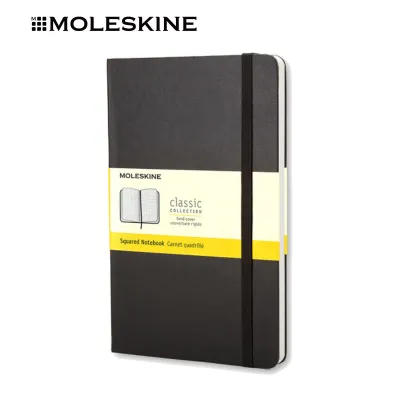
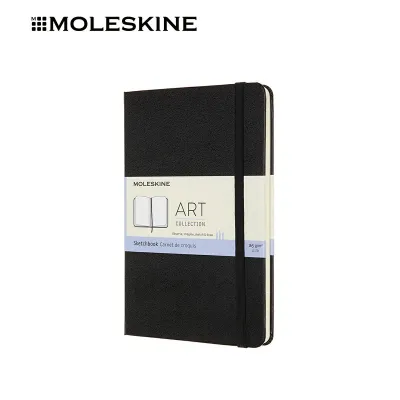
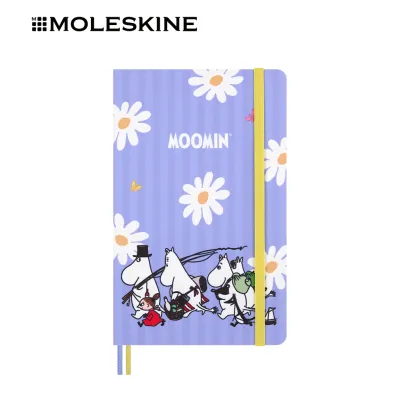
Prices are valid at publication and may change. Please refer to the product page for the latest price.
Paper texture, often referred to as “tooth,” also significantly influences your writing experience. Smooth, low-tooth papers allow fountain pen nibs to glide effortlessly across the page with minimal friction, but they can feel slippery and slow down ink drying times. Textured, high-tooth papers provide tactile feedback that many writers enjoy, but the rougher surface can accelerate the wear and tear of delicate marker tips, particularly flexible brush pens. Balancing these three elements—weight, sizing, and texture—is key to matching your writing tools with the right paper.
Evaluating Moleskine for Fountain Pens and Markers
Standard Moleskine notebooks are widely recognized for their classic design and ivory-colored pages, but their paper requires careful consideration if you plan to use wet writing instruments. When reviewing a standard Moleskine notebook, the product label typically indicates a paper weight of 70 gsm or 80 gsm. This relatively light weight, combined with a highly absorbent, lightly sized formulation, makes the paper highly susceptible to ink penetration.

If you use wet fountain pens, medium or broad nibs, or alcohol-based markers on standard Moleskine paper, you are highly likely to observe significant feathering and bleed-through. The liquid ink quickly saturates the thin fibers, causing lines to lose their definition and creating dark spots on the reverse side of the page. Alcohol-based art markers, which rely on fast-evaporating solvents to lay down heavy color, will almost always bleed through standard Moleskine paper, often staining the subsequent pages beneath.
To achieve a clean writing experience in a standard Moleskine notebook, it is best to adapt your tool selection. Dry-writing instruments, such as ballpoint pens, pencils, gel pens with fine tips, and extra-fine fountain pens paired with dry-flowing inks, generally perform well without causing excessive show-through. If you prefer to use wet markers, brush pens, or broad fountain pens, you should look for Moleskine’s specialized “Art Collection” or “Sketchbook” lines, which feature much heavier paper weights (ranging from 120 gsm to 165 gsm or more) designed specifically to handle wet media.
Evaluating Leuchtturm1917 for Fountain Pens and Markers
Leuchtturm1917 notebooks have earned a strong reputation among journal enthusiasts for their functional details and ink-friendly paper. The standard Leuchtturm1917 notebook features 80 gsm paper, which is specifically formulated to be “ink-proof.” While this paper is relatively thin, its chemical sizing is designed to resist feathering and prevent ink from breaking through to the other side of the page.
When writing on standard 80 gsm Leuchtturm1917 paper with a fountain pen, you will observe a slight texture that provides a pleasant, controlled feedback. The paper handles most standard fountain pen inks and water-based fineliners exceptionally well, maintaining sharp, crisp lines with minimal feathering. However, because the paper is light, “ghosting” (also known as show-through) is a common characteristic. While the ink rarely bleeds through to create physical spots on the back of the page, you will clearly see the shadow of your writing from the reverse side, which may bother writers who prefer a pristine look.
For those who use broad nibs, wet inks, or heavy water-based markers, the standard 80 gsm paper may push the limits of your tolerance for ghosting. To address this, you can verify if the notebook is part of Leuchtturm1917’s “120 gsm Edition.” This heavier paper option dramatically reduces ghosting while preserving the signature cream color and smooth writing feel, making it an excellent alternative for bullet journalers who enjoy using colorful markers and wet pens without sacrificing the use of the reverse page.
Evaluating Rhodia for Fountain Pens and Markers
Rhodia notebooks and notepad products are highly favored by fountain pen users due to their exceptionally smooth, coated paper. Most Rhodia products feature 80 gsm or 90 gsm brushed vellum paper manufactured by Clairefontaine. This paper undergoes a specialized surface treatment that creates a slick, low-friction barrier, allowing metal nibs to glide effortlessly without catching or scratching.
The primary benefit of Rhodia’s coated paper is its strong resistance to ink penetration. Even when using highly saturated inks, wet broad nibs, or water-based brush markers, the paper resists feathering and bleed-through remarkably well. Because the ink sits on top of the coating rather than soaking into the fibers, it dries slowly, allowing the ink’s natural shading, color variation, and metallic sheen to become highly visible. This makes Rhodia a highly suitable choice for calligraphy, ink swatching, and detailed handwriting practice.
However, this coated surface introduces specific trade-offs that you must evaluate. Because the ink remains wet on the surface for longer, the risk of accidental smudging is high, particularly for left-handed writers whose hands drag across the page, or when writing quickly in fast-paced environments. Additionally, while water-based markers perform beautifully on Rhodia paper, highly concentrated alcohol-based markers will still eventually penetrate the 80 gsm or 90 gsm barrier if applied in multiple layers, so care must be taken during heavy coloring.
Brand Comparison and Decision Framework
To help you choose the right notebook for your specific writing kit, the following table summarizes the key specifications to verify and the observable traits of each brand:
| Brand | Typical Paper Weight | Surface Finish | Primary Risk | Compatible Instrument Match |
|---|---|---|---|---|
| Moleskine | 70 gsm – 80 gsm | Uncoated, smooth | High feathering & bleed-through | Ballpoints, pencils, dry extra-fine gel pens |
| Leuchtturm1917 | 80 gsm (or 120 gsm) | Lightly sized, slight tooth | Moderate ghosting (show-through) | Fine-to-medium fountain pens, fineliners |
| Rhodia | 80 gsm – 90 gsm | Coated, satin smooth | Long drying times & smudging | Wet fountain pens, broad nibs, brush pens |
Use this decision matrix to guide your next purchase:
- Choose Moleskine if: You prioritize a classic, globally available aesthetic, primarily use dry writing tools like ballpoints or pencils, and prefer fast-drying pages that allow you to close your notebook immediately.
- Choose Leuchtturm1917 if: You want a highly organized journal with numbered pages, use standard fountain pens or water-based markers, and do not mind seeing a faint shadow of your writing on the back of the page.
- Choose Rhodia if: You want to showcase the full beauty of your fountain pen inks, prefer an ultra-smooth writing surface with zero drag, and do not mind waiting a few extra seconds for your ink to dry.
If you have strict requirements for absolutely zero ghosting and zero bleed-through while using extremely wet, broad fountain pens or heavy alcohol-based art markers, you may need to stop and look beyond these standard options. In such cases, consider specialized papers engineered specifically for high-volume ink applications, such as notebooks featuring Tomoe River paper or heavy mixed-media cardstock.
How to Test Your Notebook and Ink Combination
Before committing to writing on the main pages of a new notebook, which can represent a significant investment, it is highly recommended to perform a safe, controlled ink test. This simple step prevents frustration and ensures your chosen pen and ink combination will perform as expected throughout the life of the journal.
To conduct a test, turn to the very last page of the notebook or use a discrete corner of an index page. Create a simple swatch chart by drawing a series of short lines, grids, and solid blocks with each of your writing instruments. For fountain pens, write a few words at your normal writing speed, and then draw a small pool of ink to test the paper’s saturation limit. For markers, draw a single stroke alongside a double-layered stroke to see how the paper handles layering.
Once the ink has dried, examine the reverse side of the page under both natural daylight and bright artificial desk lamps. Natural light is excellent for assessing the true level of ghosting, while artificial light can help you spot tiny pinpricks of bleed-through where the ink has managed to break through the paper’s sizing. Finally, evaluate the drying time by writing a word and gently running a clean finger across it at 5-second intervals, allowing you to adjust your writing habits accordingly.
Frequently Asked Questions (FAQ)
Does paper color (ivory vs. white) affect ink visibility and sheen?
Yes, the color of the paper plays a significant role in how your ink’s color and characteristics are perceived. Bright white paper provides the highest contrast, making ink colors appear vibrant and true to their bottle formulation while allowing metallic sheens to stand out clearly. Ivory or cream-colored paper, which is standard for Moleskine and Leuchtturm1917, absorbs blue light, shifting cool ink colors like blues and purples toward a warmer, slightly greener or muted tone. However, many writers prefer ivory paper because it reduces glare and eye strain during long writing sessions under bright light.
How does high humidity affect ink drying times on coated paper?
High ambient humidity slows down the evaporation of water from liquid inks, which can dramatically extend drying times on coated papers like Rhodia. Because coated paper relies on evaporation rather than absorption to dry, writing in a humid environment can cause ink to remain wet on the page for several minutes, significantly increasing the risk of smudging. If you live or work in a humid climate, you can manage this by using a sheet of blotting paper as a hand rest, opting for faster-drying ink formulations, or choosing a slightly more absorbent, uncoated paper like Leuchtturm1917.

Community discussion
Share your experience or ask a question. Comments are reviewed before publication.