
Finding the perfect notebook for fountain pen writing requires balancing ink absorption, paper texture, and drying speed. Midori paper is highly regarded among stationery enthusiasts for its distinct balance of toothy feedback and ink resistance, but how it compares to other premium options depends heavily on your specific pen, nib size, and ink choices. While some writers prefer ultra-smooth, coated surfaces that maximize ink sheen, others favor the tactile response and quick absorption of uncoated sheets. Choosing the right notebook involves understanding how paper weight, sizing, and manufacturing techniques interact with liquid ink to prevent feathering and bleed-through.
In humid climates like Singapore, paper choice becomes even more critical. High ambient humidity can cause paper fibers to absorb moisture from the air, which can alter how ink behaves on the page. This moisture absorption often accelerates feathering and extends drying times, making the inherent qualities of your notebook paper even more noticeable. Understanding the technical specifications of your stationery helps you avoid the frustration of smudged notes and ruined pages.
To make an informed decision, you must look beyond brand names and aesthetic appeal. Evaluating the physical properties of the paper, such as its weight, coating, and fiber density, allows you to predict how it will handle different ink formulations. Whether you are using a fine nib for daily journaling or a broad stub nib for expressive calligraphy, matching your tools to the correct paper surface is the key to a satisfying writing experience.
Products mentioned in this guide
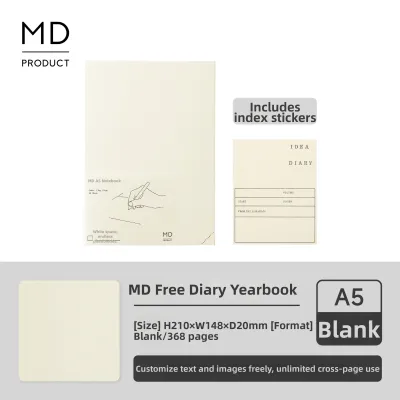
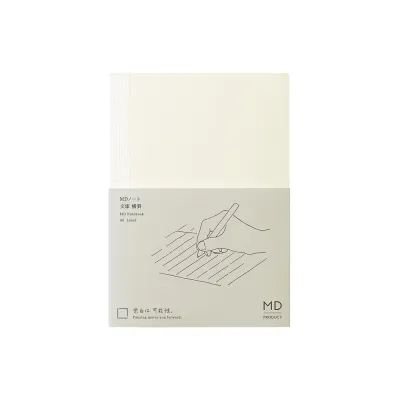
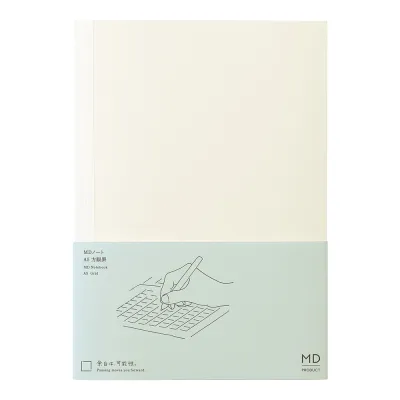
Prices are valid at publication and may change. Please refer to the product page for the latest price.
Core Paper Traits to Evaluate for Fountain Pens
When evaluating paper for fountain pen use, the primary concern is how the surface manages liquid ink. Fountain pen ink is water-based, meaning it behaves very differently from the oil-based inks found in ballpoint pens. When the ink contacts the paper, it must sit on the surface long enough to dry without soaking too deeply into the fibers. If the paper is too absorbent, the ink spreads laterally along the fibers, a phenomenon known as feathering, which ruins line definition.
Bleed-through occurs when the ink penetrates completely through the sheet to the reverse side, making it impossible to write on both sides of the page. This is largely controlled by internal and external sizing, which are chemical agents added during paper manufacturing to resist water penetration. Highly sized papers keep the ink on the surface, preserving sharp lines, while poorly sized papers act like blotting sheets, absorbing ink rapidly and causing severe bleeding.
Show-through, often called ghosting, refers to the visibility of writing on the reverse side of the page, even when the ink has not physically penetrated the paper. Ghosting is primarily determined by the paper’s opacity and thickness, rather than its chemical treatment. While some writers do not mind a faint shadow of their previous entries, others find it distracting and require highly opaque sheets to maintain readability on both sides.
Drying time and smudge resistance are also critical factors that depend on the paper’s surface coating. Highly coated papers prevent ink from absorbing, which enhances ink properties like shading and sheen but results in significantly longer drying times. In a fast-paced environment, slow-drying paper can lead to accidental smudges. Conversely, uncoated or lightly sized papers dry much faster but may absorb the ink too quickly, dulling the color.
Finally, the physical texture of the paper, often referred to as “tooth,” directly affects the writing sensation. Smooth papers allow the nib to glide effortlessly across the surface, which is ideal for fast writing but can sometimes feel slippery. Toothy papers, like Midori, offer a subtle resistance that provides tactile feedback to the hand. This feedback can improve writing control and precision, though it may feel scratchy if paired with an exceptionally fine or dry nib.
Midori vs. Premium Alternatives: Specification Comparison
Midori paper is characterized by its unique manufacturing approach, which prioritizes a natural writing feel. Typically available in weights around 80 grams per square meter (GSM), Midori MD paper is designed specifically to balance fountain pen compatibility with a tactile surface texture. It is an uncoated paper that undergoes specialized sizing to ensure that, despite its lighter weight and natural texture, it resists feathering and bleed-through. This makes it a distinct option compared to heavier, heavily coated premium papers.

In contrast, other premium notebooks often utilize high-GSM coated papers, frequently ranging from 100 GSM to 120 GSM. These heavier papers rely on a smooth clay coating to prevent ink penetration. The coating creates a barrier that keeps the ink sitting on top of the page, which minimizes ghosting and allows complex ink colors to shine. However, this coating also increases the overall thickness and weight of the notebook, making it bulkier to carry around for daily use.
Another category of premium paper includes ultra-thin specialty papers, which can be as light as 52 GSM. These papers use highly dense, specialized fibers to achieve ink resistance despite their tissue-like thickness. While they are highly resistant to bleed-through and feathering, their extreme thinness results in significant ghosting. This makes them popular for writers who value high page counts in a slim notebook profile and do not mind seeing the shadow of their writing on the reverse side.
The physical construction of the notebook also plays a major role in the writing experience. Midori notebooks are famous for their minimalist, thread-bound design that allows the book to lie completely flat on a desk. This lay-flat capability is essential for fountain pen users, as it prevents the pen from skipping or changing angles when writing near the center margin. Other premium brands may use perfect binding or stiff glue, which can force the writer to hold the pages down, disrupting the flow of writing.
Decision Framework: Which Notebook Fits Your Writing Setup?
Choosing the right notebook requires matching the paper’s characteristics to your specific writing tools and personal preferences. If you appreciate a tactile writing experience and value a minimalist, highly functional design, Midori is an excellent choice. Its subtle tooth provides excellent feedback, making it ideal for writers who use medium or fine nibs and standard daily inks. The lay-flat binding ensures comfort during long writing sessions, and the warm, cream-colored paper complements classic blue and black inks beautifully.
For those who prefer using very wet pens, broad nibs, or highly saturated specialty inks, high-GSM coated alternatives may be more suitable. The thick, coated surface of these papers provides a robust barrier against ink penetration, ensuring that even heavy pools of ink do not bleed through to the next page. This setup is perfect for calligraphers, artists, or anyone who requires absolute opacity and minimal ghosting for clean, double-sided writing. Keep in mind, however, that you will need to allow extra time for the ink to dry completely.
If your priority is a slim, lightweight notebook that can hold hundreds of pages without becoming bulky, ultra-thin specialty papers are the ideal match. These papers are highly favored by writers who enjoy watching their inks shade and sheen, as the dense fibers keep the ink on the surface to dry into beautiful gradients. This option is best for those who use fine nibs and do not mind the characteristic ghosting that comes with thin sheets. It is less suited for heavy wash techniques or very wet broad nibs.
Before making a purchase, always consider the specific ink formulations you plan to use. Highly saturated inks, shimmer inks, or iron gall inks can react differently depending on the paper’s sizing and coating. Uncoated papers like Midori may absorb highly saturated inks slightly faster, which can reduce the intensity of the sheen but offers a more practical drying time for daily note-taking. Evaluating your primary pen and ink combination first will guide you to the paper type that minimizes frustration and maximizes writing pleasure.
Practical Testing and Verification Steps
To ensure a notebook will perform well with your specific stationery collection, it is wise to conduct a systematic test before committing to a full journal. You can create a standardized test swatch on a single page, preferably at the back of the notebook. Use your most frequently used pens and inks to write a few lines, noting the nib size and ink brand. Draw a solid block of ink to test how the paper handles heavy saturation, and observe if the ink spreads or feathers along the edges.
A simple water drop test can also help you evaluate the paper’s sizing and water resistance. Place a tiny droplet of water on an unused corner of the page and observe how quickly it is absorbed. If the water beads up and sits on the surface, the paper has high sizing and will likely resist bleed-through well. If the water sinks in immediately, the paper is highly absorbent, suggesting that wet fountain pens may cause feathering or bleeding.
Next, evaluate the drying time by writing a line and gently wiping a finger across the ink at set intervals, such as five, ten, and fifteen seconds. This test is particularly important in humid environments like Singapore, where drying times can be significantly extended. Additionally, turn the page over under bright, direct lighting to check for ghosting and bleed-through. This visual check will help you determine if the paper is opaque enough for your double-sided writing needs.
If you experience unexpected issues, such as extreme feathering, ink skipping, or paper fibers clogging your nib, stop writing immediately. These problems can sometimes be caused by a mismatch between the ink’s chemical composition and the paper’s surface treatment. In such cases, consult the manufacturer’s guidelines for both your pen and ink. Adjusting your nib wetness, switching to a drier ink, or choosing a different paper weight can often resolve these issues without damaging your valuable writing instruments.
Frequently Asked Questions (FAQ)
Does paper weight alone guarantee no bleed-through?
No, paper weight alone does not guarantee resistance to bleed-through. While a higher GSM generally indicates a thicker sheet, the paper’s internal and external sizing, fiber density, and surface coatings play a much larger role in preventing ink penetration. A thin, highly sized paper can resist bleed-through far better than a thick, porous paper that lacks proper sizing. Always check the manufacturer’s specifications for fountain pen compatibility rather than relying solely on the weight of the paper.
Can I use shimmer or iron gall inks in standard premium notebooks?
Yes, you can use these specialty inks, but they require careful consideration of the paper type. Shimmer inks perform best on coated or highly sized papers that keep the metallic particles on the surface, allowing them to catch the light. Iron gall inks, which are highly acidic, require stable, high-quality paper fibers to prevent degradation over time. It is highly recommended to test these inks on a single back page first to verify that they do not feather, bleed, or react poorly with the paper’s chemical sizing.

Community discussion
Share your experience or ask a question. Comments are reviewed before publication.