
Choosing the right notebook often comes down to how a pen meets the page. While MD notebooks have earned a dedicated following for their distinct, minimalist, and slightly toothy paper texture, determining whether they offer “better” paper quality than popular alternatives depends entirely on your writing tools, ink choices, and daily note-taking habits. There is no single universal winner in the stationery world; a paper that feels luxurious to a fountain pen user might feel slow or overly absorbent to someone who prefers a quick-drying gel pen.
To find the best value for your budget, it is helpful to look past brand prestige and evaluate notebooks based on observable physical traits, ink handling capabilities, and cost-per-page. This guide compares the structural characteristics of MD paper against common market alternatives, providing a practical framework to help you choose the ideal medium for your thoughts, sketches, and daily tasks.
Understanding the Baseline: MD Notebook Paper Characteristics
To establish a reliable benchmark for comparison, you must first understand the core, observable traits of MD paper. When examining an MD notebook, begin by checking the manufacturer’s stated paper weight, which is typically measured in grams per square meter (GSM). While many standard notebooks do not explicitly print their GSM, premium options often list this specification along with details about their fiber composition and acid-free status on the product packaging or official specifications. Acid-free paper is particularly important if you intend to archive your journals, as it resists yellowing and degradation over time.
Products mentioned in this guide
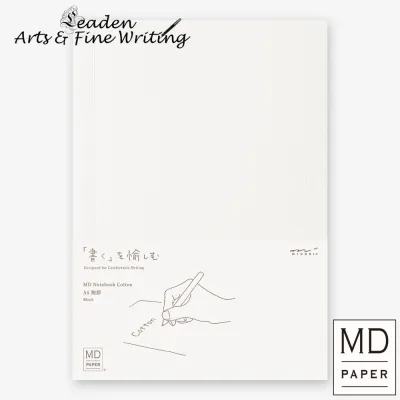
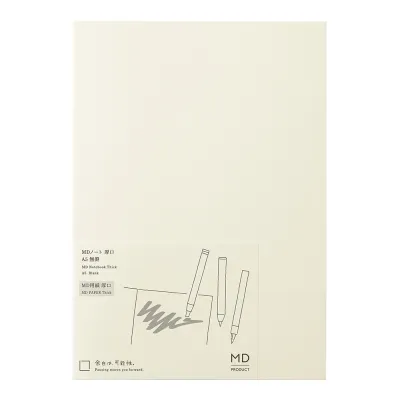
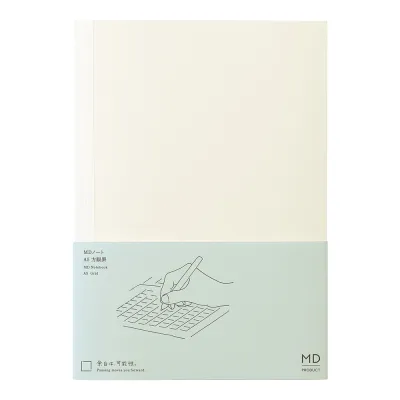
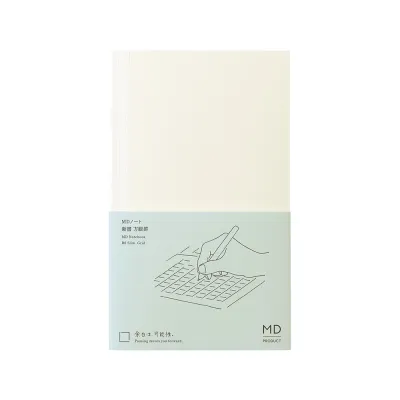
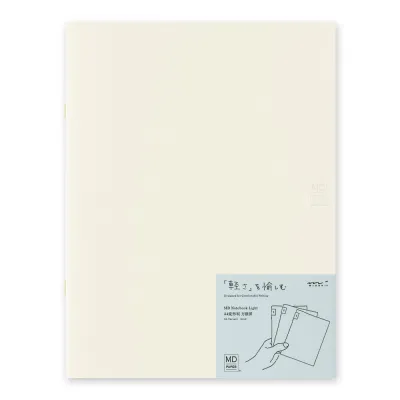
Prices are valid at publication and may change. Please refer to the product page for the latest price.
Next, observe the physical texture and color tone of the pages under typical indoor lighting. MD paper is characterized by a natural, warm off-white or cream tone rather than a stark, bleached white. This softer hue is designed to reduce eye strain during long writing sessions. When you run your fingers across the surface, you will notice a subtle tooth—a slight physical resistance that provides tactile feedback as you write. This is a deliberate design choice that contrasts sharply with the glassy smoothness of heavily coated alternatives.
Finally, examine the structural design of the notebook itself. MD notebooks utilize a thread-sewn binding method, which is visible along the spine when the book is opened. This binding style allows the notebook to lay completely flat on your desk, maximizing the usable page space near the center gutter. A true lay-flat design ensures that your hand does not have to fight the curve of the page, which is a common frustration with tightly glued or stapled alternatives.
Core Dimensions for Evaluating Notebook Paper Quality
Evaluating paper quality objectively requires a standardized checklist based on how the paper interacts with your specific writing instruments. The most critical dimension is ink handling, which encompasses absorption, bleed-through, and feathering. To test this, write a few lines using your primary tools, whether they are wet fountain pens, fine-liner gel pens, or standard ballpoints. Bleed-through occurs when ink penetrates completely to the reverse side of the page, rendering it unusable, while feathering refers to ink spreading sideways along the paper fibers, causing sharp lines to look fuzzy.

Paper weight and thickness must also align with your intended use. A higher GSM generally indicates a thicker, heavier sheet, which is beneficial if you use heavy markers, brush pens, or watercolor washes. However, thickness alone does not guarantee superior performance; the internal sizing and surface treatment of the paper play a massive role in how well it resists ink penetration. For everyday writing with fine-liners or ballpoints, a lighter, more flexible sheet may feel more comfortable and portable.
Surface texture is another key dimension that dictates writing friction and control. A smooth, polished surface allows gel pens and ballpoints to glide effortlessly, which is ideal for rapid note-taking or shorthand. Conversely, a toothier surface provides a controlled drag that fountain pen enthusiasts often prefer, as it prevents the nib from slipping and helps maintain consistent letter shapes.
Lastly, consider the optical brightness of the paper. High-brightness, bleached white papers can reflect a significant amount of light, which may lead to eye fatigue during extended reading or writing sessions under bright office lights. Muted, cream, or ivory tones absorb more light, offering a gentler contrast that is easier on the eyes over long periods.
Comparing MD Paper Against Common Market Alternatives
To make an informed decision, it is helpful to contrast MD paper with other widely available paper types based on their structural differences. Standard wood-pulp paper, commonly found in budget-friendly, high-volume notebooks at local bookstores, is typically thin, highly absorbent, and bleached to a bright white. While highly accessible and perfectly adequate for quick, disposable notes, this paper type often suffers from significant feathering and bleed-through when paired with wet inks or medium-tip gel pens.
In contrast, premium planners and specialized sketchbooks often feature heavily coated or highly polished paper types. These papers undergo a calendering process that compresses the fibers to create an exceptionally smooth, glossy finish. This coating slows down ink absorption, which virtually eliminates bleed-through and allows fountain pen inks to show off unique properties like shading and sheen. However, the trade-off is a significantly longer drying time, which can easily lead to smudging, especially for left-handed writers or those taking quick notes on the go.
Recycled or eco-friendly paper alternatives represent another distinct category. These papers often have a unique, rustic texture with visible fiber variations and a slightly toothier feel. While they appeal to environmentally conscious users, recycled papers can vary widely in quality; some may have lower opacity, leading to more pronounced ghosting (where writing is visible on the reverse side without actually bleeding through), and they may absorb ink more rapidly, causing line spread.
To help visualize these differences, consider the following comparison matrix mapping general paper types to their ideal writing instruments and typical use cases:
| Paper Type | Surface Texture | Ink Absorption Speed | Best-Suited Writing Instruments | Primary Use Case |
|---|---|---|---|---|
| Uncoated Minimalist (e.g., MD style) | Subtle tooth, natural cream | Moderate | Fountain pens, fine-liners, pencils | Journaling, structured sketching, long-form writing |
| Coated Premium | Exceptionally smooth, bright | Slow (high smudge risk) | Fine-nib fountain pens, ballpoints | Detailed planning, ink art, calligraphy |
| Standard Wood-Pulp | Variable, often slightly rough | Fast | Ballpoints, pencils, dry gel pens | Quick drafts, daily lists, high-volume logging |
| Recycled / Eco-Friendly | Toothy, textured | Fast to moderate | Ballpoints, pencils, dry gel pens | Eco-conscious journaling, casual note-taking |
Assessing Price-to-Value: When to Pay for Premium Paper
When shopping for stationery, premium notebooks can represent a notable investment compared to standard school or office supplies. To determine if a higher price tag is justified, start by calculating the cost per page or cost per 100 sheets. For example, if a notebook costs S$15.00 and contains 176 pages, your cost per page is approximately S$0.085. Normalizing the price this way allows you to compare notebooks of different sizes, dimensions, and page counts on an equal footing, revealing which options offer the best physical value.
Next, weigh the importance of archival quality and paper longevity against your daily writing needs. If you are keeping a personal journal, a creative portfolio, or professional records that you intend to keep for decades, investing in acid-free, high-quality paper is highly justified. However, if you are simply jotting down temporary daily to-do lists, phone messages, or rough lecture drafts that will be discarded within a few weeks, a budget-friendly, standard wood-pulp notebook is far more economical.
You must also factor in the hidden costs of your writing tools. High-quality, uncoated papers like MD are designed to perform beautifully with fountain pens and fine-liners, but they may require you to use specific inks to avoid feathering. Conversely, heavily coated papers might require you to invest in specialized quick-drying gel pens to prevent constant smudging. Consider your entire writing system—both the pen and the paper—to ensure you are not wasting money on premium paper that clashes with your favorite everyday writing instruments.
Decision Framework: Choosing the Right Notebook for Your Needs
To finalize your purchase decision, match your specific writing habits and environmental conditions to the strengths of each paper type.
Choose MD notebooks if you prioritize a tactile, slightly toothy writing experience and primarily use fountain pens, fine-liners, or pencils. The natural cream tone is ideal for reducing eye strain, and the lay-flat thread binding ensures a comfortable writing surface from edge to edge. Always verify ink compatibility by testing a small corner of the page if you use particularly wet or customized fountain pen inks.
Choose heavily coated premium alternatives if you prefer an ultra-smooth glide with zero feedback and require high-opacity paper for double-sided writing with wet inks. These papers are excellent for showcasing ink sheen and shading, though you must be willing to accommodate slower drying times, which can be challenging in humid tropical climates where moisture in the air can further delay ink drying.
Choose standard budget-friendly options if your notebook is destined for temporary drafts, quick lists, or high-volume daily logging where archival longevity is not a priority. These notebooks are highly accessible, easy to replace, and work perfectly with standard ballpoint pens and pencils.
Before purchasing any notebook in bulk, always verify the manufacturer’s specifications. Check for details regarding lay-flat binding, acid-free certification, and the exact GSM to ensure the product meets your standards. If possible, visit a local stationery store to feel the paper texture in person before committing to a large purchase.
Frequently Asked Questions (FAQ)
How can I test a notebook's paper quality before buying in bulk?
To test paper quality before committing to a bulk purchase, obtain a single sample notebook or a loose sheet of the same paper type. Use the exact pens, inks, and nib sizes you plan to use daily. Write a test passage using varying writing pressures and ink wetness, then inspect the reverse side of the page for ghosting or bleed-through. Additionally, hold the page up to a light source to evaluate its opacity and fiber consistency.
Does a higher paper weight (GSM) always mean better quality for fountain pens?
No, a higher paper weight does not automatically guarantee better performance with fountain pens. While a thicker sheet (high GSM) is less likely to show ghosting, its resistance to feathering and bleed-through depends heavily on the paper’s sizing—the chemical treatment applied during manufacturing to control water absorption. A well-sized 80 GSM paper can easily outperform an untreated 120 GSM paper when paired with wet fountain pen inks.
Are MD notebooks suitable for double-sided writing with gel pens?
MD notebooks are generally suitable for double-sided writing with standard gel pens, but performance depends on the pen’s tip size and ink flow. Because MD paper is uncoated and moderately absorbent, very bold gel pens (such as 0.7mm or 1.0mm tips) may produce slight ghosting on the reverse side. It is highly recommended to test your specific gel pen on a single back page to check the drying speed and opacity before utilizing both sides of every sheet.

Community discussion
Share your experience or ask a question. Comments are reviewed before publication.