
To choose the right mailer box size, you must match the internal dimensions of the packaging to the maximum physical boundaries of your product plus any necessary protective cushioning, while keeping the external dimensions small enough to avoid costly shipping surcharges. Selecting the wrong size can lead to damaged goods from shifting during transit or unexpected shipping fees due to oversized packaging. Finding the perfect balance ensures your items arrive safely while keeping your shipping budget intact.
Understanding Mailer Box Dimensions: Internal vs. External
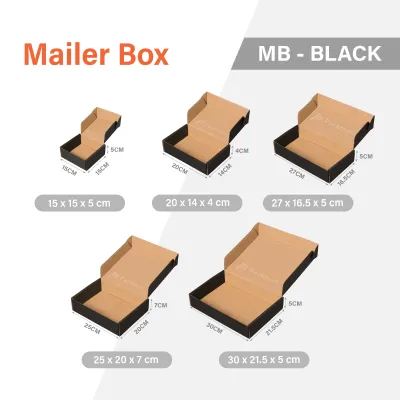
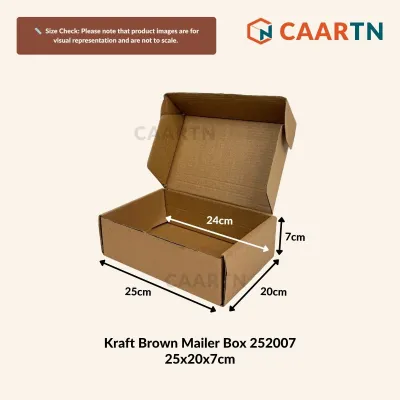
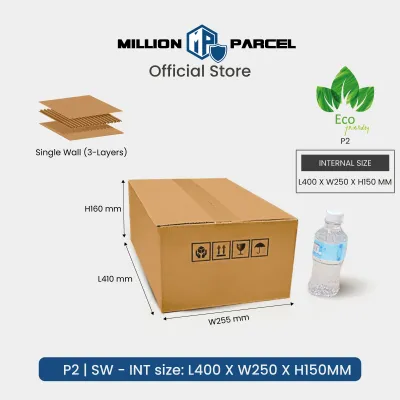
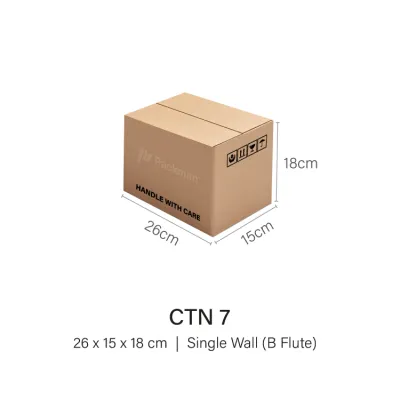
Confusing the external footprint of a mailer box with its internal usable space is one of the most common mistakes when purchasing packaging materials. Manufacturers always list dimensions in a standard format: Length x Width x Height (L x W x H). However, you must distinguish between internal and external measurements to ensure your products actually fit inside the box while complying with courier guidelines.
Internal dimensions represent the true usable capacity of the box. This is the space available for your product, tissue paper, bubble wrap, or paper fillers. Because corrugated cardboard has physical thickness, the space inside the box is always smaller than the space the box occupies on the outside.
Products mentioned in this guide
![[SG] 10 Pc Foldable Black Brown Kraft Paper Gift Mailer Jewellery Box Small Present Wrapping Christmas Birthday Present](https://img.lazcdn.com/g/ff/kf/S8f8887ff77ae464f99e25a2e7d0a9a17P.jpg_400x400q80.jpg_.webp)
Prices are valid at publication and may change. Please refer to the product page for the latest price.
External dimensions measure the outer footprint of the fully assembled box. These measurements are critical for calculating shipping costs. Logistics providers use external dimensions to determine volumetric or dimensional weight (DIM weight) and to plan vehicle space. Storage facilities also rely on external measurements to organize warehouse shelving and inventory stacking.
Material thickness directly impacts the difference between these two sets of measurements. A double-wall box or a box made with thicker corrugated layers will have a significantly larger external footprint than a single-wall box with the exact same internal capacity. When fitting tight or rigid items, you must always verify the manufacturer’s specified internal dimensions rather than relying on the overall external size.
How to Calculate the Ideal Box Size for Your Items
Determining the exact mailer box size you need requires a systematic measurement process before placing an order. Following a step-by-step framework prevents the common issue of buying boxes that are slightly too small, which forces the cardboard to bulge and compromises its structural strength.

First, measure the product at its widest, longest, and tallest points. Use a reliable ruler or calliper to find these maximum boundaries. Be sure to account for any protruding parts, such as bottle pumps, decorative tags, or existing retail packaging that will remain on the item during transit.
Second, add clearance for protective void fill or wrapping materials. Items should rarely be packed bare against the cardboard walls. For fragile goods like glassware or ceramics, add a buffer of 2 cm to 5 cm on all sides to accommodate bubble wrap, honeycomb paper, or packing peanuts. For sturdy, non-fragile items like apparel or books, a smaller clearance of 0.5 cm to 1 cm is sufficient to prevent friction damage during handling.
Third, match your calculated target dimensions to standard mailer box sizes. If an exact match is not available from your supplier, always round up to the nearest standard option. Forcing an item into a box that is even slightly too tight can bow the sides of the cardboard, making the package highly vulnerable to crushing when stacked.
For irregularly shaped items, you can determine the required space by measuring an imaginary rectangular bounding box. Place the object on a flat surface and measure the absolute limits of the space it occupies in three dimensions. Treat this imaginary box as your product’s actual size when calculating your clearance buffers.
Decoding Box Thickness and Flute Profiles
Corrugated cardboard is categorized by its “flute profile,” which refers to the wavy middle layer sandwiched between the flat outer liners. This structural design determines both the crush resistance of the mailer box and how much internal space is lost to the box walls.
- E-Flute: This profile is approximately 1.5 mm thick. It features tight, dense ridges that provide a smooth, flat surface ideal for high-quality custom printing. E-flute is the standard choice for subscription boxes, cosmetics, small electronics, and premium retail packaging where presentation is a priority.
- B-Flute: This profile is approximately 3.0 mm thick. It offers much greater puncture resistance and vertical stacking strength. B-flute is highly recommended for heavier items, books, canned goods, or fragile items that require a thicker physical barrier against external impacts.
Thicker flutes provide superior protection but inherently reduce the internal usable space of the box. If you switch from an E-flute box to a B-flute box of the same external dimensions, the thicker walls will reduce the interior space by several millimetres on every side. This can prevent a tightly fitted product from entering the box.
To balance protection and box footprint, evaluate the vulnerability of your product. If your item is lightweight and structurally durable, choose a thinner E-flute box to keep the package sleek and lightweight. If your product is heavy or easily damaged, prioritize a thicker B-flute or double-wall construction, even if it requires sizing up your box dimensions to maintain adequate internal clearance.
Evaluating Weight Limits and Carrier Sizing Rules
Physical dimensions are only one part of the packaging equation; you must also consider the structural weight capacity of the mailer box and how logistics carriers calculate shipping fees based on package size.
A box’s weight capacity is determined by its material grade and construction quality rather than its physical volume. A small box made from heavy-duty corrugated board can safely carry several kilograms, whereas a large, low-grade box may collapse under the same weight. Always check the manufacturer’s board grade specifications to ensure the box can support your product without tearing or buckling.
Logistics providers calculate shipping costs using dimensional weight (DIM weight) to account for the space a package occupies in their delivery vehicles. The formula typically multiplies the external length, width, and height of the box and divides the total by a standard carrier factor. If the resulting DIM weight is higher than the actual physical weight of your package, you will be billed at the higher dimensional rate. Shipping lightweight items in oversized boxes leads to unnecessary shipping costs.
To optimize your shipping budget, apply this practical decision rule:
- Prioritize a Snug Fit: For lightweight, durable goods, choose the smallest possible box size with minimal clearance. This minimizes the external footprint and keeps your shipping costs low.
- Prioritize Extra Space: For heavy, fragile, or high-value items, choose a larger, sturdier box that allows for thick, shock-absorbing void fill. The minor increase in shipping fees is far lower than the cost of replacing damaged inventory.
Frequently Asked Questions (FAQ)
Can I use a mailer box that is slightly too big for my product?
Yes, you can use a slightly larger box, but you must fill the empty space with adequate void fill to prevent the product from sliding around. When items shift freely inside a package, they can suffer cosmetic damage or puncture the box walls from the inside. Additionally, using an oversized box can increase your shipping costs if the external dimensions trigger a higher dimensional weight tier from your courier.
Do mailer box dimensions include the tuck-in flap?
No, standard mailer box dimensions provided by manufacturers refer only to the main internal cavity of the box. The measurements do not include the tuck-in flaps, dust flaps, or the double-thickness side walls created during assembly. You should always review the manufacturer’s technical diagram to ensure that these closure flaps do not pinch or compress your products when the lid is folded down and locked into place.

Community discussion
Share your experience or ask a question. Comments are reviewed before publication.