
Finding the right long notebook in Singapore’s diverse stationery market requires looking beyond aesthetic covers. The writing experience is a physical interaction between your chosen pen, the ink formulation, and the paper’s structural properties. Humid tropical climates can also subtly affect how paper fibers absorb moisture and ink, making your choice of paper coating and weight even more critical. By matching your daily writing tools to the correct paper specifications, you can avoid frustrating issues like ink feathering, bleed-through, and slow drying times.
Rather than searching for a single, universally perfect notebook, the key is to identify a format that complements your specific writing habits. Whether you are sketching out ideas with a soft pencil, writing rapid meeting notes with a gel pen, or enjoying the expressive shading of a fountain pen, the paper must act as a cooperative partner. This guide provides a practical framework to evaluate paper quality, understand notebook specifications, and choose the ideal long notebook format for your desk setup.
Defining Your Writing Needs and Notebook Specifications
Before comparing paper types, you must clarify how you intend to use your notebook and the physical constraints of your workspace. The primary writing instrument you use daily is the single most important factor in determining which paper characteristics you need. A heavy ink flow from a liquid rollerball demands a completely different paper structure than the dry, friction-based mark of a graphite pencil.
Products mentioned in this guide
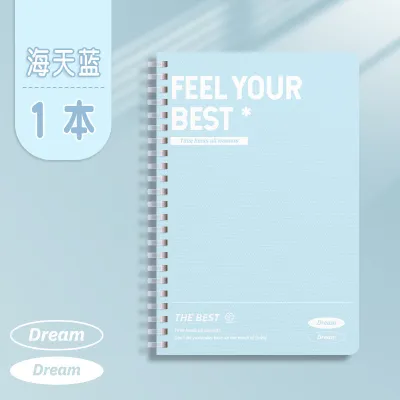
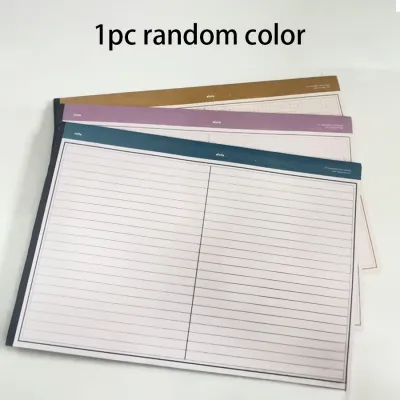
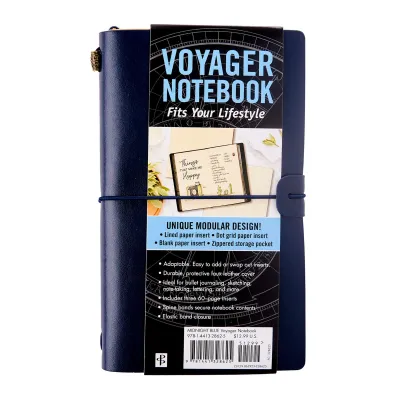
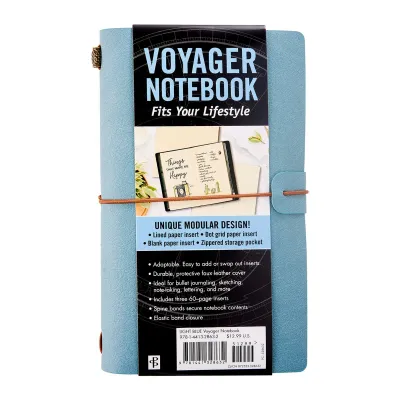
Prices are valid at publication and may change. Please refer to the product page for the latest price.
In Singapore’s compact workspaces, cafes, and co-working offices, the physical dimensions of a “long notebook” offer distinct practical advantages. These elongated formats—such as B5 slim, A4 slim, or proprietary traveler-style dimensions (often measuring around 110mm by 210mm)—provide ample vertical space for structured list-making, journaling, or meeting notes. Their narrow footprint allows them to sit neatly on a desk directly below or alongside a laptop keyboard, maximizing your available work surface without crowding your mouse or digital devices.
Binding is another critical specification that directly impacts your writing comfort. Thread-sewn bindings are highly favored for long-form writing because they allow the notebook to lay completely flat on your desk, ensuring a smooth transition as your hand moves across the central fold. Glued bindings offer a clean, book-like spine but may require you to physically hold the pages down while writing. Spiral or wire-bound long notebooks lay flat and can be folded back 360 degrees for easy handheld note-taking, though the central metal rings can sometimes obstruct your hand during long writing sessions.
Key Dimensions for Evaluating Paper Quality
To judge paper quality objectively, you must look past vague marketing terms like “premium” or “ultra-smooth” and focus on measurable technical specifications. The most common metric you will encounter is paper weight, measured in Grams per Square Meter (GSM). Standard notebook paper typically ranges from 50 GSM to 120 GSM. While a higher GSM generally indicates thicker, more opaque paper that resists ink show-through, it is not the sole indicator of quality. Lightweight papers can be engineered to handle heavy ink beautifully, while thick, poorly made papers can still suffer from severe ink bleeding.

Paper finish and sizing are equally critical to the writing experience. Sizing refers to chemical additives applied during the papermaking process to regulate how the paper absorbs liquid. Highly sized, coated papers resist liquid absorption, keeping the ink on the surface where it can dry slowly and retain sharp, crisp edges. This prevents feathering—the spiderweb-like spreading of ink along the paper fibers. Uncoated or lightly sized papers absorb ink almost instantly, which is excellent for preventing smudges but can cause lines to look fuzzy and bleed through to the reverse side of the sheet.
Finally, consider the color of the paper, which typically ranges from bright white to warm cream or off-white. Bright white paper provides maximum contrast, making ink colors pop vividly, but it can reflect a significant amount of harsh light under bright office fluorescent tubes or study lamps. Cream and off-white papers soften this contrast, significantly reducing eye strain during extended writing or reading sessions, making them highly suitable for daily journaling and professional note-taking.
Matching Paper Types to Writing Instruments
Achieving a smooth, smudge-free writing experience requires matching your specific pen type to the appropriate paper characteristics. Fountain pens, which lay down a generous pool of liquid, water-based ink, are the most demanding of all writing instruments. They require highly sized, smooth paper—typically 80 GSM or higher—to prevent the ink from feathering and bleeding through the page. The trade-off for this ink resistance is a longer drying time, as the ink must dry via evaporation rather than absorption, which requires a bit of patience in humid environments.
Gel and rollerball pens are incredibly popular for daily writing due to their smooth flow and vibrant colors, but their fast-flowing, water-based inks can easily smudge on highly coated papers. For these pens, look for moderately absorbent, smooth paper around 80 GSM to 90 GSM. This balance allows the gel ink to penetrate the paper fibers quickly enough to dry within a couple of seconds, preventing smudges when you turn the page, while still maintaining clean, sharp lines without excessive feathering.
Ballpoint pens and graphite pencils are far less demanding and perform exceptionally well on a wide variety of standard, uncoated papers. Because ballpoint ink is oil-based and viscous, it rarely feathers or bleeds, even on thin 70 GSM paper. Pencils, on the other hand, rely on physical friction to deposit graphite onto the page. They actually perform better on paper with a slight texture or “tooth” rather than an ultra-smooth, glazed surface, as the texture helps wear down the graphite lead to leave a dark, legible mark.
Comparing Popular Long Notebook Formats and Brand Profiles
When shopping for long notebooks in Singapore, you will generally encounter three major categories of paper products, each designed with a specific writing philosophy and user profile in mind. Understanding these categories helps you narrow down your choices based on your primary writing tools.
Japanese-Style Long Notebooks
These notebooks are highly celebrated for their meticulous paper engineering. They frequently feature lightweight yet incredibly dense paper (ranging from 52 GSM to 80 GSM) that has been heavily sized to handle wet inks, including fountain pens, without bleeding. The paper surface is typically ultra-smooth, allowing fine-point gel pens and fountain pens to glide effortlessly across the page.
- Choose this category if: You primarily write with fountain pens, fine-point gel pens, or multi-pens; you appreciate precise, subtle ruling lines like 5mm grids or dot grids; and you want a slim, lightweight notebook that maximizes page count without adding bulk to your bag.
European-Style Premium Notebooks
European-style notebooks often prioritize structural durability and a tactile writing feel. They typically feature thicker paper, usually between 80 GSM and 100 GSM, with a distinct cream or off-white tone. The paper surface often has a very slight texture, providing a satisfying physical feedback or “tooth” as you write. These notebooks are almost always thread-sewn and bound in sturdy hardcovers or flexible leatherette covers.
- Choose this category if: You prefer a substantial, tactile writing experience with a bit of physical resistance; you write with medium-to-broad ballpoints, rollerballs, or pencils; and you want a durable, elegant notebook that can withstand daily commuting and serve as a long-term archive.
Standard Commercial Long Notebooks
Widely available in local supermarkets, office supply stores, and general bookstores, these notebooks are designed for high-volume, everyday utility. They typically use standard wood-pulp paper (around 70 GSM to 80 GSM) with simple glue, staple, or spiral bindings. The paper is generally uncoated and moderately absorbent, optimized for quick drying with standard ballpoint pens.
- Choose this category if: You need an economical, high-volume option for rapid brainstorming, lecture notes, or temporary to-do lists; you almost exclusively use standard ballpoint pens or mechanical pencils; and you do not require specialized ink-resistant properties.
How to Test and Verify Paper Performance Before Buying
Because paper performance depends entirely on the specific combination of your pen, ink, and paper fibers, verifying these properties yourself is the most reliable way to ensure satisfaction. When shopping in-store or browsing online specifications, you can use several practical methods to evaluate a notebook before making a purchase.
First, carefully examine the product packaging and manufacturer specifications. Look for explicit GSM ratings and key terms such as “acid-free” (which ensures the paper will not yellow or degrade over time) and “fountain pen friendly.” If you are shopping in a physical stationery store in Singapore, look for open display samples. Gently run your fingertips over the page to assess the texture; a glassy, ultra-smooth surface indicates high coating and sizing, while a slightly rougher feel indicates a toothier paper designed for pencils and ballpoints.
To check the paper’s opacity in-store, lift a single page and hold it up against the store’s overhead lights. If you can clearly see the silhouette of your hand or the text from the page behind it, the paper has low opacity. This means you will likely experience significant ghosting (where writing is visible on the reverse side of the page), which can make writing on both sides of a sheet difficult to read.
Once you purchase a new notebook, always conduct a personal swatch test on the very last page before committing to your main writing. Draw a simple grid on the test page using all the pens in your daily rotation. For each pen, write a few words, draw a solid line, and color in a small square to pool the ink. Note how many seconds each ink takes to dry completely. Finally, flip the page over to inspect the reverse side for feathering, ghosting, and physical bleed-through. This simple test provides an accurate, personalized reference of how your stationery collection interacts with your new notebook.
Frequently Asked Questions (FAQ)
Does a higher GSM always mean better paper for fountain pens?
No, a higher GSM does not automatically guarantee that paper will perform well with fountain pens. While a thicker paper (such as 100 GSM or 120 GSM) is highly effective at preventing ink from showing through to the other side, its resistance to feathering and bleeding is determined by the surface sizing and coating. A highly sized, well-engineered 68 GSM or 80 GSM paper can handle wet fountain pen inks beautifully without any feathering, whereas an unsized, highly absorbent 100 GSM sketch paper may cause fountain pen ink to spread rapidly and bleed through the fibers like a sponge.
How can I prevent gel pen ink from smudging in a long notebook?
Gel pens use water-based inks that dry through a combination of absorption into the paper fibers and evaporation into the air. In Singapore’s naturally humid climate, evaporation occurs more slowly, which can prolong drying times and lead to accidental smudging. To prevent this, choose notebooks with moderately absorbent, uncoated or lightly sized paper rather than highly glazed, slick surfaces. Additionally, you can place a sheet of blotting paper or a simple plastic pencil board (shitajiki) directly under your writing hand to absorb excess hand oils and protect the page below from smudging as you write.

Community discussion
Share your experience or ask a question. Comments are reviewed before publication.