
When preparing for a relocation, understanding the exact capacity of your packing materials is essential for an efficient move. A large moving box typically measures around 45 to 60 centimeters on its longest side, offering a generous volume of roughly 100 to 120 liters. However, because “large” is a relative retail descriptor rather than a rigid manufacturing standard, actual dimensions vary significantly between suppliers. Packing these boxes correctly requires matching their volume with the right types of items—specifically lightweight, bulky goods—to prevent structural failure and make the moving process as smooth as possible.
Using the wrong box size for heavy items is one of the most common moving mistakes, often resulting in damaged belongings or physical strain. By learning how to verify box specifications and identifying which household goods belong in larger containers, you can optimize your packing strategy. This guide outlines how to measure your boxes, what items to place inside them, and how to secure them for transit.
How to Verify Large Box Dimensions and Weight Limits
Because “large” is a marketing term rather than a standardized industrial classification, you cannot assume two boxes labeled “large” from different suppliers will share the same dimensions. One manufacturer might offer a large box measuring 45 x 45 x 50 centimeters, while another might produce one that is 60 x 40 x 40 centimeters. To avoid packing surprises, always check the supplier’s product specifications, website listings, or printed labels for the exact length, width, and height before purchasing.
Products mentioned in this guide
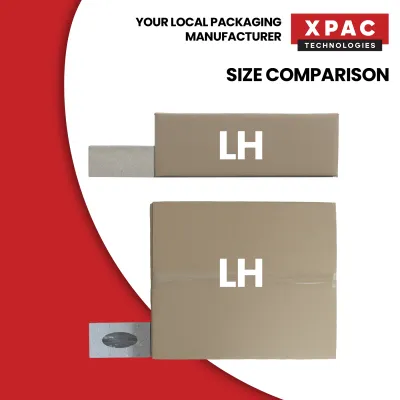
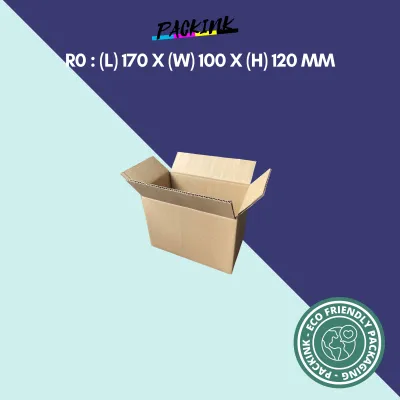
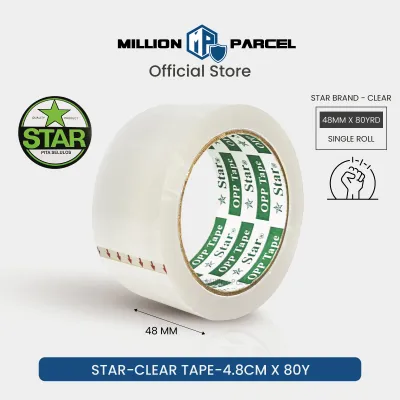
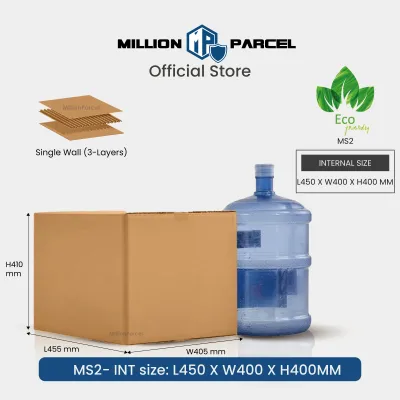
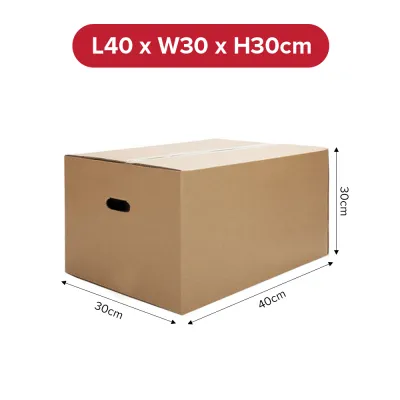
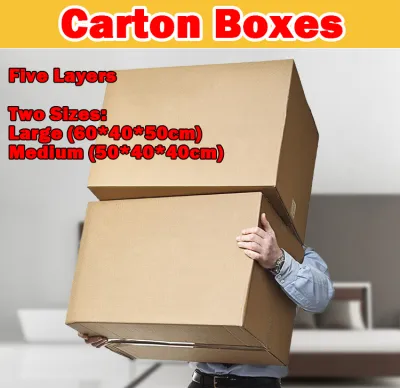
Prices are valid at publication and may change. Please refer to the product page for the latest price.
Beyond external dimensions, pay close attention to the material construction of the cardboard. Moving boxes are generally available in single-wall or double-wall corrugated cardboard. Single-wall boxes are lightweight and cost-effective, but they offer limited puncture resistance and stacking strength. Double-wall boxes feature two layers of fluting, providing significantly higher structural integrity and a much higher weight capacity, which is crucial if your boxes will be stacked high in a moving truck.
In humid climates like Singapore, cardboard naturally absorbs moisture from the air, which can reduce its load-bearing capacity by up to thirty percent over time. If you are storing packed boxes in non-air-conditioned spaces or moving during the monsoon season, verifying the material strength is even more critical. Look for the manufacturer’s stamp on the bottom of the box, which often indicates the Edge Crush Test (ECT) rating or burst test limit, to ensure the cardboard can withstand the pressure.
Finally, remember to measure the physical pathways the boxes must travel. A large box might fit your items perfectly, but it must also fit through your doorways, narrow hallways, apartment lifts, and vehicle cargo spaces. Measuring these tight spots beforehand ensures that your fully packed, bulky boxes can be maneuvered safely without getting stuck or requiring awkward, dangerous lifting angles.
Ideal Lightweight and Bulky Items for Large Boxes
Large moving boxes are designed to hold items that take up a lot of physical space but do not weigh very much. Utilizing these containers for low-density household goods allows you to maximize your packing efficiency without making individual boxes too heavy to carry. Bedding is the perfect candidate for this size; items like pillows, duvets, comforters, blankets, and mattress protectors should always be allocated to your largest boxes.

Out-of-season clothing, winter coats, and large soft furnishings like couch cushions and patio chair pads also fit exceptionally well in these spacious containers. Because these items are highly compressible, you can pack them tightly to utilize every cubic centimeter of space. Other excellent candidates include lightweight plastic kitchenware, empty storage canisters, large lampshades, and stuffed toys from children’s bedrooms.
To maximize space and protect your belongings, you can use soft textiles as natural padding around fragile but lightweight objects. Wrapping a delicate plastic item or a lightweight decorative piece in towels or t-shirts serves a dual purpose: it cushions the item against impact while simultaneously packing away your everyday linens. This method reduces the need for excess bubble wrap and keeps your packing material costs down.
When packing these bulky items, it is vital to fill all empty voids inside the box. If a large box is only partially filled, or if there are large air pockets between items, the cardboard walls will lack internal support. When other boxes are stacked on top of it in the moving vehicle, the empty space can cause the box to bow, shift, or collapse entirely. Use crumpled packing paper, clean towels, or small cushions to fill any remaining gaps at the top or corners of the box.
What Not to Pack: Avoiding Overweight Box Failures
While it can be tempting to fill a large box with as many items as possible to reduce the total number of boxes on moving day, packing dense, heavy items in a large container is a recipe for disaster. Heavy household goods such as books, files, tools, canned food, vinyl records, and small kitchen appliances should never be placed in large boxes. These items quickly accumulate weight, easily exceeding the safe carrying capacity of the cardboard.
When a large box is overloaded with heavy materials, the physical risks increase dramatically. The most common failure is a bottom blowout, where the adhesive tape or cardboard flaps give way under the weight, spilling your belongings onto the floor. Additionally, if the box features pre-cut handholes, the concentrated weight can cause the cardboard around the handles to tear instantly when lifted, leading to dropped boxes and potential foot injuries.
Overpacked boxes also pose a significant risk of personal injury, particularly back strain and muscle pulls. To prevent this, always perform a practical lifting test before sealing any large box. Gently lift the box a few centimeters off the ground using proper lifting posture—bending at your knees and keeping your back straight. If you cannot lift and carry the box comfortably without straining, it is overpacked and must be unpacked and redistributed.
To maintain safety and efficiency, reserve your large boxes strictly for bulk and volume, and move all heavy items into small or medium boxes. A small box filled with books is heavy but structurally stable and easy to grip, whereas a large box filled with books is virtually unmovable and highly prone to structural failure. Keeping your heavy items in smaller containers ensures that every box remains manageable for you or your professional movers.
Step-by-Step Guide to Packing and Sealing Securely
Proper assembly is the foundation of a secure moving box. Begin by folding the bottom flaps of the box inward; always fold the two smaller side flaps first, followed by the two larger outer flaps. Never interlock the flaps in a woven pattern, as this deforms the cardboard fibers and significantly reduces the box’s load-bearing capacity. Once the flaps are flat, apply high-quality packing tape across the center seam, extending the tape at least ten centimeters up the sides of the box.
To ensure maximum foundational support, reinforce the bottom of the box using the H-tape method. This involves applying two additional strips of packing tape along the exposed side seams perpendicular to the center seam, forming the letter “H”. This technique seals all open edges, prevents dust and moisture from entering, and distributes the weight of the contents evenly across the bottom structure.
Once the bottom is sealed, line the base of the box with a layer of crumpled packing paper or bubble wrap to act as a shock absorber. Begin loading your items by placing the densest and heaviest allowable objects at the bottom, followed by the lightest, most crushable items at the top. This keeps the box’s center of gravity low, preventing it from tipping over during transit and protecting delicate items from being crushed under heavier weight.
After filling the box to the top and ensuring all voids are packed tight, fold the top flaps down and seal them using the same H-tape method. Use a permanent marker to clearly label the box on at least two sides, indicating the destination room and a brief summary of the contents. If the box contains any breakable items, clearly write “FRAGILE” in bold letters and draw arrows pointing upward to indicate the correct orientation for stacking.
Frequently Asked Questions (FAQ)
Can I use standard large moving boxes for international freight?
Standard domestic moving boxes are generally not recommended for international freight or long-term sea shipping. International transit subjects cargo to extreme shifts in temperature, high humidity, and prolonged stacking pressure inside shipping containers. For these journeys, you should use export-grade, heavy-duty double-walled or triple-walled corrugated boxes specifically rated for freight. Always consult your international relocation specialist or freight forwarder to verify their specific packaging mandates and material standards before packing your belongings.
How do I store empty large moving boxes flat?
To preserve your large moving boxes for future use, you must break them down carefully to avoid tearing the cardboard. Use a utility knife to gently slice through the packing tape along the top and bottom seams, taking care not to cut into the cardboard flaps themselves. Once the tape is severed, fold the box completely flat along its natural manufactured creases. Store the flattened boxes in a dry, elevated area—such as on a shelf or pallet—to protect them from floor moisture, mold, and common household pests like silverfish.

Community discussion
Share your experience or ask a question. Comments are reviewed before publication.