
Choosing the right large carton box requires balancing the physical dimensions of your items with the structural limits of the cardboard. Standard large boxes typically range from 50 cm to over 80 cm in length, but the key to a successful pack lies in understanding the difference between external shipping dimensions and internal usable space. By measuring your items accurately and accounting for protective cushioning, you can select a box size that prevents damage and avoids unnecessary shipping fees.
Selecting an incorrect size often leads to two common issues: paying excess shipping fees for transporting empty space, or risking damage because there is insufficient room for protective padding. In humid climates, cardboard can also absorb moisture from the air, which naturally reduces its structural strength over time. Therefore, choosing the correct dimensions and wall thickness is essential for ensuring your goods arrive safely at their destination.
Common Standard Dimensions for Large Carton Boxes
When browsing packaging supplies, you will notice that box dimensions are always listed in a specific order: Length x Width x Height (L x W x H). Length refers to the longest side of the box opening, width is the shorter side of the opening, and height is the vertical depth from the opening down to the base. Understanding this standard sequence prevents ordering errors, especially when purchasing specialized flat or tall cartons online.
Products mentioned in this guide
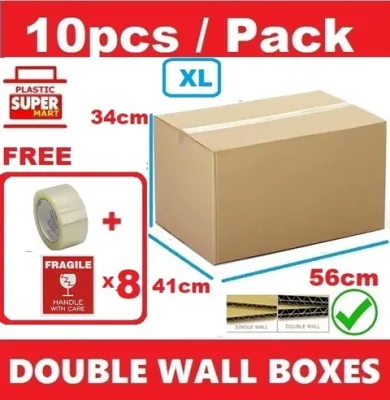
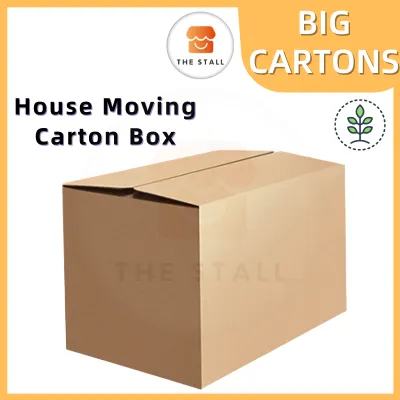
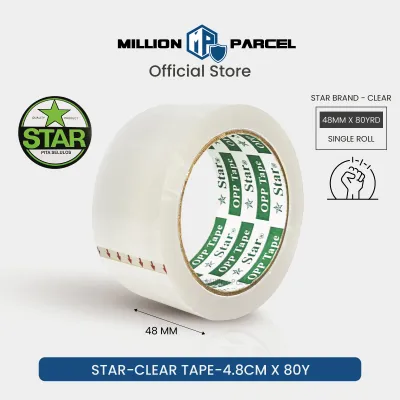
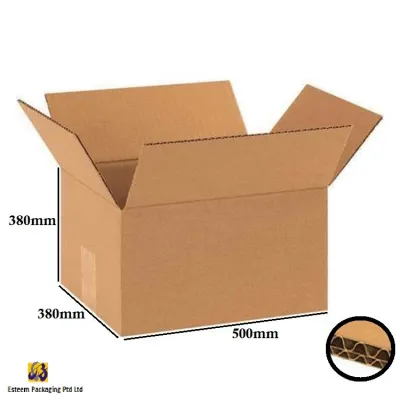
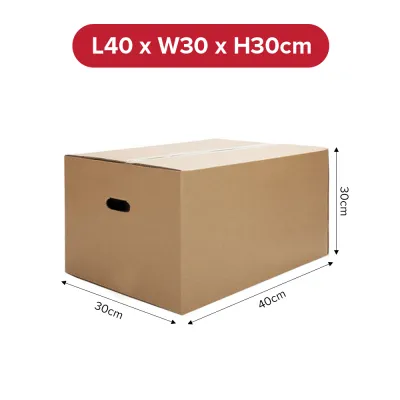
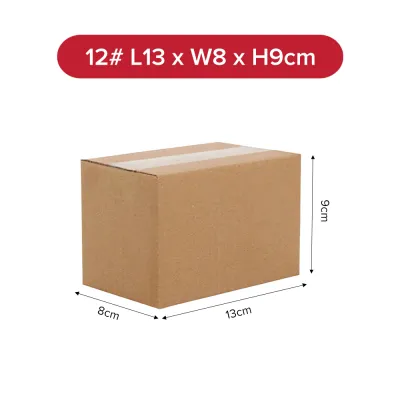
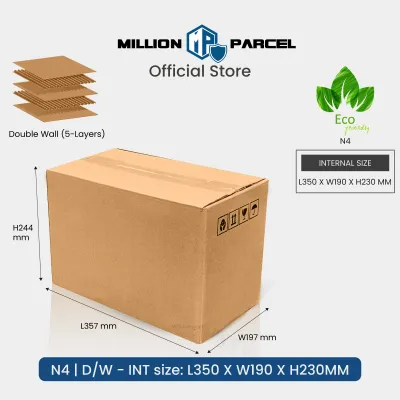
Prices are valid at publication and may change. Please refer to the product page for the latest price.
It is critical to distinguish between internal usable space and external physical dimensions. Cardboard has a physical thickness that reduces the actual space available inside the box. For standard single-wall boxes, the difference is usually minor, but for heavy-duty double-wall boxes, the internal dimensions can be 5 mm to 10 mm smaller than the external measurements. Always base your calculations on the internal dimensions to ensure your items will fit comfortably.
While manufacturers offer custom sizes, most large carton boxes fall into a few recognizable categories. Standard large moving boxes typically measure around 50 x 50 x 50 cm or 60 x 40 x 40 cm, making them ideal for lightweight household goods, bedding, and kitchenware. Wardrobe boxes are much taller, often reaching 100 cm or more in height, and include a metal hanging bar to transport clothing without folding. Bulk cargo cartons are designed for industrial storage and can exceed 80 cm in length to accommodate flat-screen monitors, framed artwork, or machinery parts.
To verify these measurements before buying, always consult the manufacturer’s specification sheet or product label. Reliable packaging suppliers print both the internal and external dimensions clearly on their product listings. If a listing only provides a single set of dimensions, assume they are external measurements and allow a conservative safety margin of at least 1 cm on all sides when planning your pack.
How to Measure Your Items and Calculate the Required Box Size
To determine the minimum box size you need, start by gathering and organizing the items you plan to pack. If you are packing a single large object, measure its maximum length, width, and height at the widest points. For irregular or oddly shaped items, such as an office chair base or a table lamp, imagine a rectangular box enclosing the object and measure the outermost boundaries of that imaginary boundary.

Once you have the baseline measurements of your items, you must factor in the thickness of your protective packaging materials. Wrapping an item in bubble wrap, foam sheets, or packing paper adds significant volume to its overall footprint. For standard, non-fragile items, add at least 3 cm to 5 cm of extra space to your measurements on all sides to accommodate cushioning. For highly fragile items like glassware or electronics, increase this buffer to 5 cm or 8 cm to ensure a thick, shock-absorbing barrier.
Choosing the right box size also involves a trade-off between cushioning space and structural stability. A box that is too large requires excessive void fill, which can settle during transit and allow your items to shift, increasing the risk of damage. Conversely, packing heavy, dense items into a massive box makes the package incredibly difficult to lift and puts immense pressure on the bottom seams. For heavy items, a snug fit in a smaller, double-walled box is always safer than a large, half-empty carton.
Translating Box Specifications to Real-World Performance
Selecting the right dimensions is only half the battle; you must also ensure the box can physically support the weight of your items. Cardboard boxes are classified by their wall construction, which directly impacts both their strength and internal capacity. Single-wall boxes feature one layer of fluted paper between two flat liners, offering lightweight protection for everyday items. Double-wall boxes add a second layer of fluting, significantly increasing puncture resistance and stacking strength, though they reduce the internal usable space slightly.
To evaluate a box’s structural integrity, look for the Box Maker’s Certificate (BMC) usually printed on one of the bottom flaps. This stamp often displays the Edge Crush Test (ECT) rating or the burst strength rating. The ECT rating measures the box’s ability to withstand vertical crushing pressure, which is crucial if your boxes will be stacked in a warehouse or delivery truck. A higher ECT rating indicates superior stacking stability, ensuring the bottom boxes do not collapse under the weight of those piled on top.
Finally, always check the manufacturer’s printed weight limits and structural warnings before packing. Even the largest carton box has a maximum gross weight capacity that should never be exceeded. Overloading a large box compromises its structural integrity, leading to torn handles, split seams, or complete structural failure when lifted. If you are packing heavy items, prioritize double-wall or triple-wall construction over sheer volume.
Frequently Asked Questions (FAQ)
Can I use a large carton box for shipping heavy items?
A large physical volume does not automatically mean a high weight capacity; wall thickness and material ratings are the deciding factors. Large boxes packed with heavy items are highly prone to structural failure and are difficult to handle safely. Always check the manufacturer’s printed weight limit on the bottom flap and verify specific size and weight restrictions with your chosen shipping courier, as many local delivery services impose strict weight limits per parcel.
How much extra space should I leave inside the box for padding?
For standard items, leave a general clearance buffer of 3 cm to 5 cm on all sides of the box to accommodate protective wrapping like bubble wrap or packing paper. Fragile items require a larger buffer of at least 5 cm to 8 cm to ensure adequate shock absorption. However, heavy items require a snug fit with minimal void fill to prevent them from shifting during transit, which can easily blow out the bottom of the carton.

Community discussion
Share your experience or ask a question. Comments are reviewed before publication.