
Finding the ideal journal book in Singapore often comes down to a silent partnership between your pen and the page. Because paper performance is highly subjective and varies by ink formulation, there is no single universal winner among popular notebook brands. Instead, buyers must match their pen type—ballpoint, gel, or fountain pen—to observable paper characteristics like weight, surface finish, and sizing. This guide provides a conditional framework to help you evaluate paper quality, verify manufacturer claims, and select a journal book that complements your everyday carry pen without bleeding, feathering, or smudging.
Whether you are browsing the shelves of a boutique stationery shop in Orchard or scrolling through online marketplaces, understanding how paper interacts with different inks will save you from the frustration of ruined pages. By focusing on physical specifications rather than brand prestige, you can find a notebook that makes writing a tactile pleasure.
Understanding Paper Characteristics for Different Pens
To make an informed choice, you must understand the technical specifications printed on journal packaging or listed in product descriptions. These metrics dictate how a sheet of paper behaves when it meets liquid, gel, or oil-based inks.
Products mentioned in this guide
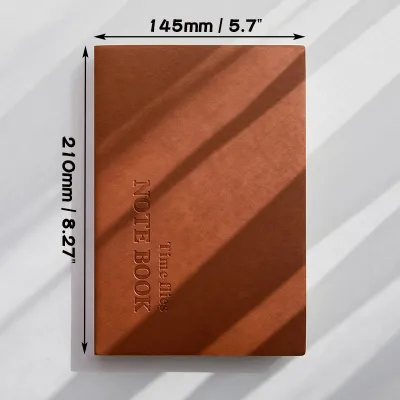
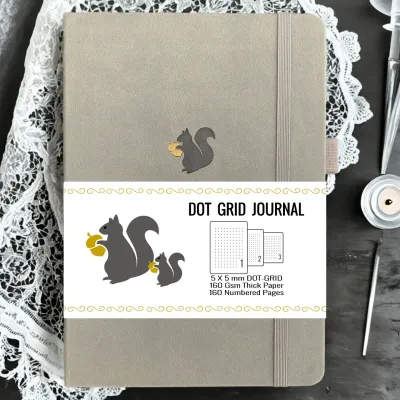
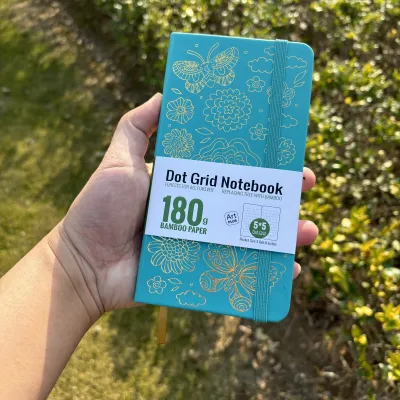
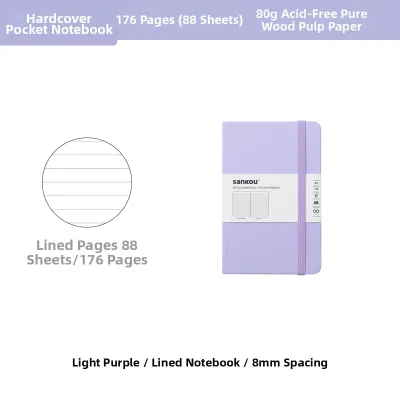
Prices are valid at publication and may change. Please refer to the product page for the latest price.
Paper weight is measured in grams per square meter (GSM), indicating the density of the paper. Standard office paper sits around 70 to 80 GSM, while quality journal books range from 50 GSM to 160 GSM. A higher GSM increases opacity, helping prevent “ghosting”—the visual show-through of writing on the reverse side. However, a high GSM also makes the notebook thicker and heavier, which might not suit those who carry their journals daily.
Surface finish and sizing are equally critical. Sizing refers to chemical additives applied during manufacturing to reduce absorbency. Heavily sized paper allows wet inks to sit on the surface and dry slowly, preserving crisp lines. Unsized paper acts like a sponge, drawing ink deep into the fibers, which leads to feathering. The surface finish can range from ultra-smooth (coated) to textured (uncoated, or having “tooth”). Smooth finishes reduce friction for fine nibs, while textured finishes provide the resistance needed for dry inks.
Paper color also affects your writing experience. Bright white paper offers high contrast, making ink colors pop, but it can cause eye strain under bright lights. Cream, ivory, or off-white papers are gentler on the eyes during long writing sessions and lend a classic aesthetic to your journal, though they can slightly alter the perceived color of your inks.
Matching Your Pen Type to the Right Paper Profile
Different writing instruments rely on distinct ink formulas, each requiring a specific paper profile to perform optimally. Matching your pen’s flow rate to the correct paper ensures a clean, legible, and enjoyable writing experience.

Ballpoint Pens: Texture and Grip
Oil-based ballpoint pens require a specific physical interaction with the page to function correctly. The thick, viscous ink relies on friction to rotate the tiny ball at the pen’s tip, which then transfers the paste onto the paper.
Because of this mechanism, ballpoint pens perform optimally on paper that offers a slight texture or “tooth.” Extremely smooth, coated, or heavily sized papers can cause the ball to slide without rotating, resulting in skipping or faint lines. A standard paper weight of 70 to 90 GSM is usually sufficient for ballpoint users, as the oil-based ink rarely bleeds through or feathers, even on thinner sheets.
If you primarily write with ballpoint pens, you do not need to invest in premium, high-GSM specialty papers. Instead, look for standard, uncoated paper that provides enough grip for your pen tip. This allows you to choose lighter, more portable journal books with higher page counts.
Gel Pens: Drying Time and Smudge Resistance
Gel pens use water-based gel inks that offer vibrant colors and a smooth glide, but they present a unique challenge: drying time. The ink is suspended in a water-soluble polymer, meaning it remains wet on the page for several seconds after writing.
To prevent hand smudges and smears, gel pen users need paper with moderate absorbency. The paper must draw the water-soluble carrier into its fibers quickly enough to dry the ink, yet resist spreading so the lines remain sharp. Highly textured or overly porous paper can cause gel pens to deposit excess ink, leading to minor feathering. Conversely, heavily coated, non-porous papers keep the gel ink wet for too long, making smudging inevitable for fast note-takers.
When shopping for a journal book to use with gel pens, look for medium-weight paper (around 80 to 100 GSM) with a satin or semi-smooth finish. Labels indicating “quick-dry compatibility” or “fountain pen friendly” are often reliable indicators that the paper has been treated to handle wet inks without excessive bleeding.
Fountain Pens: Managing Wet Ink and Show-Through
Fountain pens deliver a continuous flow of highly liquid, water-based ink directly to the page. This high flow rate demands the most robust paper characteristics to prevent writing from turning into a blurry, bleeding mess.
The primary defense against fountain pen ink feathering is proper paper sizing. Internal and external sizing treatments limit how quickly the paper fibers absorb liquid, keeping the ink crisp and localized on the surface. Without adequate sizing, even a thick 120 GSM paper can suffer from severe feathering, where the ink spreads outward like tiny tree roots. To prevent show-through and actual bleed-through to the reverse side, fountain pen users generally require high-opacity paper, typically starting at 80 GSM for highly sized specialty papers, or 100 to 120 GSM for standard papers.
When selecting a journal book for fountain pens, do not rely on GSM numbers alone. Look for explicit manufacturer claims regarding fountain pen compatibility or “ink-proof” properties. High-quality, fountain-pen-friendly papers often feel slightly coated or exceptionally smooth, which also protects delicate gold or steel nibs from catching on loose paper fibers.
How to Evaluate Journal Books Before Buying in Singapore
Finding the right journal book in Singapore requires a mix of hands-on testing and careful inspection of product specifications, whether you are shopping in physical retail stores or browsing online.
When visiting local stationery boutiques or department stores, take advantage of physical displays. Many specialty shops provide sample notebooks or allow you to touch the paper texture. Always carry your favorite everyday pens with you. Turn to the very back page of a sample notebook and perform a quick swatch test. Observe how quickly the ink dries under the store’s lighting, check if the edges of the lines feather, and turn the page to inspect for ghosting or bleed-through.
If sample notebooks are not available, learn to read the product packaging like a professional. Look for key details beyond the brand name. Check the country of origin, as papers manufactured in Japan or Europe often follow strict quality standards for ink resistance. Look for terms like “acid-free,” which ensures the paper will not yellow or degrade over time, and “wood-free,” which often indicates a smoother, more consistent writing surface. Avoid notebooks that omit the GSM rating entirely, as this lack of transparency often points to lower-grade utility paper.
For online shopping on local ecommerce platforms, you must rely on collective user experiences. Search the product reviews specifically for terms like “bleed,” “ghosting,” “fountain pen,” or “smudge.” Many stationery enthusiasts upload detailed photo reviews showing ink tests with various pen types. Pay close attention to reviews that mention the exact pen model you use. If a seller does not provide the GSM or paper type in the listing, use the platform’s Q&A feature to ask for these specifications before placing your order.
Decision Framework: Choosing Your Ideal Journal Book
To simplify your next purchase, use this conditional framework to match your writing habits with the correct journal book specifications:
Choose a smooth, high-GSM (100 to 160 GSM), sized paper if you primarily write with fountain pens, heavy gel pens, or rollerballs. This profile ensures that wet inks remain crisp on the surface, allowing you to write on both sides of the page without distracting ghosting or bleed-through. It is also ideal for those who enjoy shading and sheen in specialty fountain pen inks.
Choose a slightly textured, standard-GSM (70 to 90 GSM) paper if you rely on classic ballpoint pens or fine-liner pens. This combination provides the necessary friction for smooth writing while keeping the notebook lightweight, slim, and highly portable for daily commuting around Singapore.
Choose a mixed-media or heavy-weight specialty paper (120 to 150 GSM) if you frequently switch between gel pens, brush pens, markers, and light watercolor washes in a single journal. This robust paper handles diverse moisture levels without warping or buckling.
Verify first if the journal book lacks clear paper specifications on the packaging or online listing. If you cannot find the GSM, sizing details, or user reviews confirming ink compatibility, assume the paper is optimized for basic ballpoint use and may require single-sided writing if you use wet inks.
Frequently Asked Questions (FAQ)
Does a higher GSM always guarantee no bleed-through for fountain pens?
No, a higher GSM does not guarantee resistance to bleed-through. While a thick 120 GSM or 160 GSM paper will offer excellent opacity to prevent show-through (ghosting), it can still suffer from severe feathering and bleed-through if it lacks proper internal or external sizing. Sizing is the chemical treatment that prevents paper from acting like a sponge. A highly sized, thin 52 GSM or 68 GSM specialty paper can resist fountain pen ink far better than an unsized, thick 120 GSM sketch paper. Always prioritize manufacturer sizing claims and user ink tests over GSM numbers alone.
How can I safely test a new journal book without ruining the first page?
To test a new journal book without spoiling your main writing space, use the very last page of the notebook or the inside back cover flap if it is made of the same paper stock. Write a few test characters using your wettest everyday pen, and draw a small ink swatch. Wait a few seconds to observe the drying time, then check the reverse side of the page for any signs of bleeding or ghosting. This ensures that your primary pages remain clean and pristine while giving you a clear understanding of how your pen and paper will interact.

Community discussion
Share your experience or ask a question. Comments are reviewed before publication.