
Evaluating the paper quality and writing experience of different jotter book brands in Singapore requires looking beyond simple brand names and focusing on the physical characteristics of the paper itself. Because local stationery options span from budget-friendly school exercise books to premium imported notebooks, the ideal choice depends entirely on how a specific paper interacts with your preferred writing instruments. In Singapore’s humid climate, paper can absorb moisture from the air, which subtly alters how ink behaves on the page. Understanding the technical specifications of paper and learning how to perform simple, objective tests will help you find a jotter book that prevents ink feathering, minimizes bleed-through, and provides the exact level of tactile feedback you prefer.
Understanding Paper Quality Metrics in Jotter Books
The most common metric used to measure paper thickness and density is GSM, or grams per square meter. In standard jotter books, GSM typically ranges from a lightweight 50 GSM to a sturdier 80 GSM or higher. A lower GSM means the paper is thinner and lighter, allowing manufacturers to pack more pages into a single, slim book without making it bulky. However, thin paper is inherently more translucent, which increases the likelihood of ink showing through to the other side. If you plan to write on both sides of each page, aiming for a jotter book with at least 70 to 80 GSM is generally advisable to ensure adequate opacity.
Opacity refers to how much light—and consequently, how much ink—can be seen through a sheet of paper. When evaluating jotter books, it is important to distinguish between ghosting and bleed-through. Ghosting, also known as show-through, occurs when the shadow of your writing is visible on the reverse side of the page, but the ink itself remains bound to the fibers on the front. Bleed-through, on the other hand, happens when the ink completely penetrates the paper, creating wet spots or actual ink marks on the back or even on the subsequent page. High-opacity paper prevents both issues, ensuring that your notes remain clean, legible, and organized on every single sheet.
Products mentioned in this guide
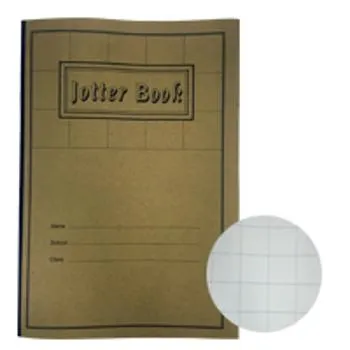
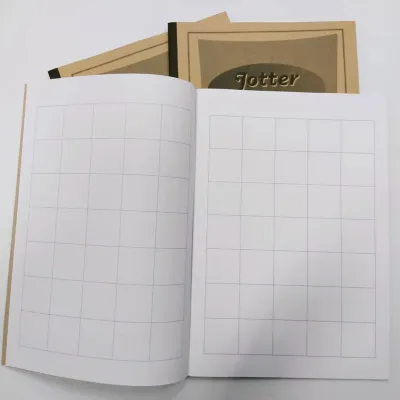
![[SG] Azone A4 My Space Jotter Book [Evergreen Stationery]](https://img.lazcdn.com/g/p/c71bb4caadbb808f836225d6e3ad0856.jpg_400x400q80.jpg_.webp)
![[SG] Lined Jotter Book | 17.9 x 25.3 cm [Evergreen Stationery]](https://img.lazcdn.com/g/p/3221943c70bd8da609f22794cc4179b5.png_400x400q80.png_.webp)
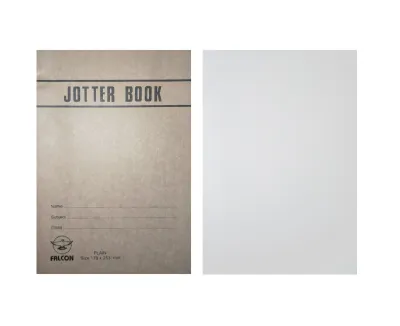
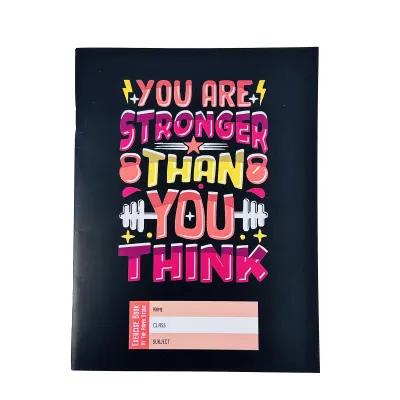
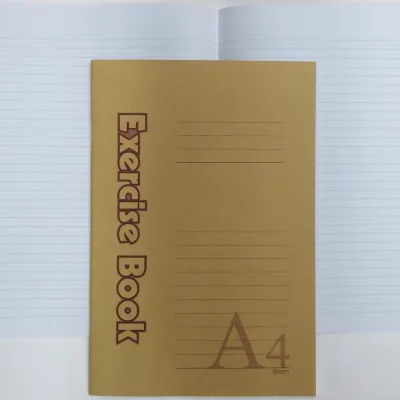
Prices are valid at publication and may change. Please refer to the product page for the latest price.
The surface texture of the paper, often referred to as its “tooth,” plays a critical role in how a pen feels as it moves across the page. Paper with a prominent tooth has a slightly rough, uncoated surface that provides physical resistance against the pen tip. This tactile feedback is highly valued by those who prefer a controlled writing experience, as it prevents the pen from slipping. Conversely, highly calendered paper has been pressed between heavy rollers during manufacturing to create an exceptionally smooth, flat surface. Smooth paper allows pens to glide effortlessly with minimal friction, which can reduce hand fatigue during long writing sessions but may affect how quickly ink dries.
Sizing is a chemical treatment applied to paper fibers during or after manufacturing to regulate how the paper absorbs liquids. Unsized paper acts like a paper towel, drawing ink rapidly into its fibers and causing the lines to spread out, a phenomenon known as feathering. Well-sized paper resists immediate liquid penetration, keeping the ink crisp and sharp on the surface. Some premium jotter books also feature light coatings that further enhance smoothness and ink resistance. However, in Singapore’s naturally humid environment, heavily coated papers can sometimes struggle to let water-based inks dry quickly, making a balanced, moderately sized paper highly desirable for daily use.
Matching Paper Types to Your Preferred Writing Instruments
An optimal writing experience is never the result of the paper alone; it is a chemical and physical partnership between the paper surface and the specific ink formula of your pen. Different writing instruments deposit varying volumes and types of ink, meaning a jotter book that performs beautifully with one pen might fail miserably with another. By understanding how your favorite pens interact with different paper characteristics, you can avoid common frustrations like smudging, skipping, or tearing.

Gel and rollerball pens are incredibly popular in Singapore schools and offices due to their vibrant colors and smooth ink flow. These pens utilize water-based or gelled inks that are deposited in relatively generous quantities onto the page. To handle this volume of liquid without feathering, gel pens require paper with a tight fiber structure and moderate sizing. If the paper is too absorbent, the ink will quickly spread sideways, turning fine handwriting into a blurry, illegible mess. Conversely, if the paper is completely non-porous or heavily coated, the gel ink will pool on the surface and remain wet for an extended period, leading to accidental smudges as your hand moves across the page.
Fountain pens demand the highest standards of paper quality because they lay down a continuous, wet line of water-based ink. When using a fountain pen in a standard jotter book, low-GSM or poorly sized paper will almost certainly result in severe feathering and bleed-through. To enjoy a smooth fountain pen experience, look for jotter books that specify fountain-pen-friendly paper, which typically features a higher density (80 GSM or above) and specialized surface sizing. This combination allows the ink to sit elegantly on top of the paper, preserving the unique shading, sheen, and crisp lines of the ink without ruining the pages underneath.
Ballpoint pens use a thick, oil-based ink that requires physical friction to rotate the tiny ball in the pen tip and transfer the ink to the page. Because ballpoint ink is highly viscous and dries almost instantly, it is incredibly forgiving and performs exceptionally well on almost any paper type. Standard, slightly textured paper in the 60 to 70 GSM range is often a highly compatible match for ballpoints. The natural tooth of the paper provides the necessary grip to keep the ball rolling smoothly, while the instant-drying nature of the oil-based ink completely eliminates the risk of smudging, making this combination a highly practical choice for rapid, high-volume note-taking.
Pencils, whether traditional wooden or mechanical, rely entirely on the paper’s surface texture to shave off microscopic particles of graphite and hold them in place. If a jotter book’s paper is too smooth or heavily coated, the graphite cannot grip the surface effectively, resulting in faint, slippery lines that are difficult to read and prone to fading. A paper with a moderate, natural tooth is essential for pencil users. This texture ensures dark, crisp lines and allows for clean erasability without tearing or scuffing the paper fibers, which is particularly important for students, designers, and anyone who frequently drafts and revises their work.
Practical Steps to Test and Compare Jotter Book Brands
When shopping for jotter books in local stationery stores or bookstores in Singapore, you can perform several non-destructive physical checks to evaluate quality before buying. Start by gently feeling a single page between your thumb and index finger to gauge its thickness and surface texture; higher-quality paper will feel consistent and smooth without any rough wood-pulp particles. Next, hold the book open toward an overhead light source to observe the paper’s opacity and look for a uniform fiber distribution. Finally, test the binding by opening the book to the center; a well-constructed jotter book should lay relatively flat without requiring you to crack or damage the spine, ensuring a comfortable writing surface from margin to margin.
If you have already purchased a few different jotter books or have access to sample pages, conducting a systematic “swatch test” is the most reliable way to compare their performance. Dedicate a single page at the back of each book to this test, using the exact pens and pencils you write with daily. Draw a series of straight lines, write a few sentences at your normal writing speed, and create a small, concentrated block of ink to simulate heavy pooling. Note how many seconds it takes for the ink to dry completely, inspect the edges of the lines under good light to check for feathering, and turn the page over to evaluate the severity of ghosting or bleed-through.
When physical testing is not possible—such as when purchasing jotter books from online marketplaces or ecommerce platforms—you must rely on verifying manufacturer specifications. Look closely at the product description, packaging labels, or the manufacturer’s official website for key details like GSM, paper origin, and binding type. High-quality brands are usually transparent about these metrics, often highlighting features like “acid-free paper” (which prevents yellowing over time) or “chlorine-free bleaching.” If a product listing lacks these specifications and only refers to the book as a standard utility item, you should assume it contains basic 50 to 60 GSM paper designed for general, low-moisture writing tasks.
Decision Framework: Selecting the Right Jotter Book for Your Needs
To finalize your choice, align the paper specifications with your primary writing tasks and environmental conditions. If your daily routine involves wet inks, fountain pens, or heavy gel pens, prioritize jotter books with high-GSM (80 GSM or above), well-sized, or lightly coated paper. This selection ensures that your writing remains crisp, prevents ink from bleeding through to the next page, and offers the durability required for long-term archiving or professional documentation where clean presentation is paramount.
For students and professionals who primarily use standard ballpoint pens or pencils for rapid, high-volume note-taking, a lightweight and economical jotter book is often the most practical choice. Look for books featuring standard, slightly textured paper in the 60 to 70 GSM range. These books offer a higher page count in a slim, highly portable format that fits easily into a backpack or briefcase without adding unnecessary weight, while the paper’s natural tooth provides excellent tactile feedback for fast writing.
Consider the ruling and layout of the pages based on the nature of your work. While classic horizontal lines are ideal for standard text, dot-grid or square-grid patterns are highly versatile for those who mix writing with technical diagrams, sketches, or mathematical equations. Ensure that the printed lines or dots are rendered in a soft, light grey ink rather than a harsh black; this subtle printing keeps the layout helpful without distracting from your actual notes or clashing with different ink colors.
Finally, evaluate the physical construction of the jotter book, focusing on the binding and cover materials. If you carry your notebook daily in a bag, a flexible plastic or heavy cardstock cover will protect the inner pages from bent corners and moisture. Stapled (saddle-stitched) bindings are incredibly lightweight and cost-effective but can wear out at the spine over time, whereas thread-sewn or tape-bound spines offer superior durability and allow the book to lay relatively flat, making them better suited for intensive, long-term use.
Frequently Asked Questions (FAQ)
Does higher GSM always mean a better writing experience?
Not necessarily, as the ideal GSM depends entirely on your specific use case and portability needs. While higher GSM paper (80 to 100 GSM) is thicker and highly resistant to ink bleed-through, it also makes the jotter book significantly heavier and bulkier, reducing the number of pages you can comfortably carry. For everyday writing with ballpoint pens or pencils, a lower GSM (60 to 70 GSM) is often preferred because it allows for a slimmer, more flexible book with a higher page count at a more economical price point.
How can I prevent ink from smudging on smooth jotter book paper?
To prevent smudging on smooth or coated paper, which naturally takes longer to absorb liquid, you can adjust your writing tools and habits. Consider pairing smooth paper with fast-drying gel pens or fine-point ballpoints that deposit less ink. You can also place a clean sheet of blotting paper or a simple scrap piece of paper under your writing hand; this acts as a physical barrier that absorbs any excess surface ink and prevents your palm from dragging and smearing your notes as you move down the page.

Community discussion
Share your experience or ask a question. Comments are reviewed before publication.