
Quick Answer: Matching IK Paper Weights to Your Printing Needs
Selecting the right paper weight is a balance between print volume, budget, and the professional presentation of your documents. The term “best” paper weight does not refer to a single superior option; instead, it depends entirely on your specific printing tasks and the equipment you use. Matching the correct grammage to your daily requirements ensures clear prints, reliable printer performance, and cost-effective operations.
For high-volume printing where cost efficiency is the primary concern, IK Paper 70gsm serves as the ideal choice. It is best suited for internal drafts, single-sided office memos, and bulk reference materials. When you need a versatile standard for daily business operations, IK Paper 80gsm is the universal benchmark. It offers a professional tactile feel and sufficient opacity for double-sided printing, making it the default option for client-facing documents, standard reports, and contracts. For high-impact presentations, marketing flyers, or documents with heavy ink coverage, IK Paper 100gsm provides a premium, heavy-duty feel with maximum opacity to prevent show-through.
Understanding these distinctions prevents common office frustrations, such as frequent paper jams or illegible double-sided prints. The following sections break down the physical properties of each paper weight, their specific performance characteristics, and the crucial printer compatibility and environmental factors you must consider before purchasing.
Products mentioned in this guide
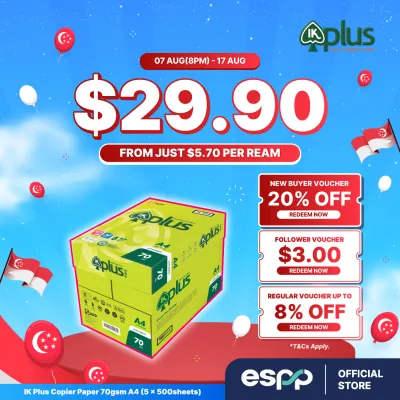
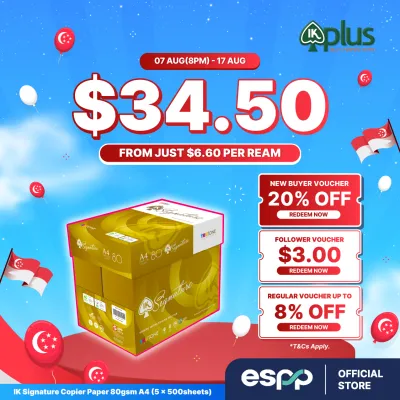
Prices are valid at publication and may change. Please refer to the product page for the latest price.
Understanding Grammage: How Paper Weight Affects Your Prints
To make an informed purchasing decision, you must understand what paper weight actually measures. Grammage is expressed in GSM, which stands for “grams per square meter.” This metric defines the physical weight of a single sheet of paper cut to a one-meter by one-meter square. While GSM directly measures weight, it also serves as a reliable proxy for several other critical physical properties, including thickness, stiffness, and opacity.

As the GSM rating increases, the paper sheet becomes physically thicker and stiffer. This stiffness is vital for how paper behaves inside your office machinery. Printer feed mechanisms rely on a specific level of paper stiffness to pull single sheets from the tray. If a paper is too light or lacks stiffness, the pickup rollers may grab multiple sheets simultaneously, leading to multi-feed jams. Conversely, if the paper is too thick or rigid, it may struggle to bend around the tight rollers and paper paths found in compact desktop printers, causing immediate feed failures.
Opacity is another critical property tied directly to grammage. Higher GSM paper contains more wood fibers packed into the same surface area, which naturally blocks more light. This high opacity prevents ink bleed-through and “show-through,” which is the visibility of printed text from the reverse side of the sheet. When printing with liquid inks, such as dye-based or pigment-based inkjet inks, the solvent naturally travels along the paper fibers. Thinner papers allow this ink to penetrate closer to the reverse side, whereas thicker papers absorb the ink within their internal structure, keeping the back of the sheet clean and legible.
When evaluating IK Paper, you should also look beyond GSM on the packaging. Quality indicators like CIE whiteness and opacity percentages are often listed. CIE whiteness measures the paper’s light-reflecting capability across the visible spectrum; a higher rating means a brighter sheet that provides sharper contrast for text and colors. These optical metrics vary across different IK product lines and influence the perceived quality of your printed documents just as much as the physical weight itself.
IK Paper 70gsm: The Cost-Effective Choice for High-Volume Drafts
IK Paper 70gsm is the lightest and thinnest option in the brand’s standard lineup. When you handle a sheet of 70gsm paper, it feels noticeably flexible and lightweight. It has a slightly lower opacity compared to heavier papers, meaning that when held up to standard office lighting, you can easily see light passing through the sheet.
The primary advantage of 70gsm paper is its exceptional cost-effectiveness. For businesses, educational institutions, or tuition centres in Singapore that handle massive print volumes, the cost savings of buying 70gsm paper in bulk are substantial. It is the perfect medium for printing daily internal drafts, rough outlines, high-volume training manuals, and temporary reference sheets that will be discarded or recycled shortly after use. Additionally, because the sheets are thinner, a ream of 70gsm paper takes up less physical storage space and is lighter to transport than heavier alternatives.
However, these cost savings come with distinct physical limitations. The most prominent drawback is show-through. If you attempt to print double-sided (duplex) on 70gsm paper, the text from the reverse side will be highly visible, making the document difficult to read and unprofessional in appearance. Furthermore, the lighter weight means the paper has less structural stiffness. In high-speed commercial copiers or older desktop printers with worn pickup rollers, this lack of stiffness can occasionally lead to feeding issues, particularly in humid environments where the paper may absorb moisture and lose its remaining rigidity.
Choose IK Paper 70gsm if:
- High-volume focus: You are printing massive quantities of single-sided documents where minimizing cost per page is the absolute priority.
- Internal use only: The documents are intended for internal drafts, rough layouts, or temporary personal reference.
- Standard text printing: Your files consist almost entirely of black text with no heavy solid blocks of ink or color graphics.
- Storage constraints: You need to store large quantities of paper and want to minimize the physical weight and height of your paper stacks.
IK Paper 80gsm: The Reliable Standard for Professional Documents
IK Paper 80gsm represents the universal standard for everyday office and business printing. It is the default weight used in almost all professional environments, striking a carefully engineered balance between cost, performance, and aesthetic presentation. When you handle an 80gsm sheet, it feels substantial and possesses a clean, professional stiffness that immediately distinguishes it from lighter utility papers.
The strength of 80gsm paper lies in its versatility. It offers sufficient opacity to handle moderate double-sided printing with minimal show-through, particularly when using laser printers that dry toner instantly on the paper’s surface. The stiffness of 80gsm paper is also optimized for the feed mechanisms of standard office copiers, multi-function printers, and home desktop units. It glides through high-speed paper paths smoothly, minimizing the risk of downtime caused by paper jams. This reliability makes it the go-to choice for external correspondence, client proposals, standard business reports, invoices, and legal contracts.
While 80gsm paper handles most daily office tasks effortlessly, it does have limitations when subjected to heavy ink saturation. If you print high-resolution color photos, dense charts, or marketing materials with large solid blocks of color using an inkjet printer, the paper may warp or ripple slightly as it absorbs the liquid ink. In these specific scenarios, the ink may still show through to the other side, indicating that a heavier grammage is required for specialized visual media.
Choose IK Paper 80gsm if:
- Professional correspondence: You are printing client-facing documents, official letters, proposals, or contracts that require a polished look.
- Standard double-sided printing: You regularly print duplex documents containing standard text and minor graphics.
- Universal compatibility: You want a single, worry-free paper weight that performs reliably across all office copiers and home printers without risk of jamming.
- Balanced budget: You require a professional presentation but still need to maintain a sensible budget for daily office operations.
IK Paper 100gsm: Premium Quality for Presentations and Heavy Ink
IK Paper 100gsm is a premium, heavy-duty paper designed for high-impact applications. When you pick up a sheet of 100gsm paper, the difference in quality is immediately apparent. It feels thick, remarkably stiff, and has a smooth, luxurious texture. It offers exceptionally high opacity, meaning that even under bright light, virtually no text or images will show through from the other side.
This weight is ideal for executive presentations, marketing brochures, flyers, resumes, and formal invitations. If your documents contain high-density color graphics, detailed charts, or solid color backgrounds, 100gsm paper is essential. The thick fiber structure easily absorbs heavy ink loads from inkjet printers without warping, buckling, or wrinkling, ensuring that your color prints remain flat, crisp, and vibrant. It is also the ultimate choice for double-sided documents where zero show-through is a strict requirement, ensuring that both sides of the page look pristine and are perfectly legible.
Despite its premium quality, 100gsm paper is not intended for everyday high-volume printing. The primary limitation is cost, as it carries a higher price tag per sheet compared to 70gsm and 80gsm options. It is also significantly heavier, making bulk transportation and storage more physically demanding. Crucially, you must verify your printer’s specifications before loading 100gsm paper. Many standard home printers and compact office units have tight paper paths designed primarily for 80gsm paper; feeding thick 100gsm sheets through these machines can sometimes cause pickup failures or paper jams if the tray is overloaded.
Choose IK Paper 100gsm if:
- Premium presentations: You are printing executive reports, marketing flyers, resumes, or portfolios where the tactile feel must convey high quality.
- Heavy ink saturation: Your documents feature high-resolution color graphics, photos, or dense charts printed via inkjet technology.
- Flawless double-sided printing: You are producing high-end duplex documents and require absolute zero show-through between pages.
- Sturdy physical media: You need the printed document to withstand frequent handling without tearing, dog-earing, or wearing down quickly.
Side-by-Side Comparison: 70gsm vs 80gsm vs 100gsm
To help you visualize the differences and quickly select the right paper for your specific setup, the table below compares the key features of IK Paper across all three grammages.
| Feature | IK Paper 70gsm | IK Paper 80gsm | IK Paper 100gsm |
|---|---|---|---|
| Primary Use Case | High-volume drafts, internal memos, school worksheets | Client proposals, contracts, standard office reports | Executive presentations, marketing flyers, heavy graphics |
| Tactile Feel | Thin, lightweight, highly flexible | Substantial, crisp, standard professional stiffness | Thick, luxurious, highly rigid and smooth |
| Opacity / Show-Through | Low opacity; high risk of show-through | Moderate-to-high opacity; low show-through for text | Very high opacity; zero show-through for heavy ink |
| Printer Jam Risk | Low-to-medium (can curl in high humidity) | Very low (optimized for standard feed rollers) | Low-to-medium (requires compatible printer feed path) |
| Relative Cost | Low | Medium | High |
| Duplex Printing | Not recommended | Highly suitable for standard text/graphics | Excellent; ideal for heavy ink and color images |
Concluding Decision Framework
To finalize your purchase, apply this simple decision framework to your current printing environment:
- Choose 70gsm if your primary goal is to minimize operational costs on high-volume, single-sided documents, and the tactile feel of the paper has no impact on your business outcomes.
- Choose 80gsm if you need a reliable, all-purpose office paper that looks professional to clients, works flawlessly in every printer, and handles double-sided text printing without issue.
- Choose 100gsm if you are printing high-quality marketing materials, color-heavy presentations, or documents where the thickness and premium feel of the paper directly influence the recipient's perception of your brand.
- Verify first if your printer's paper tray and rollers are rated to handle 100gsm paper before purchasing large quantities, especially if you are using a compact home inkjet printer.
Preventing Jams: Verifying Printer Compatibility and Storage
Buying the correct paper weight is only half the battle; you must also ensure that your printing hardware can handle the paper and that the paper is stored correctly to maintain its physical properties. Failing to do so can lead to frequent paper jams, poor print quality, and unnecessary wear on your equipment.
First, always check your printer’s user manual or manufacturer specification sheet to identify the supported paper weight range. This range is typically listed clearly in gsm (for example, “60 gsm to 90 gsm for the standard paper tray”). Standard home inkjet and laser printers are engineered with compact, U-shaped paper paths that require the paper to bend sharply as it feeds. These machines often struggle with paper weights above 90gsm, meaning that loading 100gsm paper into the main tray may result in feed errors. Heavy-duty office copiers and multi-function printers, on the other hand, usually feature flatter, more robust feed paths that can easily accommodate weights up to 120gsm or higher. If your printer struggles with 100gsm paper from the main tray, check if your machine has a manual bypass tray, which typically has a straighter feed path designed specifically for heavier media.
Environmental factors play a massive role in paper performance, especially in tropical climates like Singapore where relative humidity is consistently high. Paper is highly hygroscopic, meaning it naturally absorbs moisture from the surrounding air. When paper absorbs moisture, it loses its stiffness, becomes limp, and the edges can warp or curl. This moisture absorption is the single most common cause of paper jams and misfeeds in both home and office printers.
To prevent humidity-related issues, keep your IK Paper sealed inside its original moisture-proof wrapper until you are ready to load it into the printer. The wrapper is lined with a protective barrier designed to keep humidity out. Avoid loading more paper into the printer tray than you expect to use over a few days. If your printer sits idle for extended periods, remove the unused paper from the tray and store it in a resealable plastic container or a dry cabinet to preserve its crispness and feeding reliability.
Frequently Asked Questions (FAQ)
Can I mix different paper weights in the same printer tray?
No, you should never mix different paper weights, such as 70gsm and 80gsm, in the same printer tray simultaneously. Printer feed mechanisms rely on consistent friction and paper thickness to separate and pull a single sheet at a time. When you mix weights, the pickup rollers cannot apply uniform pressure, which frequently results in multi-feeds, where the printer pulls multiple sheets at once, causing immediate paper jams and misaligned prints.
Does a higher GSM always mean brighter or whiter paper?
No, a higher GSM does not automatically guarantee a brighter or whiter sheet of paper. GSM measures only the physical weight and density of the paper, whereas whiteness is an optical property measured by the CIE whiteness index. The brightness and whiteness of paper depend entirely on the specific manufacturing process, chemical bleaching agents, and raw materials used. It is entirely possible for a premium IK Paper 70gsm sheet to have a higher CIE whiteness rating and look brighter than a lower-grade 100gsm sheet from another product line. Always check both the GSM and the CIE whiteness ratings on the packaging to ensure the paper meets your visual standards.

Community discussion
Share your experience or ask a question. Comments are reviewed before publication.