
When preparing items for shipping, storage, or retail display, selecting the right packaging box is crucial to protect your goods and manage shipping costs. Reading box dimensions correctly prevents the common mistake of purchasing boxes that are either too small for your products or unnecessarily bulky. The industry standard for measuring a packaging box is always presented in a specific sequence: Length x Width x Height (L x W x H).
To choose the correct size, you must understand how these measurements are taken, distinguish between the usable space inside the box and its external footprint, and calculate the necessary clearance for protective cushioning. By mastering these basic principles, you can ensure your items remain secure during transit while keeping packaging waste and shipping fees to a minimum.
Decoding the Length, Width, and Height (L x W x H) Standard
Every standard packaging box is defined by three primary measurements, always written in the order of Length, then Width, and finally Height. This sequence is a universal standard across the packaging and shipping industry. When you look at a product label or a supplier catalog, a dimension listed as 300 x 200 x 150 mm means the box has a length of 300 mm, a width of 200 mm, and a height of 150 mm.
Products mentioned in this guide
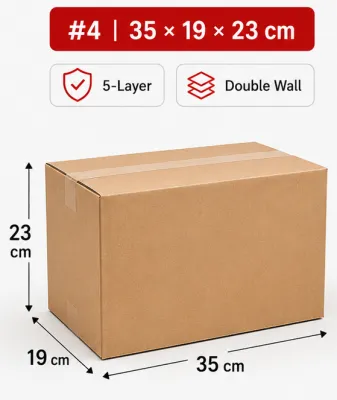
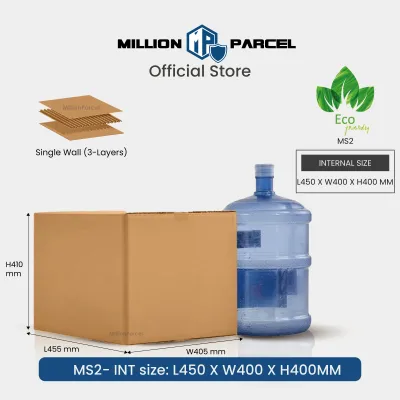
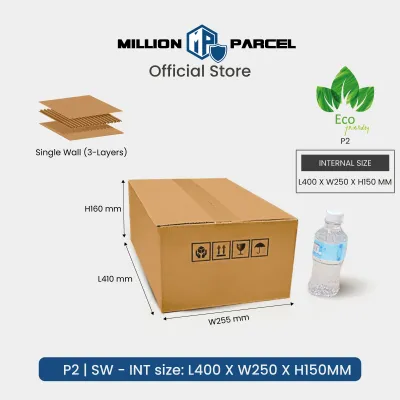
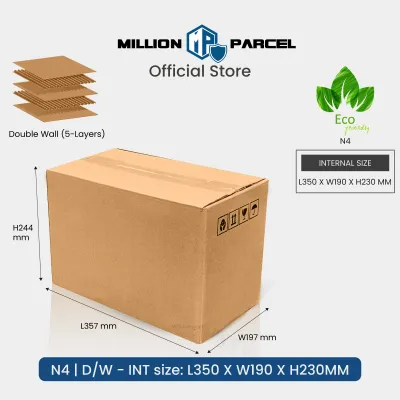
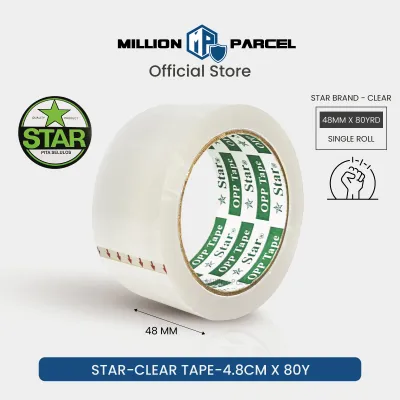
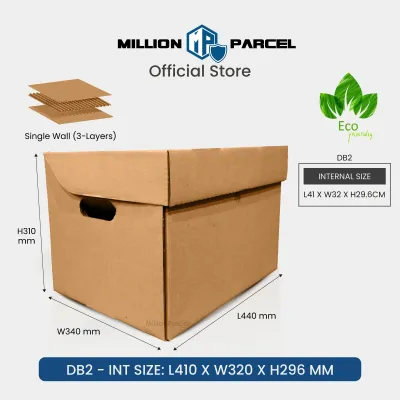
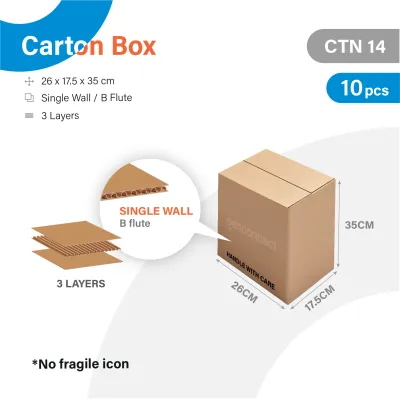
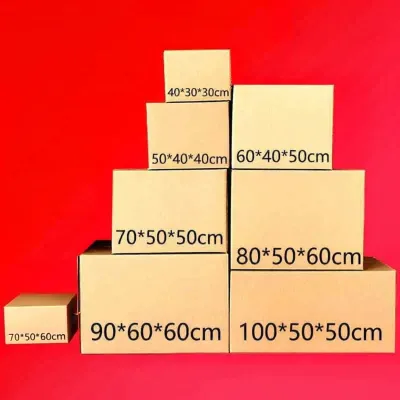
Prices are valid at publication and may change. Please refer to the product page for the latest price.
To identify these dimensions on an unassembled or assembled box, you must first look at the open face of the box. The length is always the longer side of the opening. The width is the shorter side of the opening. The height is the only dimension that does not describe the opening itself; instead, it measures the depth of the box from the top opening down to the inside bottom.
Maintaining this standard orientation is essential when comparing options from different packaging suppliers. If you mistake the width for the length, or the height for the width, you might end up ordering a box that opens from an unexpected side. This can disrupt your packing workflow, make it difficult to insert your products, or affect the structural integrity of the carton when stacked.
Inner vs. Outer Dimensions: Which One Matters for Your Items?
One of the most critical distinctions to make when purchasing a packaging box is the difference between inner and outer dimensions. Inner dimensions measure the usable space inside the box from wall to wall. This is the space available for your product and any protective wrapping. Outer dimensions measure the total physical footprint of the box from the outermost edges, including the thickness of the cardboard and any folded flaps.

The difference between these two sets of measurements is determined by the thickness of the corrugated board used to construct the box. For a thin, single-wall box, the difference might only be a few millimeters. However, for heavy-duty double-wall or triple-wall cartons, the thickness of the walls can reduce the internal space by 10 mm or more compared to the external measurements. If you only look at the outer dimensions, your items might not fit inside the box.
While inner dimensions dictate whether your product will fit, outer dimensions are vital for logistics and storage. Couriers and postal services calculate shipping rates based on the external volume of the package, often using volumetric weight formulas. Additionally, if you are planning to stack boxes on specific warehouse shelves, fit them into delivery vehicles, or store them in tight spaces, you must use the outer dimensions to ensure they fit the physical environment.
How to Measure Your Items and Calculate the Required Box Size
To find the perfect packaging box, you must start by measuring your product accurately. Place the item on a flat surface and use a reliable measuring tape or ruler. Measure the maximum length, width, and height of the item at its widest points. Be sure to include any protruding parts, such as handles, knobs, cables, or product packaging, as these will dictate the minimum space required inside the box.
Once you have the exact measurements of your item, you must calculate the required clearance for protective packaging. If you are shipping non-fragile items like clothing or books, you may only need a small clearance of about 10 mm to 15 mm total to allow the item to slide in easily. However, fragile items require cushioning materials like bubble wrap, packing paper, or foam inserts to absorb shocks during transit.
To adjust your target inner dimensions, add the thickness of your chosen padding to all sides of the product. For example, if you plan to wrap a delicate item in 20 mm of bubble wrap, you must add 40 mm (20 mm for each side) to the item’s length, width, and height. This adjusted figure represents the minimum inner dimensions your packaging box must have to accommodate both the product and its protective layer.
Choosing a box that is too tight risks damaging the product, as any external impact will transfer directly through the cardboard to the item. Conversely, an excessively large box leaves too much empty space, allowing the item to slide around and break. It also increases your shipping costs, as you will pay more for the volumetric size of the box and spend more money on unnecessary void fill materials.
Adjusting for Box Wall Thickness and Structural Design
The structural design and material of the packaging box play a significant role in how much usable space is available inside. Corrugated cardboard comes in various wall thicknesses, commonly referred to as flutes. Single-wall boxes (typically B or C flutes) offer a good balance of lightweight protection and space. Double-wall boxes (such as BC flute) combine two layers of fluted medium, providing excellent stacking strength for heavy items but reducing the internal dimensions significantly.
The style of the box also affects the internal clearance. A standard Regular Slotted Carton (RSC) has flaps that meet in the center, which creates a relatively uniform internal space. In contrast, a mailer box features folding flaps and interlocking side walls that roll over each other. This design creates double or triple layers of cardboard on the sides, which can reduce the usable width and length more than you might expect from the basic material thickness.
Because of these structural variations, you should never assume a standard deduction when converting outer dimensions to inner dimensions. Always check the manufacturer’s specifications or product labels for the exact internal clearance. If you are ordering custom boxes or purchasing in bulk, it is highly recommended to request a sample box first to test the fit with your actual product and packaging materials before committing to a large order.
Frequently Asked Questions (FAQ)
Does the order of dimensions change for tall or flat boxes?
The standard Length x Width x Height (L x W x H) sequence remains constant regardless of the box’s physical proportions. The sequence is always determined by the opening of the box, not by which side is the tallest. For a tall, narrow box, the opening might be small, meaning the length and width will be small numbers, while the height (depth) will be a much larger number. For a flat, shallow box, the height will be the smallest number, but it is still written last. Always identify the open face first to determine the length and width.
How much extra space should I leave inside the box for padding?
The amount of extra space you should leave depends on the fragility and weight of your item. For lightweight, non-fragile items, a clearance of 10 mm to 20 mm total is usually sufficient to allow for easy packing. For fragile, heavy, or high-value items, you should plan for 30 mm to 50 mm of space around the entire product to accommodate thick cushioning materials like bubble wrap or molded foam. Ensure this space is distributed evenly on all sides so the product remains centered and protected from external impacts.

Community discussion
Share your experience or ask a question. Comments are reviewed before publication.