
To choose the right paper box size, you must measure the maximum length, width, and height of your items, add the necessary clearance for protective padding, and match these final calculated dimensions to the internal measurements of the box. Selecting the correct paper box packaging ensures your items remain secure during transit, minimizes volumetric shipping costs with Singapore couriers, and reduces material waste. Let’s look at how to systematically measure your goods, calculate padding offsets, and select the optimal box.
Essential Tools for Accurate Box and Item Measurement
To avoid costly sizing errors, gather the right tools before measuring your products. A rigid measuring tape, a heavy-duty metal ruler, or a carpenter’s square is ideal because they maintain a straight, unyielding line. Avoid flexible tailoring tapes, which bend easily around corners and can yield inaccurate, overly generous readings for rigid items.
Keep a digital notepad or a physical stationery logbook nearby to record each dimension immediately in millimeters or centimeters. Always perform your measurements on a flat, level surface, such as a sturdy packing desk or table, to ensure your items and boxes rest naturally without sagging or tilting.
Products mentioned in this guide
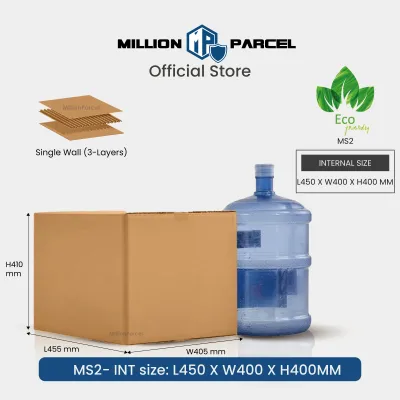
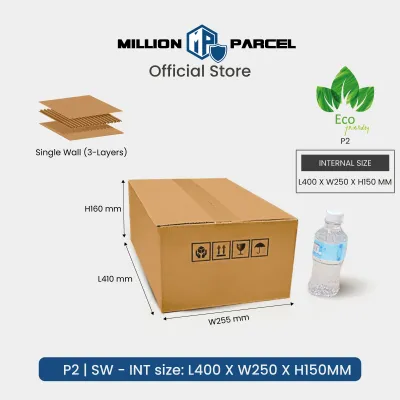
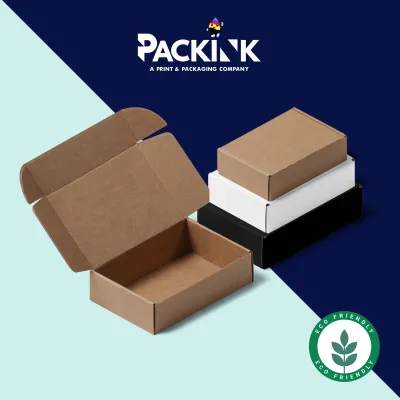
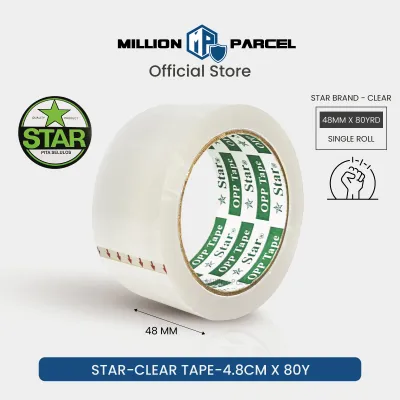
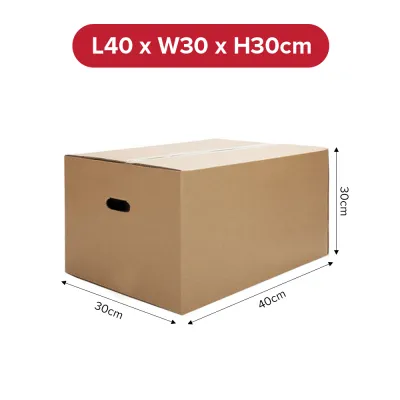
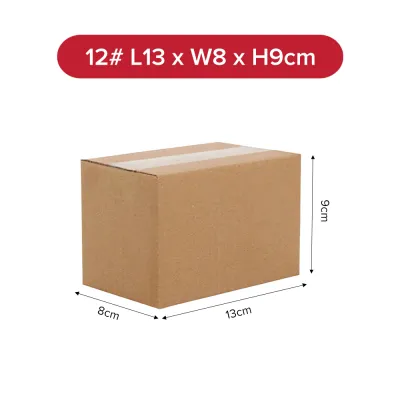
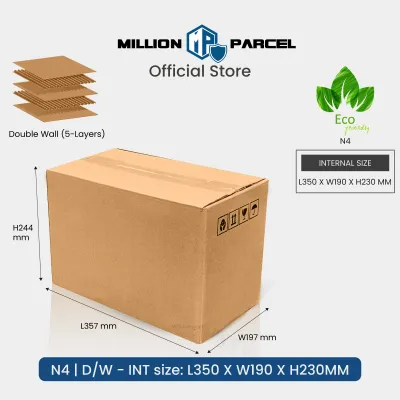
Prices are valid at publication and may change. Please refer to the product page for the latest price.
How to Measure Your Items for Packaging
Establishing a precise baseline of your product’s dimensions is the foundation of secure packaging. The global industry standard for recording these measurements is the Length x Width x Height (L x W x H) convention. When looking at your item, identify the three distinct axes:

- Length (L): Typically the longest horizontal side of the item.
- Width (W): The shorter horizontal side, perpendicular to the length.
- Height (H): The vertical distance from the base of the item to its highest point.
For regular, rectangular items like books, stationery sets, or boxed cosmetics, simply measure along these straight edges. However, if you are packing irregularly shaped items—such as handmade ceramics, bottles, or plush toys—you must measure the absolute maximum points in all three dimensions. Imagine an invisible rectangular “bounding box” enclosing the item. Measure from the outermost protrusion on one side to the outermost protrusion on the opposite side for each axis.
To maintain professional precision, record all measurements in millimeters (mm) or centimeters (cm). This aligns with the product catalogs of most packaging suppliers in Singapore, who list sizes using these units to ensure exact fits.
If you plan to pack multiple identical items into a single container, do not simply multiply a single item’s dimensions. Instead, stack or arrange the actual items on your flat work surface in the exact configuration they will be packed. Measure the total length, width, and height of this combined cluster. This physical arrangement accounts for natural gaps, overlapping edges, and structural variations that a simple mathematical multiplication would miss.
Calculating Space for Protective Padding and Void Fill
Rarely should an item sit flush against the raw cardboard walls of its shipping container. To protect your goods from shocks, drops, and vibration during transit, you must calculate the extra clearance required for protective padding and void fill. The amount of space you need depends heavily on the fragility of your product and the type of cushioning material you choose.
Different materials occupy different amounts of physical space:
- Bubble Wrap: Standard small-bubble wrap typically requires about 1 cm to 2 cm of clearance on all sides, while large-bubble wrap may require 3 cm or more.
- Kraft Paper / Honeycomb Paper: Crumpled kraft paper or expanded honeycomb wraps are highly versatile and generally require 2 cm to 4 cm of space to provide effective deceleration during drops.
- Foam Inserts / Molded Pulp: Custom-cut polyethylene foam or molded pulp trays provide highly precise protection and must be measured according to their specific wall thicknesses, often ranging from 1.5 cm to 3 cm.
- Air Pillows: Best suited for larger boxes, these require at least 3 cm to 5 cm of void space to prevent them from popping under external pressure.
To find the correct minimum inner box size, use this straightforward formula:
Item Dimension + (Padding Thickness x 2) = Minimum Inner Box Dimension
You must multiply the padding thickness by two because the cushioning material must wrap around or sit on both sides of the item (left and right for length, front and back for width, top and bottom for height). For example, if a fragile ceramic mug measures 10 cm (L) x 8 cm (W) x 12 cm (H) and requires 2 cm of bubble wrap protection on all sides, your calculation is:
- Length: 10 cm + (2 cm x 2) = 14 cm
- Width: 8 cm + (2 cm x 2) = 12 cm
- Height: 12 cm + (2 cm x 2) = 16 cm
Your minimum internal box size must be at least 14 x 12 x 16 cm.
Fragile items like glassware, delicate electronics, or fine stationery with sensitive corners demand generous padding space. Durable goods like books, plastic folders, or textile items can tolerate minimal or even zero padding, allowing you to choose a box size very close to the item’s actual dimensions.
Avoid over-packing by leaving excessive empty space. If a box is far too large, you will need to consume excessive quantities of void fill to keep the item from sliding around, which drives up material costs and increases the package’s volumetric weight. If your item is already housed in its own retail box, treat the retail box as the “item” and calculate padding based on its outer dimensions, usually allowing a slightly thinner layer of transit padding since the retail packaging provides primary structural support.
Understanding Inner vs. Outer Paper Box Packaging Dimensions
One of the most common mistakes in e-commerce fulfillment is confusing the inner dimensions of a box with its outer dimensions. Failing to distinguish between these two can lead to products that do not fit inside the box, or unexpected shipping surcharges from local couriers.
Inner Dimensions: These represent the actual usable space inside the box. Packaging manufacturers almost universally list inner dimensions in their catalogs to help you determine if your item and its padding will fit.
Outer Dimensions: These represent the total external footprint of the box, including the thickness of the paperboard and the folded flaps. Couriers and postal services use outer dimensions to calculate volumetric weight and determine whether a parcel fits into standard delivery lockers, post boxes, or sorting bins.
The difference between these two sets of measurements depends entirely on the thickness of the corrugated cardboard material:
- Single-Wall Flute (B-Flute or C-Flute): Typically 1.5 mm to 4 mm thick. The difference between inner and outer dimensions is minor, usually around 3 mm to 8 mm.
- Double-Wall Flute (BC-Flute): Typically 5 mm to 7 mm thick. Designed for heavier items, these boxes can reduce the internal usable space by up to 1.5 cm compared to the outer dimensions.
When sourcing paper box packaging, always verify which dimensions are listed. If a supplier does not specify, assume they are inner dimensions, but explicitly request the outer dimensions to calculate your shipping costs accurately.
Choosing Between Standard and Custom Paper Box Sizes
Once you have determined your minimum inner box dimensions, you must decide whether to purchase off-the-shelf standard boxes or invest in custom-manufactured packaging. This decision impacts your upfront costs, storage space, and overall shipping efficiency.
Standard boxes are highly cost-effective and readily available in small quantities from local packaging suppliers in Singapore. They are ideal for businesses starting out, or those shipping items that naturally fit into common dimensions (such as A4 or A5 paper sizes, standard shoe boxes, or cosmetic mailers). The primary trade-off is that standard sizes rarely match your calculated dimensions perfectly. If your calculated minimum inner dimension falls between two standard sizes, always round up to the nearest available standard size. You can easily fill the minor excess space with lightweight void fill like crumpled tissue paper or air pillows.
Custom paper box packaging is a viable option if you have high shipping volumes (typically thousands of units per run) or highly specific product shapes. Custom boxes eliminate excess void space, which reduces material costs and lowers your shipping volume. This is particularly beneficial in Singapore, where courier rates are highly sensitive to parcel dimensions.
Before committing to a custom manufacturing run, review the catalogs of local Singaporean packaging suppliers. Many local distributors stock dozens of standard dimensions tailored to popular regional e-commerce categories, allowing you to find a near-perfect fit without the tooling fees and long lead times associated with custom orders.
How to Test and Verify Your Box Fit Before Shipping
Before purchasing boxes in bulk or sending a large batch of orders out for delivery, perform a physical dry run to verify your sizing calculations. Place your item and its calculated protective padding inside a sample box or a temporary container of the same dimensions.
Close the flaps and perform a gentle shake test. The contents should remain securely in place; if you hear or feel the item sliding or shifting significantly, you need to add more void fill or reduce the box size. Next, ensure the top flaps fold completely flat without bulging. A bulging box distorts the outer dimensions, makes stacking difficult in delivery vans, and can be rejected by automated sorting machines at local courier hubs.
Finally, check the box’s structural capacity. Corrugated boxes often feature a Box Maker’s Certificate (BMC) printed on the bottom flap, which indicates the maximum weight limit and burst strength. Ensure your product’s weight does not exceed these limits, especially if you are shipping dense, heavy stationery supplies or books that require reinforced double-wall cardboard.
Frequently Asked Questions (FAQ)
What is the standard way to write box dimensions?
Box dimensions are universally written in the order of Length x Width x Height (L x W x H). Length is always the longer side of the open flap, width is the shorter side of the open flap, and height is the vertical depth of the box from the top opening down to the bottom panel.
How do I calculate volumetric weight for my paper box packaging?
To calculate volumetric (or dimensional) weight, multiply the outer Length x Width x Height of the box in centimeters and divide the result by a standard courier divisor (typically 5000 for most international and local Singapore couriers). The formula is: (L x W x H) / 5000. Always check with your specific local carrier, as some express services may use a divisor of 6000 or apply different volumetric rules for regional shipping.
Can I use a box that is slightly too big?
Yes, you can use a slightly oversized box, but it requires additional void fill to keep the contents secure and prevent damage from shifting during transit. Additionally, using a larger box increases the outer dimensions, which can raise your shipping costs if the courier charges based on volumetric weight rather than actual physical weight.

Community discussion
Share your experience or ask a question. Comments are reviewed before publication.