
Choosing the right packing box size requires balancing three critical elements: the physical dimensions of your items, the total weight of the load, and the structural limits of the box itself. Selecting an incorrect size does not just waste space; it leads to damaged goods, inflated shipping fees, and physical strain. By systematically evaluating your belongings and matching them to the correct box specifications, you can ensure your items arrive safely at their destination while keeping packaging costs to a minimum.
To make an informed decision, you must look beyond the simple volume of the box. You need to consider how the items will be arranged, the thickness of the protective cushioning required, and how the physical properties of the cardboard behave under pressure. This guide provides a step-by-step framework to help you select the ideal box size for any packing task.
Assess Your Items Before Selecting a Box
Before browsing box options, you must gather precise physical data about the items you intend to pack. Begin by using a reliable tape measure to record the length, width, and height of each item in centimetres. If you plan to pack multiple items together, group them tightly on a flat surface exactly as they would sit inside a box, then measure the outer boundaries of the entire cluster to establish your baseline dimensions.
Products mentioned in this guide
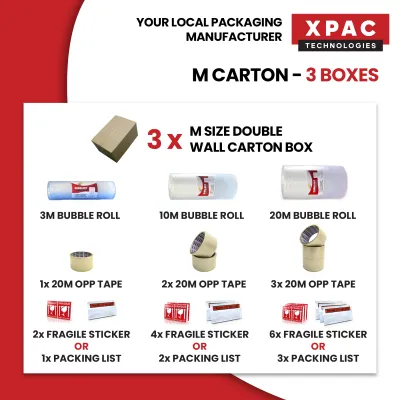
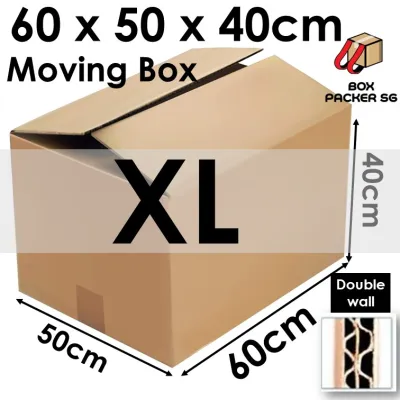
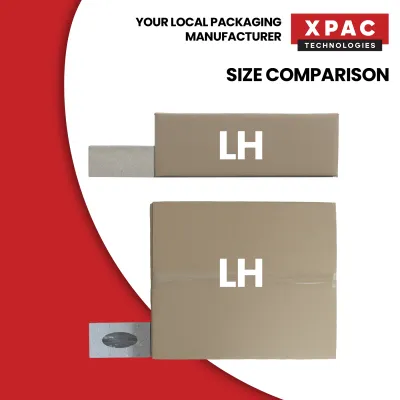
Prices are valid at publication and may change. Please refer to the product page for the latest price.
Next, categorize your items based on their weight, fragility, and material type. Heavy, dense objects must never be mixed with delicate or lightweight items in the same container. For example, keep heavy books, files, and tools completely separate from glassware, ceramics, or plastic ornaments. Mixing these categories inevitably leads to shifting during transit, where heavier items crush lighter, more fragile ones.
Once your items are grouped, calculate the total volume of each cluster by multiplying the overall length, width, and height. This calculation gives you the absolute minimum internal volume your box must provide. Keep in mind that manufacturers usually print external dimensions on packaging; you must specifically look for the internal dimensions to ensure your items will actually fit.
In tropical environments like Singapore, high relative humidity can soften cardboard over time, reducing its structural strength by up to 30% to 50%. If you plan to store your packed boxes in non-air-conditioned spaces, such as household bomb shelters or self-storage units, you must account for this strength loss by choosing slightly sturdier boxes or packing them less densely than you would for immediate shipping.
Match Common Items to Standard Box Categories
Packing boxes are generally categorized into three standard sizes: small, medium, and large. While these categories offer a helpful starting point, exact dimensions vary significantly between manufacturers. Always verify the internal dimensions listed on the product specification sheet rather than relying solely on generic size labels.

Small Boxes for Heavy and Dense Items
Small packing boxes typically measure around 30 x 30 x 30 cm or similar compact dimensions. These boxes are engineered specifically to carry heavy, dense items that accumulate weight quickly.
- Suitable items: Books, office files, hand tools, canned foodstuffs, vinyl records, and thick documents.
- Physical risks: Packing dense items into a large box makes the container incredibly heavy, often exceeding 25 kg. This extreme weight increases the risk of a bottom blowout, where the tape or cardboard tears under pressure. It also poses a severe risk of back strain or injury when lifting, especially when navigating narrow corridors or stairwells.
To ensure safe manual handling, keep the total weight of a small box under 15 kg, and secure the bottom seams with high-quality packaging tape.
Medium Boxes for Mixed and Fragile Goods
Medium boxes, generally ranging from 40 x 40 x 40 cm to 50 x 40 x 40 cm, are the most versatile options for general packing. They provide a balanced volume that accommodates a wide variety of household goods.
- Suitable items: Kitchenware, pots and pans, small home appliances, toys, shoes, and folded clothing.
- Weight and protection balance: The medium size allows you to pack moderately heavy items while leaving sufficient room for protective wrapping. For example, you can pack ceramic plates vertically inside a medium box, leaving enough space to insert protective cardboard dividers and bubble wrap without making the box too heavy to lift comfortably.
Large Boxes for Bulky and Lightweight Items
Large boxes typically measure 60 x 45 x 45 cm or larger. They are designed exclusively to hold high-volume, low-density items that take up space without adding significant weight.
- Suitable items: Bedding, pillows, winter coats, blankets, linens, and large plush toys.
- The safety warning: Never fill a large box with heavy items like books or electronics. Even if the items physically fit inside the dimensions, the sheer weight will cause the cardboard walls to buckle, sag, or rupture when lifted, potentially destroying your belongings and causing injury.
Factor in Cushioning and Void Fill Space
One of the most common packing errors is choosing a box that matches the exact dimensions of the bare items. Protective packaging materials occupy a surprising amount of physical space, and you must add their thickness to your initial measurements.
Wrapping materials like bubble wrap, foam sleeves, and thick packing paper increase the effective dimensions of your items. For instance, wrapping a fragile porcelain vase in two layers of standard bubble wrap can easily add 3 to 5 cm to its overall diameter and height. If your box is too tight, you will be forced to compress the wrapping, which destroys the air pockets and eliminates the material’s protective qualities.
Furthermore, any empty space remaining inside a packed box must be filled with void-fill materials to prevent the contents from shifting. Materials such as crumpled kraft paper, air pillows, or biodegradable packing peanuts act as shock absorbers. Without proper void fill, items will slide and collide when the box is tilted, stacked, or vibrated during transit.
For fragile items, follow the clearance rule of thumb: maintain a minimum of 5 cm of cushioning space on all six sides of the box (top, bottom, and all four walls). This means your chosen box’s internal dimensions should be at least 10 cm larger in length, width, and height than the item itself. For non-fragile items, a smaller clearance of 2 to 3 cm is generally sufficient to allow easy packing and tape sealing.
Verify Box Material and Weight Capacity
Selecting the right box size must go hand-in-hand with verifying its material strength. A box that is sized perfectly will still fail if the cardboard grade cannot support the weight of the contents.
Corrugated boxes are primarily available in single-wall and double-wall constructions. Single-wall boxes feature one layer of fluted corrugated medium glued between two flat linerboards, making them lightweight and cost-effective for items under 10 kg. Double-wall boxes feature two layers of fluted medium and three flat linerboards, offering significantly higher resistance to crushing, puncturing, and bending. You should always upgrade to double-wall boxes for fragile items, heavy electronics, or when boxes will be stacked high in a moving truck or storage unit.
To identify a box’s structural capacity, look at the bottom flap for the circular Box Manufacturer’s Certificate (BMC). This stamp provides critical test ratings that indicate how the box will perform under stress:
- Edge Crush Test (ECT): This rating (e.g., 32 ECT, 44 ECT) measures the top-to-bottom stacking strength of the box. A higher ECT rating is essential if you plan to stack boxes, as it prevents the bottom boxes from collapsing under the weight of those above.
- Bursting Test: This rating measures the pressure required to rupture the face of the cardboard, indicating how well the box can contain heavy or sharp items without tearing.
Never exceed the manufacturer’s stated weight limit, regardless of whether the items physically fit inside the box. Overloading compromises the structural integrity of the cardboard, making it highly susceptible to tearing at the seams or collapsing when stacked.
Common Box Sizing Mistakes to Avoid
Understanding the consequences of poor sizing decisions can help you avoid costly shipping and moving errors. Both oversized and undersized boxes present unique risks that can damage your items or increase your expenses.
Choosing a box that is too large is a costly mistake. First, it requires an excessive amount of void-fill material to secure the items, which increases your packaging costs. Second, if the empty space is not completely filled, the box will easily collapse when other containers are stacked on top of it. Third, major courier services and international air freight providers charge based on volumetric weight (Length x Width x Height in cm / 5000) rather than actual weight if the box is large but light, resulting in unnecessarily high shipping fees.
Conversely, choosing a box that is too small leads to bulging sides and flaps that cannot close flat. This prevents the boxes from being stacked evenly, concentrates stress on the taped seams, and increases the risk of the box popping open during handling. It also deprives your items of the necessary cushioning barrier, leaving them vulnerable to external impacts and corner drops.
To verify that you have chosen the correct box size and packed it properly, perform a gentle shake test. Once the box is packed and sealed with high-quality packaging tape, lift it slightly and shake it gently. If you feel or hear the contents shifting inside, the void fill is insufficient. Reopen the box and add more crumpled paper or air pillows until the items remain completely stationary.
Additionally, you can perform a simple thumb-press test to check for structural firmness. Press your thumb against the sides and top of the sealed box; if the cardboard soft-spots or caves in easily, the box contains too much empty space and needs more internal support to withstand stacking pressure.
Frequently Asked Questions (FAQ)
Is it better to use one large box or several small ones?
For almost all scenarios involving mixed or heavy items, using several small boxes is superior. Distributing your items across multiple smaller containers keeps the weight of each box manageable, reducing physical strain and preventing bottom blowouts. It also allows you to group similar items together more effectively, preserving the structural integrity of each box. You should reserve single large boxes strictly for lightweight, bulky, non-divisible items such as comforters, pillows, or large plastic toys.
How should I measure irregularly shaped items for packing?
To measure an irregularly shaped item, such as a desk lamp or an ornamental sculpture, imagine a rectangular box enclosing the object. Measure the absolute maximum length, width, and height from the outermost protruding points of the item. Once you have these maximum dimensions, add an extra 5 to 8 cm of clearance on all sides. This extra space is necessary to accommodate custom-molded cushioning, foam inserts, or thick bubble wrap, which protects the protruding edges from puncturing the cardboard walls during transit.
Community discussion
Share your experience or ask a question. Comments are reviewed before publication.