
Choosing the correct polymailer size is a balancing act between product protection, professional presentation, and shipping cost efficiency. To select the right size, you must measure your product’s maximum length, width, and height after it is fully prepared for shipping, and then apply standard dimensional formulas. These calculations ensure the bag comfortably accommodates the three-dimensional volume of your item without putting undue stress on the seams or the adhesive seal. Getting this right prevents transit damage, reduces material waste, and helps avoid unnecessary shipping surcharges from local couriers.
Understanding Poly Mailer Dimensions and Industry Sizing Standards
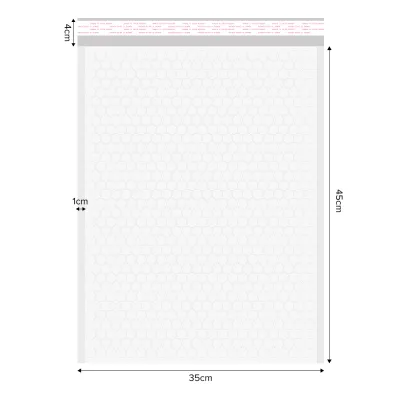
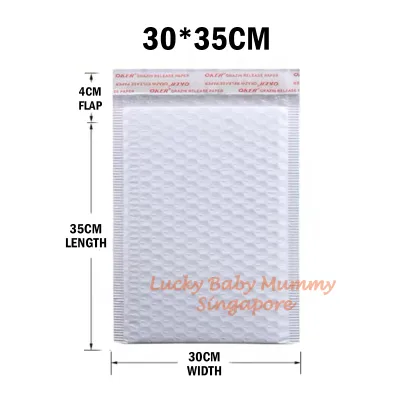
To calculate the correct size, you must first understand how packaging manufacturers label and measure their products. Poly mailers are almost universally sold using a flat, two-dimensional format: Width (W) x Length (L). For example, a standard mailer might be listed as 25 x 35 cm or 10 x 14 inches. The width refers to the opening of the bag, while the length represents the usable depth of the pocket.
A critical detail that frequently trips up e-commerce merchants is the adhesive flap, often called the lip. In standard industry sizing, the stated length of the polymailer represents only the usable body of the bag and completely excludes this adhesive flap. The flap, which typically extends an additional 4 to 5 cm (1.5 to 2 inches) beyond the opening, folds over to seal the package. Assuming the flap is included in the main length measurement is a common mistake that leads to ordering bags that are too short to seal properly.
Products mentioned in this guide
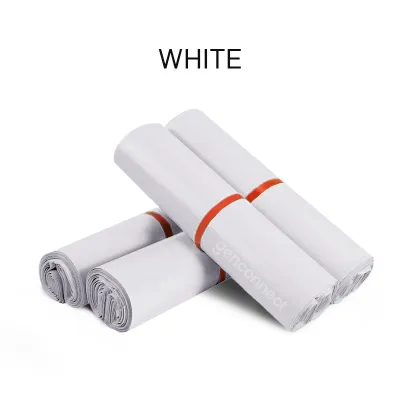
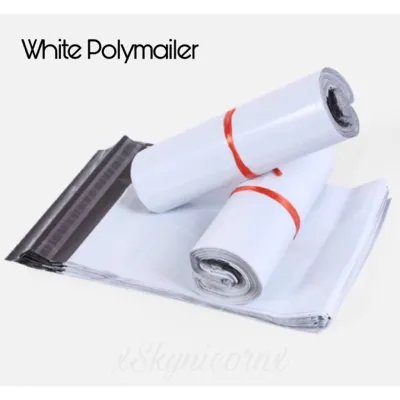

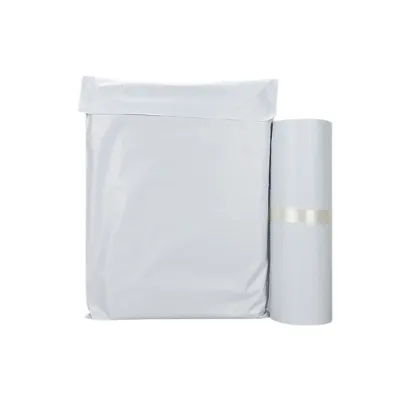
Prices are valid at publication and may change. Please refer to the product page for the latest price.
Another key specification to consider is material thickness, which is measured in microns (metric) or mils (imperial). Standard poly mailers for general apparel usually range from 50 to 60 microns in thickness, while heavy-duty or co-extruded mailers designed for heavier or sharp-edged items can exceed 75 to 100 microns. While thickness does not alter the physical external dimensions of the bag, it significantly impacts the material’s flexibility. Thicker, heavy-duty plastics have less stretch, meaning you will need to allow a slightly more generous sizing margin during your calculations to ensure easy packing.
How to Accurately Measure Your Products for Shipping
Before applying any sizing formulas, you must obtain precise measurements of your products. A common error is relying on the manufacturer’s raw product dimensions. For shipping purposes, you must measure the item only when it is in its final, shippable state.

To begin, gather a firm ruler or a flexible measuring tape and measure the three primary dimensions of your packaged item:
- Length: The longest side of the prepared item.
- Width: The side perpendicular to the length.
- Height (Thickness): The maximum depth or thickness of the item at its bulkiest point.
The physical characteristics of your product will dictate how you approach these measurements. Rigid items, such as books, board games, cosmetics in retail boxes, or small electronic accessories, maintain a fixed shape. For these products, measuring is straightforward: use a flat surface to capture the exact height, width, and depth without any compression.
Flexible items, such as apparel, textiles, plush toys, or soft home goods, require a different approach. These items naturally expand and shift. The golden rule for soft goods is to measure them after they have been folded, bundled, or placed inside their primary protective packaging. If you wrap your garments in tissue paper, place them in clear inner bags, or use custom branded boxes, perform your measurements on this complete bundle.
When measuring soft, lofty items like sweaters or winter wear, gently press out any trapped excess air to simulate how the item will sit inside a sealed mailer. Measure the thickness of the compressed bundle at its highest point. Do not over-compress the item during measurement, as the plastic of the mailer needs to slide over the product smoothly without stretching the seams to their breaking point.
Formulas to Calculate the Exact Poly Mailer Size You Need
Because a polymailer is a flat, two-dimensional envelope, inserting a three-dimensional object forces the front and back walls of the bag apart. This expansion “eats up” both the width and the length of the mailer. To compensate for this physical displacement, you must use specific mathematical formulas to determine the minimum flat dimensions required.
To find the required mailer width, use the following formula:
Required Width = Product Width + Product Thickness + Clearance Allowance
The clearance allowance (typically 2.5 to 5 cm, or 1 to 2 inches) is essential. It provides the necessary slack for the item to slide into the bag easily and accounts for the heat-sealed side seams of the mailer, which slightly reduce the usable internal width.
To find the required mailer length, use the following formula:
Required Length = Product Length + Product Thickness + Seal Allowance
The seal allowance (typically 4 to 5 cm, or 1.5 to 2 inches) ensures that the adhesive flap can fold over and seal flatly against the back of the mailer without being pulled tight or distorted by the height of the product.
Let us walk through a practical, step-by-step calculation using a common e-commerce item: a folded cotton t-shirt packaged in an inner protective sleeve.
- Product Width: 22 cm
- Product Length: 30 cm
- Product Thickness: 3 cm
To calculate the minimum mailer width:
Width = 22 cm (Product Width) + 3 cm (Product Thickness) + 3 cm (Clearance) = 28 cm
To calculate the minimum mailer length:
Length = 30 cm (Product Length) + 3 cm (Product Thickness) + 4 cm (Seal Allowance) = 37 cm
Based on these calculations, the ideal polymailer size for this folded t-shirt is at least 28 x 37 cm. Since packaging suppliers stock standard sizes, you would look for the closest available option that meets or slightly exceeds these dimensions, such as a standard 30 x 40 cm mailer.
For a thicker, rigid item like a boxed accessory, the displacement is even more pronounced. Consider a box with the following dimensions:
- Product Width: 15 cm
- Product Length: 20 cm
- Product Thickness: 6 cm
Calculating the minimum mailer width:
Width = 15 cm + 6 cm + 3 cm = 24 cm
Calculating the minimum mailer length:
Length = 20 cm + 6 cm + 4 cm = 30 cm
For this boxed accessory, you would require a mailer measuring at least 24 x 30 cm. A standard 25 x 35 cm mailer would serve as an excellent, readily available match.
Adjusting Sizes for Fragile, Bulky, or Irregular Items
Standard formulas work perfectly for uniform, rectangular items, but fragile, bulky, or irregularly shaped goods require special adjustments to ensure safe transit.
If your product is fragile and requires protective cushioning, such as bubble wrap, foam sheets, or corrugated wrap, you must perform your measurements after the cushioning has been fully applied. Wrapping an item in bubble wrap can easily add 2 to 4 cm to its overall width, length, and thickness. Failing to account for this extra bulk will result in a mailer that is far too tight, which can compress the bubble wrap, pop the protective air pockets, and leave your product vulnerable to impact damage.
Irregularly shaped items, such as shoes (without a box), soft toys, or molded plastic goods, do not have uniform dimensions. For these items, you must identify and measure the absolute maximum points of the object. Find the widest span, the longest stretch, and the deepest protrusion. Treat these maximum points as the boundaries of a hypothetical rectangular box enclosing the item, and apply the standard formulas to those dimensions.
Choosing a mailer that is excessively large to play it safe introduces logistical and financial drawbacks. In Singapore, major courier services and postal networks calculate shipping rates based on either actual weight or dimensional (volumetric) weight, whichever is higher. Volumetric weight is calculated using the standard formula:
Volumetric Weight (kg) = (Length x Width x Height in cm) / 5000
If you pack a small item in an oversized polymailer without folding down and securing the excess material, the courier may measure the parcel at its bulkiest, loose points. This can inadvertently push your shipment into a higher pricing tier. Furthermore, excess loose plastic can easily get caught in automated sorting conveyor belts, leading to torn packaging, delayed deliveries, or lost items.
Testing the Fit and Avoiding Material Waste
Before committing to a bulk order of hundreds or thousands of custom or plain poly mailers, validating your calculations with physical testing is a crucial step to prevent costly inventory errors.
Conducting a “mock pack” test allows you to evaluate how your product behaves inside the chosen bag size. If you do not have sample mailers on hand, you can use existing plastic bags or cut out a template from paper to simulate the calculated dimensions.
When evaluating your mock pack, work through the following verification checklist:
- Flat Adhesive Seal: Does the adhesive flap fold over and seal completely flat against the body of the mailer? If the flap is pulled upward or sits at an angle, the bag is too short, which risks the seal popping open during transit.
- Seam Tension: Examine the side seams of the mailer. Are they pulled taut or showing signs of stress? If the seams look strained, the width is insufficient, and the bag may burst when handled roughly by couriers.
- Corner Protection: For rigid or boxed items, check the corners. If the plastic is stretched thin or protruding sharply, it is highly susceptible to puncturing. You need a larger size or a thicker material grade.
- Professional Presentation: Is there an excessive amount of loose, floppy plastic? A mailer that is too large looks unprofessional and increases the risk of catching on sorting machinery.
Most reputable packaging suppliers in Singapore offer sample packs containing one or two mailers of each standard size. It is highly recommended to order these sample kits first. Testing physical samples across your entire product range allows you to identify the minimum number of distinct mailer sizes you need to stock, streamlining your packing workflow while minimizing material waste and keeping your packaging costs highly efficient.
Frequently Asked Questions (FAQ)
Does the stated poly mailer length include the adhesive flap?
No, standard industry sizing for poly mailers almost always excludes the length of the adhesive flap (also known as the lip). The dimensions listed by suppliers (such as 30 x 40 cm) represent the usable internal space of the bag’s main body. The adhesive flap extends beyond this length, typically adding an extra 4 to 5 cm. However, because manufacturing standards can vary slightly, always verify the supplier’s detailed specification sheet or product description. If a non-standard supplier includes the flap in their total length measurement, you will need to order a size up to ensure your product fits.
What should I do if my product size falls between two standard poly mailer sizes?
If your calculated dimensions fall between two standard, off-the-shelf poly mailer sizes, you should always choose the larger size. A mailer that is slightly too large can easily be folded over and taped down to create a snug, secure fit. This simple adjustment keeps the package compact and professional. Conversely, attempting to force a product into a mailer that is too small will result in split seams, stretched plastic, and failed adhesive seals, exposing your products to dirt, moisture, and theft during the shipping process.

Community discussion
Share your experience or ask a question. Comments are reviewed before publication.