
Matching the right crochet hook size to your yarn weight is the foundational step to achieving professional-looking crochet projects. When your hook and yarn are perfectly paired, your stitches slide effortlessly, your fabric exhibits the exact density required, and your finished piece retains its intended shape. Conversely, a mismatch can leave you with a stiff, rigid fabric that feels like cardboard or a loose, floppy structure that sags under its own weight.
To find the ideal combination, you must understand how hook dimensions interact with yarn thickness, how to interpret standard sizing systems, and how to adjust your tools based on the specific demands of your project. By mastering these principles, you can confidently tackle any pattern, swap yarns with ease, and ensure your handmade creations look and feel exactly as intended.
The Impact of Hook and Yarn Pairing on Gauge and Texture
The relationship between a crochet hook and yarn is defined by two primary concepts: gauge and drape. Gauge refers to the number of stitches and rows per inch or centimeter of crocheted fabric. Drape describes how the finished fabric hangs, flows, or holds its shape under gravity. When you insert a hook into a loop of yarn, the physical diameter of the hook shaft determines the size of the resulting stitch.
Products mentioned in this guide
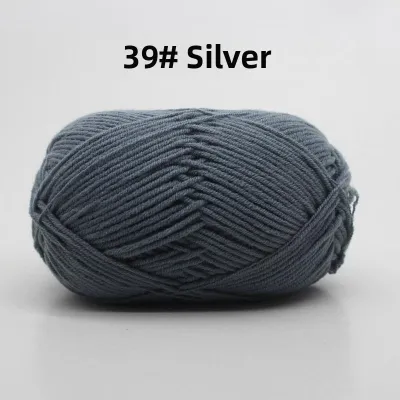
Prices are valid at publication and may change. Please refer to the product page for the latest price.
If you use a hook that is too small for your chosen yarn, the fibers are compressed tightly into a restricted space. This results in a dense, rigid fabric with very little flexibility. While this stiffness is desirable for structural items, it makes garments uncomfortable to wear and can cause significant hand fatigue as you struggle to insert the hook into tight loops.
Conversely, using a hook that is too large for the yarn creates oversized, open loops. The resulting fabric is loose, airy, and highly flexible, but it may lack structural integrity. Stitches can lose their definition, and the fabric may stretch out of shape easily over time. Finding the correct balance ensures that the yarn has enough space to bloom—allowing the fibers to expand naturally—without sacrificing the structural stability of the textile.
Standard Crochet Hook and Yarn Weight Pairing Guide
To simplify the process of matching tools to materials, the craft industry categorizes yarns by weight, ranging from delicate lace to ultra-thick jumbo. Each weight category corresponds to a recommended range of hook sizes. These recommendations serve as an excellent starting point for most projects.

When selecting a hook, it is important to note that sizing systems can vary by region. In Singapore, you will frequently encounter metric measurements (in millimeters), US letter/number designations, and UK imperial numbers. Metric sizes are the most reliable and consistent across different brands, as they measure the exact diameter of the hook shaft. Crafters who import yarns from various international sources must often translate these different classification systems to avoid pairing errors.
The following table outlines the standard pairings recommended by the Craft Yarn Council, mapping yarn weight categories to their typical metric and US hook equivalents:
| Yarn Weight Category | Common Names | Recommended Metric Hook Size | Recommended US Hook Size |
|---|---|---|---|
| 0: Lace | Fingering, 10-Count Thread | 1.60 mm to 2.25 mm | Steel 6, 7, 8 or Regular B-1 |
| 1: Super Fine | Sock, Fingering, Baby | 2.25 mm to 3.50 mm | B-1 to E-4 |
| 2: Fine | Sport, Baby | 3.50 mm to 4.50 mm | E-4 to 7 |
| 3: Light | DK, Light Worsted | 4.50 mm to 5.50 mm | 7 to I-9 |
| 4: Medium | Worsted, Aran, Afghan | 5.50 mm to 6.50 mm | I-9 to K-10.5 |
| 5: Bulky | Chunky, Craft, Rug | 6.50 mm to 9.00 mm | K-10.5 to M-13 |
| 6: Super Bulky | Roving, Bulky | 9.00 mm to 15.00 mm | M-13 to Q |
| 7: Jumbo | Roving, T-Shirt, Tube | 15.00 mm and larger | Q to U and larger |
While this chart provides a reliable baseline, you should always treat it as a starting recommendation rather than an absolute rule. Always verify the specific suggestions printed on your individual yarn label. Factors such as fiber content, ply structure, and yarn texture can significantly alter how a yarn behaves on the hook. For example, an inelastic, tightly spun cotton yarn may require a slightly larger hook to maintain stitch flexibility, whereas a highly elastic, fluffy wool yarn might require a smaller hook to prevent the stitches from looking sloppy.
How to Test Your Gauge and Adjust the Hook Size
Because everyone crochets with a slightly different level of physical tension, the recommendations on yarn labels and standard charts cannot guarantee a perfect match for your specific hands. To achieve the exact dimensions specified in a pattern, you must crochet a gauge swatch before starting your actual project.
To create a standard gauge swatch, select your yarn and the recommended hook size, then chain enough stitches to work a piece that is roughly 15 cm by 15 cm (6 inches by 6 inches). Crochet using the stitch pattern specified in your project until the swatch reaches the desired height. Working a swatch larger than the target 10 cm by 10 cm (4 inches by 4 inches) area is crucial because the edge stitches are often distorted and do not represent your natural tension.
Once your swatch is complete, lay it flat on a hard, level surface without stretching it. Use a rigid ruler or a dedicated gauge measuring tool to count the number of stitches across a 10 cm (4 inch) horizontal line in the center of the swatch. Next, measure the number of rows vertically within a 10 cm (4 inch) space. Compare these numbers to the gauge specified in your pattern.
If your count reveals more stitches and rows than the pattern requires, your stitches are too small and your fabric is too tight. To correct this, switch to a larger hook size, which will create larger loops and reduce the stitch count per inch. If your count reveals fewer stitches and rows than required, your stitches are too large and your fabric is too loose. In this case, switch to a smaller hook size to tighten your stitches and increase the count. Keep adjusting and swatching until your measurements match the pattern requirements.
Adjusting Pairings for Different Crochet Projects
While standard charts work well for general blankets and accessories, specific types of projects demand that you intentionally deviate from standard label recommendations to achieve the correct physical properties.
Amigurumi and Stuffed Toys
Amigurumi projects require a dense, highly structured fabric that can hold its shape when stuffed with polyester fiberfill. If you use the hook size recommended on the yarn label, the stitches will likely be too loose, allowing the white stuffing to show through or leak out of the finished toy.
To prevent this, you should typically use a hook that is 1 to 2 sizes smaller than the label recommendation. For instance, if you are using a Medium (4) worsted weight yarn that recommends a 5.5 mm hook, you should opt for a 3.5 mm or 4.0 mm hook instead. This tightens the stitches significantly, creating a solid, durable fabric that keeps the stuffing securely contained and gives the toy a clean, professional finish.
Garments and Wearables
For sweaters, cardigans, and shawls, the drape of the fabric is just as important as the physical dimensions. A garment that is too stiff will sit awkwardly on the body, while one that is too loose may stretch out of shape after a single wear.
When making wearables, you must adhere strictly to the pattern’s gauge and use the exact yarn weight specified. Furthermore, you should always wash and dry your gauge swatch according to the yarn’s care instructions before measuring it. This process, known as blocking, allows the fibers to relax and settle into their permanent state. In warm, humid environments like Singapore, lightweight fibers such as bamboo, linen, and mercerized cotton are highly popular for their breathability. However, these fibers can stretch significantly when washed, making a blocked gauge swatch absolutely essential to avoid sizing disasters.
Lace and Delicate Home Decor
Lacework, doilies, and lightweight summer shawls rely on open, airy spaces to highlight intricate stitch patterns. If you use a hook that is too small, the delicate details of the lace will become lost in a dense clump of thread.
To achieve the necessary stitch definition and fluid drape, lacework often utilizes a hook that is larger than what would typically be paired with such a thin thread. This deliberate mismatch allows the stitches to remain open and distinct, ensuring that the negative space within the pattern is clearly defined. When working with fine crochet threads, using a slightly larger steel hook can also prevent the thread from splitting, making the crocheting process smoother and more enjoyable.
Common Pairing Mistakes and How to Avoid Them
Avoiding common pitfalls during the selection process can save you hours of frustration and prevent you from wasting valuable materials. One of the most frequent errors is completely ignoring the yarn label’s baseline recommendations. While experienced crafters can make intentional adjustments, bypassing the label without a clear plan often leads to highly distorted projects that must be completely unraveled.
Another common mistake is mixing different yarn fibers, textures, or weights within the same project without testing them together. For example, combining a highly elastic acrylic yarn with a rigid cotton yarn of the same nominal weight can create uneven tension and warping in your finished fabric. If you plan to combine different yarns in a multi-colored project like a granny square blanket, ensure they share a similar fiber content, ply, and weight, and always crochet a test square to verify their compatibility.
Finally, many beginners fail to account for their personal tension. If you naturally hold your yarn tightly, forcing yourself to crochet looser to match a pattern’s gauge is incredibly difficult and can lead to hand strain. Instead of altering your natural grip, simply let the tools do the work. If you are a tight crocheter, make it a habit to automatically size up your hook; if you are a loose crocheter, size down. This approach preserves your physical comfort while ensuring your projects turn out beautifully.
Frequently Asked Questions (FAQ)
What should I do if my yarn label is missing the recommended hook size?
If you are working with mystery yarn from your stash or a skein that has lost its label, you can easily determine its weight using the Wraps Per Inch (WPI) method. To do this, wrap the yarn snugly around a pencil, ruler, or wooden dowel, ensuring the strands sit side-by-side without overlapping or leaving gaps. Measure a 2.5 cm (1 inch) section and count the number of wraps within that space.
A wrap count of 12 to 15 wraps per inch typically indicates a Light (3) DK weight yarn, while 9 to 11 wraps point to a Medium (4) worsted weight yarn. Once you have identified the approximate yarn weight, consult a standard pairing chart to select a baseline hook size, then crochet a quick gauge swatch to verify that the fabric has the texture and flexibility you desire.
Does the material of the crochet hook change the recommended size?
The material of your crochet hook—whether it is made of aluminum, wood, bamboo, plastic, or features an ergonomic rubber grip—does not change the physical metric millimeter size of the tool. A 5.0 mm wooden hook has the exact same shaft diameter as a 5.0 mm aluminum hook. However, different materials have varying levels of surface friction, which can subtly affect your personal tension.
Smooth metal hooks allow the yarn to glide quickly, which can sometimes result in looser stitches, while wooden or bamboo hooks offer more grip, which can naturally tighten your tension. If you find that your gauge is slightly off, do not rely on switching hook materials to fix the issue. Instead, make precise adjustments by changing the physical hook size up or down as indicated by your gauge swatch.

Community discussion
Share your experience or ask a question. Comments are reviewed before publication.