
To find the correct crochet hook size for any yarn, check the manufacturer’s recommendation printed on the yarn label first. As a general rule, fine yarns like fingering or sport weight pair best with smaller hooks (2.25 mm to 3.5 mm), medium yarns like DK or worsted weight require mid-sized hooks (4 mm to 6 mm), and thick yarns like bulky or jumbo require large hooks (6.5 mm to 15 mm or larger). Using the correct hook size ensures your stitches have the right tension, preventing the finished fabric from becoming too stiff or overly loose.
While the label provides an excellent starting point, your specific project goals and personal crocheting style will often require you to adjust your hook size. Choosing the right combination is a balance of understanding yarn characteristics, measuring your tools accurately, and testing your stitches before diving into a full project. This guide breaks down the mechanics of yarn weights, hook sizes, and how to adjust your pairings for perfect results every time.
Understanding Yarn Weights and Hook Sizing Metrics
Before matching your tools, you must understand how yarn thickness is categorized. The craft industry uses a standardized yarn weight system ranging from category 0 (Lace) up to category 7 (Jumbo). Each category represents a specific range of thickness, which directly influences the density, warmth, and drape of the finished fabric. Using a thick yarn with a tiny hook results in an incredibly dense, inflexible fabric, while pairing a thin yarn with a massive hook creates an open, mesh-like structure. Identifying the weight category of your yarn is the first step in determining which hook size will yield a balanced fabric.
Products mentioned in this guide
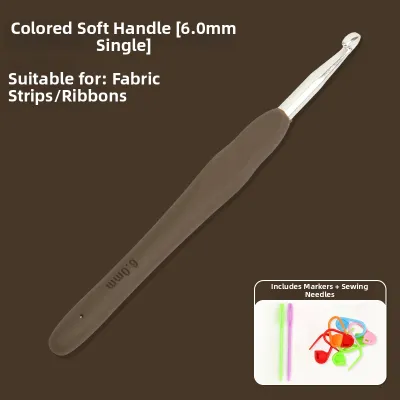
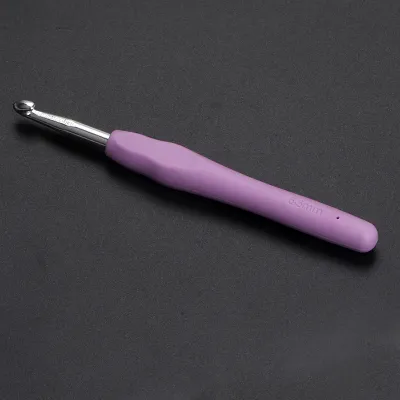
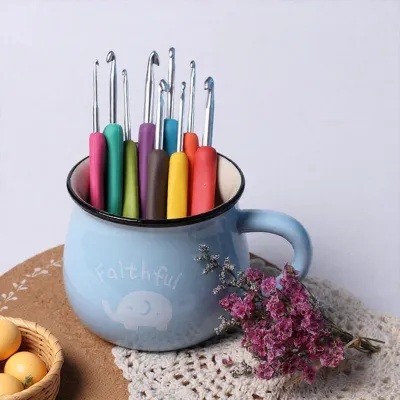
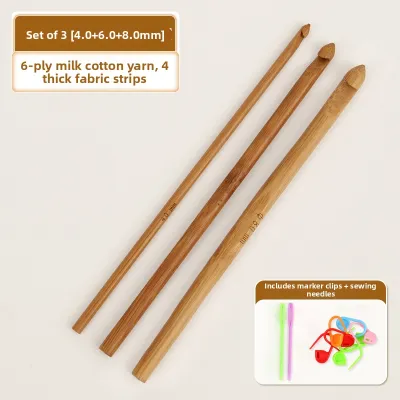
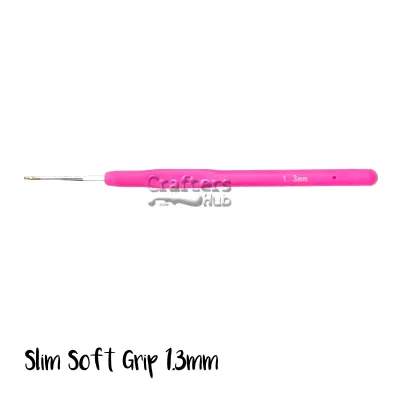
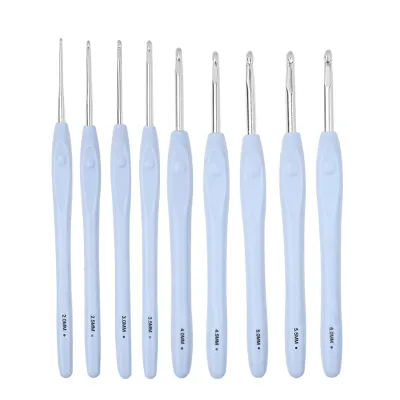
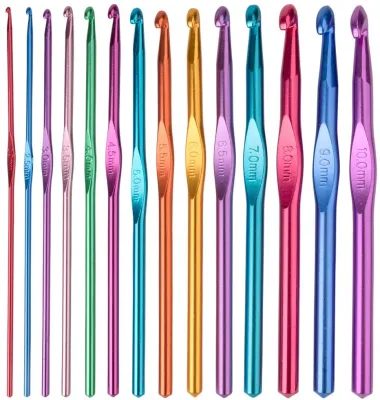
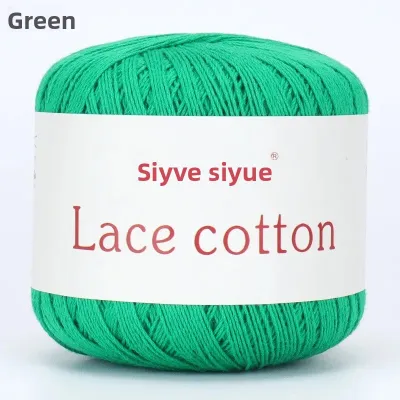
Prices are valid at publication and may change. Please refer to the product page for the latest price.
Crochet hooks are measured by the diameter of their shaft, which is the cylindrical area between the hook tip and the thumb rest. This shaft diameter determines the size of the loops you create, directly dictating the size of your stitches. Millimeters (mm) are the most reliable metric for hook sizing because they represent an absolute, physical measurement that does not change between brands or regions. Whether you are purchasing tools online or sourcing them from local craft shops, relying on the millimeter measurement prevents errors caused by regional sizing variations.
In addition to metric measurements, you will frequently encounter US and UK sizing systems, which can be highly confusing for beginners. The US system uses letters and numbers, where the further down the alphabet the letter is, the larger the hook (for example, a G-6 hook is 4 mm, while an H-8 hook is 5 mm). Conversely, the UK system uses a reverse numbering method where smaller numbers represent larger hooks (for example, a UK size 8 is 4 mm, while a UK size 0 is 8 mm). Because these systems can overlap or vary slightly by manufacturer, always cross-reference the metric millimeter size to ensure accuracy.
To simplify the pairing process, manufacturers print a recommended hook size directly on the paper band surrounding the yarn skein. This recommendation is usually represented by a small icon of a crochet hook with a millimeter measurement next to it. This suggested size is calculated by professional designers to produce a balanced, standard fabric with average tension. While you are not strictly obligated to use this exact size, it serves as the ultimate baseline for your initial swatching and testing.
Standard Crochet Hook and Yarn Weight Pairings
To help you navigate your projects, this structured reference maps standard yarn weight categories to their generally accepted metric crochet hook ranges. These pairings are designed to produce a classic, balanced fabric that is neither too stiff nor too loose.

| Yarn Weight Category | Common Yarn Names | Recommended Metric Hook Size (mm) | Recommended US Hook Sizing |
|---|---|---|---|
| 0: Lace | Fingering, Thread, Cobweb | 1.6 mm to 2.25 mm | Steel 6, 7, 8 or B-1 |
| 1: Super Fine | Sock, Fingering, Baby | 2.25 mm to 3.5 mm | B-1 to E-4 |
| 2: Fine | Sport, Baby | 3.5 mm to 4.5 mm | E-4 to 7 |
| 3: Light | DK, Light Worsted | 4.5 mm to 5.5 mm | 7 to I-9 |
| 4: Medium | Worsted, Afghan, Aran | 5.5 mm to 6.5 mm | I-9 to K-10.5 |
| 5: Bulky | Chunky, Craft, Rug | 6.5 mm to 9.0 mm | K-10.5 to M-13 |
| 6: Super Bulky | Bulky, Roving | 9.0 mm to 15.0 mm | M-13 to Q |
| 7: Jumbo | Roving, T-shirt yarn | 15.0 mm and larger | Q to U and larger |
These standard pairings serve as reliable starting points, but you must remember that fiber content and ply structure heavily influence how a yarn behaves. For instance, a highly twisted, smooth mercerized cotton yarn has very little stretch and sits compactly, often requiring a slightly larger hook to maintain stitch flexibility. On the other hand, a lofty, single-ply merino wool yarn contains trapped air and natural elasticity, allowing it to bloom and fill out gaps, which means you can easily use a slightly smaller hook without making the fabric feel stiff.
Verifying the physical size of your crochet hook is critical, especially when working with heirloom tools, vintage patterns, or unbranded hooks. Over time, printed size labels on plastic or aluminum handles can rub off due to friction and hand oils. If you are using an older hook with missing or ambiguous markings, use a physical hook gauge tool—a metal or plastic card with precisely drilled holes—to find the exact millimeter diameter of the shaft. Never guess the size of an unmarked hook, as a variance of even half a millimeter will noticeably alter your project’s final dimensions.
Novelty, textured, or highly irregular yarns require special consideration when selecting a hook size. Yarns like bouclé, chenille, eyelash, or faux-fur feature uneven textures, loops, or halos that can easily catch on the throat of a small hook, resulting in split fibers and intense frustration. When working with these materials, it is highly beneficial to size up by one or two full millimeters above the standard recommendation. Sizing up keeps the stitches open, makes the loops easier to see or feel, and prevents the hook from snagging on the yarn’s textured elements.
Adjusting Hook Sizes for Project Needs and Personal Tension
There are many scenarios where deviating from the standard hook-and-yarn pairing is not only acceptable but necessary to achieve the desired outcome. The primary reason to size down—using a hook that is smaller than recommended—is to create a dense, rigid, and highly structured fabric. This is the gold standard for amigurumi (crocheted stuffed toys), where the stitches must be tight enough to prevent the polyester fiberfill stuffing from stretching the fabric and showing through. Sizing down is also highly useful for functional household items like market bags, coasters, and storage baskets that need to hold their shape under weight.
Conversely, sizing up by choosing a larger hook than recommended is essential when your project requires maximum drape, flexibility, and breathability. In warm, tropical climates like Singapore, heavy and dense crochet projects can be uncomfortable to wear. By pairing a lightweight fingering or sport weight yarn with a larger hook, you create an open, airy stitch pattern that allows air to circulate freely. This technique is perfect for summer garments, lace shawls, and lightweight beach cover-ups, giving the fabric a fluid, flowing quality that moves beautifully.
Your personal tension—the unique way you hold your yarn and pull your stitches—is another critical variable that dictates your hook choice. Every crocheter has a distinct physical style; some naturally wrap the yarn tightly around their fingers, creating highly compact stitches, while others maintain a loose, relaxed grip. If you are a tight crocheter, using the standard recommended hook will often result in a piece that is too small, stiff, and difficult to work. Sizing up by 0.5 mm or 1 mm will relax your stitches, while loose crocheters should size down to prevent their work from becoming floppy and oversized.
While experimenting with different hook sizes is encouraged, avoid extreme deviations from the recommended ranges unless you are intentionally creating a highly specialized art piece. Using a hook that is excessively small for a thick yarn will cause the hook to split the plies, shredding the fibers and making it nearly impossible to pull the loop through cleanly. On the other end of the spectrum, using a massive hook with a very thin thread results in a floppy, structurally unstable mesh that easily snags, loses its shape after washing, and lacks any stitch definition.
Testing Your Gauge to Verify the Perfect Pairing
To guarantee that your chosen hook and yarn combination will yield the correct dimensions and texture, you must crochet a gauge swatch. A gauge swatch is a temporary test square that allows you to measure your personal stitch density under real conditions. Skipping this step can lead to devastating results, such as crocheting an entire sweater only to find it is three sizes too large or too small. Investing fifteen minutes in a test swatch saves hours of unraveling and reworking later.
To create an accurate swatch, cast on enough stitches to work a square that measures approximately 12 cm by 12 cm, using the exact stitch pattern specified in your project instructions. Crocheting a swatch slightly larger than the standard 10 cm measuring zone is crucial because the edge stitches of a swatch are often distorted and do not represent your natural tension. Work the pattern for several rows until the height of the piece matches the width, then fasten off the yarn.
Once your swatch is complete, lay it completely flat on a hard, level surface without stretching or pulling the fabric. Use a rigid ruler or a dedicated sliding gauge tool to count the number of stitches horizontally across exactly 10 cm, and the number of rows vertically within 10 cm. Compare your count to the gauge requirements listed in your pattern. If you count more stitches than the pattern specifies, your stitches are too small and dense; you must switch to a larger hook. If you count fewer stitches, your stitches are too large and loose; switch to a smaller hook.
For the most accurate assessment, always wash and block your gauge swatch before measuring. Fiber characteristics change dramatically when wet; natural fibers like wool and cotton will bloom and relax, while synthetic fibers like acrylic can stretch or soften. Wash the swatch according to the care instructions on the yarn label, lay it flat to dry, and then take your final measurements. This step also allows you to physically evaluate the fabric’s drape and hand-feel, ensuring the finished project will be comfortable, durable, and visually appealing.
Frequently Asked Questions (FAQ)
Can I use a different yarn weight than the pattern recommends?
Yes, you can substitute yarn weights, but doing so will fundamentally alter the size, drape, and yarn requirements of your project. If you substitute a heavier yarn weight than recommended, you must use a larger hook, which will make the finished item significantly larger and require more total yarn by weight. If you substitute a lighter yarn, you must use a smaller hook, resulting in a much smaller finished piece. When substituting, you must recalculate your stitch counts, adjust your starting chain, and accept that the fabric’s weight and warmth will change.
What happens if my crochet hook is too big or too small for the yarn?
Using a hook that is too small for your yarn makes crocheting physically difficult, causing hand fatigue as you struggle to catch the yarn. It also splits the yarn plies and creates a dense, stiff, board-like fabric with zero flexibility. If your hook is too large, the hook will slip out of the loops too easily, creating loose, uneven stitches with excessive gaps. This results in a flimsy, structurally weak fabric that easily snags on jewelry or household objects and completely loses its shape after a single wash.

Community discussion
Share your experience or ask a question. Comments are reviewed before publication.