
Choosing the correct crochet hook size is the foundation of any successful crochet project, directly influencing the final size, drape, and texture of your work. While yarn labels provide a helpful starting point, matching your hook to your yarn involves understanding how fiber thickness, project goals, and personal tension interact. By mastering these variables, you can ensure your stitches are neither too loose and floppy nor too tight and stiff.
As a general rule, thinner yarns require smaller hooks to maintain structure, while thicker yarns require larger hooks to allow the fibers to move freely. For example, delicate lace yarns typically pair with tiny steel or aluminum hooks ranging from 0.6 mm to 2.25 mm, whereas medium-weight worsted yarns are best suited for 5.0 mm to 6.5 mm hooks. This guide will walk you through reading yarn labels, navigating standard sizing charts, adjusting hook sizes for specific projects, and verifying your pairing with a gauge swatch.
Understanding Yarn Weight and Hook Size Labels
When you purchase a new skein of yarn, the paper band wrapped around it contains essential technical specifications. To find the recommended hook size, look for a small graphic of a crochet hook, which is typically printed alongside a square grid representing a standard tension swatch. Inside or next to this hook graphic, the manufacturer will print a recommended measurement, such as “5.0 mm” or “H-8.” This recommendation is calculated by textile designers to produce a balanced fabric that is neither overly stiff nor excessively loose.
Products mentioned in this guide
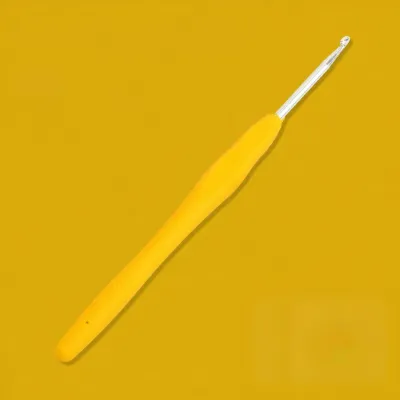
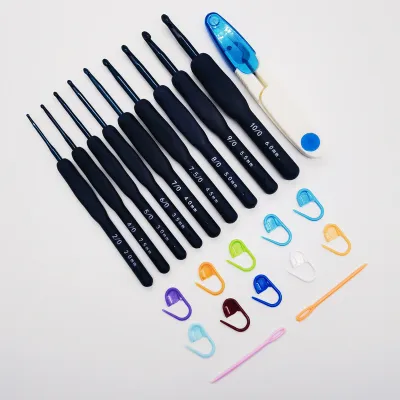
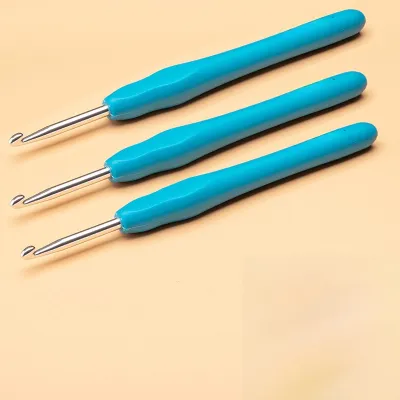
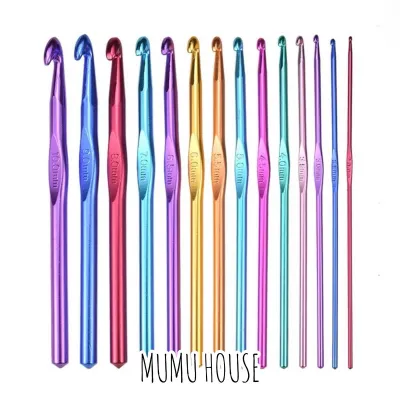
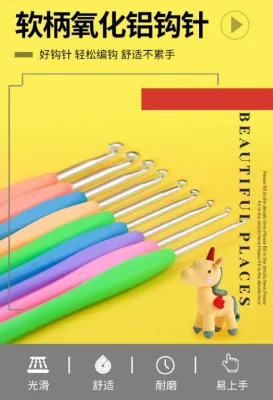
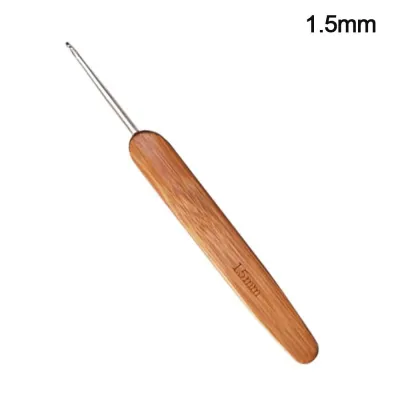
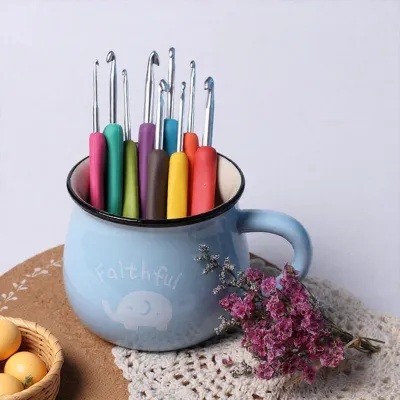
Prices are valid at publication and may change. Please refer to the product page for the latest price.
On another part of the label, you will find the standard yarn weight symbol, which is represented by a graphic of a yarn skein with a number from 0 to 7 printed inside it. These numbers correspond to the standard yarn weight categories established by the Craft Yarn Council, ranging from Category 0 (Lace) to Category 7 (Jumbo). Understanding this numbering system allows you to quickly categorize any yarn in your collection, even if the specific brand or product line is discontinued.
While many regions use letter or number systems to label crochet hooks, the universal metric millimeter (mm) measurement is the most reliable standard. In the United States, hooks are often labeled with letters (such as G, H, or I) and numbers (such as 6, 8, or 9). However, because different manufacturers occasionally assign different millimeter measurements to the same letter label, relying solely on letters can lead to sizing discrepancies. Always check the precise millimeter measurement engraved on the shaft of your hook to ensure accuracy across different brands.
The manufacturer’s printed recommendation on the yarn band serves as an excellent baseline, especially for beginners. This suggested size is optimized for standard stitches, such as single or double crochet, using average tension. While you may eventually decide to deviate from this recommendation based on the specific requirements of your project, starting with the suggested hook size saves time and prevents common structural mistakes during your initial trials.
Standard Yarn Weight to Crochet Hook Size Reference
When you are working with scrap yarn, unlabeled skeins, or handspun fibers, you will not have a manufacturer’s label to guide your hook selection. In these situations, a standard reference chart is invaluable for identifying a safe starting point. The following matrix maps the eight standard yarn weight categories to their typical metric crochet hook ranges:

| Yarn Weight Category | Common Names | Recommended Metric Hook Size (mm) |
|---|---|---|
| 0 – Lace | Fingering, 10-count thread, Cobweb | 1.60 mm to 2.25 mm (Steel: 0.60 mm to 1.60 mm) |
| 1 – Super Fine | Sock, Fingering, Baby | 2.25 mm to 3.50 mm |
| 2 – Fine | Sport, Baby | 3.50 mm to 4.50 mm |
| 3 – Light | DK (Double Knitting), Light Worsted | 4.50 mm to 5.50 mm |
| 4 – Medium | Worsted, Afghan, Aran | 5.50 mm to 6.50 mm |
| 5 – Bulky | Chunky, Craft, Rug | 6.50 mm to 9.00 mm |
| 6 – Super Bulky | Super Bulky, Roving | 9.00 mm to 15.00 mm |
| 7 – Jumbo | Jumbo, Roving, T-shirt yarn | 15.00 mm and larger |
This reference table should be treated as an initial starting point rather than an absolute, unbreakable rule. Because crochet is a highly tactile and variable craft, the ideal hook size can shift depending on the specific stitch pattern you choose. For instance, highly textured stitches like cables or popcorn stitches may require a slightly larger hook to prevent the fabric from becoming too dense and heavy.
Additionally, a yarn’s actual physical thickness can sometimes deviate from its official labeled category. Factors such as the number of plies, the spinning technique, and the fiber content play a significant role in how the yarn behaves. A single-ply wool yarn, for example, may loft and bloom significantly after washing, requiring a larger hook than a tightly spun, multi-ply cotton yarn of the exact same labeled weight category.
Adjusting Hook Sizes for Specific Crochet Projects
There are many scenarios where you should intentionally deviate from the manufacturer’s recommended hook size to achieve a specific structural outcome. The most common reason to size down—meaning choosing a hook that is 0.5 mm to 1.5 mm smaller than recommended—is to create a tight, dense fabric. This is essential when making amigurumi (crocheted stuffed toys), where the stitches must be tight enough to prevent the polyester fiberfill stuffing from poking through. Sizing down is also beneficial for functional household items like coasters, baskets, and structured bags that need to hold their shape under weight.
Conversely, you should size up—choosing a hook that is 0.5 mm to 2.0 mm larger than recommended—when your project requires maximum drape, flexibility, or an open, airy texture. Lightweight garments, shawls, and summer accessories benefit greatly from larger hooks because they allow the stitches to expand, creating a fluid fabric that moves naturally with the body. For example, in warm and humid climates like Singapore, crocheting a cotton or bamboo DK yarn with a larger 5.0 mm or 5.5 mm hook instead of the standard 4.0 mm hook creates a breezy, breathable garment that is comfortable to wear locally.
Your personal tension habits also dictate whether you need to adjust your hook size. Every crafter holds their yarn and hook with a unique level of muscle tension, resulting in stitches that are naturally tighter or looser than average. If you tend to struggle to insert your hook into previous rows, you are likely a tight crocheter and should try sizing up by 0.5 mm to make your work more comfortable. If your stitches look loose, uneven, or floppy, you are likely a loose crocheter and should size down to restore structural integrity to your fabric.
How to Make and Measure a Gauge Swatch
To guarantee that your finished project matches the dimensions specified in a pattern, you must work a gauge swatch before starting. A gauge swatch is a temporary test square that allows you to measure your personal stitch density using your chosen yarn and hook. Skipping this step can result in garments that are multiple sizes too large or too small, even if you followed the pattern instructions perfectly.
To create a standard gauge swatch, follow these steps:
- Cast on enough stitches to create a width of approximately 5 to 6 inches (12 to 15 cm), using the exact stitch pattern specified in your project instructions.
- Crochet the pattern until the swatch measures approximately 5 to 6 inches (12 to 15 cm) in height, then fasten off the yarn.
- Wash and block the swatch according to the yarn's care instructions, allowing it to dry completely. This step is critical because many natural fibers expand, shrink, or relax significantly when wet.
Once your swatch is dry, lay it flat on a hard, even surface. Use a rigid metal or wooden ruler to measure the stitches; avoid using a flexible plastic tape measure, as these can stretch over time and distort your measurements. Place the ruler horizontally across the center of the swatch and count the number of individual stitches that fit within a 4-inch (10 cm) window. Next, turn the ruler vertically and count the number of stitch rows within a 4-inch (10 cm) window. Compare these two numbers to the gauge requirements listed in your pattern.
If your swatch has more stitches and rows per inch than the pattern requires, your stitches are too small, meaning your tension is too tight. To correct this, switch to a larger hook size and crochet a new swatch. If your swatch has fewer stitches and rows than required, your stitches are too large, meaning your tension is too loose. In this case, switch to a smaller hook size and repeat the test until your measurements match the pattern exactly.
Frequently Asked Questions (FAQ)
Does Hook Material Change the Recommended Size for a Yarn Weight?
While the physical millimeter measurement of a hook remains identical regardless of its material, the surface friction of different materials significantly affects how the yarn glides, which in turn alters your personal tension. Metal hooks, such as those made of polished aluminum or steel, offer the least resistance, allowing yarn to slide quickly and effortlessly. This makes metal highly suitable for grabby wool fibers, but it can sometimes cause slippery yarns like silk or bamboo to slide off the hook prematurely.
Wood and bamboo hooks have a natural grain that provides subtle surface friction, slowing down your stitches and offering excellent control over slippery fibers. Plastic and acrylic hooks fall in the middle, though they can sometimes create a slight drag or squeaking sound when paired with synthetic acrylic yarns. If you find your stitches are consistently too tight or your hands are fatiguing quickly, switching from a high-friction wooden hook to a slick aluminum hook of the exact same millimeter size can help relax your tension and improve stitch consistency.
What if My Yarn Label Has No Weight or Hook Size Recommendation?
If you are working with unlabeled yarn, you can easily determine its weight category using the Wraps Per Inch (WPI) method. To do this, take a standard pencil or a rigid ruler and wrap the yarn around it side-by-side, ensuring the strands sit snugly against each other without overlapping or being pulled too tightly. Use a ruler to measure exactly one inch of these wraps, and count how many individual strands fit within that space.
You can map your counted wraps per inch to the following standard categories to identify your yarn weight:
- Over 18 WPI: Lace weight (Category 0)
- 14 to 18 WPI: Super Fine or Fine weight (Category 1 or 2)
- 12 to 14 WPI: Light weight / DK (Category 3)
- 10 to 12 WPI: Medium weight / Worsted (Category 4)
- 8 to 10 WPI: Bulky weight (Category 5)
- Under 8 WPI: Super Bulky or Jumbo weight (Category 6 or 7)
Once you have identified the estimated yarn weight category using the WPI method, refer to the standard reference chart to select a hook size from the middle of the recommended range. Crochet a small test swatch of about twenty stitches for a few rows. If the resulting fabric feels too stiff, switch to a hook that is 0.5 mm larger; if the fabric feels too loose or lacks structure, switch to a hook that is 0.5 mm smaller until you achieve the desired drape.

Community discussion
Share your experience or ask a question. Comments are reviewed before publication.