
Choosing the right circular knitting needle requires matching two distinct measurements to your project: the needle diameter and the cable length. The needle diameter determines your stitch size and fabric density, while the cable length must accommodate the physical circumference or width of your work. Getting this combination right ensures your stitches glide smoothly without being stretched or crowded, making your knitting experience comfortable and your finished piece structurally sound.
Decoding Needle Diameter and Gauge Requirements
Needle diameter directly dictates the size of the loops you form, establishing your stitch gauge. Thicker needles create larger, looser stitches, while thinner needles produce tight, dense fabric. Matching the needle diameter to your chosen yarn weight is the first step in achieving the fabric drape intended by a pattern.
Sizing systems vary by region. The metric system measures the actual diameter in millimeters, which is the most precise standard. In contrast, US and UK systems use arbitrary numbers; for example, a US 8 corresponds to 5.0 mm. Most modern circular needles feature laser-etched markings showing both metric and US sizes on the needle tips to help you verify the size before starting.
Products mentioned in this guide
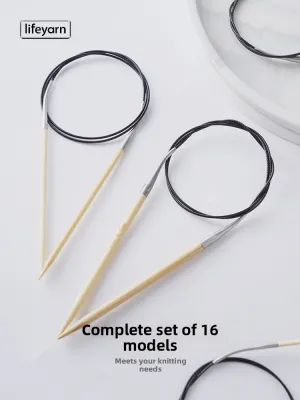
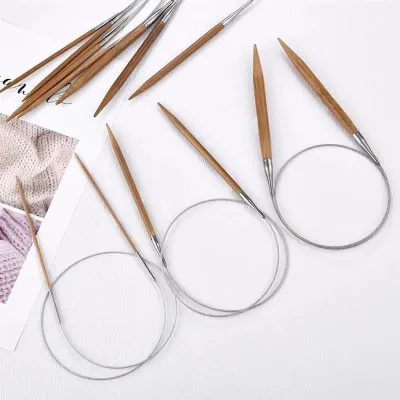
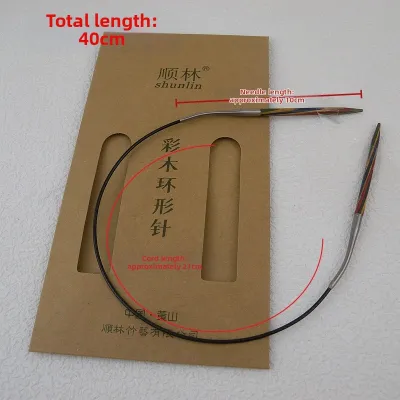
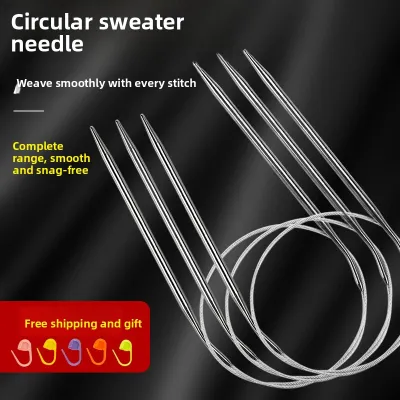
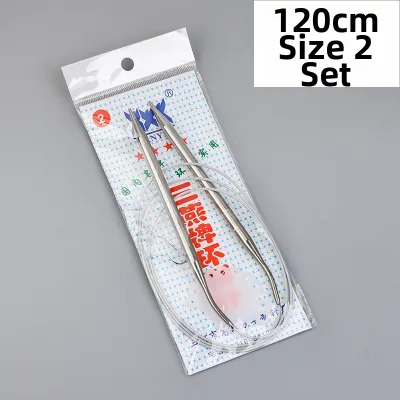
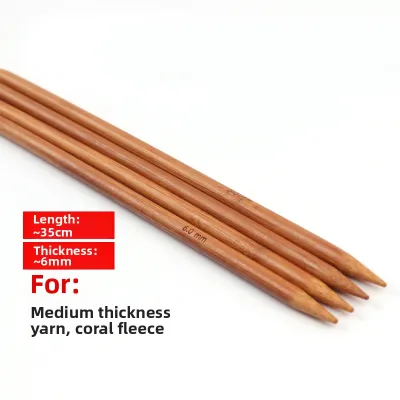
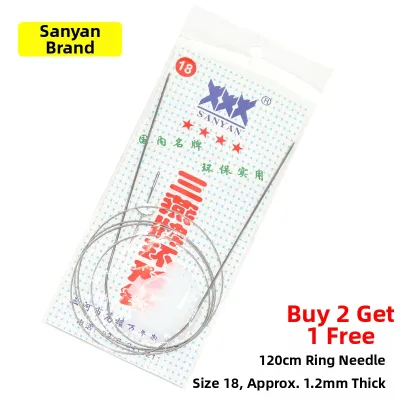
Prices are valid at publication and may change. Please refer to the product page for the latest price.
To ensure your project turns out the correct size, always knit a gauge swatch. Cast on a square of at least 10 by 10 centimeters using your chosen yarn and needles, wash and dry it, and count the stitches per inch. If your stitch count is higher than the pattern specifies, your stitches are too tight, and you should switch to a larger needle diameter. If your stitch count is lower, switch to a smaller needle diameter.
The necessity of an exact needle diameter depends on the project. For fitted garments like sweaters, socks, and hats, even a tiny deviation in gauge can result in an item that does not fit, making precise needle selection critical. For flat, non-fitted items like scarves or blankets, exact gauge is less critical, allowing you more flexibility to choose a needle size that simply produces a fabric drape you enjoy.
Selecting Cable Length for Project Circumference
The total length of a circular knitting needle is measured from tip to tip, including both the rigid needle ends and the flexible cable. As a general rule, your chosen needle length should be slightly shorter than the total circumference of the circular project you are knitting. This prevents the stitches from being stretched too tightly around the loop, which can strain your hands and distort the fabric.

When working on small-circumference projects like socks or sleeves, you can use the Magic Loop method. This technique requires a long cable, typically 80 to 100 centimeters, which is pulled out in loops on either side of the work, dividing the stitches into two manageable halves. This allows you to knit small tubes without needing short, specialized needles or double-pointed needles.
The physical properties of the cable itself play a major role in how easily your stitches move. Stiff cables with high memory tend to coil up and resist straightening, which can twist your work and cause hand fatigue. High-quality cables are designed to be highly flexible and memory-free, relaxing into a smooth curve when exposed to warm water or through regular use.
Conversely, using a cable that is too short for a large number of stitches can crowd your work excessively. When hundreds of stitches are crammed onto a short cable, it becomes difficult to see your pattern, and stitches can easily slip off the needle tips. For large items like blankets or seamless sweaters, a longer cable keeps the weight of the project resting comfortably in your lap.
Matching Specifications to Common Knitting Projects
Different projects demand specific needle configurations to make knitting efficient. For small tubular items like beanies, a 40-centimeter circular needle is standard, as it matches the average adult head circumference. For large, flat-knitted items like blankets or shawls, a long cable of 100 to 150 centimeters is ideal because it holds the massive volume of stitches securely, even though you are working back and forth in rows.
Knitting patterns almost always include a recommended needle size and cable length, but these are starting guidelines. Every knitter maintains a unique personal tension, meaning you may need to deviate from the designer’s suggested needle size to achieve the correct gauge. Always prioritize matching the pattern’s stitch gauge over using the exact needle size listed in the instructions.
If you plan to knit a variety of projects, investing in an interchangeable circular needle set offers excellent versatility. These sets allow you to mix and match different needle tip sizes with various cable lengths on the fly. This is particularly useful when a pattern requires you to switch to a smaller needle size for a ribbed cuff or transition to a longer cable as your stitch count increases.
While needle diameter and cable length are critical, secondary specifications like exact cable thickness have minimal impact on your final project. As long as the cable is thin enough to allow your stitches to slide easily over the join and onto the needle tip, its precise thickness will not alter your stitch gauge. Focus your attention on the primary dimensions and the quality of the materials instead.
Evaluating Joins, Tips, and Material Compatibility
The transition point where the needle tip meets the flexible cable is known as the join. Before starting a project, run your fingers over this connection to ensure it is perfectly smooth and free of ridges. A rough or poorly manufactured join will snag delicate yarn fibers, slowing down your knitting speed and potentially damaging your yarn over time.
Needle tips come in various shapes, ranging from blunt to highly pointed. Sharp, tapered tips are ideal for intricate lace patterns, fine laceweight yarns, and complex stitch maneuvers like decreases, as they easily slip into tight loops. Blunter tips are better suited for loosely plied or bulky yarns, as they help prevent the needle from splitting the yarn strands as you knit.
The material of your circular needle significantly influences how the yarn glides. Metal needles, such as brass or stainless steel, offer a slick surface that allows yarn to slide quickly, making them popular among experienced knitters who want to maximize speed. Wood and bamboo needles provide more surface friction, which helps keep slippery yarns like silk or synthetic blends from sliding off the needles accidentally. Plastic or acrylic needles offer a lightweight, middle-ground option with a slight grip.
To keep your circular needles in excellent condition, check the manufacturer’s care instructions regularly. Wooden and bamboo needles can benefit from occasional wiping with a dry cloth to remove hand oils, while metal needles can be cleaned with a damp cloth if they become sticky. Store your cables loosely coiled rather than tightly bent to prevent permanent kinks that could interfere with your stitch management.
Frequently Asked Questions (FAQ)
Can I use a longer cable than the pattern recommends?
Yes, you can use a longer cable if you employ specialized techniques like the Magic Loop or the traveling loop method. These techniques allow you to manage excess cable length by pulling the extra cord out in loops away from your active stitches. However, be aware that managing a very long, heavy cable on a tiny project can add unnecessary weight and tension, making the knitting process more cumbersome than using the correct length.
How do I adjust needle size if my gauge swatch is off?
If your finished gauge swatch has more stitches per inch than the pattern requires, your knitting is too tight; you need to switch to a larger needle diameter to make larger loops. If your swatch has fewer stitches per inch, your knitting is too loose, and you must switch to a smaller needle diameter. Always knit a new swatch and block it after changing needle sizes to verify that the new combination achieves the correct dimensions before starting your project.

Community discussion
Share your experience or ask a question. Comments are reviewed before publication.