
In an era dominated by digital notifications and screen-based schedules, the physical wall planner remains an indispensable tool for personal and professional organization. For many households and offices in Singapore, a wall planner serves as a shared, highly visible “single source of truth” that keeps everyone aligned without the need to open an app. As you prepare for the upcoming year, selecting the right 2027 wall planner brand requires a systematic approach that goes beyond simply choosing an appealing cover design.
Evaluating a wall planner brand involves analyzing material specifications, structural durability, and layout functionality to ensure the product can withstand twelve months of active use. Singapore’s unique environmental factors, such as high relative humidity, also play a significant role in how paper and ink behave over time. By establishing clear standards for paper weight, binding types, and layout structures, you can make an informed decision that enhances your daily productivity. This comprehensive guide provides the framework needed to assess 2027 wall planner brands, match layouts to your specific workflow, and navigate the local retail landscape.
What to Look for When Choosing a Wall Planner Brand
The foundation of any high-quality wall planner is the paper on which it is printed. Paper weight is measured in grams per square meter (GSM), and this metric directly influences how different writing instruments interact with the surface. Standard printer paper typically ranges from 70 to 80 GSM, which is highly prone to ink bleeding, feathering, and ghosting when used with gel pens, rollerballs, or markers. For a wall planner that will be written on daily, look for brands that utilize paper weights of at least 120 GSM. If you plan to use heavy markers, highlighters, or fountain pens, premium brands offering 150 GSM to 200 GSM cardstock are highly recommended to ensure a clean, bleed-free writing experience.
Products mentioned in this guide
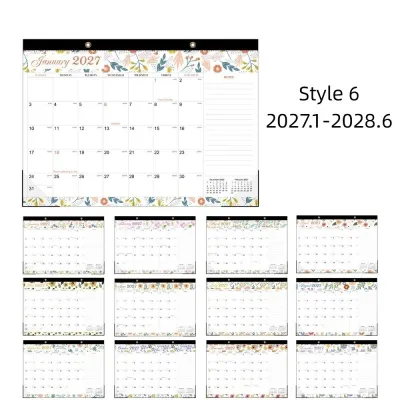
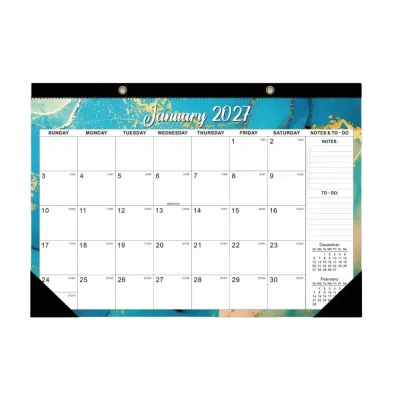
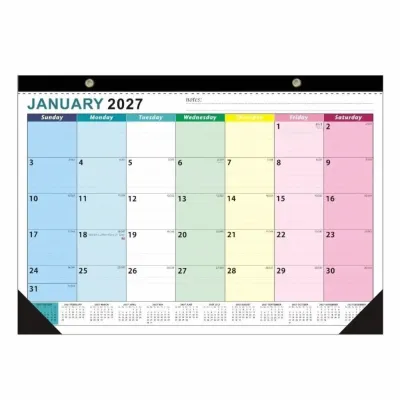
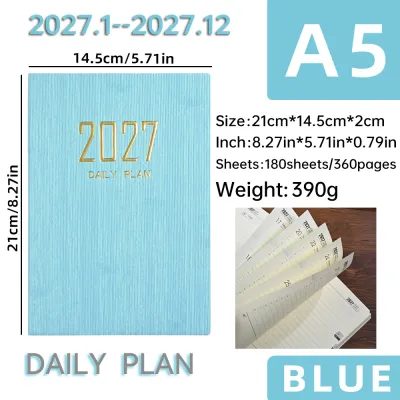
Prices are valid at publication and may change. Please refer to the product page for the latest price.
In Singapore, the tropical climate and high relative humidity introduce additional variables to paper performance. High humidity levels can cause paper fibers to absorb moisture from the air, leading to a phenomenon known as “cockling,” where the edges of the paper become wavy or warped. To prevent this, look for brands that use high-density, acid-free archival paper. Acid-free paper resists yellowing and degradation over time, while high-density fibers are less susceptible to moisture absorption. Additionally, uncoated paper with a slight texture is ideal for wall planners, as it allows ink to dry rapidly, minimizing the risk of smudging when you quickly jot down an appointment.
The binding and structural design of the planner determine how flat it will hang against your wall. Wire-O binding, which features a double-loop metal wire, is one of the most reliable options for multi-page monthly planners. This binding allows you to flip pages completely over without creating a bulky crease, ensuring the planner remains flush against the wall surface. For single-sheet yearly planners, look for brands that incorporate metal tinning or wooden hanger bars at the top and bottom. These structural elements provide weight and tension, keeping the large sheet taut and preventing the bottom corners from curling forward as the months progress.
Hanging mechanisms must be robust enough to support the weight of the planner for an entire year. Metal grommets or reinforced brass eyelets are the gold standard for hanging points, as they distribute the weight evenly and prevent the paper from tearing under tension. If you are using a lightweight or single-sheet planner, you might consider mounting options that do not require drilling, such as damage-free adhesive strips or magnetic poster hangers. When evaluating a brand, check if they include mounting hardware or specify the recommended hanging method in their product descriptions.
Matching Planner Layouts to Your Organizational Needs
Selecting the right layout is crucial for ensuring your wall planner remains a functional tool rather than a decorative wall hanging. Minimalist layouts are characterized by clean, open grids with minimal pre-printed text or decorative elements. This design philosophy offers maximum flexibility, allowing you to customize the space using color-coded sticky notes, highlighters, or custom symbols. Minimalist planners are highly suited for creative professionals, freelancers, or anyone whose daily schedule varies significantly and requires a highly adaptable planning canvas.

Conversely, structured layouts provide built-in frameworks to guide your organization. These planners often include dedicated sections for monthly goals, habit trackers, priority lists, and reflection spaces. By prompting you to define specific objectives alongside your daily schedule, structured layouts help maintain focus and accountability. This format is ideal for individuals working toward specific milestones, students managing academic deadlines, or anyone who thrives on systematic, routine-based tracking.
For shared spaces, such as family kitchens or collaborative office environments, multi-column planners are exceptionally effective. Often referred to as family organizers or team planners, these layouts divide each day into parallel vertical or horizontal columns. Each column can be assigned to a specific family member, team colleague, or project stream. This parallel structure allows you to view multiple schedules simultaneously, making it easy to coordinate activities, spot scheduling conflicts, and manage shared responsibilities at a glance. Single-user formats, by contrast, dedicate the entire grid to a single timeline, maximizing the writing space for detailed daily appointments.
You must also consider the calendar alignment that best fits your annual cycle. Standard calendar year planners run from January to December 2027, aligning with traditional personal and professional planning cycles. Academic planners, however, typically run from mid-year to mid-year (such as July 2026 to June 2027), making them the preferred choice for students, educators, and businesses operating on non-traditional fiscal years. Understanding your primary planning cycle ensures you do not purchase a planner with redundant months.
To help you compare the most common layout types, the table below outlines their key features, ideal use cases, and typical space requirements:
| Layout Type | Key Features | Ideal Use Case | Space Requirement |
|---|---|---|---|
| Yearly Giant Grid | Single large sheet, entire year visible at once | Long-term project tracking, holiday planning | Large wall space |
| Monthly Grid | Individual pages per month, large daily boxes | Daily appointments, family schedules | Medium wall space |
| Weekly Columnar | Detailed weekly breakdown, hourly or task-based | High-density scheduling, team task tracking | Medium to large wall space |
| Family/Multi-Column | Parallel vertical columns for different names | Household coordination, multi-project tracking | Medium wall space |
Where to Buy Wall Planners in Singapore
Acquiring the right 2027 wall planner involves navigating a variety of retail channels, each offering distinct advantages. Visiting physical stationery stores and bookshops in Singapore is highly recommended for those who wish to conduct a hands-on inspection of paper quality and binding durability. Established stationery hubs and major bookstores located in central retail districts, such as Orchard Road, Bugis, and Bras Basah Complex, carry a wide range of annual planners. In these physical spaces, you can feel the texture of the paper, test the rigidity of the backing board, and visually assess whether the planner’s dimensions will fit your designated wall space.
For access to a broader selection of international, boutique, or highly specialized planner brands, exploring official brand websites and authorized online retailers is an excellent strategy. Many premium stationery manufacturers ship directly to Singapore or distribute their products through local e-commerce partners. When shopping online, look for authorized distributors to ensure you receive an authentic product. Additionally, pay close attention to shipping and packaging specifications; reputable online retailers will ship large wall planners in sturdy cardboard tubes or flat, reinforced boxes to prevent creasing or corner damage during transit.
Specialty lifestyle boutiques and design-focused gift shops, often found in creative neighborhoods like Tiong Bahru, Holland Village, or Haji Lane, offer curated selections of aesthetically unique planners. These retailers frequently source eco-friendly planners made from recycled materials, soy-based inks, or FSC-certified paper. If you prioritize sustainable manufacturing practices, unique artistic collaborations, or minimalist design aesthetics, these boutique shops are excellent places to discover niche brands that are not typically found in mainstream bookstores.
How to Track Release Dates for 2027 Editions
Because wall planners are highly seasonal products with limited production runs, timing your purchase is essential to securing your preferred brand and layout. Most stationery brands release their annual 2027 editions during the third quarter of 2026, with the peak launch window occurring between August and October. Academic planners, which cater to school and university schedules, often launch much earlier in the year, typically appearing in retail spaces around April or May.
To ensure you do not miss out on popular designs that tend to sell out quickly, consider setting up restock alerts or subscribing to brand newsletters. Many boutique and premium stationery brands offer early-access pre-orders to their email subscribers, allowing you to secure your 2027 planner before it is released to the general public. Additionally, following local stationery retailers on digital platforms or checking their online storefronts regularly during the late summer months will help you stay informed about incoming shipments.
When browsing online marketplaces or physical retail shelves, always perform a diligent check of the product listings and packaging to verify the exact year. Because brands often retain the same cover artwork or color schemes across multiple years, it is easy to accidentally purchase outdated stock from the current or previous year. Carefully read the product title, check the start and end dates in the specifications, and verify that the calendar grid aligns with the 2027 calendar year to avoid purchasing an unusable planner.
Frequently Asked Questions (FAQ)
Can I use fountain pens on standard wall planner paper?
Fountain pen compatibility depends heavily on the paper’s weight, density, and sizing (the chemical treatment applied to paper to resist liquid absorption). Standard wall planners with thin paper (under 100 GSM) are highly likely to experience feathering, where the ink spreads along the paper fibers, and bleed-through, where the ink seeps through to the reverse side of the page. To use fountain pens successfully, look for brands that explicitly specify fountain-pen-friendly paper or offer a paper weight of 120 GSM and above. If you are inspecting a planner in a physical store, look for a sample page or test a tiny, inconspicuous corner with your preferred pen and ink combination to observe how the ink dries and whether it bleeds.
What is the difference between a wall planner and a wall calendar?
The primary difference between a wall planner and a wall calendar lies in their functional design and writing utility. A wall calendar is designed primarily for date-tracking and visual decoration, often featuring large artistic images, illustrations, or photographs with small date boxes that offer limited room for writing. A wall planner, conversely, is a functional tool optimized for active scheduling and task management. It prioritizes writing utility by maximizing the grid size, offering dedicated columns for tasks, and including notes sections. Wall planners are designed to be written on daily, making them more suitable for managing busy schedules, tracking project timelines, and coordinating household activities.

Community discussion
Share your experience or ask a question. Comments are reviewed before publication.