
Finding the right customized planner service in Singapore depends on balancing your production volume, design complexity, and material expectations. While some users require a single, highly personalized journal for daily reflection, others seek bulk corporate gifts that align with brand guidelines. Because local print shops and boutique design studios offer vastly different capabilities, selecting the ideal provider requires a systematic evaluation of their paper stocks, binding methods, and pricing structures. By understanding these technical specifications, you can secure a high-quality planner that withstands daily use in Singapore’s humid climate.
Defining Your Customisation Requirements
Before contacting a local printing service, you must define the primary purpose of your planner. A personal daily log requires a layout optimized for reflection, habit tracking, and creative writing, often demanding thicker paper to accommodate various ink types. In contrast, professional project planners prioritize structured weekly grids, action item lists, and compact dimensions for easy transport between meetings. If you are designing corporate gifts or event handouts, the focus shifts toward brand consistency, durable cover materials, and cost-effective bulk production.
The level of customization you choose will directly dictate your choice of provider. Basic customization typically involves adding a name or logo to a pre-designed cover template, which is highly accessible and cost-effective for individual buyers. Intermediate customization allows you to select from a range of pre-designed internal layouts, such as dotted, ruled, or weekly grids, combined with custom cover materials. Fully bespoke planners, where every page layout, margin, and tracker is designed from scratch, require professional graphic design files and are best suited for large-scale corporate orders or dedicated self-publishing projects.
Products mentioned in this guide
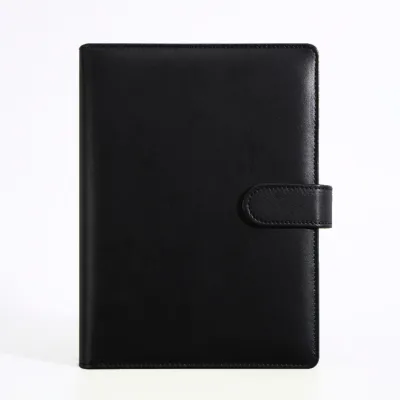
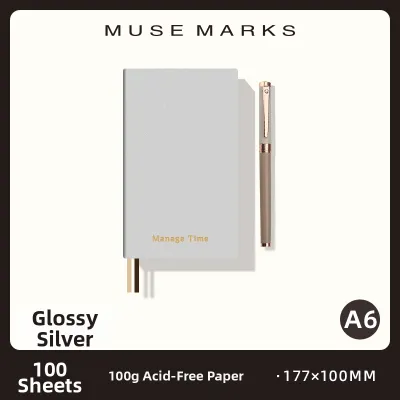
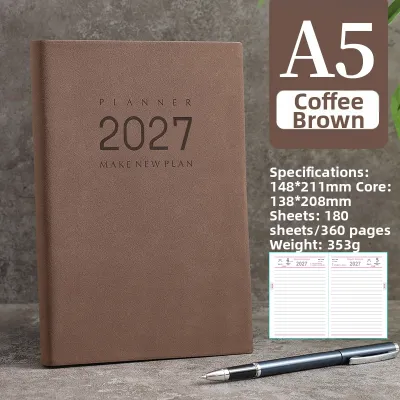
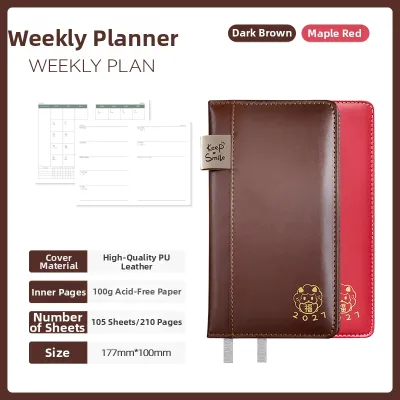
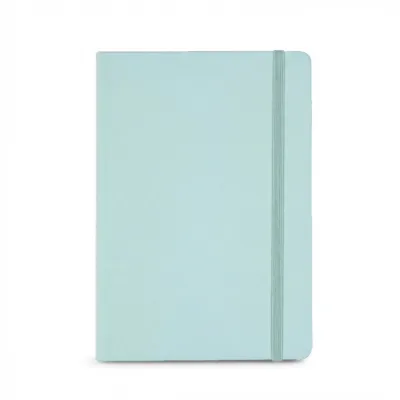
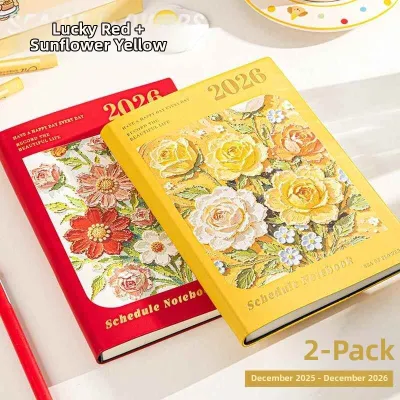
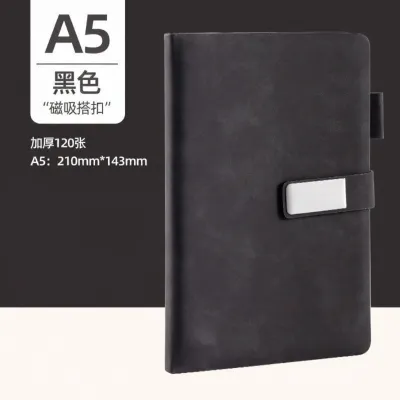
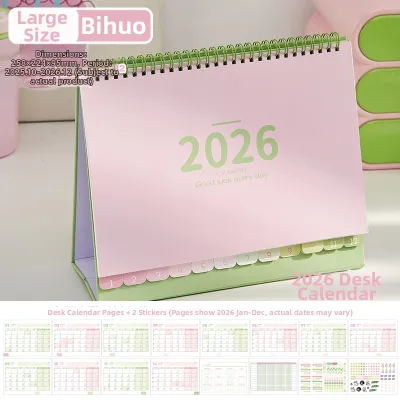
Prices are valid at publication and may change. Please refer to the product page for the latest price.
Budget constraints and Minimum Order Quantities (MOQs) are the ultimate deciding factors in your procurement process. Many commercial printers in Singapore enforce strict MOQs, often starting at 50 to 100 units, to offset the setup costs of digital or offset printing presses. If you only require a single copy, you must seek out specialized print-on-demand services or boutique binderies that accommodate ultra-low volumes, though these carry a significantly higher per-unit price. Clarifying your volume requirements early prevents wasted time negotiating with suppliers whose production models do not align with your scale.
Core Criteria for Evaluating Planner Services
Evaluating the material specifications of a planner service ensures the final product meets your writing standards. Paper weight, measured in grams per square meter (GSM), is the most critical factor for interior pages. Standard copy paper is typically 70 to 80 GSM, which is highly prone to ink ghosting and bleed-through when using gel pens, rollerballs, or fountain pens. For a premium writing experience, look for providers offering 100 GSM to 120 GSM wood-free paper, which provides excellent opacity and minimizes feathering. If your planner is intended for heavy sketching or artistic bullet journaling, a weight of 140 to 160 GSM is recommended to handle wet media.

Layout flexibility varies significantly between standard commercial printers and specialized stationery designers. Some providers offer rigid, pre-set templates where you can only modify the cover and introductory pages. Others provide modular systems, allowing you to mix and match monthly calendars, weekly spreads, and blank notes pages. If you require a fully bespoke layout, ensure the provider can accommodate custom margins, grid sizes, and page counts without charging prohibitive template setup fees.
The binding method determines both the usability and longevity of your planner. Wire-O binding, which uses a double-loop metal wire, is highly popular because it allows the planner to lie completely flat on a desk and fold back 360 degrees. However, the exposed metal loops can catch on fabrics inside a bag. Perfect binding offers a clean, book-like spine that looks highly professional, but standard adhesive binding can make it difficult to write near the inner margins. For a premium, durable option that lies flat without exposed wires, inquire about Smyth-sewn (thread-bound) binding, which secures folded paper signatures with thread before gluing the spine.
Production turnaround times and proofing policies must align with your schedule, especially if you have a fixed deadline like the start of the calendar year. Standard production lead times in Singapore typically range from two to four weeks, depending on the complexity of the finishes and the order volume. Ensure your chosen provider includes a physical or high-resolution digital proof in their contract. A digital proof allows you to verify layout alignment, while a physical proof is invaluable for checking color accuracy and paper texture before the full print run begins.
Navigating Customisation Tiers and Pricing Structures
Understanding how local print shops structure their pricing helps you optimize your budget without sacrificing essential features. The base price of a customized planner usually covers standard paper stock, a basic cover material, and a pre-existing layout template. When you transition to a fully bespoke design, providers will apply one-time setup fees or design consultation charges to cover the labor of pre-press preparation. To keep costs manageable, consider using the provider’s standard internal templates while focusing your customization budget on the cover and introductory pages.
Material upgrades are a primary driver of escalating unit costs. Premium cover options, such as vegan leather (PU), genuine leather, or heavy-duty bookbinding board wrapped in custom-printed linen, add a tactile, high-end feel but increase production costs. Embellishments like metallic foil stamping (gold, silver, or rose gold), debossing, gilded page edges, and elastic band closures require specialized machinery and manual assembly. If you are working within a tight budget, prioritize a durable cover material over decorative foil finishes, as the cover must protect the planner through a full year of daily handling.
Bulk discount structures are highly non-linear in the printing industry. The unit price of a planner drops dramatically as order volume increases, because the fixed setup costs of the printing plates and binding machines are distributed across more units. For example, ordering 500 planners might yield a unit cost that is less than half of the unit cost for an order of 50. If your projected need is close to a pricing tier threshold, it is often more economical to order the higher quantity to secure the lower unit price, using the surplus for promotional giveaways or future distribution.
Be vigilant about potential hidden costs that can inflate your final invoice. Design modification fees may apply if you submit files that do not meet the printer’s technical specifications, requiring their in-house prepress team to correct them. Local delivery fees within Singapore are typically calculated by weight, which can become substantial for large orders of heavy, high-GSM planners. Additionally, ordering during peak seasons—typically from October to January—may incur rush order surcharges if you require guaranteed delivery before the new year.
Verifying Quality and Service Reliability
To safeguard your investment, you must actively verify a provider’s quality standards before signing a contract. Requesting a physical sample pack is the most reliable way to assess paper performance. Once received, conduct a hands-on writing test using your preferred writing instruments, such as fountain pens, fine liners, and highlighters. Observe how the paper handles ink absorption: check for feathering (where ink spreads along the paper fibers), ghosting (where writing is visible on the reverse side), and complete bleed-through. This step is crucial because paper smoothness and ink resistance depend on the specific sizing and coating of the paper fibers, which cannot be judged from a digital spec sheet.
Reviewing a provider’s portfolio of past work reveals their attention to detail and manufacturing consistency. Examine their samples for alignment issues, such as off-center page numbers, uneven margins, or crooked cover stamping. Color consistency is another critical factor; check if the printed colors match across different pages and if there is any banding or pixelation in solid color blocks. A reputable provider should be proud to showcase physical samples of their previous corporate or personal projects.
Clear communication and robust error-resolution policies are essential when navigating custom manufacturing. Clarify the provider’s policy regarding printing errors, misprints, or binding defects before production begins. A reliable service provider will offer a clear framework for resolving issues, which may include reprinting defective units or issuing partial refunds if the final product deviates from the approved proof. Ensure these terms are documented in writing, along with agreed-upon timelines for correction.
Finally, verify that the provider employs secure payment methods and respects data privacy, particularly if your planner contains sensitive corporate information, proprietary frameworks, or personal contact details. If you are uploading custom designs or corporate databases for personalized recipient names, ask the provider how they store and dispose of your digital assets after production. A professional printer should have clear data handling policies and be willing to sign a non-disclosure agreement (NDA) if required.
The Ordering Process and Pre-Press Checklist
The transition from design to physical production requires meticulous technical preparation to avoid costly printing errors. When preparing your print-ready files, you must adhere strictly to the printer’s template guidelines. Ensure your document includes a “bleed” area—typically 3mm to 5mm beyond the final trim size—to prevent white borders if the paper shifts slightly during cutting. Keep all critical text, logos, and page numbers within the “safe zone” (usually 5mm inside the trim line) to ensure they are not accidentally cut off during the binding process.
Color space conversion is another common source of disappointment. Digital screens display colors using the RGB (Red, Green, Blue) spectrum, whereas commercial printing presses use CMYK (Cyan, Magenta, Yellow, Key/Black) inks. You must convert all design files to the CMYK color space before submission, as this conversion can cause vibrant screen colors to appear more muted in print. Additionally, ensure all images used in your layout have a resolution of at least 300 DPI (dots per inch) to guarantee sharp, crisp printing without pixelation.
When you receive the digital pre-press proof from the printer, treat it as the final opportunity to catch mistakes. Read through every page systematically, checking for spelling errors, incorrect dates, missing page numbers, and misaligned grid lines. Pay close attention to the gutter margin—the space closest to the binding—to ensure that text or writing grids will not be swallowed by the spine or obscured by wire-o punches. Once you sign off on the proof, the printer is legally protected against any pre-existing layout errors, making this step your most critical quality gate.
Finally, plan your logistics and storage to preserve the quality of your finished planners. Upon delivery, inspect the packaging to ensure the boxes are sturdy and sealed against moisture, which is particularly important in Singapore’s humid climate. Store the planners in a cool, dry, air-conditioned environment, stacked flat rather than vertically, to prevent the covers from warping or the paper from absorbing atmospheric moisture. If you anticipate reordering the same design in the future, confirm that the printer will archive your approved design files and custom plates, simplifying the reordering process and ensuring visual consistency across production runs.
Frequently Asked Questions (FAQ)
Can I order a single fully customised planner, or is there a minimum quantity?
Yes, you can order a single fully customized planner, but your options will be limited to specific production methods. Print-on-demand (POD) services and boutique binderies can produce individual bespoke planners using digital printing and manual binding techniques. However, because the setup costs cannot be distributed across multiple units, a single custom planner will carry a significantly higher per-unit price than a bulk order. If you find the cost of a single fully bespoke planner prohibitive, a practical alternative is to purchase a high-quality standard planner from a local brand and customize only the cover through laser engraving, foil stamping, or custom slipcases.
What file formats do providers usually require for custom covers and layouts?
Most professional printing services in Singapore require print-ready PDF files as their primary format. For vector-based elements like logos, text, and geometric grids, formats such as Adobe Illustrator (.AI) or Encapsulated PostScript (.EPS) are preferred because they can be scaled infinitely without losing sharpness. If your design includes raster images or photographs, they should be saved in high-resolution TIFF or PSD formats at 300 DPI. Before submitting your files, ensure that all fonts are converted to outlines (curves) to prevent formatting issues if the printer does not have your specific typeface installed, and make sure all color profiles are set to CMYK.

Community discussion
Share your experience or ask a question. Comments are reviewed before publication.