
Starting your watercolor journey can feel overwhelming when faced with rows of colorful tubes and pans at your local art supply store. To choose your first watercolor paint set, you must balance three core factors: the physical form of the paint, the quality of the pigments, and the size of the color palette. Selecting a set that aligns with your immediate painting environment and budget prevents early frustration and helps you build solid color-mixing habits.
Understand Paint Forms: Tubes, Pans, and Liquid
Watercolor paints are primarily sold in three physical formats: tubes, dry pans, and liquid concentrates. Each form offers distinct advantages depending on where you plan to paint and the scale of your artwork.
Tubes contain moist, creamy paint that you squeeze directly onto a palette. This format is highly suitable for mixing large volumes of paint quickly, making it the preferred choice for artists who work on large sheets of paper or enjoy creating broad, sweeping washes. Because the paint is already wet, it is easy on your brushes, as you do not need to scrub a dry surface to lift the pigment. However, tubes require a separate mixing palette, and paint left exposed can dry out, though most brands can be re-wetted later.
Products mentioned in this guide
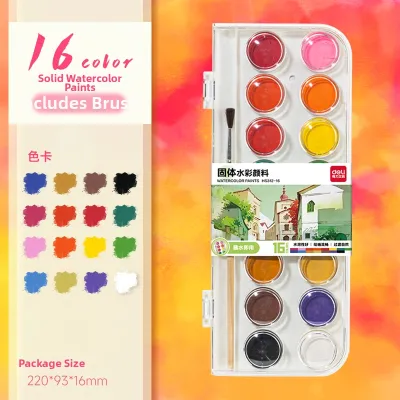
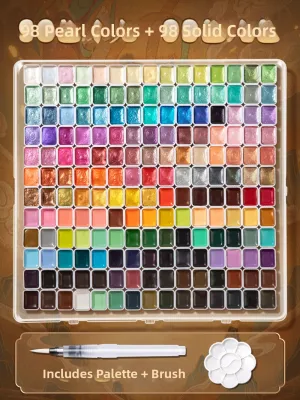
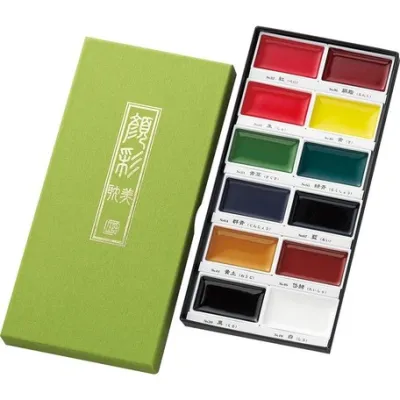
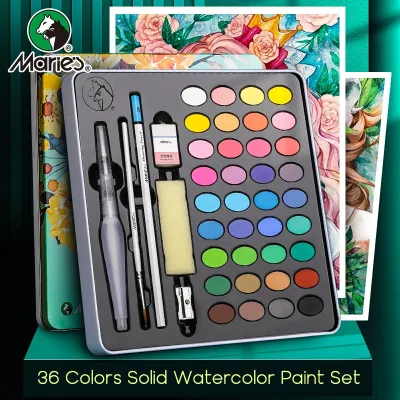
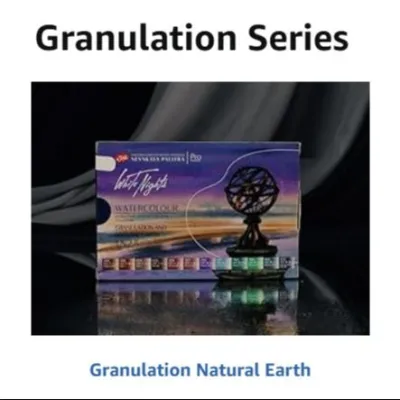
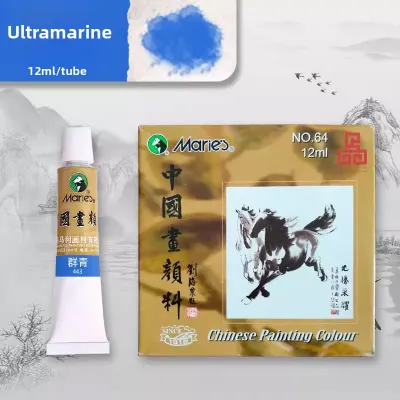
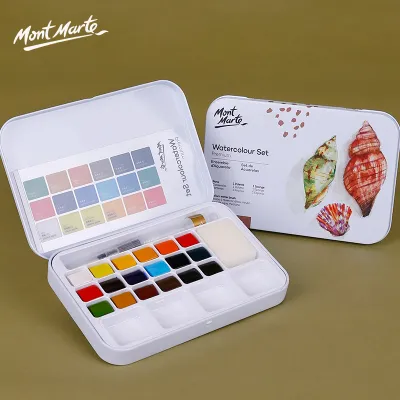
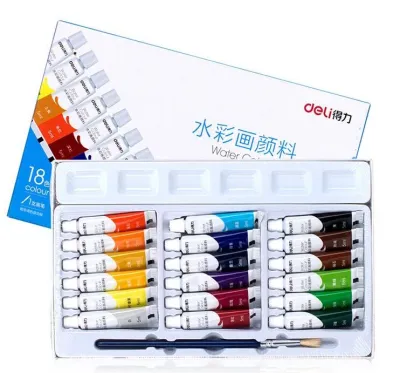
Prices are valid at publication and may change. Please refer to the product page for the latest price.
Pans are small, dry blocks of watercolor paint housed in plastic cups, known as half pans or full pans, which are arranged inside a portable metal or plastic case. To use them, you simply activate the dry paint with a wet brush. This format is exceptionally portable, neat, and easy to manage, making it highly popular for outdoor sketching, travel journaling, and small-scale studio work. Half pans are the most common size for starter sets, while full pans offer a larger surface area that accommodates wider brushes.
Liquid watercolors are highly concentrated, fluid pigments sold in dropper bottles. They deliver incredibly vibrant, saturated colors and are excellent for specialized techniques, calligraphy, airbrushing, or flat graphic illustrations. However, because they are already fully diluted, they are difficult to control for traditional watercolor techniques that require precise water-to-pigment ratios. For this reason, liquid watercolors are generally not recommended as a primary starter set for beginners.
Evaluate Pigment Quality: Student vs. Professional Grade
Art supplies are generally categorized into student grade and professional (or artist) grade. This distinction reflects the concentration of pure pigment, the quality of the binder, and the presence of fillers, all of which directly impact how the paint behaves on paper.

Student-grade watercolors are formulated to be cost-effective, making them highly practical for beginners who need to practice techniques without worrying about the cost of materials. To keep prices accessible, manufacturers use lower concentrations of pure pigments and substitute expensive natural pigments with synthetic alternatives, often referred to as “hues.” These paints also contain more fillers and binders, such as dextrin, which can sometimes result in a slightly chalky finish or cause mixed colors to look dull or muddy.
Professional-grade watercolors contain a much higher concentration of finely ground, pure pigments bound with high-quality natural gum arabic. This formulation results in exceptional color vibrancy, superior transparency, and excellent lightfastness, which measures a pigment’s resistance to fading when exposed to light over time. Professional paints flow more dynamically when introduced to wet paper, allowing for smooth, predictable color transitions.
When deciding which grade to buy, consider your current level of frustration with your materials. If you find that your mixed colors consistently turn gray or muddy despite following correct color theory, or if your dried paintings look significantly duller than when they were wet, it is time to upgrade. You do not need to replace your entire collection at once; purchasing a few single tubes of professional-grade primary colors is an affordable way to experience the difference in handling and vibrancy.
Determine the Right Color Range and Palette Size
A common pitfall for beginners is purchasing a massive paint set containing dozens of pre-mixed colors. While a 48-color set may look appealing, an excess of choices can actually hinder your artistic growth by bypassing the essential process of learning how to mix colors.
A basic set of 12 to 24 colors is the ideal range for a beginner. This size forces you to learn color theory and understand how different pigments interact, which is a foundational skill for any watercolorist. A well-curated small set typically utilizes a “split primary” system, which includes both a warm and a cool version of the three primary colors: red, yellow, and blue.
A warm primary color leans toward its neighbor on the color wheel (for example, a warm yellow leans toward orange), while a cool primary leans toward the opposite side (a cool yellow leans toward green). By mixing warm primaries together, or cool primaries together, you can create clean, vibrant secondary colors. Mixing a warm color with a cool color allows you to create beautiful, muted earth tones and subtle neutrals.
Before purchasing a starter set, verify that it contains a versatile core color range. A highly functional palette should include a warm red (such as Cadmium Red hue), a cool red (such as Alizarin Crimson), a warm yellow (such as Cadmium Yellow deep), a cool yellow (such as Lemon Yellow), a warm blue (such as Ultramarine), and a cool blue (such as Phthalo Blue). Additionally, look for essential earth tones like Yellow Ochre and Burnt Sienna, along with a versatile neutral like Payne’s Gray, which allows you to darken colors without relying on flat black paint.
Check Compatibility with Paper and Brushes
Watercolor paint does not work in isolation; its performance is deeply dependent on the paper and brushes you use. Beginners often attribute poor painting results to their paint quality, when the actual issue lies with incompatible paper or brushes.
Always use dedicated watercolor paper with a minimum weight of 300gsm (grams per square meter). Standard drawing paper or thin sketchbooks cannot handle the water volume required for watercolor painting; they will buckle, warp, and cause the paint to pool unevenly. For the best experience, look for paper made from 100% cotton rather than wood pulp. Cotton paper absorbs water evenly, keeps the surface wet longer for smooth blending, and allows you to lift dry paint or scrub the surface without tearing the paper fibers.
Your brushes must also match your paint format and painting style. Synthetic brushes are highly recommended for beginners because they maintain their shape, offer excellent spring, and are highly durable. Natural hair brushes, such as squirrel or sable, hold significantly more water, which is useful for large washes but can make water control difficult for those still learning. A versatile starter selection includes a medium round brush (size 6 or 8) for general work and detail, and a flat brush (half-inch or one-inch) for broad washes.
Before starting a major project, establish a testing protocol by creating a simple swatch card on a scrap piece of your watercolor paper. Paint a small rectangle of each color, transitioning from a highly concentrated application to a very diluted wash. This exercise helps you observe the paint’s transparency, check for granulation (where pigment particles settle into the paper’s texture), and test how easily the paint can be lifted off the paper with a damp brush.
Build Your Starter Kit: A Step-by-Step Selection Checklist
To ensure you make a confident purchase at an art supply shop or online marketplace, follow this structured selection checklist to build your ideal starter kit.
Step 1: Define your primary painting environment. If you plan to paint primarily at a dedicated desk or home studio, a set of tubes paired with a spacious plastic palette offers maximum flexibility. If you want to paint on the go, in local cafes, or while traveling, a compact pan set with a built-in mixing tray is the most practical choice.
Step 2: Set a realistic budget. For a reliable, student-grade starter set in Singapore, expect to spend between S$20 and S$50. If you prefer to start with entry-level professional paints, a small set of 6 to 12 colors typically ranges from S$60 to S$100. Avoid extremely cheap, unbranded sets sold in toy aisles, as their high filler content will make learning difficult and frustrating.
Step 3: Inspect the packaging for included accessories. Many travel pan sets come equipped with built-in mixing wells, travel brushes, or small sponges for wiping excess water. A sturdy metal tin or a folding plastic palette provides valuable mixing space, saving you from having to purchase a separate mixing tray.
Step 4: Read the product labels carefully before buying. Look for the pigment codes (such as PB29 for Ultramarine Blue) and lightfastness ratings, which are often indicated by ASTM ratings or a series of asterisks. Opt for paints labeled as transparent or semi-transparent, as opaque watercolors can easily look muddy when layered over other colors.
Frequently Asked Questions (FAQ)
Can I mix student and professional grade watercolors?
Yes, you can safely mix student and professional grade watercolors on the same palette and within the same painting. However, keep in mind that the higher filler content in student-grade paints may slightly reduce the overall transparency and vibrancy of your professional-grade pigments when they are blended directly together. A practical approach is to use professional-grade paints for your main focal points and student-grade paints for large background washes to manage your material costs effectively.
Do I need to buy white watercolor paint?
In traditional watercolor painting, you do not use white paint to create lighter shades; instead, you dilute the pigment with more water to let the white of the paper shine through. However, a tube of opaque white paint, such as Chinese White or white gouache, is highly useful for adding tiny highlights, correcting small mistakes, or painting fine details over dark washes. While it is not strictly necessary for a basic starter kit, having a small tube of white paint on hand offers valuable creative flexibility.
How long do watercolor paint sets last?
Watercolor paints are incredibly durable and can last for many years when stored correctly. Dry pans can last almost indefinitely, provided you let them dry completely with the lid open before closing the case to prevent mold. Tubes can last for several years, though the binder (gum arabic) may occasionally separate from the pigment over time. If this separation occurs, you can simply squeeze the paint onto a palette and mix it back together with a clean brush. In humid climates like Singapore, store your paint sets in a cool, dry place away from direct sunlight to prevent mold growth on damp pans.

Community discussion
Share your experience or ask a question. Comments are reviewed before publication.