
Selecting your very first crochet hook set is a pivotal step in your crafting journey. For a complete beginner, the ideal starter kit is a mid-sized ergonomic aluminum crochet hook set containing sizes from 4.0mm to 6.0mm, paired with essential accessories like locking stitch markers and blunt tapestry needles. This specific range of hook sizes is designed to match medium-weight yarns, such as worsted or 8-ply, which are the easiest to handle and visualize when you are learning basic stitches. By starting with a focused, high-quality set rather than a massive collection of specialized tools, you can build your muscle memory and hand strength without the frustration of split yarn, dropped loops, or hand fatigue.
Essential Features to Look for in a Beginner Crochet Hook Set
Finding a high-quality hook crochet beginners can easily control is essential for a frustration-free learning experience. A well-designed starter set should bridge the gap between zero experience and basic competency by offering tools that minimize common learning hurdles. The most critical feature of any beginner set is a curated range of mid-size hooks. Specifically, look for a set that highlights sizes between 4.0mm and 6.0mm. These sizes are large enough to hold comfortably and allow you to see the structure of your stitches clearly, which is essential for understanding where to insert your hook next.
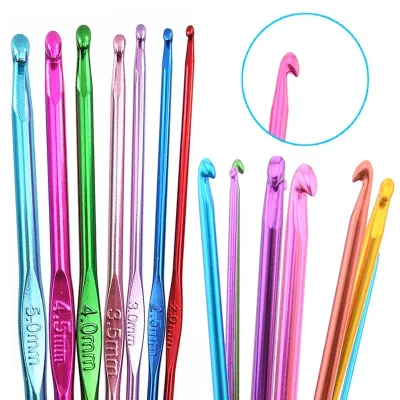
Another indispensable feature is clear, permanent size marking. Many budget-friendly hooks have sizes printed in ink that quickly rubs off due to the friction and natural oils of your hands. In warm, humid environments, this wear can happen even faster, leaving you with a collection of mystery tools. If the size markings disappear, you will find yourself constantly guessing which hook you used for a project, leading to inconsistent stitch tension. To avoid this, prioritize sets with deeply engraved metal shafts or molded rubber handles where the size is physically embossed into the material.
Products mentioned in this guide
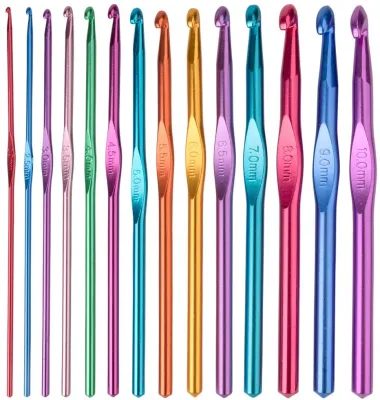
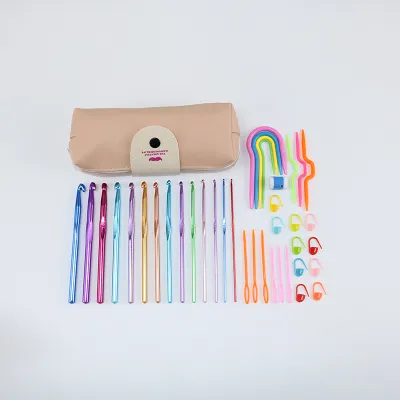
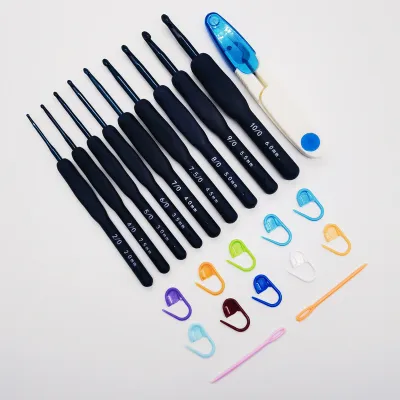
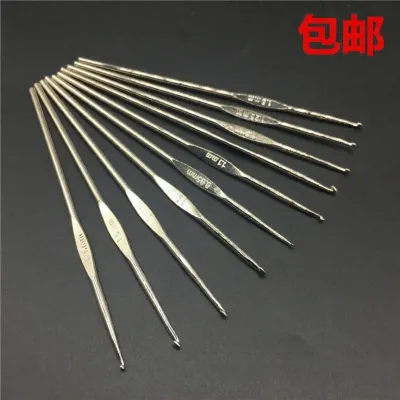
Prices are valid at publication and may change. Please refer to the product page for the latest price.
Finally, a practical beginner set should include a few basic, high-quality accessories rather than a mountain of filler items. Locking plastic stitch markers are absolutely essential for marking the beginning of rounds or counting rows, preventing your work from unraveling. A pair of blunt-tipped tapestry needles is required for weaving in loose yarn ends securely without splitting the fibers. A flexible measuring tape is also highly beneficial, as it allows you to check your gauge and ensure your practice pieces match the dimensions specified in your beginner patterns.
Understanding Crochet Hook Materials and Grip Types
The physical design of a crochet hook greatly influences how comfortably you work and how smoothly your yarn glides. Hook heads generally fall into two categories: inline and tapered. Inline hooks feature a throat cut at a sharp, consistent angle, with the hook head aligned perfectly with the shaft. This design helps beginners maintain a highly consistent loop size, though the sharper point requires a bit of care to avoid splitting multi-ply yarns. Tapered hooks, on the other hand, have a rounded head and a shallower, slanted throat. They glide effortlessly through existing loops, making them faster to use, but they require more manual tension control to keep your stitches uniform.

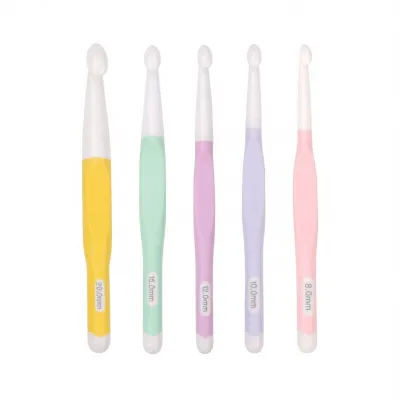
The handle design is equally important for managing hand fatigue during longer crafting sessions. Traditional flat metal hooks feature a small, flattened thumb rest in the middle of the shaft. While this works well for crafters who prefer the “pencil grip,” it offers very little support for those who use the “knife grip.” Ergonomic handles, typically made of soft-touch silicone, thermoplastic rubber, or contoured plastic, widen the gripping surface. This design distributes pressure across your palm and fingers, significantly reducing the pinching force required to hold the tool and preventing hand cramps.
Material selection also plays a conditional role in your crocheting experience. Aluminum is widely considered the gold standard for beginners because of its durability, rigidity, and low surface friction. It allows almost any yarn type to slide smoothly, helping you focus entirely on stitch mechanics. Wood and bamboo hooks offer natural warmth and a higher level of surface friction. This extra grip is highly beneficial when working with slippery synthetic yarns, as it keeps the loops from sliding off the hook prematurely, but it can cause drag when paired with standard acrylic or wool practice yarns. Plastic or acrylic hooks are lightweight and highly affordable, but they can flex under tight tension and may feel slightly sticky in humid conditions.
Decoding Hook Sizes and Yarn Compatibility
Understanding how hook sizes relate to yarn weights is crucial for preventing tension issues and ensuring your projects turn out as expected. When evaluating hook sizes, it is highly recommended to rely on metric measurements in millimeters rather than regional letter or number codes. US letters and UK numbers do not follow a linear progression and can vary significantly between manufacturers, leading to unnecessary confusion. Millimeter measurements are absolute and universal, ensuring that a 5.0mm hook is identical regardless of where it was purchased.
To set yourself up for success, you should establish a general framework for matching mid-range millimeter sizes to medium-weight practice yarns. A 4.0mm hook is ideal for light worsted or 8-ply yarns, offering excellent control for slightly more detailed projects. A 5.0mm hook is the absolute sweet spot for beginners, pairing perfectly with standard worsted weight, 10-ply, or medium aran yarns. A 6.0mm hook is best suited for heavy worsted or bulky yarns, allowing you to complete practice swatches quickly and see your stitch definition clearly.
Before starting any project, make it a habit to check the paper band label wrapped around your yarn skein. Manufacturers print a recommended hook size grid directly on this label, which serves as an excellent starting point. However, because beginners often wrap their yarn very tightly due to initial nervousness, it is often wise to select a hook that is 0.5mm larger than the label suggests. This minor adjustment keeps your stitches pliable and makes it much easier to insert your hook into previous rows.
Building Your Shortlist: What a Complete Starter Kit Should Include
When compiling a shortlist of potential starter kits on online marketplaces or at local craft shops, you need a clear framework to evaluate their practical value. A foundational set should cover a continuous millimeter range, typically from 2.0mm to 6.0mm or 3.0mm to 8.0mm. This range ensures you have the exact tool needed for everything from delicate coasters to warm winter scarves, allowing your toolkit to grow alongside your skills.
Beyond the hooks themselves, look for kits that include useful supplementary tools that add genuine value to your crafting experience. A compact, zippered storage case is highly beneficial, as it keeps your tools organized, protects the finer hooks from bending, and makes the set easy to transport. Other practical additions include a small pair of yarn snips, a manual row counter to help you track your progress, and a few plastic stitch holders. These tools are highly functional and prevent you from having to make multiple separate purchases.
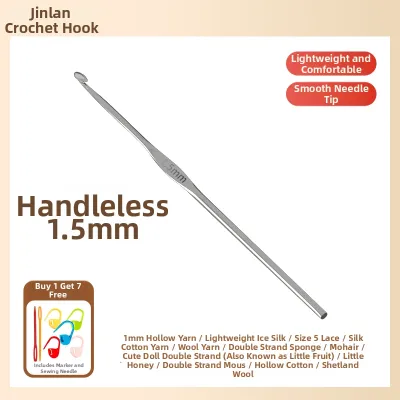
Conversely, you should actively avoid kits that exhibit common red flags. Be cautious of massive, low-cost sets that boast dozens of pieces but are padded with tiny steel lace hooks ranging from 0.5mm to 1.5mm. These micro-hooks are completely unsuitable for beginners and will likely sit unused for a long time. Other red flags include hooks with visible, rough ridges along the plastic or rubber handles, which can cause blisters, and flimsy plastic cases that tear easily, leading to lost tools. A high-quality, focused set of nine or ten ergonomic hooks is far more valuable than a poorly made 100-piece kit.
Pre-Purchase Checks and Quality Verification
Before finalizing your purchase, whether you are inspecting a set in a local craft store or reading detailed specifications online, there are several physical quality checks you should perform. The most critical check is the smoothness of the hook’s head, throat, and shaft. Run your thumb and index finger over these areas to ensure there are absolutely no rough spots, metal burrs, or sharp molding seams. Any imperfection on the gliding surface will snag the delicate plies of your yarn, causing it to split and fray, which can ruin your rhythm and damage your materials.
Next, verify how the size markings are applied to the hooks. If the sizes are simply printed on the surface with ink, they are highly prone to rubbing off within a few weeks of regular use. Instead, look for markings that are deeply engraved into the metal shaft or molded directly into the rubber handle in a contrasting color. This physical depth ensures that the size will remain legible even after years of friction and hand sweat.
Finally, assess the overall durability and balance of the tools. If you are choosing an ergonomic set, gently twist and squeeze the rubber or silicone handle to ensure it is securely bonded to the inner metal shaft. If the handle twists or slides off easily, it will compromise your control and precision while crocheting. Hold the hook in your preferred grip style to check its balance; it should feel comfortable and lightweight, with the center of gravity resting naturally in your hand to minimize wrist strain during extended use.
Frequently Asked Questions (FAQ)
Is it better to buy a large set or a few individual hooks?
For most beginners, starting with a small, focused set of ergonomic aluminum hooks is the most cost-effective and practical approach. A set ensures you have a continuous range of sizes on hand, allowing you to transition smoothly between different patterns and yarn weights without interruption. However, if you are on a budget, purchasing two or three high-quality individual hooks in core sizes—such as 4.0mm, 5.0mm, and 6.0mm—is an excellent alternative. This allows you to test different materials and handle styles to find what works best for your hands before committing to a larger financial investment.
What type of yarn should I pair with my first crochet hook set?
When learning to crochet, you should pair your starter hook set with a smooth, light-colored, medium-weight acrylic or cotton-acrylic blend yarn. Light colors, such as cream, pastel blue, or soft yellow, make it much easier to see the structure of your stitches, which is crucial for learning where to insert your hook and counting your rows accurately. Avoid dark colors like black or navy, as well as highly textured, slippery, or novelty yarns like chenille or boucle. These specialty yarns hide stitch definition and can make the initial learning phase incredibly frustrating.

Community discussion
Share your experience or ask a question. Comments are reviewed before publication.