
Selecting the right waterproof name stickers for your child’s school gear requires balancing durability, size, and design across different developmental stages. In primary school, the priority is high visibility and strong adhesion on small, frequently misplaced items like pencils and water bottles. As students transition to secondary school, their needs shift toward larger, minimalist, and low-residue labels that protect expensive electronics and textbooks without looking childish. By matching the sticker’s material, adhesive type, and dimensions to specific school supplies, you can ensure their belongings remain clearly identified and undamaged throughout the academic year.
Evaluating Waterproof Materials and Adhesion for School Use
To choose a sticker that survives the daily rigors of school life, you must first understand the difference between water-resistant and truly waterproof materials. Many standard paper labels are marketed as water-resistant, meaning they can withstand a light splash but will quickly disintegrate, tear, or smudge when exposed to heavy rain, condensation, or washing. For items that undergo frequent washing or outdoor exposure, synthetic materials like vinyl, polyester, or polypropylene are essential. These plastics do not absorb moisture, ensuring the label remains structurally intact even when submerged.
Beyond the base material, the longevity of the printed text depends on protective surface treatments. High-quality waterproof stickers typically feature a clear protective laminate or a UV-resistant coating layered over the printed ink. This barrier prevents the text from fading due to sunlight exposure or rubbing off from constant handling. Without this protective layer, even a waterproof vinyl sticker can quickly become a blank white patch, defeating its original purpose.
Products mentioned in this guide
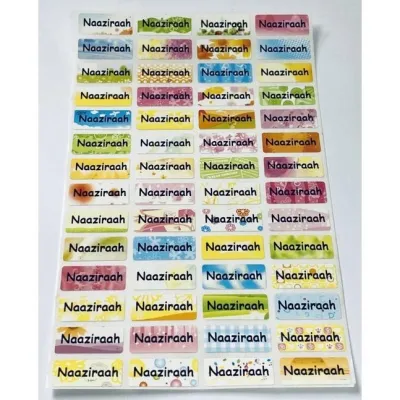
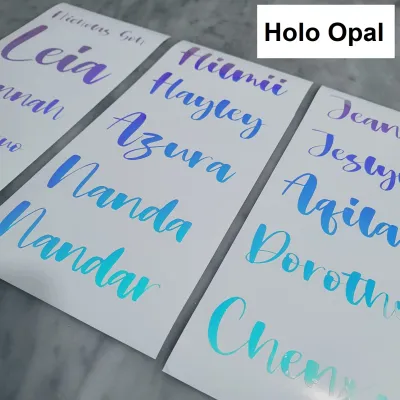
Prices are valid at publication and may change. Please refer to the product page for the latest price.
Adhesive strength is another critical variable that must be matched to the surface texture and shape of the school item. Flat, smooth, non-porous surfaces like plastic folders and metal rulers are highly receptive to standard adhesives. However, curved or textured items, such as insulated water bottles or silicone lunchbox lids, require specialized high-tack adhesives. When applying a label to a curved surface, the material must also possess enough flexibility to resist the natural tendency of plastic to spring back into a flat shape, which can cause the edges of the sticker to peel over time.
Primary School: Choosing Visible and Durable Labels for Younger Kids
Primary school students are prone to misplacing their belongings, making highly visible and easily identifiable name stickers a necessity. At this stage, children are managing dozens of small stationery items, including colored pencils, erasers, rulers, and glue sticks. Mini and small rectangular stickers are ideal for these compact objects, as they fit neatly along the narrow shafts of pens and pencils without wrapping over themselves awkwardly or peeling off during use.

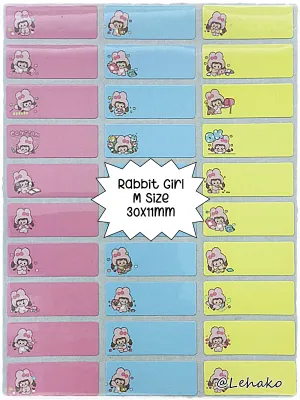
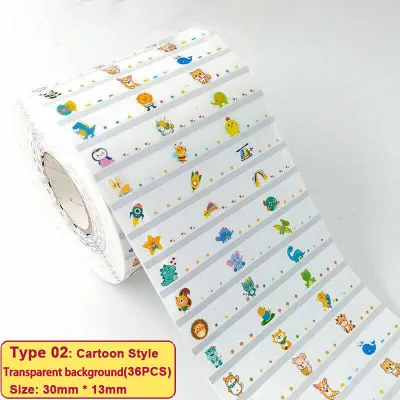
For younger children who may not yet read fluently or who share common names with classmates, visual cues are incredibly helpful. Opting for stickers that feature bright, contrasting colors, large bold fonts, or simple icons—such as a favorite animal, vehicle, or shape—allows a child to recognize their property at a glance. This visual recognition helps prevent accidental mix-ups in busy classrooms and encourages young students to take responsibility for packing their own bags.
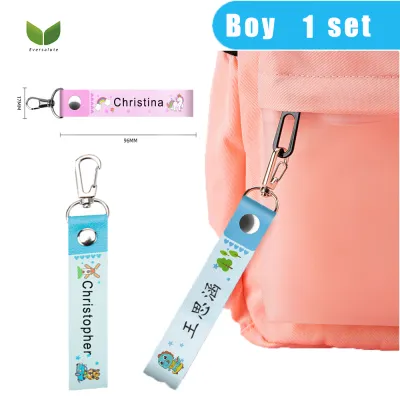
Lunchboxes, snack containers, and water bottles represent the highest-wear category for primary school gear, as they are subjected to daily washing, food oils, and rough handling. These items require heavy-duty, large waterproof labels that can withstand both hand washing and occasional cycles in a dishwasher. For cylindrical water bottles, wrap-around labels that overlap at the ends provide the most secure bond, as the adhesive sticks to the label itself, preventing the edges from lifting when wet.
Secondary School: Selecting Discreet and Residue-Free Labels for Older Students
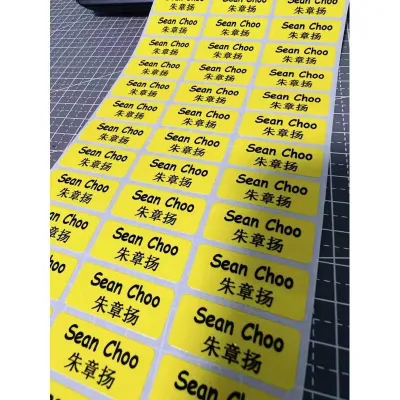
As students enter secondary school, their aesthetic preferences and the nature of their school supplies change dramatically. Teenagers generally prefer discreet, sophisticated labeling options over the bright, cartoonish designs of their primary school years. Minimalist layouts, neutral or monochrome color palettes, and clean, modern typography are far more appropriate for this age group, allowing them to identify their belongings without feeling self-conscious.
The types of items requiring labels also shift toward larger, more expensive equipment. Secondary students carry thick textbooks, multi-subject ring binders, scientific or graphing calculators, and specialized gear for physical education (PE) and extracurricular activities. Medium to large rectangular labels work best for these items, providing enough space for both the student’s name and their class or contact details, which is particularly useful if a high-value item is left behind in a lecture hall or laboratory.
Furthermore, secondary school often introduces personal electronic devices, such as laptops, tablets, and digital styluses. Because these devices are costly and may eventually be resold, upgraded, or returned to the school, avoiding permanent adhesive damage is crucial. For electronics, look for stickers labeled as “removable” or “low-residue.” These labels utilize specialized acrylic adhesives that provide a secure bond during use but can be peeled away cleanly without leaving a sticky, dirt-attracting residue or stripping the protective coating off the device’s chassis.
Matching Sticker Shapes and Dimensions to Common School Supplies
Selecting the correct sticker shape and size prevents the frustration of labels that are too large for pencil shafts or too small to read on a large binder. Standardizing your label selection into a few key categories makes it easier to organize an entire school kit efficiently.
Mini labels (typically around 20mm x 6mm) are designed specifically for thin stationery items like pens, pencils, and paintbrushes. Small rectangular labels (approximately 30mm x 13mm) are highly versatile, fitting comfortably on scissors, staplers, glue sticks, and the sides of pencil cases. Medium labels (around 50mm x 20mm) are the standard choice for food containers, water bottles, and calculators, offering a balanced surface area for clear text. Large labels (60mm x 30mm or larger) are best reserved for book covers, folders, and sports equipment where maximum visibility is required.
The shape of the sticker should also match the contour of the object. Circular and square stickers work well on flat, broad surfaces like the lids of lunchboxes or the front covers of notebooks. For cylindrical items like water bottles or markers, long, thin rectangular labels that can wrap around the circumference are far less likely to lift at the corners than wide, stiff stickers.
| Item Type | Recommended Sticker Size | Recommended Shape | Material Requirement |
|---|---|---|---|
| Pencils & Pens | Mini (20mm x 6mm) | Thin Rectangle | Flexible Vinyl |
| Water Bottles | Medium (50mm x 20mm) | Wrap-around / Rectangle | Heavy-duty Vinyl with Laminate |
| Lunchboxes | Medium to Large | Square / Circle | Dishwasher-safe Synthetic |
| Textbooks & Binders | Large (60mm x 30mm) | Rectangle | Standard Vinyl or Matte Synthetic |
| Calculators & Laptops | Medium (50mm x 20mm) | Rectangle | Low-residue / Removable Vinyl |
Applying and Maintaining Stickers for Long-Lasting Adhesion
Even the highest-quality waterproof sticker will fail prematurely if the application surface is not prepared correctly. Before applying any label, thoroughly clean the target area with soap and water, or wipe it down with rubbing alcohol to remove any surface oils, dust, or manufacturing residues. Ensure the surface is completely dry before proceeding, as moisture trapped beneath the adhesive will permanently weaken the bond.
When applying the sticker, start from one edge and smooth it down gradually to prevent air bubbles from becoming trapped underneath. Press firmly across the entire surface of the label, paying extra attention to the corners and edges, which are the most vulnerable to lifting. Once applied, allow the adhesive to cure undisturbed; most manufacturers recommend waiting 24 to 48 hours before exposing the labeled item to water, washing, or heavy handling.
Finally, always check the manufacturer’s care guidelines for temperature limits. While many high-grade vinyl stickers are rated as dishwasher-safe, extreme heat cycles or high-temperature sanitizing settings can degrade the adhesive over time. Hand washing labeled food containers with mild dish soap remains the gentlest way to extend the lifespan of both the sticker and the container.
Frequently Asked Questions (FAQ)
Can standard waterproof stickers be used on school uniforms and fabric bags?
Standard adhesive waterproof stickers are designed specifically for hard, non-porous surfaces and will not hold up on fabrics. The flexible, textured fibers of school uniforms, canvas backpacks, and PE bags prevent standard adhesives from forming a complete bond, causing them to peel off during movement or in the washing machine. For fabric items, you should look for specialized iron-on labels, sew-in tags, or fabric-stamp alternatives that are engineered to bond with textiles and withstand laundry cycles.
How can I remove waterproof name stickers without damaging the item?
To remove a stubborn waterproof sticker without scratching or damaging the underlying surface, apply gentle heat using a hairdryer on a low setting for 10 to 15 seconds. This heat softens the adhesive, allowing you to peel the sticker away slowly and smoothly. For any remaining sticky residue, apply a small amount of mild oil-based remover, such as eucalyptus oil or baby oil, to a soft cloth and gently rub the area. Avoid using harsh chemical solvents, abrasive scrubbing pads, or sharp metal blades, as these can easily scratch plastics, melt delicate electronics, or tear book covers.

Community discussion
Share your experience or ask a question. Comments are reviewed before publication.