
Selecting the correct white poly mailer size requires measuring your product’s folded dimensions and adding adequate allowance for thickness and sealing. This guide breaks down the essential specifications and sizing methods to help you avoid material waste or insufficient coverage during transit.
Choosing the wrong mailer size can lead to torn packaging, damaged goods, or unnecessary shipping costs. By matching your items to the correct dimensions, you ensure that your products arrive safely while keeping your packaging process efficient and professional.
Understanding Poly Mailer Dimensions and Thickness
Poly mailers are typically labeled by their width and length, such as 10 x 13 inches or 250 x 325 millimeters. It is important to verify whether the manufacturer’s stated length includes the adhesive sealing flap, as this flap is folded over during packaging and does not contribute to the usable internal space. Most standard measurements refer only to the usable body of the mailer, but checking the product specifications or testing a sample is the most reliable way to confirm the exact dimensions.
Products mentioned in this guide
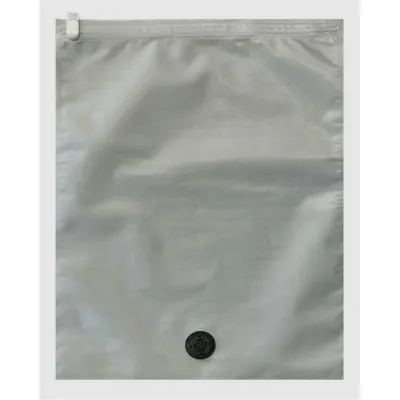
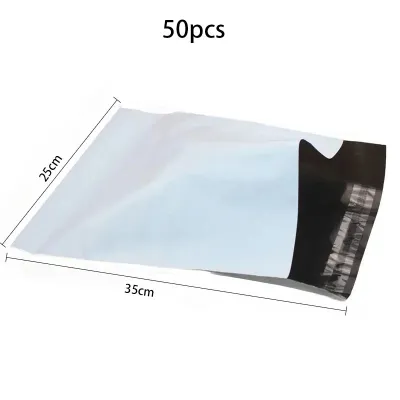
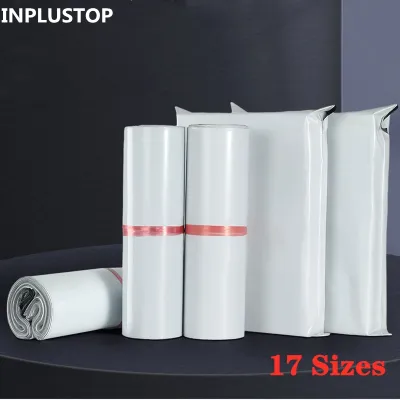
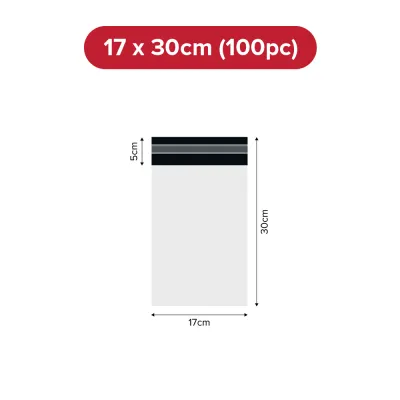
Prices are valid at publication and may change. Please refer to the product page for the latest price.
The thickness of a poly mailer is measured in mils (thousandths of an inch) or microns, which directly affects its durability and puncture resistance. Lightweight items like single t-shirts generally require a thickness of around 2.0 mils, while heavier or semi-rigid items like jeans or boxed goods benefit from a thickness of 2.5 to 3.0 mils to prevent tearing during transit. Choosing the appropriate thickness ensures the bag can withstand the friction and sorting machinery of postal networks.
White poly mailers offer a clean, professional appearance, but they are more susceptible to showing scuffs, dirt, and dust accumulated during transit. Selecting a mailer with a high-quality, smooth exterior finish can help minimize the appearance of transit wear. Additionally, verifying that the material has a co-extruded design—often featuring a white exterior and a black or grey interior lining—helps maintain both the clean look and the necessary opacity.
How to Measure Your Products for a Secure Fit
To find the correct mailer size, you must measure your product in its final, folded shipping state rather than its flat, laid-out dimensions. Use a ruler or measuring tape to determine the maximum length, width, and height (thickness) of the item once it is folded, rolled, or bundled. If you plan to wrap the item in tissue paper, place it in an inner clear poly bag, or include promotional inserts, measure the entire bundled package together.

To calculate the minimum required mailer width, add the product’s width and its height together, then add an extra 0.5 to 1 inch (about 13 to 25 millimeters) of clearance to allow the item to slide in easily. For the minimum required mailer length, add the product’s length and its height together, then add an extra 1 to 1.5 inches (about 25 to 38 millimeters) to ensure the adhesive flap can fold over and seal flat without stretching the plastic.
Stretching a poly mailer to its maximum limit weakens the seams and increases the risk of punctures or bursting during transit. If your calculations fall between two standard mailer sizes, it is generally more practical to select the larger size. This extra space prevents tension on the adhesive seal and allows the mailer to flex naturally when handled by sorting equipment.
Sizing Guidelines for Common Product Categories
For lightweight apparel like single t-shirts, thin leggings, or summer tops, a small mailer measuring approximately 6 x 9 inches or 9 x 12 inches is usually sufficient. Folding the garment neatly into a compact rectangle minimizes shifting and keeps the package flat, which helps secure lower shipping rates. When shipping multiple lightweight garments together, upgrading to a 10 x 13-inch mailer provides the necessary volume without adding excess weight.
Accessories and small soft goods, such as socks, beanies, scarves, or small plush toys, fit well in compact mailers ranging from 6 x 9 inches to 7.5 x 10.5 inches. These smaller dimensions keep the item snug, preventing it from sliding around and bunching up at one end of the bag. Maintaining a uniform thickness across the package helps prevent sorting machines from catching on loose folds of plastic and reduces the dimensional weight of the shipment.
Bulky items like heavy sweaters, denim jeans, jackets, or multi-item orders require larger mailers, typically starting at 12 x 15.5 inches or 14.5 x 19 inches. For exceptionally thick or rigid bundles, standard flat mailers may stretch excessively at the sides, making a gusseted poly mailer a more suitable choice. Gusseted mailers feature expandable sides or bottoms that open up to accommodate three-dimensional bulk, ensuring the seams remain secure and the package retains a professional shape.
Checking Sealing, Opacity, and Return Features
Before purchasing white poly mailers in bulk, inspect the quality of the adhesive strip to ensure a secure, tamper-evident closure. The adhesive should be strong enough that attempting to open the sealed flap tears the plastic, indicating that the package cannot be opened and resealed without visible damage. A wider adhesive strip generally provides a more reliable bond, especially when shipping heavier items that put pressure on the seams.
If your business frequently handles customer returns or exchanges, look for white poly mailers equipped with a dual adhesive strip and a convenient tear line. This design allows the customer to open the package neatly along the perforated line and reuse the same mailer for the return journey by sealing it with the second adhesive strip. This feature reduces packaging waste and simplifies the return process for your customers.
Opacity is another critical factor when choosing a white mailer, as transparent or thin materials can compromise customer privacy and increase the risk of theft. To verify opacity, place a brightly colored item or a printed label inside a sample mailer and hold it up to a strong light source. High-quality white poly mailers utilize a multi-layer co-extruded construction with a dark inner lining to ensure the contents remain adequately hidden from view.
Frequently Asked Questions (FAQ)
Can I use a white poly mailer for fragile or rigid items?
White poly mailers are designed for flexible, non-fragile items and do not provide structural protection against crushing or bending. If you need to ship rigid items, books, or fragile goods, you should use corrugated boxes or rigid cardboard mailers instead. If you must use a poly mailer for semi-fragile items, ensure the product is thoroughly wrapped in multiple layers of bubble wrap or placed inside a sturdy inner box before inserting it into a larger mailer to prevent punctures.
Will the white color affect my shipping costs or branding?
The color of your poly mailer does not affect shipping costs, as postal carriers calculate rates based on package weight, dimensions, and destination. However, white poly mailers serve as an excellent canvas for branding, allowing you to apply custom logo stamps, colorful branded stickers, or high-contrast shipping labels that are easy for optical scanners to read. This clean background helps maintain a professional presentation while keeping packaging costs low compared to custom-printed mailers.

Community discussion
Share your experience or ask a question. Comments are reviewed before publication.